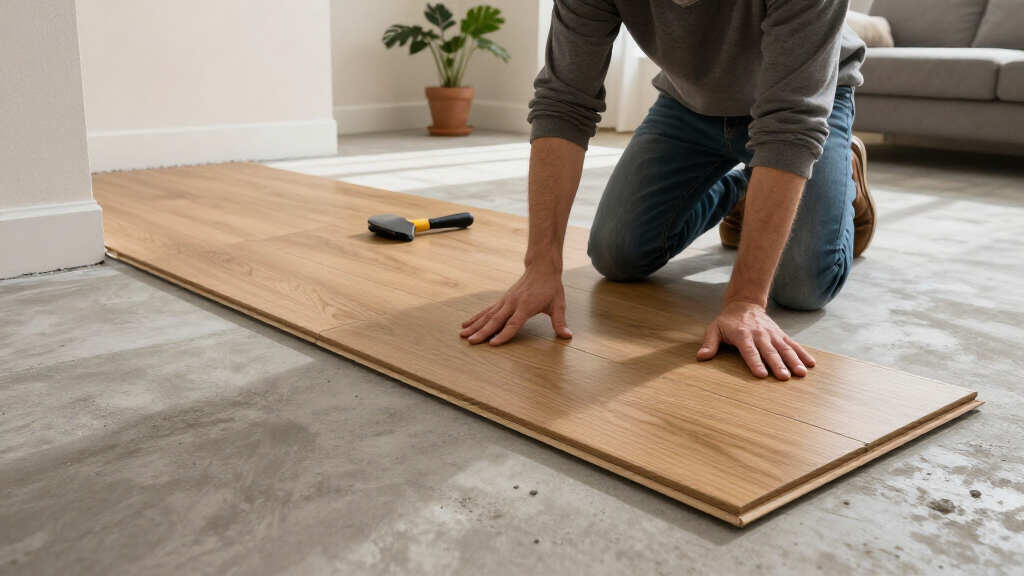

The best flooring for concrete slabs depends on moisture, intended use, and how much prep and installation work you can take on. I name Swisstrax Ribtrax PRO best overall for its interlocking garage design, while Rubber-Cal Elephant Bark stands out for cushioned coverage and AKOLAFE peel-and-stick tiles for a wood-look DIY finish. The main tradeoff is between floating or interlocking systems that can be easier to remove and adhesive options that call for a flatter, drier, well-prepared slab. Read on for the full comparison, including where each pick makes sense and what to check before installing it.

Get cleaning gear delivered free — and shop member deals
- Fast, free delivery on millions of items
- Access to Prime Big Deal Days deals on October 6–7
- Prime Video, Amazon Music and more included
Complete the kit


Key Takeaways
- Swisstrax Ribtrax PRO leads for garage use: Its interlocking tile format is a stronger match for a changeable garage floor than the adhesive vinyl options.
- Rubber flooring serves different needs: Rubber-Cal Elephant Bark offers thicker, cushioned coverage, while the 3.5 mm Coin-Pattern option is a thinner sheet-style alternative.
- Peel-and-stick is not a shortcut around slab prep: AKOLAFE and FLOREXP may suit DIY projects, but adhesive performance depends on a clean, dry, smooth concrete surface.
- Nitro Tiles prioritize a familiar garage-tile layout: Their 12-by-12-inch diamond-pattern modules offer a different look and format from Swisstrax‘s Ribtrax design.
- No single surface fits every slab: Intended use, moisture conditions, comfort, and willingness to prepare the concrete separate the leading choices more than appearance alone.
| Swisstrax Ribtrax PRO Interlocking Garage Floor Tiles, Slate Grey, 24-Pack |  | Best for Wet Garages | Material: Polypropylene copolymer | Color: Slate Grey | Tile dimensions: 15.75 × 15.75 × 0.75 inches | VIEW LATEST PRICE | See Our Full Breakdown |
| AKOLAFE Peel-and-Stick Vinyl Floor Tiles, Grey Wood, 36 Pack |  | Best for a Wood-Look Basement | Material: Vinyl | Color/pattern: Grey wood | Tile size: 11.8 × 11.8 inches | VIEW LATEST PRICE | See Our Full Breakdown |
| Rubber-Cal Coin-Pattern Thermoplastic Flooring, 3.5 mm, 36 in × 3 ft, Dark Gray |  | Best for Damp Work Areas | Material: Thermoplastic rubber (TPE) | Color: Dark gray | Thickness: 3.5 mm (0.14 inch) | VIEW LATEST PRICE | See Our Full Breakdown |
| FLOREXP Self-Adhesive Vinyl Floor Tiles, Dark Concrete, 30 Tiles | 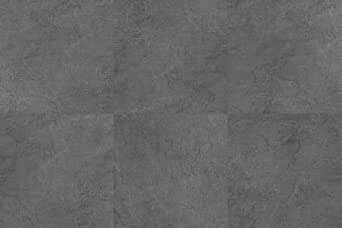 | Best for a Concrete-Look Room | Material: Polyvinyl chloride (PVC) | Color: Dark Concrete | Tile dimensions: 30.5 × 30.5 cm (12 × 12 inches) | VIEW LATEST PRICE | See Our Full Breakdown |
| Nitro Tiles 12 x 12 in. Interlocking Garage Floor Tiles, Diamond Pattern, Gunmetal, 24-Pack |  | Best for Modular Garage Coverage | Material: Polypropylene | Color: Gunmetal | Tile size: 12 × 12 inches | VIEW LATEST PRICE | See Our Full Breakdown |
| Rubber-Cal Elephant Bark Recycled Rubber Flooring, 3/16-Inch Thick |  | Best for Indoor-Outdoor Grip | Brand: Rubber-Cal | Material: Recycled tire rubber with ozone-resistant EPDM | Thickness: 3/16 inch (5 mm) | VIEW LATEST PRICE | See Our Full Breakdown |
| flooring for concrete slab | Material | Installation | Color | Coverage |
|---|---|---|---|---|
| Swisstrax Ribtrax PRO Interloc | Polypropylene copolymer | Tool-free interlocking | Slate Grey | 41.28 square feet |
| AKOLAFE Peel-and-Stick Vinyl F | Vinyl | Peel-and-stick, pressure-sensitive adhesive backing | — | Approximately 36 square feet |
| Rubber-Cal Coin-Pattern Thermo | Thermoplastic rubber (TPE) | Loose lay, carpet tape, or polyurethane-based adhesive | Dark gray | — |
| FLOREXP Self-Adhesive Vinyl Fl | Polyvinyl chloride (PVC) | Self-adhesive, peel-and-stick | Dark Concrete | 2.8 m² (30 square feet) |
| Nitro Tiles 12 x 12 in. Interl | Polypropylene | Interlocking; no glue required | Gunmetal | 24 square feet |
| Rubber-Cal Elephant Bark Recyc | Recycled tire rubber with ozone-resistant EPDM | DIY; lay down and secure with double-sided tape | — | — |
More Details on Our Top Picks
Swisstrax Ribtrax PRO Interlocking Garage Floor Tiles, Slate Grey, 24-Pack
For a concrete slab that regularly sees wet tires, tracked-in grit, or spills, the Swisstrax Ribtrax PRO has a practical advantage over flat peel-and-stick tiles: its ribbed, self-draining channels let water and debris move below the walking surface. The tool-free interlocking design avoids bonding a floor covering directly to concrete, and individual tiles can be rinsed or rearranged when cleaning is due. Compared with the Nitro Tiles Diamond Pattern, this set covers more area and prioritizes drainage, while Nitro offers a simpler one-square-foot tile layout and resistance to common shop chemicals. The tradeoff is that 24 tiles cover only 41.28 square feet, so a full garage can require multiple sets. Swisstrax tiles also do not connect with other brands, making future expansion within the same system the safer plan.
Pros:- Self-draining ribbed surface helps move water, dirt, and debris off the walking surface.
- Snaps together without tools or adhesives, avoiding direct bonding to concrete.
- Impact- and chemical-resistant polypropylene suits garage use.
- Tiles can be rinsed clean and reconfigured.
Cons:- The 24-tile set covers about 41.28 square feet, so larger areas need additional sets.
- Not compatible with other brands’ interlocking tiles.
Best for: Homeowners with damp garages who want a removable, drain-through surface that can be rinsed clean.
Not ideal for: Buyers covering a large slab on a tight materials plan or anyone who needs tiles to connect with another brand.
- Material:Polypropylene copolymer
- Color:Slate Grey
- Tile dimensions:15.75 × 15.75 × 0.75 inches
- Pack size:24 tiles
- Coverage:41.28 square feet
- Surface:Ribbed, slip-resistant, self-draining
- Installation:Tool-free interlocking
- Warranty:Limited lifetime residential; 15 years commercial
Our verdict“Choose Swisstrax for a wet garage slab where drainage and washable, removable tiles matter more than cross-brand compatibility.”
AKOLAFE Peel-and-Stick Vinyl Floor Tiles, Grey Wood, 36 Pack
The AKOLAFE Grey Wood tiles suit buyers who want a residential finish on a concrete slab and prefer small peel-and-stick squares over a floating or modular garage floor. Each 11.8-inch tile can be trimmed with a utility knife, which helps around doorways and other awkward edges. Unlike the Swisstrax Ribtrax PRO, this is a thin, bonded surface rather than a raised, drain-through system; that gives it a more conventional room appearance, but makes surface preparation more demanding. Concrete must be clean, flat, and dry before installation, and the adhesive needs 48 hours to set before use. At 1.5 mm thick, these tiles offer little added cushioning or correction for slab imperfections. They make most sense in a dry, well-prepared basement or similar room, not a damp garage where water management matters.
Pros:- Peel-and-stick backing avoids the need to spread separate adhesive.
- Tiles can be trimmed with a utility knife for edges and obstacles.
- A 36-tile pack covers approximately 36 square feet.
- Manufacturer describes the tiles as water- and fire-resistant.
Cons:- Requires a clean, flat, dry slab for reliable adhesion.
- The 1.5 mm thickness offers little cushion or coverage for surface irregularities.
- Adhesive requires 48 hours to set, and color may vary between production batches.
Best for: DIY renovators covering a smooth, dry basement slab who want a grey wood appearance and easy-to-trim tiles.
Not ideal for: People with damp, uneven, or dusty concrete, or buyers seeking a thick, cushioned floor that conceals slab flaws.
- Material:Vinyl
- Color/pattern:Grey wood
- Tile size:11.8 × 11.8 inches
- Thickness:1.5 mm (0.06 inch)
- Pack quantity:36 tiles
- Coverage:Approximately 36 square feet
- Installation:Peel-and-stick, pressure-sensitive adhesive backing
- Recommended preparation and wait:Clean, flat, dry floor; wait 48 hours after adhesive sets before use
Our verdict“Pick AKOLAFE for a prepared, dry basement slab when a wood-look finish matters more than thickness or drainage.”
Rubber-Cal Coin-Pattern Thermoplastic Flooring, 3.5 mm, 36 in × 3 ft, Dark Gray
For a concrete slab in a laundry area, utility room, or work zone where moisture and foot traffic are routine, Rubber-Cal Coin-Pattern Flooring offers a waterproof surface with raised texture intended to improve traction. Its loose-lay installation can spare the slab from adhesive, while carpet tape or polyurethane-based adhesive is available if the sheet shifts. That flexibility separates it from the FLOREXP Dark Concrete tiles, which bond to the floor and are aimed at indoor residential use. Rubber-Cal is the more functional choice for spills, but its 3.5 mm material comes in a 36-inch-wide section, so seams or extra cuts may complicate coverage across a broad room. A more secure installation can also require adhesive, reducing the benefit of a removable layout. This is a utility-first surface, not a wood- or stone-look decorative finish.
Pros:- Waterproof thermoplastic surface suits areas exposed to spills.
- Raised coin pattern is designed to improve traction in damp conditions.
- Abrasion- and mild-chemical-resistant surface is easy to clean.
- Can be installed loose, with carpet tape, or with polyurethane-based adhesive.
Cons:- The 36-inch width may require seams or additional planning on larger slabs.
- Loose-laid flooring may shift; a more secure fit can require tape or adhesive.
- At 3.5 mm thick, it adds limited cushioning over concrete.
Best for: Homeowners outfitting a damp utility or work area on concrete who value waterproofing and a textured walking surface.
Not ideal for: Buyers seeking a decorative tile pattern, broad seamless coverage, or a floor that will stay put without any fastening.
- Material:Thermoplastic rubber (TPE)
- Color:Dark gray
- Thickness:3.5 mm (0.14 inch)
- Dimensions:36 × 36 × 0.14 inches
- Weight:7.7 lb
- Pattern:Raised coin
- Installation:Loose lay, carpet tape, or polyurethane-based adhesive
- Warranty:3-year limited manufacturer warranty
Our verdict“Choose Rubber-Cal for a spill-prone concrete work area where waterproofing and traction matter more than a decorative finish.”
FLOREXP Self-Adhesive Vinyl Floor Tiles, Dark Concrete, 30 Tiles
FLOREXP Dark Concrete tiles are a straightforward match for buyers who want a concrete-inspired finish without leaving the slab exposed. The 12-inch PVC squares have a peel-and-stick backing, and their stated water-, scratch-, and oil-resistant surface is suited to ordinary indoor residential use. Compared with the AKOLAFE Grey Wood tiles, FLOREXP trades a wood effect for a darker, more understated concrete look; both share the same basic limitation of being thin adhesive tiles that need a carefully prepared floor. The 1.5 mm thickness will not level or cushion an uneven slab, so bumps and debris can undermine the finished appearance. The box covers about 30 square feet, less than AKOLAFE’s stated pack coverage, and the manufacturer recommends a 2 mm expansion gap near walls in cold weather. This pick is best for smaller, smooth indoor areas.
Pros:- Dark concrete finish complements a restrained, concrete-inspired room style.
- Peel-and-stick installation avoids separate adhesive.
- Water-, scratch-, and oil-resistant surface is easy to clean.
- Made with recyclable materials.
Cons:- Requires a smooth, flat, dry floor for installation.
- The 1.5 mm thickness does little to cushion or hide slab imperfections.
- Covers about 30 square feet per box, and a 2 mm wall gap is recommended in cold weather.
Best for: DIY homeowners covering a smooth, dry indoor slab who want a dark concrete-style finish in a modest-sized room.
Not ideal for: People with uneven or damp concrete, large spaces requiring fewer seams, or garages needing a drain-through or heavy-duty modular surface.
- Material:Polyvinyl chloride (PVC)
- Color:Dark Concrete
- Tile dimensions:30.5 × 30.5 cm (12 × 12 inches)
- Thickness:1.5 mm
- Tiles per box:30
- Coverage:2.8 m² (30 square feet)
- Installation:Self-adhesive, peel-and-stick
- Use:Indoor, residential
Our verdict“Choose FLOREXP for a small, well-prepared indoor slab when a dark concrete look matters more than added thickness or drainage.”
Nitro Tiles 12 x 12 in. Interlocking Garage Floor Tiles, Diamond Pattern, Gunmetal, 24-Pack
Nitro Tiles are a practical pick for buyers who want to cover a garage slab with removable, hard-wearing squares rather than glue down a thin finish. Each one-square-foot tile snaps together without glue, and the raised diamond pattern adds texture underfoot. The polypropylene resists water, stains, oil, gasoline, and common shop chemicals, giving it a more workshop-focused profile than the FLOREXP Dark Concrete tiles, which are thinner and intended for indoor residential rooms. Nitro’s individual tiles can be removed and replaced, a useful advantage if one section gets damaged. The tradeoff is coverage: one pack handles only 24 square feet, less than the Swisstrax pack, and these tiles are intended for flat, covered areas rather than exposed outdoor slabs. Their raised texture also does not provide the same drainage-channel design as Swisstrax Ribtrax PRO.
Pros:- Interlocks without glue or tools for a modular installation.
- Resists water, stains, oil, gasoline, and common shop chemicals.
- Raised diamond pattern provides textured traction.
- Individual tiles can be removed and replaced.
Cons:- Each pack covers 24 square feet, so larger floors need multiple packs.
- Designed for flat surfaces and intended for covered areas.
- Raised diamond texture does not offer the drainage-channel system of Swisstrax Ribtrax PRO.
Best for: Garage and workshop owners who want a replaceable, chemical-resistant modular floor over a flat, covered concrete slab.
Not ideal for: Buyers covering exposed outdoor concrete, uneven slabs, or wet areas where a dedicated drain-through tile design is the priority.
- Material:Polypropylene
- Color:Gunmetal
- Tile size:12 × 12 inches
- Pack size:24 tiles
- Coverage:24 square feet
- Pattern:Raised diamond
- Installation:Interlocking; no glue required
- Warranty:Limited lifetime
Our verdict“Pick Nitro Tiles for a covered garage slab where chemical resistance and replaceable sections matter more than drainage or broad pack coverage.”
Rubber-Cal Elephant Bark Recycled Rubber Flooring, 3/16-Inch Thick
I’d choose this rubber flooring when a concrete slab needs a grippy, impact-resistant surface that can also handle outdoor exposure. Made from recycled tire rubber with ozone-resistant EPDM, it resists water and UV exposure, making it more versatile than the indoor-focused AKOLAFE Peel-and-Stick Vinyl Floor Tiles. Its anti-slip surface suits garages, basements, patios, and kennels, while the 3/16-inch thickness offers some impact protection without creating a tall floor buildup.
The tradeoff is that this is a laid-down covering, not an interlocking tile system like Swisstrax Ribtrax PRO; double-sided tape may be needed to keep it from shifting. Its relatively thin profile also provides less cushioning than thicker rubber flooring. I’d pick it for flexible indoor-outdoor coverage, but not for a workout area where substantial impact absorption is the priority.
Pros:- Made from recycled passenger-car and commercial-truck tires
- Anti-slip surface provides traction on concrete
- Resists water, UV exposure, and ozone for indoor or outdoor use
- Can be installed as a DIY project and secured with double-sided tape
Cons:- Double-sided tape may be needed to prevent shifting
- At 3/16 inch thick, it offers limited cushioning for high-impact activities
- Does not interlock like the Swisstrax Ribtrax PRO or Nitro Tiles systems
Best for: Garage, basement, or patio owners who want a grippy rubber surface on concrete that can tolerate water and outdoor exposure.
Not ideal for: Buyers seeking substantial cushioning for heavy-impact exercise, or a tile system that locks together without tape.
- Brand:Rubber-Cal
- Material:Recycled tire rubber with ozone-resistant EPDM
- Thickness:3/16 inch (5 mm)
- Weight:31 pounds
- Color options:6
- Installation:DIY; lay down and secure with double-sided tape
- Warranty:3 years
- Model number:03-100-WEB-AB-08
Our verdict“Choose it for versatile, grippy indoor-outdoor coverage over concrete, but look elsewhere if you need deep cushioning or interlocking tiles.”
How We Picked
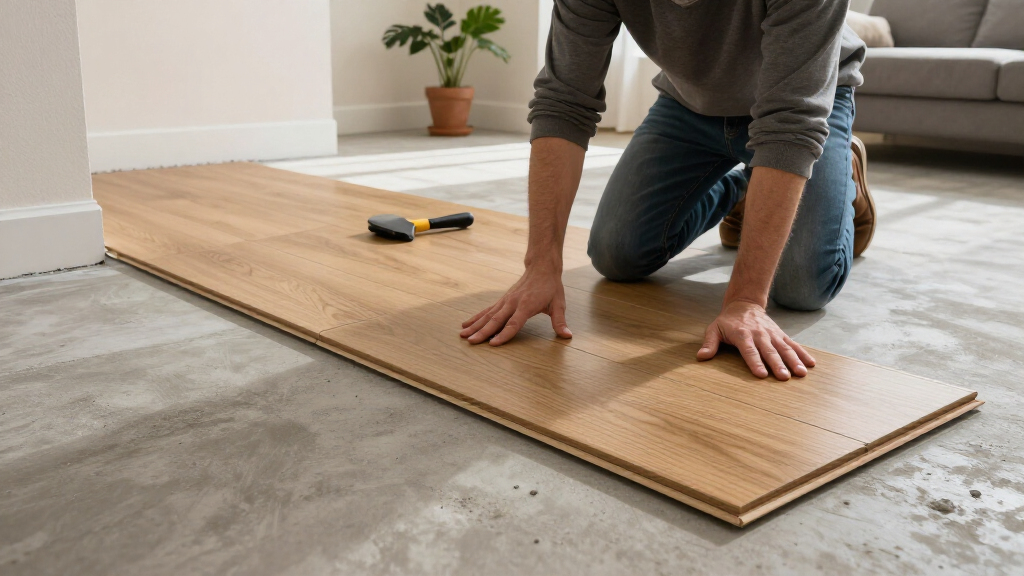
I ranked these six options for the specific challenges of covering a concrete slab: surface condition, moisture exposure, installation demands, comfort, and suitability for the room or work area. I gave more weight to how a flooring format fits its likely use than to appearance alone. Interlocking garage tiles rank ahead for buyers who want modular coverage; adhesive vinyl is more dependent on careful slab preparation; rubber flooring brings a different balance of cushioning and coverage.
The order reflects those differences rather than treating every product as interchangeable. Swisstrax Ribtrax PRO earns the lead for its garage-focused modular format, while Nitro Tiles is another interlocking choice with a smaller tile size and diamond pattern. Rubber-Cal’s two products serve distinct cushioning and sheet-coverage preferences. The AKOLAFE and FLOREXP vinyl tile options rank lower because adhesive flooring leaves less room for uneven, damp, or poorly prepared concrete.
| flooring for concrete slab | Material | Color | Installation |
|---|---|---|---|
| Swisstrax Ribtrax PRO Interloc | Polypropylene copolymer | Slate Grey | Tool-free interlocking |
| AKOLAFE Peel-and-Stick Vinyl F | Vinyl | — | Peel-and-stick, pressure-sensitive adhesive backing |
| Rubber-Cal Coin-Pattern Thermo | Thermoplastic rubber (TPE) | Dark gray | Loose lay, carpet tape, or polyurethane-based adhesive |
| FLOREXP Self-Adhesive Vinyl Fl | Polyvinyl chloride (PVC) | Dark Concrete | Self-adhesive, peel-and-stick |
| Nitro Tiles 12 x 12 in. Interl | Polypropylene | Gunmetal | Interlocking; no glue required |
| Rubber-Cal Elephant Bark Recyc | Recycled tire rubber with ozone-resistant EPDM | — | DIY; lay down and secure with double-sided tape |
Factors to Consider When Choosing Best Flooring For Concrete Slabs
Before choosing a surface, I would match the flooring to the slab and the room—not just the pattern. These factors help prevent common installation problems and clarify when a different format is worth choosing.
Check Moisture Before Choosing Adhesive Flooring
Concrete can release moisture even when its surface looks dry, and that can interfere with adhesive or affect flooring over time. A basement slab, newly poured concrete, or a room with past dampness deserves extra attention before you choose peel-and-stick tiles. Follow the flooring maker’s moisture-testing and installation instructions rather than relying on appearance alone. If moisture is a concern, ask whether the product and any recommended underlayment are suitable for those conditions. Skipping this check can turn an easy-looking DIY project into a removal and surface-prep job.
Match the Format to Slab Flatness and Condition
Small cracks, surface flaking, and uneven spots affect different flooring formats in different ways. Adhesive tiles need a smooth, clean base because bumps and debris can show through or weaken contact. Interlocking tiles can cover some minor surface variation, but they do not repair structural damage or make a badly uneven slab safe. Sheet flooring may also reveal ridges or dips, especially under furniture or rolling loads. Patch and level the concrete where the product instructions call for it, and do not treat flooring as a substitute for slab repair.
Decide Whether You Need a Fixed or Removable Floor
Adhesive tiles are suited to buyers who want a more fixed layout and are comfortable committing to careful preparation. Interlocking tiles are easier to rearrange or remove in sections, which can help in garages or work areas where access to the slab matters. That modular convenience can bring visible seams and a more segmented look than continuous coverage. Rubber sheet-style flooring offers broader coverage, but moving or trimming it may take more planning. Think about future repairs, room changes, and whether you may need to expose the concrete again.
Choose Comfort and Load Support for the Room
A floor used for standing, stretching, or workshop tasks may benefit from cushioning, while a space for vehicles or rolling equipment calls for a surface suited to those loads. Thicker rubber can feel more forgiving underfoot, but thickness alone does not establish that a product fits every machine, vehicle, or chair. Check the manufacturer’s guidance for load limits, indentation, and intended applications. A thinner floor may be easier to handle but provide less cushioning. Match the surface to the activity rather than assuming that one garage or utility-room product covers every use.
Plan for Water, Dirt, and Cleaning
Entryways and garages bring in grit, spills, and water that can collect at edges or seams. Open or modular designs may make local access and cleanup easier, but their joints can change how debris and liquids behave beneath the surface. A more continuous floor can reduce exposed seams, though its edges and adhesive bond still need proper installation. Ask how the product should be cleaned and whether standing water is acceptable; do not assume that a water-resistant surface makes the slab beneath it moisture-proof. Choose based on the mess you expect and the maintenance you are willing to do.
Measure Waste and Installation Requirements
Measure the full floor area and note doorways, columns, drains, and corners before ordering. Tile systems often require cuts at room edges, while sheet flooring may need careful layout to limit seams and waste. Confirm what tools are needed, whether tiles can be trimmed cleanly, and if the product requires acclimation or a specific room temperature during installation. Add a modest allowance for cuts, but avoid over-ordering without checking the package coverage. A realistic plan can matter as much as the material choice, especially for first-time installers.
Frequently Asked Questions
Can I install peel-and-stick vinyl tiles directly over concrete?
Only if the slab meets the product’s installation requirements. It generally needs to be clean, dry, smooth, and free of dust, sealers, or residue that could weaken adhesion. Check for moisture and repair cracks or uneven areas before laying tiles. Skipping prep may lead to edges lifting or imperfections showing through the finish. Follow the specific instructions for the vinyl you choose, since requirements can differ.
Are interlocking garage tiles a better choice than adhesive tiles?
They are better for some uses, not every room. Interlocking tiles make more sense when you want modular coverage that can be rearranged or lifted in sections, particularly in a garage. Adhesive tiles can create a more fixed finish, but they depend more heavily on slab preparation and can be harder to remove cleanly. Compare the surface’s intended use, moisture conditions, and appearance before choosing. Neither format fixes a damaged or persistently damp slab.
What should I do if my concrete slab has cracks or low spots?
First distinguish minor cosmetic defects from active movement, water intrusion, or structural damage. Repair and level the slab as needed before covering it, following the flooring maker’s flatness requirements. Small modular tiles may accommodate some minor variation better than thin adhesive tiles, but they can still rock or show unevenness over larger defects. Covering a crack without addressing its cause can hide a problem rather than solve it. If the crack is widening or accompanied by water, get the slab assessed before installing flooring.
Which flooring type should I choose for a damp basement slab?
Start by identifying and addressing the source of dampness instead of selecting a floor to conceal it. Adhesive vinyl deserves particular caution because moisture can affect the bond and may become trapped beneath the surface. Check each product’s moisture guidance and consider whether a removable or modular format better suits the room’s conditions. No floor covering makes a wet slab dry, and some installations can make moisture problems harder to spot. If the basement has recurring water or high moisture readings, resolve that issue before covering the concrete.
How much extra flooring should I buy for cuts and mistakes?
There is no universal allowance because waste depends on the room shape, product format, and number of obstacles. Measure the floor, then account for edges, closets, posts, and any pattern alignment before calculating coverage. Small tiles may create more offcuts around irregular boundaries, while sheet material needs a layout plan to limit seams. Check package coverage and the manufacturer’s advice, and keep a few compatible pieces for later repairs if practical. Ordering only the exact measured area leaves little room for damaged pieces or cutting errors.
Conclusion
For most garage-focused buyers, I would start with Swisstrax Ribtrax PRO as the best overall because its interlocking format suits modular concrete coverage. Nitro Tiles are my value-minded alternative for shoppers drawn to a smaller diamond-pattern garage tile, while Rubber-Cal Elephant Bark is the premium-style choice for buyers who put cushioned rubber coverage first. For beginners who want a DIY wood-look finish, AKOLAFE peel-and-stick tiles are a candidate only if the slab is dry, smooth, and properly prepared; FLOREXP offers another adhesive vinyl look. Choose Rubber-Cal Coin-Pattern flooring for a thinner sheet-style rubber option, and skip adhesive products if moisture or slab condition is unresolved.
Halloween Picks
halloween
As an affiliate, we earn on qualifying purchases.