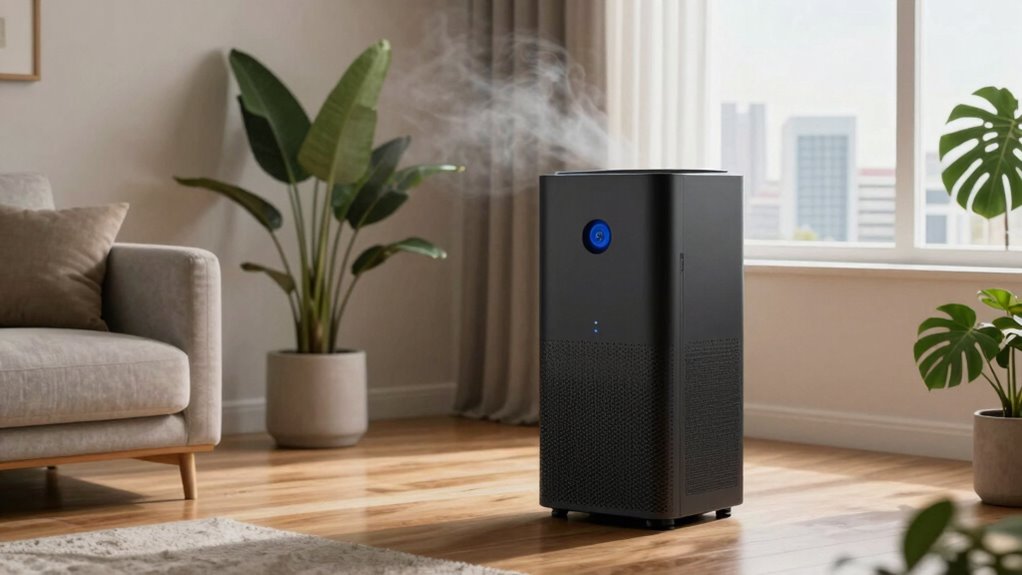
For a premium air purifier for VOCs and odors, my best overall pick is the IQAir GC MultiGas XE, which is purpose-built around gas and odor filtration. The AirDoctor AD3500 is a strong alternative if you want a larger-room purifier that also prioritizes particle filtration, while the Coway Airmega Mighty2 offers a more approachable option for everyday room cleaning. The main tradeoff is that dedicated gas-filter capacity, particle-cleaning speed, room size, and ongoing filter upkeep do not come in one package. I ranked these six by how well their filtration approach matches VOC and odor concerns, alongside usability and maintenance. Read on for the full breakdown and guidance on matching a purifier to your room and pollution source.

Get cleaning gear delivered free with Prime
- Fast, free delivery on millions of items
- Prime Video, Amazon Music and more included
- Member-only deals all year
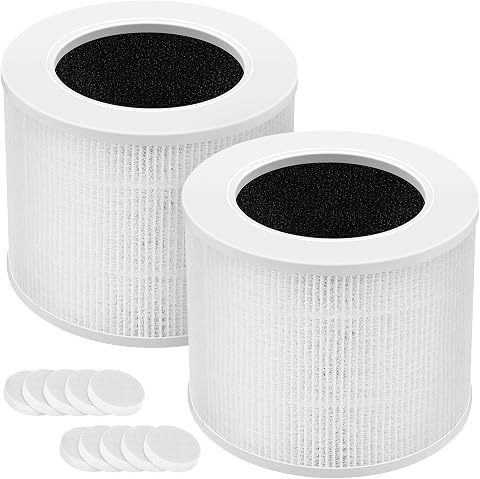
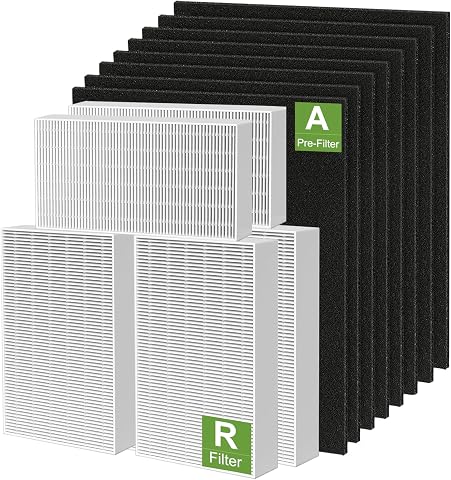
Complete the kit

Key Takeaways
- Gas filtration separates the leaders: IQAir’s GC MultiGas XE is the most specialized option here for VOCs and odors, rather than a particle-first purifier with a secondary carbon component.
- AirDoctor AD3500 favors a broader job: It offers a stronger fit for buyers who want substantial particle filtration alongside odor reduction, not a dedicated gas-filtration system.
- Smaller AirDoctor models trade coverage for placement flexibility: The AD1500 and AD2000 suit more contained spaces, but choosing between them should start with room size and expected use.
- Coway and Winix emphasize everyday versatility: The Mighty2 and 5520 make more sense for general room air cleaning than for severe or specialized chemical-odor problems.
- Filter upkeep is part of VOC performance: A purifier’s odor media has a finite service life, so replacement availability, cost, and the amount of carbon or other gas media matter alongside airflow.
| IQAir GC MultiGas XE Air Purifier with Activated Carbon and WiFi |  | Best Premium for Gas and Odor Filtration | Coverage area: Up to 1,125 sq. ft. | Filtration: HyperHEPA, activated carbon, gas cartridges, and post-filter sleeves | Connectivity: WiFi with IQAir AirVisual app integration | VIEW ON AMAZON | See Our Full Breakdown |
| AirDoctor AD3500 Air Purifier |  | Best Overall for Large Rooms | Room coverage: 630 sq. ft. in 15 minutes; up to 2,520 sq. ft. in 1 hour | Filtration: Pre-filter, activated carbon filter, and UltraHEPA filter | Particle capture: 99.99% of airborne particles at 0.003 microns | VIEW ON AMAZON | See Our Full Breakdown |
| Coway Airmega Mighty2 Air Purifier (AP-1512N) |  | Best for Quiet, Lower-Maintenance Operation | Model: AP-1512N | Room coverage: Up to 900 sq. ft. in 30 minutes or 1,800 sq. ft. in 60 minutes | CADR: Dust 242; smoke 240; pollen 249 | VIEW ON AMAZON | See Our Full Breakdown |
| AirDoctor AD1500 Air Purifier |  | Best Compact Pick for Bedrooms and Offices | Coverage: 320 sq. ft. | Air changes: 4 per hour | Filtration: Three-stage: pre-filter, activated carbon, and UltraHEPA | VIEW ON AMAZON | See Our Full Breakdown |
| AirDoctor AD2000 Air Purifier for Small and Medium Rooms |  | Best Mid-Size Pick for Everyday VOCs and Odors | Filtration: Three-stage: pre-filter, activated carbon, and UltraHEPA | Particle capture: 99.99% of airborne particles at 0.003 microns | Coverage: 305 sq. ft. in 15 minutes; up to 1,220 sq. ft. in 1 hour | VIEW ON AMAZON | See Our Full Breakdown |
| Winix 5520 Air Purifier for Large Rooms |  | Best for Large-Room Odor and Allergen Control | Room coverage: Up to 1,882 sq ft in 1 hour | Filtration: Four-stage system with True HEPA, carbon filter, and washable fine mesh pre-filter | Particle capture: 99.99% of airborne allergens as small as 0.01 microns | VIEW ON AMAZON | See Our Full Breakdown |
| air purifier for vocs and odors premium | Filtration | Particle capture | Room coverage | Fan speeds |
|---|---|---|---|---|
| IQAir GC MultiGas XE Air Purif | HyperHEPA, activated carbon, gas cartridges, and post-filter sleeves | — | — | — |
| AirDoctor AD3500 Air Purifier | Pre-filter, activated carbon filter, and UltraHEPA filter | 99.99% of airborne particles at 0.003 microns | 630 sq. ft. in 15 minutes; up to 2,520 sq. ft. in 1 hour | 4 |
| Coway Airmega Mighty2 Air Puri | Washable pre-filter and 2-in-1 HEPA and activated carbon filter | Up to 99.97% of particles as small as 0.3 microns | Up to 900 sq. ft. in 30 minutes or 1,800 sq. ft. in 60 minutes | — |
| AirDoctor AD1500 Air Purifier | Three-stage: pre-filter, activated carbon, and UltraHEPA | 99.99% at 0.003 microns | — | 6 |
| AirDoctor AD2000 Air Purifier | Three-stage: pre-filter, activated carbon, and UltraHEPA | 99.99% of airborne particles at 0.003 microns | — | 4 |
| Winix 5520 Air Purifier for La | Four-stage system with True HEPA, carbon filter, and washable fine mesh pre-filter | 99.99% of airborne allergens as small as 0.01 microns | Up to 1,882 sq ft in 1 hour | — |
More Details on Our Top Picks
IQAir GC MultiGas XE Air Purifier with Activated Carbon and WiFi
For buyers focused on gases and persistent odors, the GC MultiGas XE has the most specialized filtration setup in this group: HyperHEPA, activated carbon, gas cartridges, and post-filter sleeves. That layered approach gives it a clearer VOC-and-odor focus than the AirDoctor AD3500, whose listed system pairs carbon with UltraHEPA but does not specify gas cartridges. Its stated coverage of up to 1,125 sq. ft. also suits larger areas, while app monitoring and automatic adjustments add remote oversight. The tradeoff is practical: the purifier ships in two boxes, delivery may require a signature, and warranty terms need confirmation with the manufacturer. I’d choose it for a buyer who prioritizes gas filtration and connected controls, not someone seeking the simplest setup.
Pros:- Combines activated carbon and gas cartridges with particle filtration for a gas- and odor-focused setup.
- Rated for rooms up to 1,125 sq. ft.
- App integration provides monitoring and remote control.
- Automatic filtration adjustments respond to air quality.
Cons:- Ships in two boxes, and a signature may be required at delivery.
- Warranty availability and details require direct confirmation with the manufacturer.
Best for: Buyers in larger homes who want a dedicated gas-cartridge filtration system, app monitoring, and automatic air-quality adjustments.
Not ideal for: Buyers who want straightforward delivery and clearly stated warranty terms, or who do not need specialized gas filtration.
- Coverage area:Up to 1,125 sq. ft.
- Filtration:HyperHEPA, activated carbon, gas cartridges, and post-filter sleeves
- Connectivity:WiFi with IQAir AirVisual app integration
- Automatic operation:Automatic filtration adjustments based on air quality
- Designed and manufactured:Switzerland
- Warranty:A 10-year limited warranty may be available; contact the manufacturer for details
Our verdict“Choose the GC MultiGas XE if gas and odor filtration plus app control matter more than a simpler purchase and setup.”
AirDoctor AD3500 Air Purifier
The AD3500 earns the large-room role with a stated rate of 630 sq. ft. in 15 minutes, backed by a three-stage system that includes activated carbon for odors and gases and UltraHEPA filtration for particles. Its PM2.5 sensors and Auto Mode can adjust the fan as readings change, so buyers get hands-off operation without relying on app connectivity. Compared with the IQAir GC MultiGas XE, it offers simpler controls and a more clearly stated room-cleaning rate, while the IQAir has the more specialized gas-cartridge system. The AD3500’s main compromise is upkeep: carbon filters are scheduled every six months and UltraHEPA filters every twelve. The provided details also omit noise levels and operating costs, which makes ongoing ownership harder to estimate.
Pros:- High stated cleaning rate for large spaces: 630 sq. ft. in 15 minutes.
- Three-stage filtration includes activated carbon for odors and gases.
- PM2.5 sensors and Auto Mode adjust airflow automatically.
- Includes four fan speeds, Boost, a timer, and a filter indicator.
Cons:- Carbon and UltraHEPA filters have recurring replacement schedules.
- Noise levels and operating costs are not specified in the provided product details.
Best for: Households with a large open-plan room that want automatic particle monitoring and carbon filtration for everyday odors and gases.
Not ideal for: Buyers who need detailed noise and operating-cost information or a filtration system with specified gas cartridges.
- Room coverage:630 sq. ft. in 15 minutes; up to 2,520 sq. ft. in 1 hour
- Filtration:Pre-filter, activated carbon filter, and UltraHEPA filter
- Particle capture:99.99% of airborne particles at 0.003 microns
- Sensors:PM2.5 air quality sensors
- Fan speeds:4
- Controls:Auto Mode, Boost, timer, and filter indicator
- Filter replacement:Carbon filter every 6 months; UltraHEPA filter every 12 months
- Eligibility:FSA and HSA eligible
Our verdict“Pick the AD3500 for broad room coverage and automatic carbon-plus-particle filtration, but look to the IQAir if gas cartridges are your priority.”
Coway Airmega Mighty2 Air Purifier (AP-1512N)
The Airmega Mighty2 is the pick for buyers who want quiet operation and a washable pre-filter alongside HEPA and activated carbon filtration. Its published noise floor of 19 dB gives it a practical advantage over the AirDoctor AD3500, whose supplied details do not state noise levels. The Mighty2 also offers sleep and eco modes, automatic air-quality adjustment, and a filter-life display, making routine use easier to manage. For odors and VOCs, its carbon layer is useful, but the product details do not describe the kind of gas-cartridge stages found in the IQAir GC MultiGas XE. Room coverage is stated at 900 sq. ft. in 30 minutes, so buyers should match that rate to their room rather than rely on the larger 60-minute figure alone. A replacement Max2 filter is still required.
Pros:- Sleep mode operates as quietly as 19 dB.
- Washable pre-filter helps simplify routine upkeep.
- Automatic adjustment, sleep mode, eco mode, and filter-life display support day-to-day use.
- Includes HEPA and activated carbon filtration.
Cons:- A replacement Max2 filter is required.
- Product details do not specify gas cartridges or a specialized VOC filtration stage.
- Actual performance may vary by environment.
Best for: Light sleepers and households wanting a quiet purifier with a washable pre-filter, automatic modes, and carbon filtration for everyday odors.
Not ideal for: Buyers dealing with persistent or specialized gas concerns who want a system with specified gas cartridges, or those unwilling to replace the Max2 filter.
- Model:AP-1512N
- Room coverage:Up to 900 sq. ft. in 30 minutes or 1,800 sq. ft. in 60 minutes
- CADR:Dust 242; smoke 240; pollen 249
- Filtration:Washable pre-filter and 2-in-1 HEPA and activated carbon filter
- Particle capture:Up to 99.97% of particles as small as 0.3 microns
- Noise level:As low as 19 dB
- Maximum power:56 W
- Warranty:3-year limited manufacturer warranty
Our verdict“Choose the Mighty2 for quiet everyday odor reduction and convenient upkeep, rather than specialized gas filtration.”
AirDoctor AD1500 Air Purifier
The AD1500 makes sense when odor control needs to fit a smaller room, not a whole open-plan space. Its activated carbon and UltraHEPA stages target odors, gases, and fine particles, while a Halo PM2.5 sensor provides a color-coded reading and Auto Mode adjusts the fan. Six fan speeds offer more manual control than the four on the AirDoctor AD2000, but the AD1500 is rated for a more limited 320 sq. ft. with four air changes per hour. That makes it a more room-specific choice than the AD2000’s stated hourly coverage. The tradeoff is filter upkeep: replacements are listed every six months, and the supplied details do not separate carbon and UltraHEPA intervals. Choose it for a bedroom or office-sized area; skip it if you need one unit to serve several large connected rooms.
Pros:- Activated carbon and UltraHEPA filtration target odors, gases, and fine particles.
- Rated for 320 sq. ft. with four air changes per hour.
- Halo PM2.5 sensor uses a color-coded display and supports automatic fan adjustment.
- Six fan speeds offer more airflow choices than the AD2000.
Cons:- Coverage is limited to spaces up to 320 sq. ft.
- Filters are listed for replacement every six months.
Best for: People who want monitored odor and particle filtration in a bedroom, home office, or other space up to 320 sq. ft.
Not ideal for: Buyers seeking coverage across a large open-plan home or a longer stated filter-replacement interval.
- Coverage:320 sq. ft.
- Air changes:4 per hour
- Filtration:Three-stage: pre-filter, activated carbon, and UltraHEPA
- Particle capture:99.99% at 0.003 microns
- Fan speeds:6
- Air quality monitoring:Halo PM2.5 sensor with color-coded display
- Controls and features:Auto Mode, Boost, timer, and filter indicator
- Filter replacement interval:Every 6 months
Our verdict“Choose the AD1500 for sensor-guided odor filtration in a defined small room, not for large-area coverage.”
AirDoctor AD2000 Air Purifier for Small and Medium Rooms
The AD2000 offers the same basic pre-filter, activated carbon, and UltraHEPA approach as the AD3500, in a coverage class better matched to smaller rooms and medium-sized spaces. Its stated rate is 305 sq. ft. in 15 minutes, with up to 1,220 sq. ft. in an hour; that makes it a more room-scaled alternative to the AD3500’s 630 sq. ft. in 15 minutes. PM2.5 sensing, Auto Mode, Boost, and a timer add control without a more elaborate app setup. For buyers focused on odors and VOCs, carbon is the relevant stage, while UltraHEPA addresses particles; neither product description specifies gas cartridges like the IQAir GC MultiGas XE. Filter changes remain part of ownership, and genuine AirDoctor replacements are recommended.
Pros:- Three-stage system combines activated carbon for odors and gases with UltraHEPA particle filtration.
- Stated coverage includes 305 sq. ft. in 15 minutes and up to 1,220 sq. ft. in an hour.
- PM2.5 sensors and Auto Mode adjust the fan automatically.
- Includes four fan speeds, Boost, a timer, and a filter indicator.
Cons:- Carbon and UltraHEPA filters require scheduled replacement.
- Genuine AirDoctor replacement filters are recommended, limiting flexibility in filter choice.
- Does not list the gas cartridges included in the IQAir GC MultiGas XE.
Best for: Buyers who want carbon and UltraHEPA filtration with automatic monitoring for a bedroom, living room, or other small-to-medium space.
Not ideal for: People needing specialized gas-cartridge filtration or a purifier sized for a large open-plan room.
- Filtration:Three-stage: pre-filter, activated carbon, and UltraHEPA
- Particle capture:99.99% of airborne particles at 0.003 microns
- Coverage:305 sq. ft. in 15 minutes; up to 1,220 sq. ft. in 1 hour
- Sensors:PM2.5 air quality sensors
- Fan speeds:4
- Controls:Auto Mode, Boost, timer, and filter indicator
- Filter replacement:Carbon filter every 6 months; UltraHEPA filter every 12 months
- Eligibility:FSA and HSA eligible
Our verdict“Choose the AD2000 for AirDoctor’s carbon-and-UltraHEPA setup in a smaller space, but choose the AD3500 for faster stated coverage in a large room.”
Winix 5520 Air Purifier for Large Rooms
The Winix 5520 earns its place for buyers who want large-area coverage alongside practical odor and particle filtration. Its carbon filter targets household smells, while the True HEPA filter and washable pre-filter handle airborne particles and larger debris. That mix makes it more of an all-purpose room purifier than the IQAir GC MultiGas XE, whose activated-carbon focus is a better fit when gas and chemical odors are the main concern. The Winix’s Auto Mode adjusts fan speed using its air-quality sensor, reducing the need for manual changes; app compatibility adds another control option. The tradeoff is that the supplied coverage figure describes one air change per hour, and odor reduction depends on the carbon filter’s capacity. Its lowest-speed noise figure also does not describe louder operation.
Choose it for a spacious living area where allergens and everyday odors both matter. Skip it if your priority is specialized gas filtration or if you want app control outside the Winix app.
Pros:- Coverage is rated for up to 1,882 sq ft at one air change per hour.
- True HEPA filtration is specified to capture 99.99% of airborne allergens as small as 0.01 microns.
- Carbon filtration and a washable mesh pre-filter address household odors and larger airborne debris.
- Auto Mode, automatic Sleep Mode, and a 23.5 dB lowest-speed rating support low-effort operation.
Cons:- Its carbon filter is aimed at household odors, not the specialized gas-focused filtration offered by the IQAir GC MultiGas XE.
- The stated coverage is based on one air change per hour, so it does not describe faster cleaning in a large room.
- The 23.5 dB figure applies only to the lowest speed; higher fan settings may be louder.
Best for: Households seeking one purifier for a large shared room where airborne allergens and everyday cooking or household odors are both concerns.
Not ideal for: Buyers focused chiefly on gases, chemicals, or persistent strong odors should compare it with the IQAir GC MultiGas XE; shoppers who do not want to use the Winix app should skip its app-dependent smart controls.
- Room coverage:Up to 1,882 sq ft in 1 hour
- Filtration:Four-stage system with True HEPA, carbon filter, and washable fine mesh pre-filter
- Particle capture:99.99% of airborne allergens as small as 0.01 microns
- Lowest-speed noise:23.5 dB
- Controls:Auto Mode, automatic Sleep Mode, and Winix Smart App compatibility
- Certifications:AHAM Verified and UL Certified
Our verdict“Choose the Winix 5520 for broad large-room allergen and everyday-odor control, but favor the IQAir GC MultiGas XE when gas filtration is the main priority.”

How We Picked
I ranked these models by their fit for VOCs and odors, giving more weight to a filtration system designed to handle gases than to particle-cleaning claims alone. I also considered how room coverage, airflow, and particle filtration complement that gas-focused job, since many buyers need one machine to address both odors and airborne particles. For each option, I weighed ease of operation, likely placement, and the practical burden of replacing filters.
This is a comparative guide, not a claim of hands-on testing or a laboratory ranking. The IQAir GC MultiGas XE leads because its focus most closely matches the target use case; the AirDoctor AD3500 follows for buyers balancing gas concerns with broad particle filtration. Smaller and more general-purpose models rank below them because their stronger case is room-specific convenience or everyday air cleaning, not specialized VOC removal. A purifier cannot replace source control or ventilation, so I also account for whether a buyer’s needs may exceed what a room unit can reasonably address.
| air purifier for vocs and odors premium | Filtration | Controls |
|---|---|---|
| IQAir GC MultiGas XE Air Purif | HyperHEPA, activated carbon, gas cartridges, and post-filter sleeves | — |
| AirDoctor AD3500 Air Purifier | Pre-filter, activated carbon filter, and UltraHEPA filter | Auto Mode, Boost, timer, and filter indicator |
| Coway Airmega Mighty2 Air Puri | Washable pre-filter and 2-in-1 HEPA and activated carbon filter | — |
| AirDoctor AD1500 Air Purifier | Three-stage: pre-filter, activated carbon, and UltraHEPA | — |
| AirDoctor AD2000 Air Purifier | Three-stage: pre-filter, activated carbon, and UltraHEPA | Auto Mode, Boost, timer, and filter indicator |
| Winix 5520 Air Purifier for La | Four-stage system with True HEPA, carbon filter, and washable fine mesh pre-filter | Auto Mode, automatic Sleep Mode, and Winix Smart App compatibility |
Factors to Consider When Choosing Air Purifier For Vocs And Odors Premium
Choosing a purifier for odors means looking beyond a CADR or room-size claim. I’d first identify what is producing the smell, then match the gas-filter design and capacity to the source, room, and time the unit will run.
Match the filter to the pollutant
HEPA filtration is designed for airborne particles, not most gases or vapors. For VOCs and persistent odors, look for a purifier with a substantial activated-carbon or other gas-phase media system, and check the manufacturer’s details about the media rather than relying on a vague “odor filter” label. Different chemicals behave differently, so no single household purifier removes every VOC equally well. If a product gives little information about its gas media, treat its odor claims cautiously. A strong particle rating can still be useful, but it does not by itself establish gas-removal performance.
Find the source before sizing the machine
A purifier can reduce pollutants that reach its intake, but it cannot stop a continuing source from releasing them. New furnishings, cleaning products, cooking, and stored chemicals call for different responses, and some sources are better addressed by removal, substitution, or ventilation. If the odor is concentrated in one room, size the unit for that room rather than the whole home. A unit placed far from the source or behind furniture may capture less of the plume. For a strong or unexplained chemical smell, investigate the source instead of treating a purifier as the sole remedy.
Read coverage claims with your preferred fan speed in mind
Room-coverage figures depend on assumptions about room area, ceiling height, and air changes per hour. The highest advertised coverage may reflect a lower air-change rate or a fan setting too loud for continuous use. I’d compare airflow and coverage at a speed you can tolerate day and night, not just the maximum setting. Open floor plans, high ceilings, and closed doors can all change how well one unit serves a space. When the room is near a model’s stated limit, choosing more capacity can provide useful headroom.
Estimate filter upkeep before choosing a premium unit
Gas-filter media can become saturated, and a purifier may continue moving air even after odor performance has weakened. Check replacement intervals, filter availability, and whether gas media is replaced as a complete cartridge or as a separate component. A cheaper-to-maintain particle filter does not necessarily make a model less expensive to own if odor media needs frequent replacement. Dust and smoke can also load filters sooner than light household use. Build a realistic maintenance routine around your pollution source and run time rather than assuming a filter lasts for the full advertised interval in every home.
Balance filtration against noise and placement
A high-capacity purifier only helps while it is running, so noise can affect real-world use. Before buying, check the unit’s dimensions, intake and outlet locations, controls, and sound levels across fan settings. Avoid squeezing a purifier into a corner or covering its vents, even if that is the most convenient spot. A quieter model may be easier to leave on continuously, while a larger unit may offer more airflow when a smell needs a faster response. Decide where it will live and how you will operate it before prioritizing features on paper.
Know when to pay for specialized gas filtration
Paying more for a dedicated gas-focused system can make sense when VOCs or persistent odors are the main concern and the unit’s filter design matches the suspected pollutants. If your priority is ordinary dust, pollen, or pet dander, a particle-focused purifier may be a better fit than a premium gas system. Buyers dealing with renovation emissions or repeated chemical exposure should pair filtration with source reduction and fresh-air ventilation where practical. Do not assume a premium label guarantees broad chemical removal; review the stated media and limitations. The right purchase is the one that addresses the actual problem without paying for capacity or features your room does not need.
Frequently Asked Questions
Can any of these air purifiers remove every VOC from a room?
No room purifier can be assumed to remove every VOC, and performance depends on the chemical, filter media, airflow, and how quickly the source continues releasing it. The IQAir GC MultiGas XE is the most gas-focused model in this group, but that does not make it a universal solution. Reduce or remove the source where possible and use ventilation appropriate to the situation. If the pollutant is known, check whether the manufacturer identifies relevant gas-filter media or supporting test information. For serious exposure concerns, seek guidance from a qualified indoor-air professional.
Should I choose a HEPA purifier or one with activated carbon for odor problems?
For odors caused by gases or vapors, prioritize a meaningful gas-phase filter such as activated carbon; HEPA filtration targets particles. Many households benefit from both because the same room can contain dust or smoke particles as well as odors. The key is not simply whether carbon is present, but how much gas media the unit uses and how the maker describes its intended use. A thin odor layer may be aimed at light smells rather than sustained VOC exposure. Match the filter system to the source instead of treating HEPA and carbon as interchangeable.
Is a premium gas-focused purifier worth it for occasional cooking smells?
For occasional cooking odors, ventilation and an appropriately used range hood may address the source more directly than a specialized gas purifier. A dedicated system makes more sense when smells persist, recur across the day, or accompany broader VOC concerns. The IQAir is the clearest specialist in this lineup, while the Coway Mighty2 and Winix 5520 are more general-purpose choices. Consider how often the odor occurs and whether you need particle filtration too. Paying for specialized gas media may be unnecessary if the problem is brief and easily ventilated.
How do I decide between the AirDoctor AD1500, AD2000, and AD3500?
Start with the room where the purifier will run and the airflow you need at a tolerable fan setting. The AD1500 and AD2000 are more suited to contained spaces, while the AD3500 is the stronger fit when broader room coverage and particle filtration are priorities. For VOCs and odors, also compare the available gas-filter details and replacement parts rather than assuming that a larger model automatically has more effective gas filtration. Check dimensions and vent clearance before choosing a unit for a bedroom or compact office. If the main need is specialized gas removal, compare them against the IQAir rather than choosing by room size alone.
When should I replace an odor filter if the purifier still runs normally?
Motor operation does not show whether gas media still has useful capacity. Follow the maker’s replacement guidance, but account for heavy use, strong or continuous odor sources, and local conditions that may shorten filter life. A returning smell can be a clue that the media needs attention, though it can also mean the source has intensified or airflow is blocked. Check whether the unit has a filter-life indicator and what it measures; some indicators track time or particle loading rather than odor capacity directly. Keep replacement filters accessible so maintenance does not leave the purifier unused.
Conclusion
For the best overall match to this roundup’s VOC-and-odor focus, I’d choose the IQAir GC MultiGas XE; it is the most specialized gas-filtration option here. For a premium all-rounder that also puts strong emphasis on particle filtration, the AirDoctor AD3500 is the better fit. The Coway Airmega Mighty2 is my value-minded choice for everyday room cleaning, while the AirDoctor AD1500 is a sensible starting point for buyers who want a smaller-format option. Choose the AirDoctor AD2000 for a contained small-to-medium room, or the Winix 5520 if broad room air cleaning matters more than dedicated gas filtration. If the problem is a persistent or unknown chemical source, address that source first and select a purifier only as part of the response.