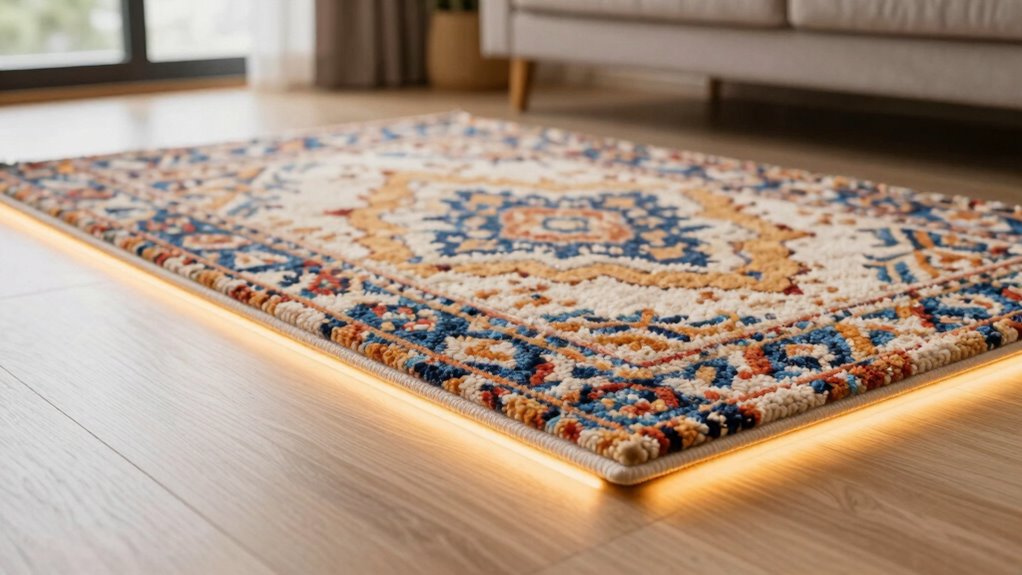

For a rug over a radiant heated floor, I would start with the 1/4-inch RUGPADUSA Basics if you want a thinner felt layer, or choose the 1/2-inch Eco-Plush when cushioning matters more. Both are made from 100% felt and are described as safe for floor finishes, but neither is non-slip, and both add insulation between the heat source and the room. That leaves a practical tradeoff: thinner felt is the more cautious choice for heat movement, while thicker felt provides a plusher step underfoot but may impede heat transfer more. I rank Basics first for this specific use because its lower profile is the more conservative starting point; Eco-Plush is the comfort-first alternative, not an automatic upgrade.

Get cleaning gear delivered free with Prime
- Fast, free delivery on millions of items
- Prime Video, Amazon Music and more included
- Member-only deals all year
Neither listing provides a radiant-floor heat-transfer rating or a maximum temperature, so I would check the flooring and heating-system instructions before placing either pad over a heated surface. The right pick also depends on the rug: a rug secured by furniture can work with these pads, while a lightweight rug that slides needs a different construction. In this comparison, the key distinctions are thickness, density, cushioning, warranty, and whether the rug stays put.
Complete the kit


Key Takeaways
- The 1/4-inch Basics is my more cautious choice for radiant heat because it creates a thinner insulating layer than the 1/2-inch Eco-Plush.
- Eco-Plush has denser felt at 40 oz per square yard versus Basics at 24 oz, making it the better fit for buyers prioritizing a cushioned feel.
- Neither pad is non-slip; both are intended for rugs anchored by furniture or rugs that stay in place on their own.
- Neither product listing gives a radiant-heat performance rating, so check your heating-system and flooring guidance before choosing a felt pad.
- Both pads are 8 by 10 feet, spot-clean only, made without glue, PVC, or latex, and designed to protect floor finishes.
| RUGPADUSA Basics 8′ x 10′ 1/4-Inch 100% Felt Rug Pad |  | Best Overall for a Lower-Profile Felt Layer | Size: 8′ x 10′ (120 x 96 inches) | Thickness: 1/4 inch | Material: 100% felt | VIEW ON AMAZON | See Our Full Breakdown |
| RUGPADUSA Eco-Plush 8′ x 10′ 100% Felt Rug Pad, 1/2-Inch Thick |  | Best for Cushioning and a Denser Feel | Size: 8′ x 10′ (120 x 96 inches) | Thickness: 1/2 inch | Material: 100% felt | VIEW ON AMAZON | See Our Full Breakdown |
| rug pads for radiant heated floor | Size | Thickness | Material | Floor compatibility |
|---|---|---|---|---|
| RUGPADUSA Basics 8′ x 10′ 1/4- | 8′ x 10′ (120 x 96 inches) | 1/4 inch | 100% felt | Hard floors; described as safe for floor finishes including hardwood |
| RUGPADUSA Eco-Plush 8′ x 10′ 1 | 8′ x 10′ (120 x 96 inches) | 1/2 inch | 100% felt | Described as safe for all flooring surfaces and finishes |
More Details on Our Top Picks
RUGPADUSA Basics 8′ x 10′ 1/4-Inch 100% Felt Rug Pad
I rank the RUGPADUSA Basics first because its 1/4-inch profile is the more restrained choice of these two felt pads for a rug over radiant heat. It still adds cushioning and can reduce noise, but it introduces less thickness than the half-inch Eco-Plush. That distinction matters here: a pad’s insulating effect can reduce how freely heat moves from the floor into the room. The listing does not quantify that effect, so I would treat Basics as the more cautious option, not as a product certified for every heated floor.
Its 100% felt construction is intended to protect floor finishes from abrasion without marking or staining them. At 24 ounces per square yard, its felt is less dense than Eco-Plush’s 40-ounce material, which helps explain why it is the less plush choice. For a dining room or sitting area where a large rug is held by furniture, this balance may be preferable to extra padding. Both pads are 8 by 10 feet and both rely on furniture or a rug that already stays in place; neither solves sliding on its own.
The tradeoff is straightforward: Basics offers a lower profile, but it does not provide a grip layer, and its two-year warranty is shorter than Eco-Plush’s five years. It is also spot-clean only. I would skip it if the rug is lightweight, sits in a high-traffic path without furniture, or if the heating-system instructions prohibit insulating rug pads. Compared with Eco-Plush, this is the more conservative pick for heat movement, while Eco-Plush is the better match when deep cushioning outranks a low profile.
Pros:- 1/4-inch thickness is the lower-profile option in this comparison
- 100% felt adds cushioning and can help reduce noise
- Designed to protect floor finishes from abrasion without marking or staining
- Made in the USA without glue, PVC, or latex
Cons:- Not non-slip; the rug must be anchored by furniture or stay in place on its own
- Spot clean only
- Two-year warranty is shorter than the Eco-Plush warranty
Best for: Buyers who want a large felt pad with a lower profile beneath a rug secured by furniture, after confirming felt-pad use is allowed by their radiant-floor guidance.
Not ideal for: Anyone needing built-in grip, a machine-washable pad, maximum cushioning, or a product with published radiant-heat performance data.
- Size:8′ x 10′ (120 x 96 inches)
- Thickness:1/4 inch
- Material:100% felt
- Felt density:24 oz per square yard
- Weight:13.3 pounds
- Floor compatibility:Hard floors; described as safe for floor finishes including hardwood
- Care:Spot clean only
- Warranty:2 years
- Made in:USA
Our verdict“I would choose Basics over Eco-Plush when a lower-profile felt layer matters more than extra cushioning, provided the floor and heating-system instructions permit it.”
RUGPADUSA Eco-Plush 8′ x 10′ 100% Felt Rug Pad, 1/2-Inch Thick
The RUGPADUSA Eco-Plush is the comfort-first choice: its 1/2-inch thickness and 40 oz per square yard density offer a more substantial layer beneath a rug than the Basics. That may appeal in a bedroom or lounge where softness underfoot is the priority. For radiant heated floors, though, this extra material is also the main compromise. A thicker felt pad adds more insulation between the floor and the room, and the listing gives no heat-transfer rating to show how much warmth will pass through. I would choose it only after checking the floor manufacturer’s guidance and accepting that tradeoff.
Like Basics, Eco-Plush is made from 100% felt, is described as safe for floor finishes, and is made without glue, PVC, or latex. It is meant to protect rugs and floors from wear and contaminants, not to grip a slick surface. So the density difference should guide a cushioning decision, not a stability decision: if a rug needs help staying put, neither option addresses that need. Compared with the thinner Basics, Eco-Plush gives more padding and has a longer five-year warranty, but it is the less cautious choice where minimizing insulation is the priority.
Its 8 by 10-foot size matches Basics, making the decision less about coverage and more about feel, heat guidance, and warranty. Care is limited to spot cleaning, and the product details do not specify radiant-floor testing. I would pass if you need a thin, heat-conscious profile, a non-slip backing, or a washable pad. For a furniture-anchored rug in a room where extra cushioning matters and the heating system permits a felt pad, Eco-Plush is the stronger comfort pick.
Pros:- 1/2-inch thickness provides more cushioning than Basics
- Denser felt at 40 oz per square yard
- Described as safe for all flooring surfaces and finishes
- Made in the USA without glue, PVC, or latex
Cons:- Thicker felt may impede heat transfer more than the 1/4-inch Basics
- Not non-slip; the rug needs furniture anchoring or inherent stability
- Spot clean only
Best for: Buyers who prioritize a dense, cushioned feel beneath a large rug and have confirmed that a thicker felt pad is compatible with their radiant-floor setup.
Not ideal for: Those seeking the thinnest possible layer over radiant heat, built-in slip resistance, washable care, or published heat-transfer specifications.
- Size:8′ x 10′ (120 x 96 inches)
- Thickness:1/2 inch
- Material:100% felt
- Density:40 oz per square yard
- Coverage:80 square feet
- Floor compatibility:Described as safe for all flooring surfaces and finishes
- Care:Spot clean
- Warranty:5 years
- Made in:USA
Our verdict“I would pick Eco-Plush for a cushier feel and longer warranty only when radiant-floor guidance allows a thick felt pad and the rug does not need added grip.”

How We Picked
I ranked these two pads by how well their stated features fit the specific demands of radiant heated floors, rather than treating thickness as an unqualified benefit. Felt can cushion a rug and help protect a finish, but it also adds insulation. Since neither listing supplies a heat-transfer measurement or radiant-floor approval, I give the thinner pad the lead as the more conservative of the two, while making clear that a thinner pad is not a guarantee of compatibility with every heating system.
I also compared the details that affect everyday fit: felt density and thickness, rug stability, floor protection, care, and warranty. The Basics is thinner and lighter on cushioning; Eco-Plush is thicker and denser, and its longer warranty may appeal to buyers planning to keep it in place for years. Both share important limits: they are not non-slip, they require a rug that stays put, and spot cleaning is the stated care method. I did not infer performance beyond the supplied product details.
| rug pads for radiant heated floor | Floor compatibility | Care |
|---|---|---|
| RUGPADUSA Basics 8′ x 10′ 1/4- | Hard floors; described as safe for floor finishes including hardwood | Spot clean only |
| RUGPADUSA Eco-Plush 8′ x 10′ 1 | Described as safe for all flooring surfaces and finishes | Spot clean |
Factors to Consider When Choosing Rug Pads For Radiant Heated Floors
I would choose a rug pad for a heated floor by balancing heat movement, grip, cushioning, and the flooring manufacturer’s instructions. These two options are both felt, so their most obvious difference is thickness rather than material type.Start with the heating-system instructions
Before choosing either pad, check the guidance for your specific radiant system and floor covering. The product details describe both pads as safe for floor finishes, but that does not establish that every heating system permits a felt pad or that a particular heat output will pass through it adequately. Look for instructions about rugs, insulating layers, temperature limits, and any required gap or covering rules. If those details are unclear, ask the flooring or heating-system manufacturer rather than assuming that floor-finish compatibility answers the heat question.
Neither listing provides a measured heat-transfer value or a radiant-floor certification. I would not translate the thinner Basics into a blanket guarantee; its advantage is only that it adds less material than Eco-Plush. If your system restricts insulating coverings, neither product may be the right choice.
Treat thickness as a comfort-versus-heat tradeoff
The Basics pad is 1/4 inch thick; Eco-Plush is 1/2 inch thick. That difference is useful when deciding how padded the rug should feel, but it also matters over a heat source. A thicker felt layer adds more material between the floor and the room, so buyers focused on heat movement should compare the thinner Basics first and confirm suitability with their system guidance.
If softness is a higher priority and your heating instructions allow the added insulation, Eco-Plush offers the more substantial feel. I would not choose it just because thicker sounds more protective: for this use, more padding also means a more pronounced heat-transfer tradeoff.
Match felt density to the feel you want
Eco-Plush lists a density of 40 oz per square yard, compared with 24 oz for Basics. That makes Eco-Plush the clearer choice for buyers seeking a denser layer beneath the rug. Basics is the less padded alternative and may suit a room where a substantial underfoot cushion is unnecessary. Density helps distinguish their feel, but neither figure tells you how much heat reaches the room; the listings do not provide that measurement.
Both use 100% felt and both are intended to protect rugs or floor finishes. If you are mainly choosing between these models, decide first whether the lower profile or denser cushioning matters more, then verify that the selected construction is allowed for your radiant floor.
Do not mistake felt for a non-slip backing
Neither pad is described as non-slip. Both are designed for rugs held by furniture or rugs that stay in place on their own. That distinction can decide the purchase: a lightweight runner in a clear walkway may need a grip solution, while a large rug anchored by a sofa or dining table may be a better match for felt. Do not count on either model to prevent movement simply because it sits between the rug and floor.
If you need grip, look for a product specifically identified as non-slip and check its compatibility with your floor finish and radiant system. Avoid stacking a separate grip layer under felt unless the relevant manufacturers say the combination is suitable.
Check coverage, edges, and maintenance
Both pads are listed for an 8 by 10-foot rug, with dimensions of 120 by 96 inches. Compare those measurements with the rug and follow any trimming instructions supplied by the maker; the pad should not protrude beyond the rug edge. A properly sized layer helps keep the setup neat, but size does not resolve heat compatibility or slip resistance.
Both products are spot-clean only, so neither is a good fit if you expect to machine-wash a rug pad. Basics lists a two-year warranty, while Eco-Plush lists five years. I would treat warranty length as a useful durability consideration, not proof of radiant-floor performance, since neither warranty detail supplies a heat-transfer rating.
Frequently Asked Questions
Are these RUGPADUSA felt pads suitable for every radiant heated floor?
No universal compatibility claim is supported by the listed product details. Both pads are described as safe for floor finishes, but neither listing gives a radiant-floor certification, heat-transfer measurement, or system-specific temperature guidance. I would check the instructions from the heating-system and flooring manufacturers before using either pad, especially if they limit insulating coverings.
Which pad is the safer starting point for heat transfer?
The 1/4-inch Basics is the more conservative starting point between these two because it is half as thick as Eco-Plush. That does not guarantee a particular room temperature or make it suitable for every system; it simply adds less felt between the heated floor and the room. Confirm that felt pads are permitted by your system guidance before installing it.
Does either pad stop a rug from sliding?
No. Both products are intended for rugs secured by furniture or rugs that stay in place independently, and neither is non-slip. If your rug moves on the floor, choose a pad specifically made for grip and verify its compatibility with both the floor finish and the radiant heating instructions.
Which one should I choose if cushioning is my main priority?
Eco-Plush is the cushioning pick because it is 1/2 inch thick and has a listed density of 40 oz per square yard, compared with Basics at 1/4 inch and 24 oz per square yard. Its thicker construction is also the greater insulation tradeoff, so I would only select it after confirming that your heated-floor guidance permits a pad of that type.
Can I wash either pad in a machine?
The supplied care information says spot clean for both products, not machine wash. If a washable pad is a requirement, I would look at another construction and check its floor and radiant-heat compatibility. For either of these felt pads, follow the maker’s care directions rather than soaking or laundering it.
Conclusion
For most buyers comparing only these two felt options, I would start with RUGPADUSA Basics: its 1/4-inch profile is the more cautious choice where minimizing insulation matters, and it still cushions a rug secured by furniture. Choose Eco-Plush if your priority is a denser, softer layer and your heating-system guidance permits its 1/2-inch thickness. If the rug slides, skip both and seek a compatible non-slip design. In every case, check the floor and heating-system instructions first; neither listing supplies enough radiant-heat data to substitute for that guidance.