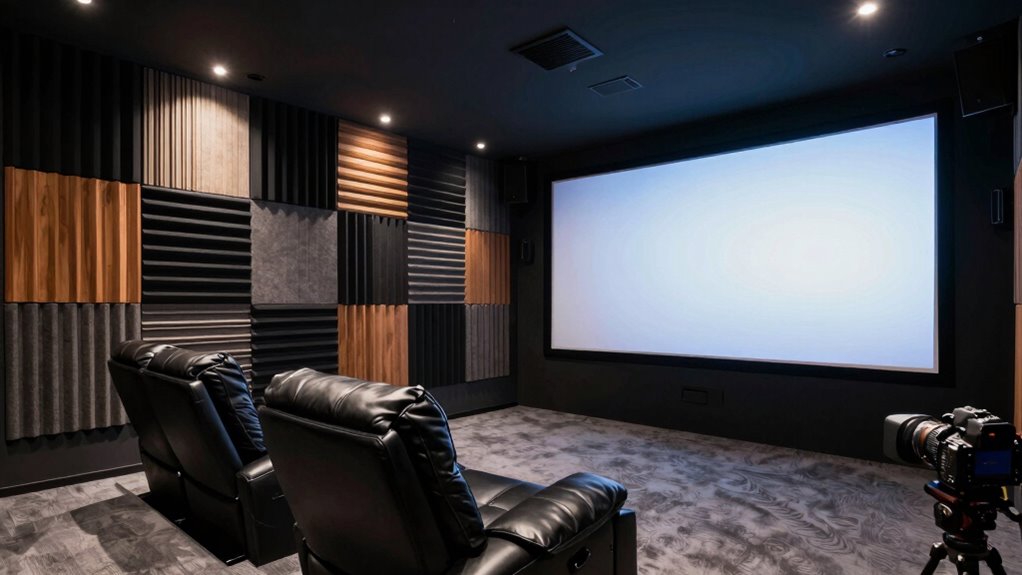

Premium soundproofing panels for a home theater can reduce room echo and improve dialogue clarity, but most acoustic panels absorb sound inside a room rather than block it from reaching other rooms. My best overall pick is the ATS Acoustics 24 x 48 x 4-inch panel, which pairs substantial thickness with a broad format for targeted reflection control. For a more polished wall treatment, the Art3d walnut slat panels stand out on appearance, while the 2-inch fiberglass panels with hanging hardware offer a practical balance of coverage and installation flexibility. The main tradeoffs are absorption versus sound isolation, decorative finish versus treatment coverage, and easy adhesive mounting versus a more secure hanging system. Read on for the full comparison and guidance on choosing panels that suit your room and priorities.

Get cleaning gear delivered free with Prime
- Fast, free delivery on millions of items
- Prime Video, Amazon Music and more included
- Member-only deals all year
Complete the kit


Key Takeaways
- Thickness separates the more treatment-focused options: the 4-inch ATS panel offers more depth than the many 1- and 2-inch foam choices, though placement and room layout still affect results.
- Large panels simplify coverage: full-size 24 x 48-inch formats can cover broad wall areas with fewer pieces, while small foam tiles allow more flexible layouts but require more installation work.
- Sound absorption is not sound isolation: these products are aimed at reducing reflections and room echo; none should be treated as a replacement for sealing gaps or adding mass to walls.
- Appearance and acoustics pull in different directions: Art3d wood slats and minimalist decorative panels can suit visible walls, while exposed foam and fabric-wrapped panels prioritize function or a subdued finish.
- Mounting method changes the commitment: self-adhesive panels are convenient for lightweight treatments, but hanging hardware or other secure mounting is a better fit when panel weight, wall finish, or future repositioning matters.
| TONOR Self-Adhesive Acoustic Panels, 8 Pack, 47.2 x 23.6 x 0.35 in |  | Best for Broad, Low-Profile Coverage | Brand: TONOR | Panel count: 8 | Panel dimensions: 47.2 x 23.6 x 0.35 inches each | VIEW ON AMAZON | See Our Full Breakdown |
| Focusound 52-Pack Acoustic Foam Panels, 1 x 12 x 12 Inches, with Double-Sided Adhesive |  | Best for Small, Detailed Coverage | Brand: Focusound | Panel count: 52 | Panel dimensions: 12 x 12 x 1 inches | VIEW ON AMAZON | See Our Full Breakdown |
| 2″ Thick Acoustic Panels with Hanging Hardware, 2 pcs 47.2″ x 23.6″ Fiberglass Sound Absorbing Panels for Home Theater, Church, Office Wall – Linen |  | Best for Serious Echo Control | Panel count: 2 | Dimensions: 47.2 x 23.6 inches each | Thickness: 2 inches | VIEW ON AMAZON | See Our Full Breakdown |
| Minimalist Acoustic Wall Panels, Decorative Sound Absorbing Panels, 6 Pack |  | Best for Modern-Room Styling | Panel count: 6 | Panel size: 23.6 x 23.6 x 0.4 inches | Pack coverage: Approximately 23.2 sq ft | VIEW ON AMAZON | See Our Full Breakdown |
| Art3d 6-Pack Walnut Wood Slat Acoustic Wall Panels, 94.5 x 7.9 Inches |  | Best Premium Feature-Wall Finish | Brand: Art3d | Panel count: 6 | Panel dimensions: 94.5 x 7.9 inches each | VIEW ON AMAZON | See Our Full Breakdown |
| Self-Adhesive Acoustic Foam Panels, 3-Inch, 36-Pack |  | Best for Broad, DIY Foam Coverage | Material: High-density polyurethane foam | Panel dimensions: 12 × 12 × 3 inches | Thickness: 3 inches | VIEW ON AMAZON | See Our Full Breakdown |
| Vyntqlla 4-Pack Acoustic Foam Panels, 48 x 24 x 2 Inches |  | Best for Large-Area Foam Placement | Material: Polyurethane foam | Density: 25 kg/m³ | Panel dimensions: 48 × 24 × 2 inches | VIEW ON AMAZON | See Our Full Breakdown |
| UMIACOUSTICS 2-Pack Acoustic Panels, 47.2 x 23.6 x 2 Inches, Black |  | Best for Published Absorption Performance | Quantity: 2 panels | Panel dimensions: 47.2 × 23.6 × 2 inches | Color: Black | VIEW ON AMAZON | See Our Full Breakdown |
| Acoustic Foam Panels, 12 × 12 × 1 in, Black/Blue, with Adhesive Tape |  | Best for Budget-Conscious Small-Area Treatment | Panel dimensions: 12 × 12 × 1 inch | Color: Black/blue | Package quantity: Conflicting listing information: title says 96; package details say 52 | VIEW ON AMAZON | See Our Full Breakdown |
| ATS Acoustic Panel, 24 x 48 x 2 Inches, Beveled Edge, Fog |  | Best Premium Framed Panel | Dimensions: 48 × 24 × 2 inches | Coverage: Approximately 7.99 square feet | Cover material: 100% jute | VIEW ON AMAZON | See Our Full Breakdown |
| TONOR 8-Pack Large Self-Adhesive Bilayer Acoustic Panels, Black |  | Best for Broad, Low-Hassle Coverage | Brand: TONOR | Quantity: 8 panels | Panel dimensions: 47.2 × 23.6 × 0.72 inches | VIEW ON AMAZON | See Our Full Breakdown |
| 4-Pack High-Density Acoustic Foam Panels, 48 x 24 x 2 Inches |  | Best for Large-Format Foam Coverage | Pack size: 4 panels | Panel dimensions: 48 × 24 × 2 inches | Material: Polyurethane foam | VIEW ON AMAZON | See Our Full Breakdown |
| BUBOS Acoustic Wall Panels, 2-Pack, Beige, 23.6 x 23.6 x 2 Inches |  | Best for Rated Absorption in a Decorative Format | Panel count: 2 | Panel dimensions: 23.6 × 23.6 inches each | Listed thickness: 2 inches in title and description; 0.35 inches in product information | VIEW ON AMAZON | See Our Full Breakdown |
| ATS Acoustics Sound Absorbing Acoustic Panel, 24 x 48 x 4 in, Beveled Edge, Black |  | Best Premium Framed Panel | Dimensions: 24 × 48 × 4 inches | Weight: 14 pounds | Core: Mineral wool | VIEW ON AMAZON | See Our Full Breakdown |
| Olanglab Fiberglass Acoustic Wall Panels, 2-Pack, 2-Inch, 24 x 48 Inches, Navy |  | Best for Large Fabric-Wrapped Panels | Quantity: 2 panels | Panel dimensions: 24 × 48 inches each | Thickness: 2 inches | VIEW ON AMAZON | See Our Full Breakdown |
| soundproofing panels for home theater premium | Panel dimensions | Material | Item weight | Color |
|---|---|---|---|---|
| TONOR Self-Adhesive Acoustic P | 47.2 x 23.6 x 0.35 inches each | Polyester fiber | — | — |
| Focusound 52-Pack Acoustic Foa | 12 x 12 x 1 inches | — | — | — |
| 2" Thick Acoustic Panels with | — | — | 24.9 pounds | — |
| Minimalist Acoustic Wall Panel | — | High-density polyester fiber | 9.73 pounds | Silken Stride – Urban Denim |
| Art3d 6-Pack Walnut Wood Slat | 94.5 x 7.9 inches each | — | — | — |
| Self-Adhesive Acoustic Foam Pa | 12 × 12 × 3 inches | High-density polyurethane foam | — | Black |
| Vyntqlla 4-Pack Acoustic Foam | 48 × 24 × 2 inches | Polyurethane foam | 5.48 pounds | Black |
| UMIACOUSTICS 2-Pack Acoustic P | 47.2 × 23.6 × 2 inches | — | 22.9 pounds combined | Black |
| Acoustic Foam Panels | 12 × 12 × 1 inch | — | 3.63 pounds | Black/blue |
| ATS Acoustic Panel | — | — | — | — |
| TONOR 8-Pack Large Self-Adhesi | 47.2 × 23.6 × 0.72 inches | High-density polyester fiber, dual-layer construction | 15,300 g | Black |
| 4-Pack High-Density Acoustic F | 48 × 24 × 2 inches | Polyurethane foam | 6.8 pounds | Black |
| BUBOS Acoustic Wall Panels | 23.6 × 23.6 inches each | High-density polyester fiber | — | — |
| ATS Acoustics Sound Absorbing | — | — | — | — |
| Olanglab Fiberglass Acoustic W | 24 × 48 inches each | Fiberglass core with fabric cover | 19.61 pounds | Navy |
More Details on Our Top Picks
TONOR Self-Adhesive Acoustic Panels, 8 Pack, 47.2 x 23.6 x 0.35 in
For a home theater with a large reflective wall and little appetite for complicated mounting, the TONOR eight-pack offers unusually broad coverage: 61.1 square feet from panels that stick directly to smooth surfaces. Its NRC 0.9 rating gives buyers a stated absorption figure, unlike the Focusound foam panels, which list no measured performance data. The tradeoff is depth. At just 0.35 inches thick, these panels are better suited to softening room echo than to the thicker treatment offered by the 2-inch fiberglass panels in this roundup. The striped black finish also reads more like a wall covering than conventional studio foam. I’d choose TONOR when coverage and a tidy, low-profile installation matter more than maximum panel depth; skip it if the wall is textured or deeper absorption is the priority.
Pros:- Eight large panels cover 61.1 square feet.
- Specified NRC of 0.9 provides a measurable absorption reference.
- Peel-and-stick backing avoids separate mounting hardware.
- Striped black polyester has a more finished look than basic foam tiles.
Cons:- Adhesive is intended for smooth surfaces.
- At 0.35 inches thick, it has less depth than the 2-inch fiberglass options.
- Large panels may be harder to arrange around doors, screens, and other wall features.
Best for: Home theater owners who want broad echo-control coverage on smooth walls without brackets or a bulky panel profile.
Not ideal for: Buyers treating textured walls or seeking thicker panels for stronger room-echo control.
- Brand:TONOR
- Panel count:8
- Panel dimensions:47.2 x 23.6 x 0.35 inches each
- Coverage:61.1 sq ft
- NRC:0.9
- Material:Polyester fiber
- Installation:Self-adhesive, peel and stick
- Warranty:2 years
Our verdict“Choose TONOR for wide, low-profile coverage on smooth theater walls, but pick a thicker panel if deeper absorption matters more.”
Focusound 52-Pack Acoustic Foam Panels, 1 x 12 x 12 Inches, with Double-Sided Adhesive
The Focusound set is the most modular option here: 52 one-foot foam tiles can be arranged around a screen, shelving, or other fixed features more easily than the TONOR panels, each nearly four feet wide. Triangular grooves are intended to absorb echoes and reverberation, making these tiles more appropriate for spot treatment than for a polished, full-wall theater finish. The package includes 300 pieces of double-sided tape, though the product data does not give a measured absorption rating, so I would not rank its acoustic performance alongside the rated TONOR or 2-inch fiberglass panels. The ability to reshape foam with water is another practical detail, but recovery takes 24–48 hours. This is a flexible layout choice for a modest budget of wall space, not my pick for buyers who want documented performance or a refined interior look.
Pros:- 52 small tiles allow flexible placement around wall features.
- Triangular grooves are designed to reduce echoes and reverberation.
- Includes 300 pieces of double-sided adhesive tape.
- Foam can be reshaped by soaking and air-drying.
Cons:- No measured acoustic performance figure is provided.
- Reshaping requires 24–48 hours of air-drying.
- Small foam tiles create more seams and a less finished wall appearance than the Art3d slat panels.
Best for: DIY theater owners who need small tiles to work around wall-mounted screens, shelves, or irregular wall sections.
Not ideal for: Buyers seeking a measured NRC, large-area coverage, or a decorative finish suited to a premium living-room theater.
- Brand:Focusound
- Panel count:52
- Panel dimensions:12 x 12 x 1 inches
- Adhesive pieces:300
- Recommended uses:Home offices, recording studios, vocal booths, and control rooms
- Model number:FS0302F
Our verdict“Pick Focusound for adaptable spot treatment and skip it if you need rated performance or broad decorative coverage.”
2″ Thick Acoustic Panels with Hanging Hardware, 2 pcs 47.2″ x 23.6″ Fiberglass Sound Absorbing Panels for Home Theater, Church, Office Wall – Linen
For buyers putting acoustic performance ahead of quick installation, these 2-inch fiberglass-core panels make the strongest documented case in this group, with an NRC above 0.95. That rating and the added depth set them apart from the 0.35-inch TONOR panels, which offer much broader coverage but a slimmer profile. Each panel measures 47.2 by 23.6 inches, and the included metal brackets and nails provide a conventional wall-mounting route rather than adhesive placement. The cost of that more substantial construction is practical: the pair weighs 24.9 pounds, so handling and secure mounting need more care. Linen fabric gives the panels a quieter visual presence than foam tiles, though two panels cover less area than TONOR’s eight-piece set. I’d rank these highest for targeted reflection control, not for renters or buyers who need a quick, lightweight installation.
Pros:- NRC greater than 0.95 is the highest stated rating among these five products.
- Two-inch thickness offers more depth than the TONOR self-adhesive panels.
- Metal hanging brackets and nails are included.
- Linen covering gives the panels a restrained appearance.
Cons:- The pair weighs 24.9 pounds, making installation more demanding.
- Panels are not self-adhesive and require mounting work.
- Two panels provide less coverage than the eight-piece TONOR set.
Best for: Home theater owners prioritizing rated, deeper echo absorption on key wall areas and able to mount heavy panels securely.
Not ideal for: Renters, solo installers, or buyers needing extensive coverage from a lightweight, adhesive-mounted set.
- Panel count:2
- Dimensions:47.2 x 23.6 inches each
- Thickness:2 inches
- NRC:Greater than 0.95
- Core:White fiberglass
- Covering:High-density polyester fabric
- Item weight:24.9 pounds
- Included hardware:Metal hanging brackets and nails
Our verdict“Choose these panels for targeted, high-rated echo absorption if you can handle their weight and wall-mounting requirements.”
Minimalist Acoustic Wall Panels, Decorative Sound Absorbing Panels, 6 Pack
These six square panels suit a theater that shares space with a living room or bedroom, where acoustic treatment needs to look intentional rather than like studio foam. The flowing-line pattern and Silken Stride – Urban Denim finish give them a more decorative role than the Focusound tiles, while the 23.6-inch squares make it easier to build a balanced feature wall than with the long Art3d slats. Their total coverage is approximately 23.2 square feet, so this is a targeted treatment set, not a whole-room solution. Nano adhesive tabs support DIY installation, but the product data says they work best on smooth walls. No NRC figure is supplied, which makes direct performance comparison with the rated TONOR and fiberglass panels difficult. I’d choose these for a modest, visible area where design matters; buyers focused on documented absorption or extensive coverage should look elsewhere.
Pros:- Subtle flowing-line pattern adds texture without a foam-tile appearance.
- Six square panels allow a balanced feature-wall arrangement.
- Nano adhesive tabs support DIY installation.
- High-density polyester fiber is specified as the panel material.
Cons:- Approximately 23.2 square feet may be insufficient for broad treatment.
- Adhesive tabs work best on smooth wall surfaces.
- No measured NRC is provided for comparison with the TONOR or fiberglass panels.
Best for: Design-conscious theater owners treating a feature wall in a modern living room or bedroom.
Not ideal for: Buyers needing whole-room coverage, a published NRC rating, or installation on textured walls.
- Panel count:6
- Panel size:23.6 x 23.6 x 0.4 inches
- Pack coverage:Approximately 23.2 sq ft
- Material:High-density polyester fiber
- Color:Silken Stride – Urban Denim
- Installation:Nano adhesive tabs
- Item weight:9.73 pounds
- Package dimensions:25 x 24.12 x 2.4 inches
Our verdict“Choose this set for a stylish, limited-area treatment in a modern room, not for documented or extensive acoustic coverage.”
Art3d 6-Pack Walnut Wood Slat Acoustic Wall Panels, 94.5 x 7.9 Inches
The Art3d panels are the most architectural-looking choice in this group, using walnut-finish slats to make acoustic treatment part of the theater’s visual design. Their six long panels cover about 31.5 square feet and can be mounted on walls or ceilings, giving them a different role from the square Minimalist panels, which are easier to arrange in smaller feature areas. The build combines wood laminate, MDF, and high-density polyester fiber; however, the supplied product data does not include an NRC or other measured absorption result. I’d treat the stated noise-reduction purpose as a starting point, not as a direct performance comparison with the fiberglass panels rated above 0.95. Installation also takes basic tools, so this is less convenient than TONOR’s peel-and-stick format. It makes the most sense when a warm slat-wall look matters as much as acoustic treatment.
Pros:- Walnut wood-grain finish gives the theater a warm, built-in appearance.
- Six panels cover about 31.5 square feet.
- Can be installed on walls or ceilings.
- Combines wood laminate and MDF with high-density polyester fiber.
Cons:- No measured NRC or other performance figure is provided.
- Installation requires basic tools rather than adhesive tabs.
- Long, narrow panels offer less placement flexibility than the Focusound tiles.
Best for: Home theater owners planning a warm walnut slat feature wall or ceiling and comfortable with tool-based installation.
Not ideal for: Buyers who need a published absorption rating, quick adhesive installation, or small tiles for irregular wall sections.
- Brand:Art3d
- Panel count:6
- Panel dimensions:94.5 x 7.9 inches each
- Coverage:31.5 sq ft
- Materials:Wood laminate, MDF, and high-density polyester fiber
- Finish:Walnut wood grain
- Installation locations:Walls or ceilings
- Model number:A31at005WA06usx
Our verdict“Choose Art3d when a walnut slat feature wall is a design priority, but select a rated panel if absorption performance needs to be directly compared.”
Self-Adhesive Acoustic Foam Panels, 3-Inch, 36-Pack
Thirty-six 3-inch panels offer a practical way to treat a spread of wall area without buying large sheets or sourcing separate adhesive. Their self-adhesive backing makes placement simpler than the ATS Acoustic Panel, which uses hanging hardware and suits buyers who want a framed finish. The foam is designed to reduce echo and reverberation, helping dialogue and effects sound less smeared in a reflective theater room. At 36 square feet of stated coverage, this pack can support a more distributed layout than a single framed panel. The tradeoff is that foam treatment is not sound isolation: it will not by itself stop sound traveling through walls, and the listing gives no NRC figure to compare absorption performance. I’d choose it for flexible DIY treatment, not as a measured-performance solution.
Pros:- Self-adhesive backing avoids the need to source separate glue or tape.
- Three-inch thickness is greater than the 1-inch foam panels in this roundup.
- Thirty-six panels provide 36 square feet of stated coverage.
- Panels can be trimmed to fit around room features.
Cons:- No NRC value is provided, so performance is harder to compare with the UMIACOUSTICS and ATS panels.
- Foam absorbs reflections but does not provide meaningful sound isolation on its own.
- Small individual panels require more placement work than large-format panels.
Best for: Home theater owners who want to cover several small wall sections with thick, easy-to-attach foam and can plan placement themselves.
Not ideal for: Buyers seeking verified absorption figures, a finished fabric-panel appearance, or reduced sound transmission between rooms.
- Material:High-density polyurethane foam
- Panel dimensions:12 × 12 × 3 inches
- Thickness:3 inches
- Pack size:36 panels
- Coverage:36 square feet
- Density:2.50 lb/ft³
- Adhesive:Self-adhesive backing
- Color:Black
Our verdict“Choose this pack for broad, adaptable foam treatment when easy installation matters more than a framed finish or published absorption data.”
Vyntqlla 4-Pack Acoustic Foam Panels, 48 x 24 x 2 Inches
Four large-format foam panels make this a tidier option for covering broad wall sections than the 12-inch squares in the Self-Adhesive Acoustic Foam Panels, 3-Inch, 36-Pack. Each 48 × 24-inch panel is designed to reduce echoes and sound reflections, which can help a theater feel less harsh without filling the wall with many small pieces. The stated fire-retardant construction is a useful distinction for buyers comparing foam options, though it does not provide an absorption rating or prove sound blocking. These panels need 2–8 hours to recover after unpacking, so they are not a hang-it-immediately choice. Their 2-inch thickness is also less substantial than the 3-inch foam pack, making this better for broad coverage and a cleaner layout than for buyers prioritizing maximum foam depth.
Pros:- Large 48 × 24-inch panels cover wall sections with fewer pieces.
- Fire-retardant construction is specified in the product data.
- Designed to reduce echoes, reverberation, and sound reflections.
- Suitable for multipurpose media rooms used for gaming or recording.
Cons:- Requires 2–8 hours to recover after unpacking.
- No measured absorption rating is provided.
- At 2 inches thick, it is less substantial than the 3-inch Self-Adhesive Acoustic Foam Panels.
Best for: Home theater owners who want fewer, larger foam pieces across a broad wall area and are comfortable allowing time for the panels to recover after unpacking.
Not ideal for: Buyers who need published sound-absorption measurements, immediate installation, or thicker foam than the 2-inch panels provide.
- Material:Polyurethane foam
- Density:25 kg/m³
- Panel dimensions:48 × 24 × 2 inches
- Pack quantity:4 panels
- Color:Black
- Item weight:5.48 pounds
- Fire safety:Fire-retardant
- Recovery time:Allow 2–8 hours after unpacking
Our verdict“Pick Vyntqlla for broad, simple foam coverage if you can wait for recovery and do not need published acoustic measurements.”
UMIACOUSTICS 2-Pack Acoustic Panels, 47.2 x 23.6 x 2 Inches, Black
The stated NRC of 0.95 gives this pair a clearer performance reference than the foam options from Vyntqlla and the 3-inch self-adhesive pack, whose listings provide no NRC figure. Fiberglass cores and a polyester fabric covering also give these panels a more finished wall presence than exposed foam, while included hanging hardware avoids relying on adhesive. That makes them a stronger fit for a dedicated theater where reflection control and a deliberate room finish both matter. The tradeoff is weight: the pair is listed at 22.9 pounds combined, so secure mounting and suitable wall support matter. Each panel is 2 inches thick and occupies a substantial wall area, so this is less flexible than smaller foam tiles for tight layouts or renters avoiding hardware installation.
Pros:- Product description states an NRC of 0.95.
- Fiberglass core and fabric covering provide a finished alternative to exposed acoustic foam.
- Hanging hardware is included.
- Large panels can treat broad reflective wall areas with fewer separate pieces.
Cons:- The pair weighs 22.9 pounds combined, making secure mounting important.
- Two-inch panels take up substantial wall space.
- Absorption treatment does not by itself block sound traveling through walls.
Best for: Dedicated home theater owners who want a fabric-covered fiberglass panel with a stated NRC and can mount heavier panels securely.
Not ideal for: Renters who cannot make mounting holes, buyers with limited wall space, or anyone seeking sound isolation rather than echo absorption.
- Quantity:2 panels
- Panel dimensions:47.2 × 23.6 × 2 inches
- Color:Black
- Item weight:22.9 pounds combined
- Outer material:High-density polyester fabric
- Core material:White fiberglass
- Mounting:Hanging hardware included
- Stated NRC:0.95
Our verdict“Choose UMIACOUSTICS when a stated absorption rating and fabric finish outweigh the need for lightweight, compact installation.”
Acoustic Foam Panels, 12 × 12 × 1 in, Black/Blue, with Adhesive Tape
These 1-inch wedge panels are aimed at taming mid- and high-frequency reflections, which can make voices and sharp effects clearer in a lively room. Included double-sided tape offers a low-hardware installation route, unlike the heavier UMIACOUSTICS fiberglass panels, which use hanging hardware. Their compact squares also suit targeted areas where a full fabric panel would dominate the wall. The main buying risk is the listing’s conflicting package quantity: the title says 96 panels, while package details say 52, so I would verify the actual count before planning coverage. At only 1 inch thick and described for mid- and high-frequency absorption, these are not the strongest choice for broad-band treatment or low-frequency control. They can help with room reflections, but they do not soundproof a theater wall.
Pros:- Double-sided adhesive tape is included for installation.
- Wedge foam is designed to reduce mid- and high-frequency reflections.
- Compact panels can fit around room features and targeted reflection points.
- Black-and-blue finish offers a different look from all-black foam options.
Cons:- Listing gives conflicting package quantities: 96 in the title and 52 in package details.
- One-inch thickness and stated frequency range limit its suitability for broader treatment.
- No NRC value or measured performance data is provided.
Best for: Buyers treating a small reflective area or vocal-focused listening position who want adhesive installation and can confirm the pack quantity before purchase.
Not ideal for: Home theater owners needing dependable coverage calculations, thicker broadband absorption, or control of bass and sound transmission.
- Panel dimensions:12 × 12 × 1 inch
- Color:Black/blue
- Package quantity:Conflicting listing information: title says 96; package details say 52
- Item weight:3.63 pounds
- Installation:Double-sided adhesive tape included
- Intended frequency range:Mid and high frequencies
Our verdict“Consider these panels for targeted, high-frequency echo control only after confirming the pack count and accepting their limited thickness.”
ATS Acoustic Panel, 24 x 48 x 2 Inches, Beveled Edge, Fog
The mineral wool core, solid wood frame, and jute cover make this the most furniture-like choice in this group, while its stated NRC of 1.0 provides a clear absorption figure for comparison with the foam panels. The beveled edge and Fog fabric suit a finished theater or living room better than the exposed black foam of the Vyntqlla and self-adhesive options. ATS also includes mounting hardware and an installation template, which helps with the planning required for a large framed panel. Its main limitation is coverage: one panel covers about 7.99 square feet, so a room needing several reflection points may require multiple units. At 8.3 pounds, it is lighter than the listed UMIACOUSTICS pair overall, but wall mounting still needs to be secure. This absorbs room reflections; it is not a sound-isolation barrier.
Pros:- Product data states an NRC of 1.0.
- Mineral wool core is enclosed by a solid wood frame and textured jute cover.
- Mounting hardware and an installation template are included.
- Fog fabric and beveled edges suit a more finished theater or living-room look.
Cons:- Only one panel is included, covering approximately 7.99 square feet.
- A larger room may need several panels to treat multiple reflection areas.
- Mounting requires wall hardware rather than a peel-and-stick approach.
Best for: Home theater owners who want a finished, framed acoustic panel with a stated NRC and are willing to plan coverage around individual panels.
Not ideal for: Buyers seeking large-area coverage from one purchase, adhesive-only installation, or sound blocking between rooms.
- Dimensions:48 × 24 × 2 inches
- Coverage:Approximately 7.99 square feet
- Cover material:100% jute
- Core material:Mineral wool
- Frame:Solid wood
- Weight:8.3 pounds
- Stated NRC:1.0 out of 1
- Included components:Mounting hardware and installation template
Our verdict“Choose the ATS panel for measured absorption and a polished framed finish, provided one panel’s limited coverage fits your treatment plan.”
TONOR 8-Pack Large Self-Adhesive Bilayer Acoustic Panels, Black
For a theater room with broad reflective wall areas, the eight large panels offer more coverage in one package than the two-panel BUBOS and Olanglab options. Each panel has a dual-layer polyester construction and a stripe pattern, so it can soften room echo while looking more finished than basic foam. The peel-and-stick backing avoids separate mounting hardware, and the panels can be cut around obstacles or fitted to smaller sections. That convenience comes with a commitment: adhesive placement may be difficult to reverse, so I would plan the layout before installation. The panels are only 0.72 inches thick, and no STC or quantified absorption rating is provided; I would choose them to manage reflections, not to block sound traveling through walls or contain subwoofer bass. The thicker ATS panel is a stronger choice when documented absorption is the priority.
Pros:- Eight panels provide nearly 60 square feet of listed coverage.
- Dual-layer high-density polyester is intended to absorb room echoes.
- Self-adhesive backing makes installation straightforward without specified mounting hardware.
- Cuttable panels and a striped black finish allow layout adjustments and a more decorative wall treatment.
Cons:- No STC or quantified absorption performance is supplied.
- The 0.72-inch thickness is less substantial than the 2-inch BUBOS and Olanglab panels.
- Adhesive installation can limit repositioning and may not suit every wall surface.
Best for: Home theater owners who want broad, decorative coverage for echo-prone walls and prefer peel-and-stick installation over separate mounting hardware.
Not ideal for: Buyers trying to block sound between rooms, control deep bass, or reposition panels later; the listing gives no STC rating and the adhesive may be difficult to remove or move.
- Brand:TONOR
- Quantity:8 panels
- Panel dimensions:47.2 × 23.6 × 0.72 inches
- Listed coverage:59.96 sq ft
- Material:High-density polyester fiber, dual-layer construction
- Installation:Self-adhesive backing; panels can be cut
- Color:Black
- Item weight:15,300 g
Our verdict“Choose TONOR for easy, broad echo-control coverage, but pick a thicker rated panel if measurable absorption or low-frequency control matters more.”
4-Pack High-Density Acoustic Foam Panels, 48 x 24 x 2 Inches
These panels suit buyers who want large, 2-inch foam sections rather than a grid of small tiles. Four panels can cover broad wall or ceiling areas, and the polyurethane foam is described as odorless and fire retardant—useful traits for a dedicated screening room. Compared with the thinner, self-adhesive TONOR set, this option has more depth, but the listing does not explain how to mount it or provide hardware, so installation planning falls to the buyer. It also supplies no absorption coefficient or frequency data, making it harder to predict how much it will tame reflections across a theater’s sound range. I would favor it over the BUBOS pair when larger-format foam is the preference, but choose BUBOS or ATS Acoustics if stated absorption performance and mounting details matter more.
Pros:- Four panels measure 48 × 24 inches each for large-format coverage.
- Two-inch polyurethane foam offers more depth than thin adhesive panels.
- Described as odorless and fire retardant.
- Listed for use on walls or ceilings in home theaters and other rooms.
Cons:- No mounting method or installation hardware is specified.
- No absorption coefficient, frequency range, or quantified sound reduction is provided.
- Four panels may leave a large room only partly treated.
Best for: DIY home theater owners who want a small number of large foam panels for wall or ceiling treatment and can source a suitable mounting method.
Not ideal for: Buyers who need included installation hardware, documented acoustic performance, or a broad package with clearly stated total coverage.
- Pack size:4 panels
- Panel dimensions:48 × 24 × 2 inches
- Material:Polyurethane foam
- Color:Black
- Item weight:6.8 pounds
- Fire resistance:Described as fire retardant
- Intended mounting surfaces:Walls or ceilings
Our verdict“Pick this set for simple, large-format foam treatment if you can handle mounting and do not require published absorption figures.”
BUBOS Acoustic Wall Panels, 2-Pack, Beige, 23.6 x 23.6 x 2 Inches
The BUBOS pair stands apart from the TONOR and four-piece foam sets by giving buyers a stated NRC of 0.9 and a frequency range of 150–20,000 Hz. Those figures offer more guidance when treating reflections in a theater, while the beige polyester finish can blend into a lighter room more easily than the black panels from TONOR or ATS. Wall brackets and ceiling suspension also make placement more flexible than peel-and-stick installation. The tradeoff is limited coverage: two 23.6-inch squares are better for selected reflection points than treating an entire room. There is also a material specification discrepancy—the title and description say 2 inches thick, while product information lists 0.35 inches. I would confirm the actual thickness before buying; the ATS panel is a clearer choice for a substantial, framed treatment.
Pros:- Published NRC of 0.9 and a 150–20,000 Hz frequency range.
- Wall brackets or ceiling suspension allow placement at different reflection points.
- High-density polyester is listed as formaldehyde-free and odorless.
- Beige finish offers a lighter alternative to the black TONOR and ATS panels.
Cons:- Only two panels are included, limiting room-wide coverage.
- Thickness is inconsistent across the supplied product information: 2 inches in the title and description versus 0.35 inches elsewhere.
- At 10.28 pounds for the pair, mounting requires attention to support and placement.
Best for: Theater owners seeking a small number of neutral-colored panels with published absorption data for targeted wall or ceiling placement.
Not ideal for: Buyers who need extensive room coverage or cannot verify the panel thickness before purchase.
- Panel count:2
- Panel dimensions:23.6 × 23.6 inches each
- Listed thickness:2 inches in title and description; 0.35 inches in product information
- Material:High-density polyester fiber
- NRC:0.9
- Frequency range:150–20,000 Hz
- Mounting:Wall brackets or ceiling suspension
- Color and safety:Beige; formaldehyde-free, odorless, UL certified, B1 flame retardant
Our verdict“Choose BUBOS for targeted treatment with published absorption data, but verify its thickness and plan for limited coverage.”
ATS Acoustics Sound Absorbing Acoustic Panel, 24 x 48 x 4 in, Beveled Edge, Black
For buyers prioritizing a substantial, finished treatment over easy coverage, the ATS panel is the strongest premium-format pick here. Its 4-inch mineral wool core, solid wood frame and back, and 100% jute burlap face create a more substantial assembly than the TONOR adhesive panels or the 2-inch foam set. The listed NRC of 1.15 gives buyers a specific absorption measure, though it does not mean the panel blocks sound through walls or eliminates bass transmission. Mounting hardware and a template are included, which is more installation guidance than the foam panel listing provides. At 14 pounds, though, this panel needs a secure mounting point, and a single 24 × 48-inch unit treats a more limited area than the eight-panel TONOR package. I would choose ATS for targeted, high-spec wall treatment, not for quick whole-room coverage.
Pros:- Four-inch mineral wool core and listed NRC of 1.15.
- Solid wood frame and back provide a framed construction.
- Mounting hardware and a template are included.
- 24 × 48-inch format treats a larger wall section than the BUBOS square panels.
Cons:- At 14 pounds, the panel needs secure, suitable mounting.
- One panel provides less total coverage than the eight-piece TONOR set.
- Sound absorption does not by itself block sound transmission through walls or control all low-frequency noise.
Best for: Home theater owners who want a substantial framed panel for targeted echo and reverberation control and can mount a 14-pound unit securely.
Not ideal for: Buyers seeking lightweight adhesive treatment, broad coverage from one package, or sound isolation from neighboring rooms.
- Dimensions:24 × 48 × 4 inches
- Weight:14 pounds
- Core:Mineral wool
- Fabric:100% jute burlap
- Frame and back:Solid wood
- NRC:1.15
- Installation:Mounting template and hardware included
- Color and manufacturer:Black; manufacturer listed as USA
Our verdict“Choose ATS for a substantial, rated panel with mounting accessories when targeted absorption matters more than lightweight, broad coverage.”
Olanglab Fiberglass Acoustic Wall Panels, 2-Pack, 2-Inch, 24 x 48 Inches, Navy
Olanglab is a middle ground between the broad but thin TONOR adhesive set and the thicker ATS framed panel: it supplies two large 24 × 48-inch panels with a 2-inch fiberglass core. The listed absorption coefficient reaches up to 0.95, giving a useful performance reference, though “up to” does not specify how the panels perform at each frequency. Included impaling clips make wall installation more clearly planned than the four-panel foam option, whose mounting method is unspecified. The navy fabric finish also brings color to a theater without relying on exposed foam. The tradeoffs are weight and careful handling: the pair weighs 19.61 pounds, and the fiberglass core calls for care during installation. Unlike ATS, Olanglab is thinner and does not list a wood frame or an NRC figure, but it covers a broad area across two panels.
Pros:- Two large panels measure 24 × 48 inches each.
- Two-inch fiberglass core is listed with absorption up to 0.95.
- Impaling clips are included for installation.
- Navy fabric covering provides a finished alternative to exposed acoustic foam.
Cons:- Fiberglass core requires careful handling during installation.
- The pair weighs 19.61 pounds, so mounting support needs attention.
- The “up to 0.95” absorption figure does not specify frequency-by-frequency performance.
Best for: Home theater owners who want large, fabric-wrapped panels with included wall clips for treating selected reflection areas.
Not ideal for: Buyers seeking light panels, a stated NRC across a defined frequency range, or a treatment intended to block sound traveling through walls.
- Quantity:2 panels
- Panel dimensions:24 × 48 inches each
- Thickness:2 inches
- Material:Fiberglass core with fabric cover
- Color:Navy
- Absorption coefficient:Up to 0.95
- Item weight:19.61 pounds
- Installation hardware:Impaling clips
Our verdict“Choose Olanglab for large, fabric-wrapped wall treatment with included clips, provided you are comfortable handling fiberglass and mounting a heavy pair.”

How We Picked
I compared the 15 listed products as home theater room treatments, not as proven soundproofing barriers. The ranking gives priority to useful panel size and thickness, stated material and construction, mounting approach, and how readily each option could fit a dedicated listening space. I also weighed visual finish and layout flexibility, since a theater treatment often remains in view rather than being hidden behind furnishings.
The order favors products with a clearer role for meaningful wall coverage and reflection control, then considers convenience, decorative appeal, and smaller targeted uses. Large fiberglass or fabric-style panels rank ahead of thin tile packs when the goal is substantial room treatment; compact foam options remain useful for budget-conscious or irregular layouts. Product descriptions do not establish a measured absorption rating or sound-blocking performance, so I do not treat any panel as a guaranteed fix for noise passing through walls.
| soundproofing panels for home theater premium | Material | Color |
|---|---|---|
| TONOR Self-Adhesive Acoustic P | Polyester fiber | — |
| Focusound 52-Pack Acoustic Foa | — | — |
| 2" Thick Acoustic Panels with | — | — |
| Minimalist Acoustic Wall Panel | High-density polyester fiber | Silken Stride – Urban Denim |
| Art3d 6-Pack Walnut Wood Slat | — | — |
| Self-Adhesive Acoustic Foam Pa | High-density polyurethane foam | Black |
| Vyntqlla 4-Pack Acoustic Foam | Polyurethane foam | Black |
| UMIACOUSTICS 2-Pack Acoustic P | — | Black |
| Acoustic Foam Panels | — | Black/blue |
| ATS Acoustic Panel | — | — |
| TONOR 8-Pack Large Self-Adhesi | High-density polyester fiber, dual-layer construction | Black |
| 4-Pack High-Density Acoustic F | Polyurethane foam | Black |
| BUBOS Acoustic Wall Panels | High-density polyester fiber | — |
| ATS Acoustics Sound Absorbing | — | — |
| Olanglab Fiberglass Acoustic W | Fiberglass core with fabric cover | Navy |
Factors to Consider When Choosing Soundproofing Panels For Home Theater Premium
Choosing home theater acoustic panels starts with identifying the problem: echo inside the room, sound escaping to another space, or both. Panel material and appearance matter, but placement, wall construction, and the amount of treated surface can matter just as much. Use these factors to plan a treatment that addresses the room rather than simply filling it with panels.
Separate Echo Control From Sound Isolation
Acoustic panels absorb some sound energy reflected around a room; they generally do not stop bass or loud movie audio from passing through a wall. If the main complaint is noise reaching a bedroom or neighbor, start by checking door gaps, vents, shared-wall paths, and wall construction. Sealing air leaks and adding mass or decoupling may be more relevant than adding foam to the room-facing wall. Panels can still improve dialogue clarity and reduce a lively, echoing sound within the theater. A common mistake is expecting a thin adhesive tile to make a room substantially quieter outside. Set the goal before choosing a product so you do not buy room treatment for an isolation problem.
Plan Placement Before Buying Coverage
More panels do not automatically produce a better-sounding theater; the first reflection points on side walls and selected areas on the front or rear wall are often more useful starting places. Mark the listening position and speaker locations, then identify where sound reflects toward the seating area. Leaving some wall surfaces untreated can preserve liveliness, while covering every surface may make a room feel acoustically dull. Large 24 x 48-inch panels can simplify a planned layout, but small tiles can fit around doors, screens, and built-ins. Measure usable wall space rather than total wall area, including clearance for trim and equipment. This planning can prevent buying an attractive pack that cannot be placed where it will help.
Choose Thickness for the Problem You Have
Panel thickness affects how much sound a treatment may absorb across frequencies, but a product’s listed thickness alone does not establish its performance. Thicker options, such as the 4-inch ATS panel, offer more material depth than 1-inch tiles, which can make them more suitable for substantial reflection treatment. Thin panels may still help with higher-frequency reflections or offer a low-profile finish, but they are not a substitute for bass traps when low-frequency buildup is the issue. Ask for tested absorption data by frequency when the manufacturer provides it. Avoid assuming that a dramatic-looking foam shape means stronger performance. Match the panel depth to the acoustic issue and the space available on the wall.
Balance Finish With the Amount of Treatment Needed
A theater is both a listening room and a visible living space, so finish can affect whether the treatment works with the room’s design. Wood-slat and minimalist decorative panels can blend with interior finishes, while fabric-faced panels offer a quieter visual presence and foam often reads as studio equipment. Decorative products may cover less wall area per package or have different acoustic construction than dedicated thick panels. Check whether the listed dimensions describe one panel or the combined package before planning a layout. If appearance is the priority, reserve decorative panels for prominent areas and use less visible treatment elsewhere. This approach can avoid paying for a full room of decorative finish when a smaller accent area would do.
Treat Mounting as Part of the Room Plan
Self-adhesive backing makes small or lightweight panels simple to place, but removal can affect paint or wallpaper and adhesive performance depends on the wall surface. Heavier panels call for a mounting method appropriate to their weight, with hanging hardware offering a more deliberate installation than relying on adhesive alone. Check the included hardware, panel weight, wall type, and whether the layout may change later. Renters may prefer freestanding placement or approved removable mounting rather than permanent adhesive. Plan around outlets, speakers, screens, and access panels before attaching anything. A secure, serviceable installation is preferable to a quick setup that limits later adjustments.
Set a Realistic Budget for a Complete Treatment
Compare the usable coverage and construction of each package rather than counting pieces alone. A pack of dozens of 12-inch tiles can require more placement time and may cover a different amount of wall than a few large panels. Include mounting supplies, cutting tools, and any separate bass treatment in the room plan. Paying more may make sense for thicker construction, larger formats, a finish suited to a visible theater, or hardware that fits the wall. It may not make sense to spend on decorative panels if the main need is broad, unobtrusive absorption. A staged approach—treating key reflection points first, then listening and adjusting—can reduce unnecessary purchases.
Frequently Asked Questions
Will these panels stop movie sound from traveling through a shared wall?
Not by themselves. The products in this roundup are presented as sound-absorbing panels, which are meant to reduce reflections and echo inside a room. Sound isolation usually calls for measures such as sealing gaps, addressing doors and vents, and changing the wall’s mass or construction. If bass is the main source of disturbance, thin foam is especially unlikely to solve the problem. Treat the room acoustically for clearer playback, and investigate the wall and openings separately for sound transfer.
Should I choose 2-inch or 4-inch panels for a home theater?
The right thickness depends on the frequencies and surfaces you are trying to treat, as well as how much wall depth you can spare. A 4-inch panel such as the ATS option provides greater material depth than the 2-inch choices, while 2-inch panels may be easier to fit around doors, furnishings, and trim. Neither thickness alone proves how well a product absorbs sound; frequency-specific test data is more informative. For low-frequency buildup, consider dedicated bass treatment rather than expecting ordinary wall panels to do everything. If the goal is reducing reflections at a listening position, map placement before choosing a thickness.
Are small foam tiles or large panels better for an irregular room?
Small tiles are easier to fit around awkward shapes, but they demand more individual placement and can create a busy-looking wall. Large panels cover broader sections with fewer pieces, though they may conflict with windows, screens, doors, or wall-mounted equipment. The small adhesive packs in this roundup suit flexible layouts better than a simple, uniform treatment plan. Measure the clear wall sections and sketch a layout before deciding. For a mixed room, large panels on unobstructed walls and smaller pieces around obstacles may be more practical than choosing only one format.
Can I mount adhesive panels on painted walls without damage?
There is no guarantee that adhesive will release cleanly from every painted surface. Paint age, wall texture, adhesive strength, humidity, and how the panel is removed can all affect the result. Test a small, inconspicuous area first and follow the product’s mounting instructions. If the room is rented or the finish is delicate, consider a removable mounting method or a panel with hanging hardware instead. Larger or heavier panels should not be supported by adhesive unless the manufacturer specifies that method for the panel and wall.
How many panels should I buy for a small theater room?
There is no reliable number without knowing the room dimensions, seating position, speaker layout, and current echo. Begin by measuring the walls and marking likely first-reflection areas rather than covering every surface at once. A few large panels may provide a simpler starting layout than many small tiles, but package dimensions and usable coverage vary. Add treatment gradually, then listen for changes in dialogue clarity and room liveliness before expanding. If the room has persistent bass problems, additional wall panels may not address them.
Conclusion
For the strongest all-around treatment profile in this lineup, I would start with the ATS Acoustics 24 x 48 x 4-inch panel, especially when thickness and targeted reflection control matter more than a low-profile look. For best value and flexible coverage, compare the large-format 2-inch options, including the fiberglass panels with hanging hardware, against the wall space you need to treat. New buyers who want a simple, low-commitment layout can start with a self-adhesive TONOR pack, while accepting the limits of adhesive mounting and thin-panel treatment. Choose the Art3d walnut slat panels when visible design is a leading priority, and the 4-inch ATS panel as the premium pick for buyers who want the deepest listed panel construction here. For compact areas or layouts with many obstacles, small foam tiles offer flexibility; for noise passing through a wall, focus on isolation work rather than expecting any panel in this roundup to block it.