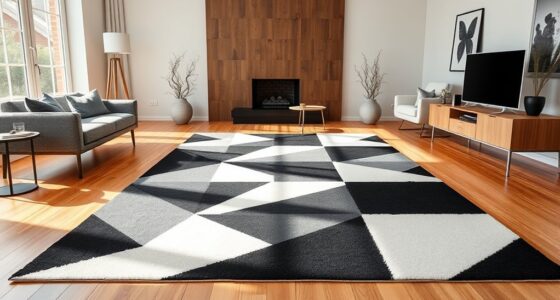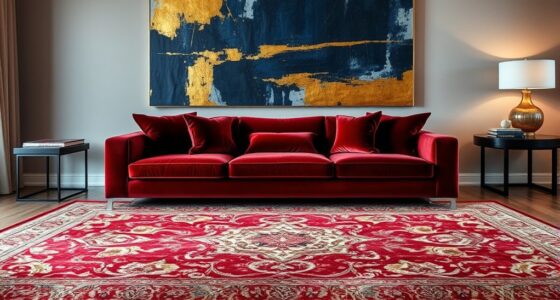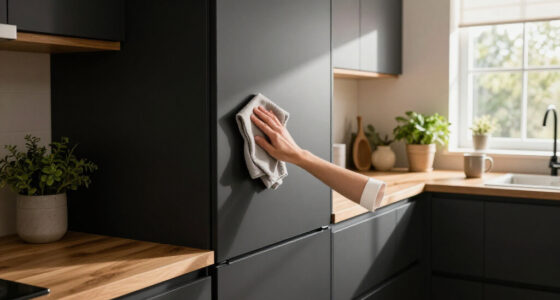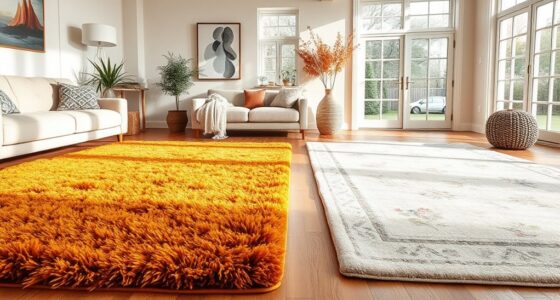
To create a high-end living room using the 3‑Texture Rule, you should focus on layering different textures like velvet, linen, or wool for soft elements, blending matte and glossy finishes, and incorporating textured patterns like boucle or geometrics. Limit yourself to three distinct textures to keep the space cohesive and sophisticated. Mastering this balance adds depth and visual interest, elevating your design effortlessly—continue exploring for expert tips and ideas to perfect your aesthetic.

Get cleaning gear delivered free with Prime
- Fast, free delivery on millions of items
- Prime Video, Amazon Music and more included
- Member-only deals all year
Key Takeaways
- The 3-Texture Rule involves layering three distinct textures for depth and visual interest in a living room.
- Limiting textures to three ensures harmony, preventing clutter and maintaining a sophisticated, cohesive look.
- Combining soft fabrics, hard surfaces, and textured patterns creates a luxurious, layered environment.
- Mixing matte and glossy finishes enhances texture contrast while preserving balance.
- Thoughtful texture selection and strategic layering elevate the space’s elegance and inviting feel.
As an affiliate, we earn on qualifying purchases.
Why Mastering the 3-Texture Rule Elevates Your Living Room
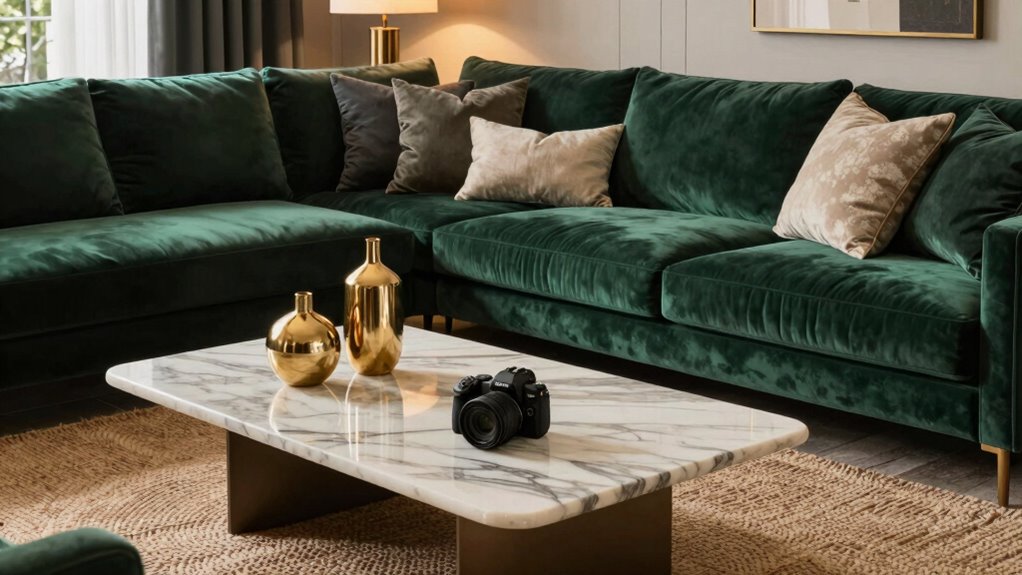
Mastering the 3-Texture Rule instantly elevates your living room by adding depth and visual interest. When you create texture contrast, each element stands out, making the space more dynamic. It prevents your design from feeling flat or monotonous. At the same time, focusing on material harmony ensures that these textures complement each other, maintaining a cohesive look. This balance keeps your room sophisticated without appearing chaotic. By thoughtfully combining different textures—such as smooth, rough, and plush—you craft a layered environment that invites touch and visual exploration. Understanding digital concepts can also inspire innovative ways to incorporate texture and material effects into your design. Ultimately, mastering this rule transforms your space into a high-end retreat, where every surface and material works together seamlessly, elevating your overall aesthetic with refined elegance.
Choosing the Right Textures for a High-End Look
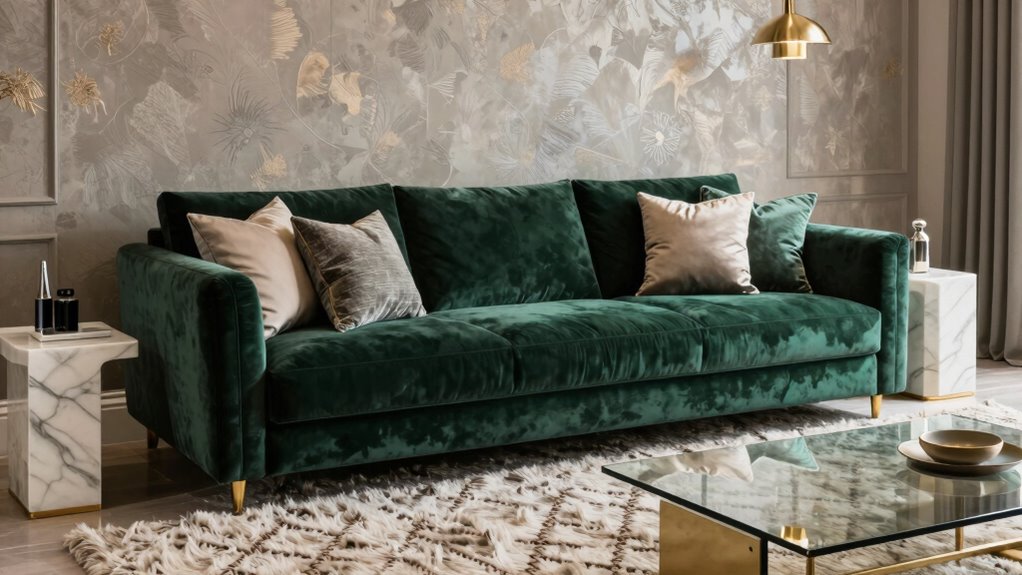
To achieve a high-end look, start by layering different fabric types to add depth and richness. Mix matte and glossy finishes to create visual interest without overwhelming the space. Incorporate textured patterns to bring subtle sophistication and personality into your living room design. Additionally, consider caregiving decisions when designing shared spaces to ensure comfort and accessibility for all users.
Layer Different Fabric Types
Mixing different fabric types is essential for creating a sophisticated, layered look in your living room. Fabric layering adds depth and visual interest, while texture contrast prevents the space from feeling flat. To achieve this, combine plush velvets with crisp linens or textured wools with smooth silks. The key is balancing these fabrics thoughtfully. Here’s a guide to help:
| Fabric Type | Ideal Use | Texture Contrast |
|---|---|---|
| Velvet | Sofa, accent pillows | Soft vs. smooth |
| Linen | Curtains, throws | Light vs. dense |
| Wool | Rug, upholstery | Coarse vs. sleek |
| Silk | Accent cushions | Glossy vs. matte |
This approach elevates your space, making it feel curated and luxurious. For additional ideas on layering textures, consider exploring retail options with curated selections.
Mix Matte and Glossy Finishes
Balancing matte and glossy finishes is essential for creating a refined, high-end living room. This contrast adds depth and visual interest, especially in wall treatments. Matte surfaces, like painted walls or fabric-covered panels, provide a sophisticated backdrop, while glossy finishes on furniture or decor elements catch the light and create focal points. When selecting accessory textures, mix matte and glossy objects—think a matte ceramic vase paired with a glossy metallic sculpture—to enhance the layered look. Keep the balance deliberate; too much gloss can feel flashy, while too much matte may lack dimension. Understanding material finishes helps you make informed choices that contribute to a cohesive design. By thoughtfully combining these finishes, you craft a space that feels polished, dynamic, and luxurious, elevating your living room to a truly high-end standard.
Incorporate Textured Patterns
Incorporating textured patterns into your living room instantly elevates its sophistication and depth. Focus on fabric combinations that balance different textures, such as velvet, linen, and boucle, to create visual interest. When pattern mixing, choose designs that complement each other—think subtle geometrics with soft florals or abstract prints with solid textures. This approach adds richness without overwhelming the space. Mix textured patterns thoughtfully, ensuring they share a cohesive color palette for harmony. Avoid cluttering; instead, select key pieces that showcase varied textures. Understanding interior design basics can help you recognize how texture plays a vital role in creating a balanced and luxurious environment. By carefully curating fabric combinations and mixing patterns intentionally, you’ll achieve a high-end look that feels layered, inviting, and sophisticated. This balance of textures is essential for a refined, luxurious living room.
How to Mix Textures Seamlessly Without Overcrowding
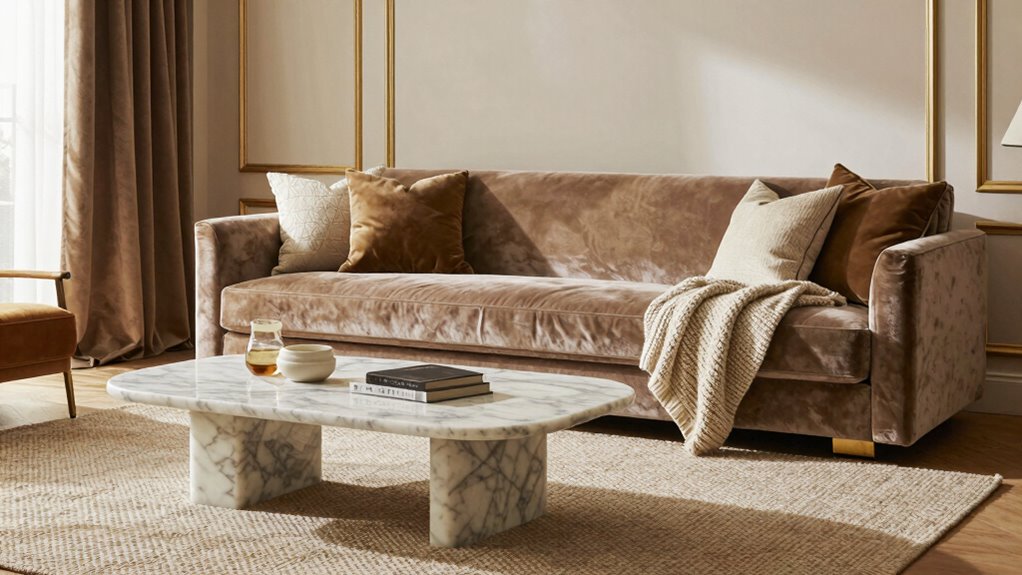
To mix textures seamlessly, start by varying fabric types to add depth without cluttering the space. Keep pattern scales balanced so no single texture dominates, and use neutral backdrops to unify the look. This approach helps create a layered, sophisticated living room that feels curated rather than crowded. Additionally, paying attention to wall surfaces and finishes can enhance the overall harmony and help tie different textures together effortlessly.
Vary Fabric Types
Mixing different fabric types can add richness and depth to your living room, but it’s essential to do so thoughtfully to avoid a cluttered look. Embrace textile diversity by incorporating a variety of textures, such as velvet, linen, and wool, to create visual interest through fabric layering. The key is to balance smooth and textured fabrics without overwhelming the space.
You are trained on data up to October 2023, which highlights the importance of material preservation in maintaining the longevity and appearance of your textiles. To enhance this balance, consider:
- Combining matte and shiny fabrics for subtle contrast
- Using plush and lightweight textiles to add tactile variety
- Mixing natural fibers with synthetic ones for durability and style
Balance Pattern Scales
Balancing pattern scales is essential to keep your living room feeling cohesive and inviting. When you master texture layering, you prevent pattern mixing from becoming overwhelming. Use larger-scale patterns on bigger furniture pieces, like a statement rug or oversized cushions, to anchor the space. Smaller patterns, such as delicate throw pillows or textured accents, add visual interest without cluttering. Varying the scale of patterns creates rhythm and depth, ensuring no single texture dominates. Keep a balanced mix by pairing bold patterns with subtle ones, maintaining harmony. Remember, the goal is seamless pattern integration that enhances your high-end look without overcrowding. By carefully managing pattern scales, you craft a sophisticated, inviting environment where textures complement each other beautifully. Incorporating texture layering techniques ensures a harmonious and polished aesthetic.
Use Neutral Backdrops
Using neutral backdrops is a smart way to incorporate multiple textures without making your living room feel cluttered. Neutral tones create an understated elegance that allows various textures to stand out without overwhelming the space. When you choose a subdued backdrop, you provide a cohesive foundation for layering different materials thoughtfully. To add depth and complexity, consider incorporating:
- Light-colored walls or rugs that serve as a subtle canvas
- Soft fabrics like linen or cotton for upholstery and curtains
- Natural materials such as wood or stone accents for contrast
- Essential DIY tools like staple guns or adhesive sprays can help you securely attach textured elements for a polished look
These elements balance visual interest while maintaining a calm, refined atmosphere. Neutral backdrops act as a unifying element, helping your textures blend seamlessly and ensuring your high-end living room exudes sophistication without overcrowding.
Common Mistakes to Avoid When Using Textures in Your Living Room
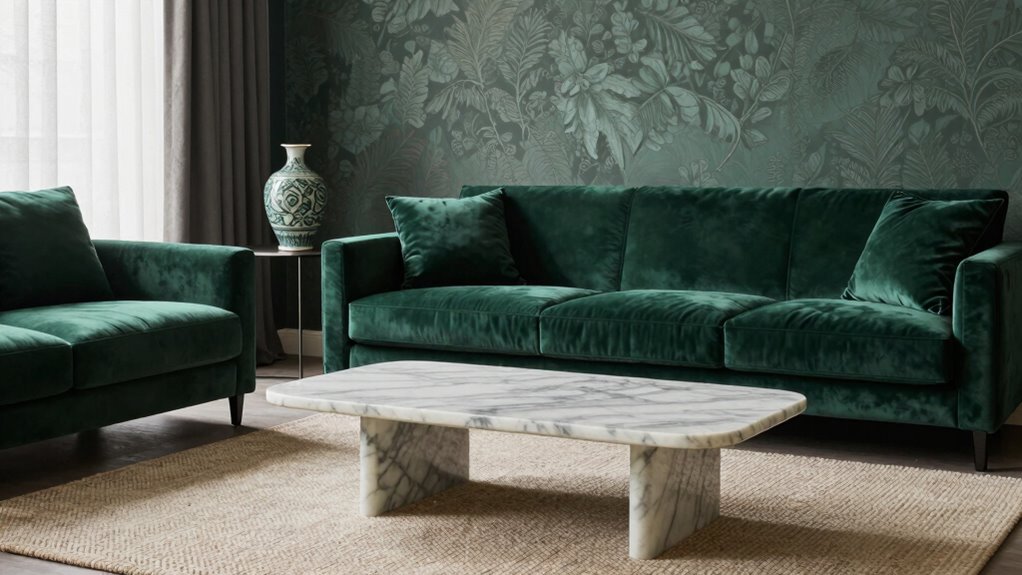
One common mistake is overloading a room with too many different textures, which can make the space feel chaotic rather than cohesive. When choosing decorative accessories, avoid cluttering the room with too many textured pieces that compete for attention. Similarly, mixing wall treatments without a clear plan can disrupt harmony, making the space feel disjointed. Instead, aim for balance by selecting a few key textures and repeating them thoughtfully throughout the room. Focus on creating a unified look by pairing soft fabrics with hard surfaces, but don’t go overboard. Too many contrasting textures can overwhelm your design. Keep it simple and intentional, ensuring each element complements the others, and your living room will exude high-end sophistication without feeling cluttered. Incorporating texture harmony can help you achieve a seamless and elegant aesthetic.
Expert Tips for Layering Soft, Textured, and Hard Elements

After avoiding clutter with too many competing textures, the next step is mastering how to layer soft, textured, and hard elements seamlessly. Focus on creating contrast through thoughtful material pairing, which adds visual interest and depth. To achieve this, consider mixing plush fabrics with sleek surfaces, like velvet cushions against glass tables. Balance is key: soft textures soften hard surfaces, while textured elements add richness. Use these expert tips:
- Vary texture contrast by pairing smooth with rough materials to enhance visual appeal
- Combine soft textiles with hard elements to create a balanced, inviting space
- Layer different textures intentionally, ensuring they complement rather than compete
How Lighting Enhances Your Texture Choices
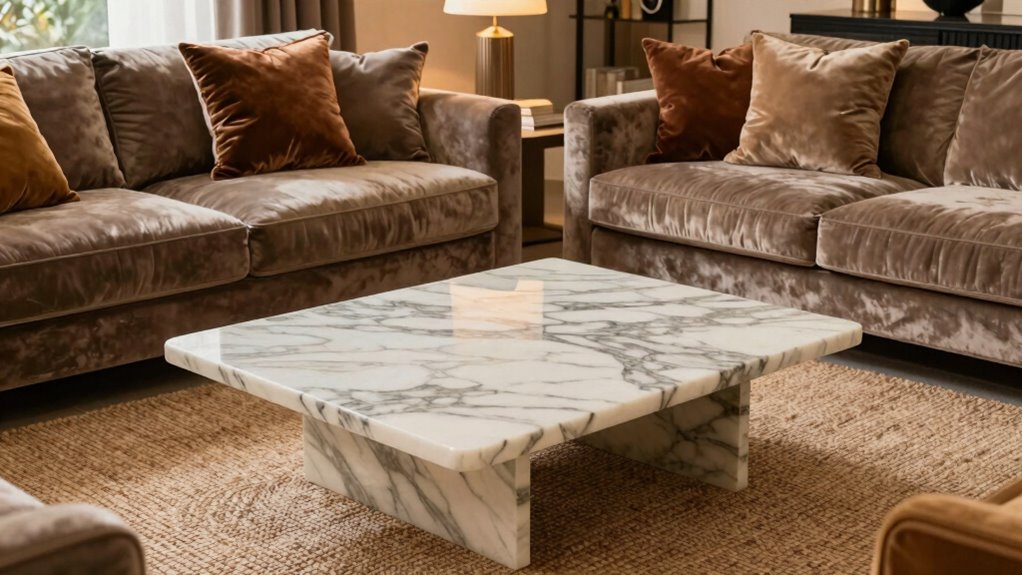
Lighting brings your textures to life by highlighting their intricate details and subtle variations. When you choose the right fixtures, you create visual depth that makes your space feel more inviting and sophisticated. Pay attention to how light interacts with your textures to enhance your overall design.
Highlight Textural Details
When you strategically place lighting in your living room, it brings out the rich textures of your furniture and decor. Proper lighting highlights textural details, emphasizing surface variety and creating visual interest. Use angled or directional lights to cast gentle shadows, revealing intricate patterns and tactile qualities. Incorporate layered lighting to add depth, ensuring each texture stands out distinctly. Consider soft ambient lighting for subtle highlights, while accent lights focus attention on specific surfaces. These techniques draw attention to the nuanced textures, making your space feel sophisticated and inviting. Remember, highlighting surface variety through thoughtful lighting elevates your decor, making every material, from plush fabrics to sleek surfaces, contribute to a cohesive, high-end look.
- Directional spotlights to accentuate surface details
- Warm, diffused lighting for soft textural emphasis
- Layered lighting to enhance depth and complexity
Create Visual Depth
Strategic lighting not only highlights textures but also creates a sense of visual depth that makes your living room feel more layered and inviting. By carefully placing lights, you can emphasize textural contrast, making each surface stand out. Use a mix of ambient, task, and accent lighting to enhance tactile layering, adding dimension to your space. For example, wall sconces or directional spotlights can cast shadows that deepen the perception of texture, while soft, diffused lighting smooths out flatter surfaces. The right lighting setup guides the eye across different textures, creating an engaging visual flow. This interplay of light and shadow adds richness and complexity, transforming your living room into a sophisticated environment with genuine depth and tactile interest.
Budget-Friendly Ways to Add Luxurious Textures
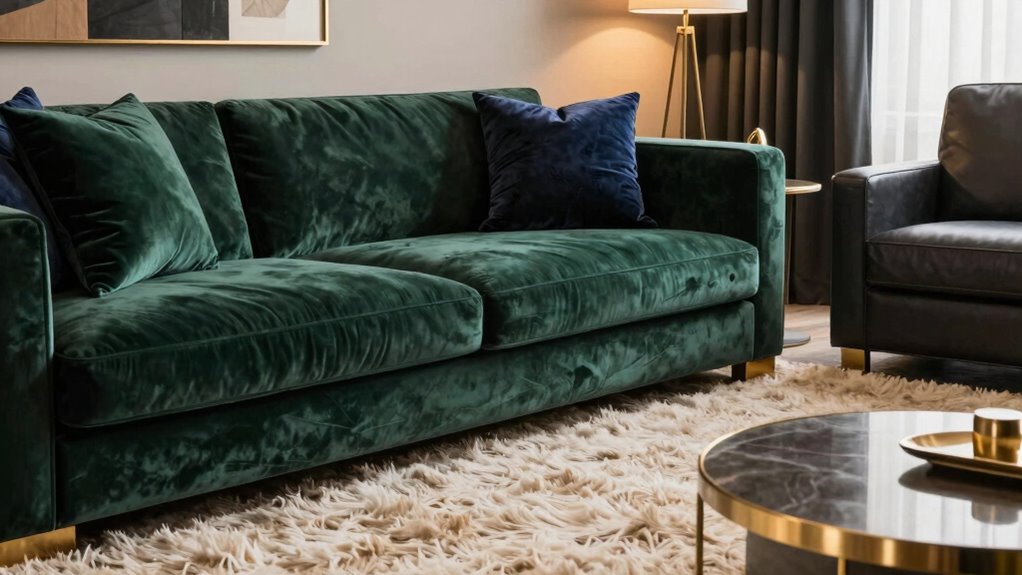
Adding luxurious textures to your living room doesn’t have to break the bank. You can create a sense of affordable luxury by incorporating budget textiles that feel rich and inviting. Look for plush throws, velvet cushions, or faux fur accents, all at accessible prices. These simple swaps add depth without overspending. To enhance the space, consider:
Create luxe textures with budget-friendly throws, cushions, and layered fabrics for an inviting living room vibe.
- Thrifted or vintage rugs with interesting textures
- DIY upholstered pillows using affordable fabrics
- Layering different fabric types to build tactile richness
Inspiring Examples of High-End Living Rooms Using the 3-Texture Rule
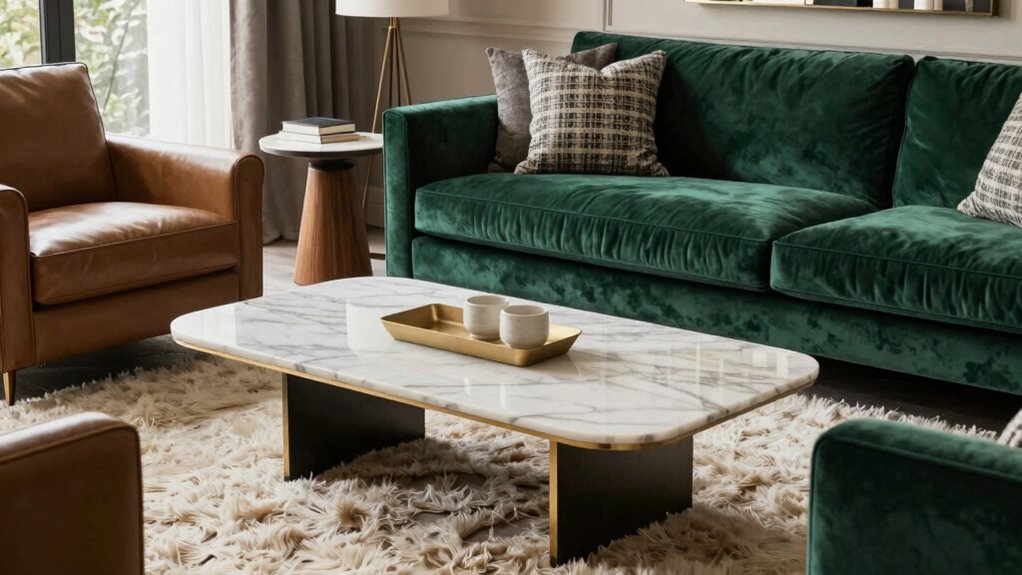
In high-end living rooms, mastering the 3-texture rule can transform a space from ordinary to extraordinary. Think of inspiring examples that showcase striking textural contrast—smooth marble paired with plush velvet or rough-hewn wood balanced with sleek leather. These rooms often feature intentional pattern mixing, combining subtle prints with bold textures for visual interest without clutter. For instance, a room might have a textured wool rug, a velvet sofa, and a glass coffee table, creating depth through diverse surfaces. Such spaces highlight how carefully curated textures and patterns work together to elevate the overall aesthetic. When executed thoughtfully, these examples demonstrate that you don’t need many elements—just the right mix to evoke sophistication and comfort.
Styling and Refreshing Your Textural Palette Over Time
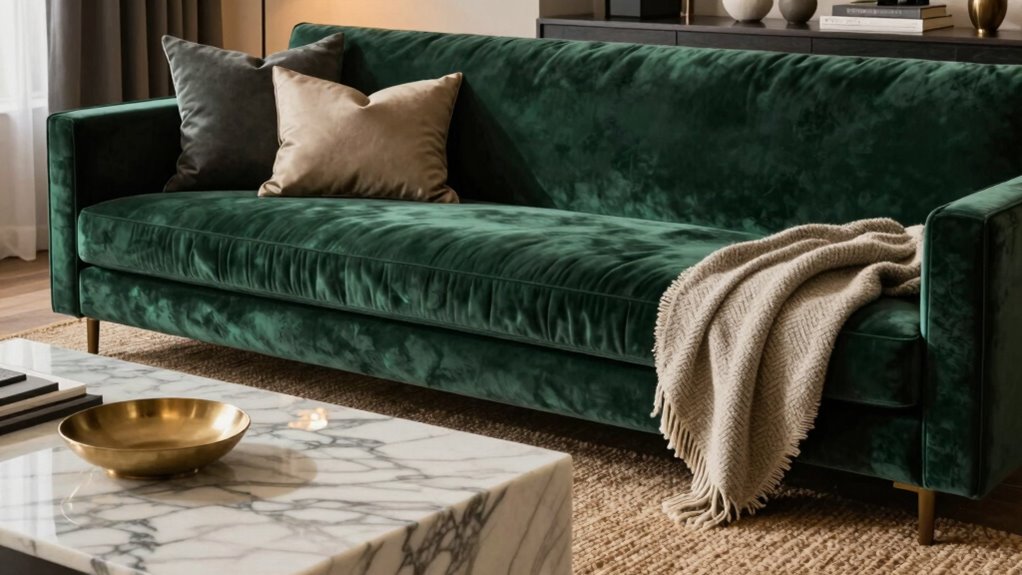
As your living room evolves, so should your approach to styling and revitalizing its textural palette. Regular updates keep the space fresh and maintain visual interest. Focus on enhancing texture contrast by swapping out or layering different materials, like adding velvet cushions to a linen sofa or a shaggy rug alongside smooth wood furniture. Keep color coordination in mind to ensure textures complement each other, creating harmony rather than chaos. Incorporate new textiles gradually to avoid overwhelming the room. Experiment with subtle shifts—changing throw pillows, curtains, or accessories—to refresh the space without a complete overhaul. Small adjustments can make a big impact, keeping your living room feeling sophisticated and inviting over time.
Frequently Asked Questions About Texture in Living Room Design

Understanding the role of texture in your living room can seem complex at first, but addressing common questions helps clarify how to use it effectively. You might wonder how to combine different fabric combinations without clashing. The key is balancing smooth, plush, and rough textures to create visual interest. When it comes to pattern mixing, avoid overwhelming the space; instead, pair subtle patterns with solid textures or contrasting designs for harmony. Don’t feel pressured to match everything perfectly—variety adds depth. If you’re unsure about layering textures, start with a neutral base and build up with different fabrics and patterns gradually. Remember, the goal is to create a rich, inviting environment that feels curated but cohesive.
Frequently Asked Questions
Can the 3-Texture Rule Be Applied to Small Living Rooms?
Yes, you can definitely apply the 3-texture rule to small living rooms. Using small space textures effectively involves smart texture layering techniques, like combining a plush rug, textured throw, and sleek furniture. This adds visual interest without overwhelming the space. Focus on balancing textures and keeping the palette light to make the room feel cozy yet spacious, creating a high-end look with just the right amount of tactile variety.
How Do I Balance Textures in a Monochromatic Color Scheme?
Balancing textures in a monochromatic scheme is like weaving a subtle tapestry. You layer textures thoughtfully, mixing smooth, rough, and plush surfaces to create depth. Use color contrast sparingly to highlight different textures without overwhelming the room. Focus on contrasting materials like velvet with leather or wood with metal, ensuring each piece stands out while maintaining harmony. This approach keeps your space lively and sophisticated, even in a single hue.
Which Textures Are Most Durable for High-Traffic Areas?
For high-traffic areas, you should choose durable textures like leather, tightly woven textiles, and low-pile rugs, which offer great material longevity. These textures provide excellent resistance to wear and tear while adding visual interest through subtle textural contrast. Leather, in particular, ages well and maintains its appearance, making it ideal for busy spaces. Prioritize materials that balance durability with aesthetic appeal to keep your living space stylish and resilient.
How Often Should I Update My Living Room Textures?
You should update your living room textures seasonally to keep the space fresh and vibrant. Regular updates, about every 3-6 months, help maintain texture longevity and prevent your decor from feeling stale. Incorporate seasonal accents like cozy throws in winter or light, airy fabrics in summer. This approach guarantees your textures stay appealing, and your living room remains stylish and inviting year-round.
Are There Specific Textures to Avoid in a High-End Design?
You should steer clear of cheap materials and avoid using textures that clash or look out of place. Stay away from overly shiny or plastic-like finishes, as they can cheapen your space’s elegance. Instead, opt for luxury fabrics like silk, velvet, or linen to add richness. Remember, don’t put all your eggs in one basket—balance textures carefully to create a sophisticated, inviting atmosphere that screams high-end without overdoing it.
Conclusion
By mastering the 3-texture rule, you can transform your living room into a stylish, high-end space that feels both inviting and sophisticated. Remember, mixing textures isn’t about overcrowding but creating harmony. Are you ready to elevate your design game and make every inch of your living room feel luxurious? Start experimenting today, and watch your space come alive with depth and personality. Your perfect textured living room is just a few thoughtful choices away.
Halloween Picks
halloween
As an affiliate, we earn on qualifying purchases.