TL;DR

Get cleaning gear delivered free with Prime
- Fast, free delivery on millions of items
- Prime Video, Amazon Music and more included
- Member-only deals all year
A Hunker report says a homeowner’s long-sticking door lock began working smoothly after they sprayed it with 3-IN-ONE Dry Lock Lube purchased at Lowe’s. The account is a single test, not evidence that lubricant will fix every faulty lock; the product’s price and effectiveness may vary.
A homeowner writing for Hunker says a locksmith recommended trying dry lock lubricant before replacing a door lock that had resisted use for years. The writer reports that applying 3-IN-ONE Dry Lock Lube, purchased at Lowe’s, made the lock work smoothly. The result is one person’s experience, not proof that lubricant will resolve every lock problem.
The writer says the lock had become so difficult to use that the household avoided locking its knob and relied on the deadbolt. On one occasion, a key broke in the lock, leading to an after-hours locksmith visit that cost hundreds of dollars, according to the account. A year later, when the writer contacted another locksmith about replacing the hardware, that locksmith suggested trying a bottle of dry lock lubricant first. The report says the product cost about $7 at the time; current price and availability are not established.
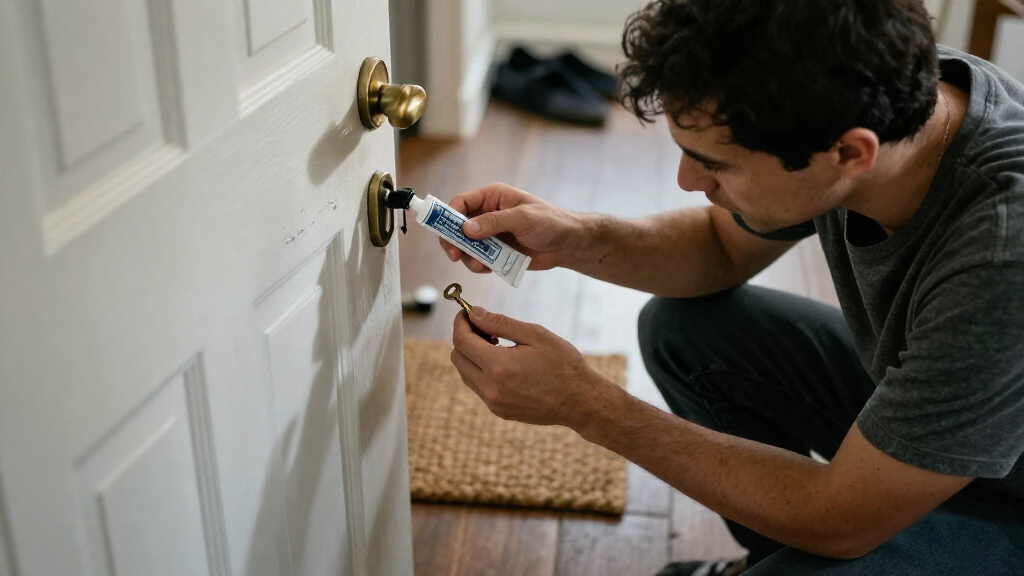
The writer chose 3-IN-ONE Dry Lock Lube, shook the can, attached its narrow nozzle and sprayed into the keyhole. They report that the lock worked smoothly immediately afterward, with the key sliding in and out without the earlier struggle. The account also says the writer treated other exterior locks and padlocks, but gives no independent test or longer-term results showing how long the improvement lasted.
The article distinguishes dry lock lubricant from general-purpose oil-based sprays such as WD-40. It says oil-based products may attract dust and debris over time, while the dry lubricant is designed to leave a film after its liquid carrier evaporates. Those are product and maintenance claims presented in the source report; the article does not provide laboratory comparisons or advice from the product maker to verify how different formulations perform in every lock.
A Low-Cost Step Before Replacement
For someone dealing with a stiff key or lock, the account points to a relatively inexpensive option to try before arranging a replacement. A lock that is difficult to operate can become more than an annoyance: the Hunker writer describes a broken key and an emergency service call as the consequences of continuing to force a troublesome lock. A suitable lubricant may help when the cause is dirt or buildup, but a single success story cannot show that it will prevent breakage or avoid a locksmith visit in other cases.
The practical takeaway is to avoid forcing a key into a resistant lock and to check that any lubricant is intended for lock mechanisms. If the key remains difficult to turn, the lock is damaged, or the problem returns, a qualified locksmith can assess whether cleaning, repair or replacement is needed. The report does not establish a universal maintenance schedule or guarantee that annual spraying will extend a lock’s life.
Products Worth Considering

Dreame L50 Ultra Robot Vacuum and Mop Combo

Roborock Qrevo S Pro Robot Vacuum and Mop

Philips Hue Starter Kit with Bridge Pro and 4 Retrofit LED Recessed Downlights
As an affiliate, we earn on qualifying purchases.
What the Locksmith Recommended
The article’s recommendation came from the second locksmith the homeowner contacted about replacing the lock. According to the writer, the locksmith suggested trying dry lock lubricant before paying for new hardware. That advice was not quoted directly in the report, and the source does not identify the locksmith or describe an inspection of the lock before the suggestion was made.
In the writer’s account, the product was sprayed directly into the keyhole using the can’s narrow extension straw. The writer observed that some liquid dripped out and appeared to dry within seconds, then tested the lock with a key. Their report describes an immediate improvement, but does not document the lock’s model, its internal condition, or whether other repairs had been made. Those details limit how widely the result can be applied.
“The key slid in effortlessly after the spray was applied.”
— The homeowner writing for Hunker
How Far the Result Applies
The report does not establish whether dry lock lube will fix locks with different causes of sticking, such as damaged parts, misalignment or a worn key. It also does not include an independent test, a comparison with WD-40, or follow-up showing whether the improvement persisted. The roughly $7 price is the amount given in the account, not a confirmed current Lowe’s price. Readers should follow the label for the specific product they buy and seek professional assessment if a lock remains difficult to use.
Check the Lock After Treatment
The source article does not announce a formal follow-up test or a scheduled update. For readers considering the same approach, the next step is to use only a lubricant labeled for locks, apply it as directed, and test the key gently. If the problem continues or returns, stop forcing the mechanism and contact a locksmith to determine whether the lock needs repair or replacement. The Hunker writer suggests adding lock checks to seasonal home maintenance, but that timing is their recommendation, not a verified requirement from a manufacturer or locksmith association.
Key Questions
What product did the Hunker writer use?
The writer used 3-IN-ONE Dry Lock Lube, purchased at Lowe’s. The report gives a price of about $7 at the time, but does not confirm the product’s current price or availability.
Why does the report advise against using WD-40?
The report says oil-based products may attract dust and debris that can build up inside a lock. It recommends a dry lubricant made for locks, but does not provide independent testing comparing the products.
Did the lubricant fix every lock the writer tried?
The writer says the spray immediately improved their household door lock and also treated other exterior locks and padlocks. The account does not give detailed results for each lock or show how long the changes lasted.
What should I do if my lock is still sticky?
Do not force the key. Follow the lubricant’s label, and contact a qualified locksmith if the lock remains difficult to use, appears damaged or continues to stick.
Source: hunker.com