
Early signs of carpet beetle infestation can be easy to miss but are essential to catch early. Look for tiny, irregular holes, frayed fabric edges, and small specks that might be droppings or shed skins. You might also notice silken threads or fuzzy larval casings on clothing or carpets. Noises or small movements near your fabrics can also be clues. Recognizing these subtle signs can save your belongings—keep exploring to learn how to spot them quickly.

Get cleaning gear delivered free — and shop member deals
- Fast, free delivery on millions of items
- Access to Prime Big Deal Days deals on October 6–7
- Prime Video, Amazon Music and more included
Key Takeaways
- Look for tiny black, brown, or mottled specks—signs of droppings or shed skins indicating carpet beetle activity.
- Notice silk threads or fuzzy larval casings on fabrics, which signal early infestation.
- Check for fabric fraying, small holes, or thinning areas in carpets and upholstery.
- Listen for scratching sounds or observe movement near stored textiles or dark corners.
- Regularly vacuum, inspect, and wash vulnerable fabrics to catch early signs before extensive damage occurs.
As an affiliate, we earn on qualifying purchases.
How to Recognize Tiny Signs of Carpet Beetle Infestation
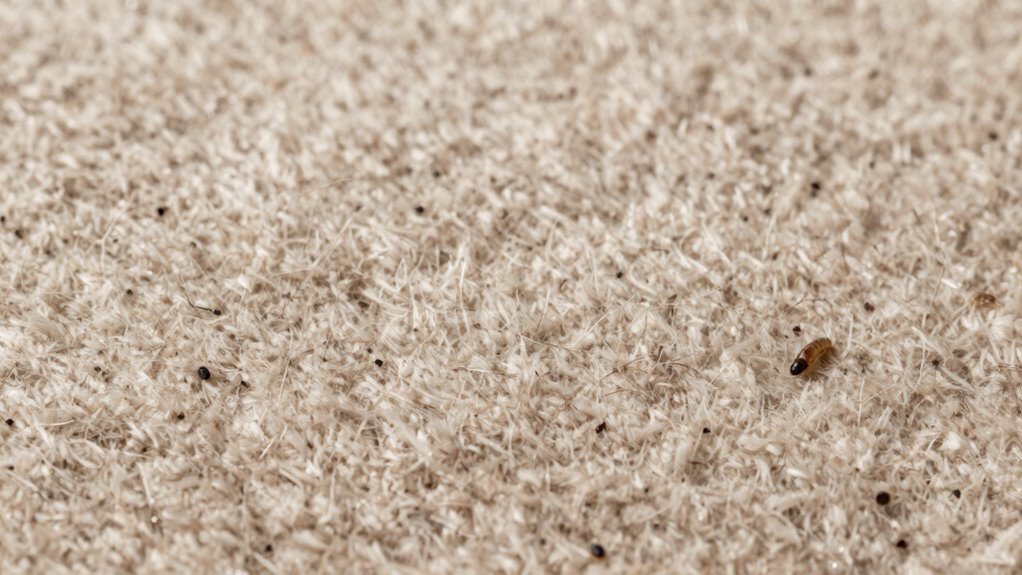
Tiny signs of a carpet beetle infestation can be easy to miss if you’re not paying close attention. To spot early, focus on pest prevention and regular home maintenance. Check your carpets, furniture, and clothing for tiny, shed skins or larvae. You might notice small, irregular holes in fabrics or frayed edges, signaling hidden damage. Look for tiny black, brown, or mottled specks—these are often beetle droppings or shed skins. Regular vacuuming and cleaning reduce the risk of an infestation and help you catch signs early. Pay attention to areas where lint, hair, or natural fibers accumulate, as these attract carpet beetles. Staying vigilant and maintaining a clean home are your best defenses against these tiny pests. Additionally, understanding heatstroke signs and implementing proper ventilation can help prevent further issues caused by hidden pests or environmental factors.
Early Clues: Silk and Larval Casings in Your Home
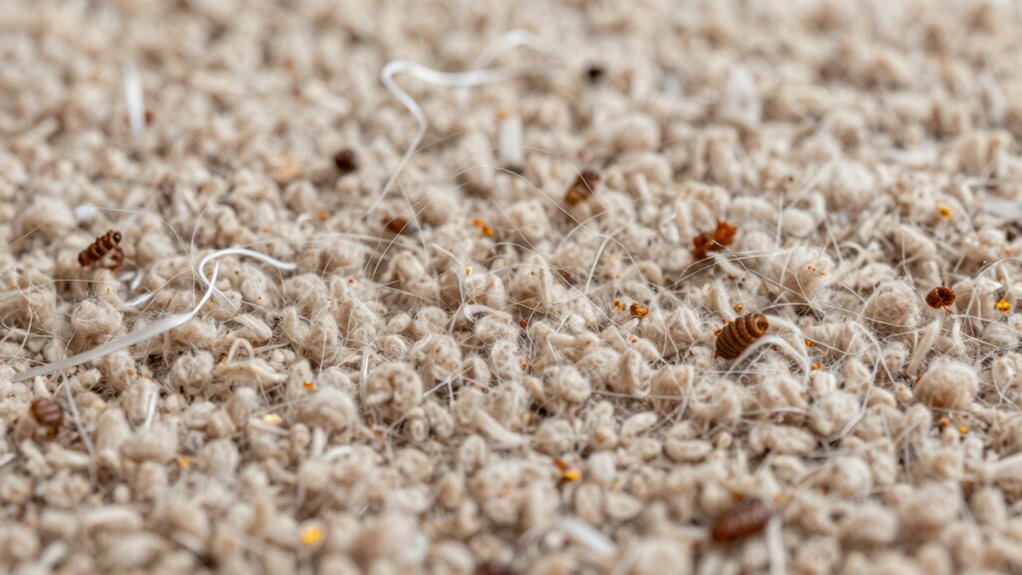
Since silk and larval casings are common early signs of a carpet beetle infestation, paying close attention to these clues can help you catch the problem early. You might notice fine silk threads or tiny, fuzzy larval casings on your clothing, carpets, or stored fabrics. Recognizing these signs allows you to intervene before significant damage occurs, supporting fabrics preservation and pest prevention tips. Additionally, understanding cabling solutions related to pest control equipment can aid in maintaining a clean environment.
Early signs like silk threads and larval casings help detect carpet beetle infestations early.
- Check hidden areas like under furniture, in closets, or near vents for silk threads or castings
- Regularly inspect stored clothing, especially wool or silk items
- Use gentle vacuuming and laundering to remove larvae and prevent spread
Spotting these early clues helps you act quickly, reducing potential damage and safeguarding your fabrics.
What Damage Looks Like: Fabric Fraying and Holes

Fabric damage from carpet beetles often appears as frayed edges, small holes, or thinning areas on your clothing and textiles. This fabrics deterioration results from larval damage patterns, which target natural fibers like wool, silk, and cotton. You might notice areas where the fabric seems worn or threadbare, especially along seams or edges. Over time, larvae create tiny, irregular holes that can expand if left untreated. The damage may look like sections of fabric are unraveling or thinning, giving a ragged appearance. Recognizing these signs early is essential, as they indicate larval activity and ongoing deterioration. Proper storage methods can help prevent infestations and protect your textiles. If you observe such damage, it’s a clear sign that carpet beetles have been feeding on your textiles, and prompt action is necessary to prevent further destruction.
Noticing Noises or Movement Near Fabrics : What It Means

If you notice scratching sounds or movement near your textiles, it could be a sign that carpet beetles larvae or adults are active nearby. These noises might seem minor, but they often indicate household pests at work. Pay attention to pet behavior too; pets may sniff or paw at infested areas, alerting you to a problem. Recognizing nutritional information about pests can help you understand their impact on household health. Small creatures moving in dark corners or under furniture. Unusual pet activity around fabric storage or carpets. Faint rustling sounds near stored clothing or upholstery. Such signs suggest that larvae are feeding on your fabrics, and household pests like carpet beetles are present. Early detection helps prevent extensive damage, so stay alert to these subtle cues.
What to Do If You Find Signs of Carpet Beetles

When you notice signs of carpet beetles, acting quickly can prevent further damage. Start by thoroughly cleaning the affected areas, vacuuming carpets, rugs, and furniture to remove larvae and eggs. Wash any infested clothing or fabrics in hot water to kill hidden pests. Implement preventive measures like sealing cracks and storing vulnerable items in airtight containers. If the infestation persists or is widespread, consider professional extermination to eliminate the pests effectively. Professionals can identify hidden hotspots and use targeted treatments that are safe for your home. Regular inspections and diligent cleaning are essential to prevent future infestations. Additionally, understanding pest behavior can help you develop more effective prevention strategies. Don’t delay taking action; early intervention saves your belongings and reduces the need for extensive repairs later.
Frequently Asked Questions
How Quickly Can a Carpet Beetle Infestation Spread?
A carpet beetle infestation can spread surprisingly quickly, often within a few weeks if left unchecked. The spread rate depends on factors like food sources and humidity, but you might notice damage or larvae in just 2-4 weeks. Regular inspections and prompt treatment are essential to slow the infestation timeline and prevent widespread damage. Don’t wait—early action keeps the spread rate manageable and protects your belongings.
Are There Specific Seasonal Patterns for Carpet Beetle Activity?
Yes, carpet beetle activity follows seasonal patterns influenced by temperature. You’ll notice seasonal emergence typically occurs in spring and summer when temperatures rise, encouraging their development. During colder months, activity slows down or stops. To prevent infestations, stay vigilant during peak seasons, clean thoroughly, and store fabrics properly. Understanding these patterns helps you anticipate when they’re most active, making it easier to take preventative measures.
Can Carpet Beetles Harm Pets or Humans Directly?
While carpet beetles don’t bite or sting, they can still affect you. You might notice pet allergy concerns or skin irritation from direct contact with their shed skins or larvae. Though they don’t harm humans or pets directly, their presence can trigger allergic reactions, especially in sensitive individuals. So, even without physical bites, carpet beetles can impact your health through allergic responses and indirect contact.
What Are the Most Effective Long-Term Prevention Strategies?
To prevent carpet beetles long-term, you should implement integrated pest management and environmental modifications. Regularly vacuum and clean your home, especially carpets, furniture, and closets, to remove eggs and larvae. Seal cracks and store susceptible items in airtight containers. Reduce humidity and sunlight exposure, and inspect second-hand items before bringing them inside. These proactive steps will make your environment less attractive to carpet beetles and help keep them at bay.
Do Professional Pest Control Methods Differ for Carpet Beetles?
While DIY solutions and chemical treatments can help, professional pest control methods for carpet beetles are more thorough and tailored. You might try sprays yourself, but pros use specialized equipment and stronger formulations, targeting hidden larvae and eggs effectively. They also assess your home’s unique environment, providing exhaustive solutions that DIY methods often miss, ensuring longer-lasting protection and peace of mind against future infestations.
Conclusion
If you spot tiny silk threads or see larvae wriggling in your closet, don’t ignore the signs. Imagine delicate fibers fraying under your fingertips or faint rustling sounds behind your walls—these are your home’s subtle warnings. Act quickly before your cherished fabrics turn to tattered memories. By catching the signs early, you can protect your space and restore peace to your home’s quiet corners. Stay vigilant, and your home will stay cozy and intact.
Fall Picks
fall essentials
As an affiliate, we earn on qualifying purchases.