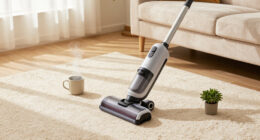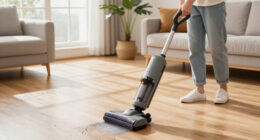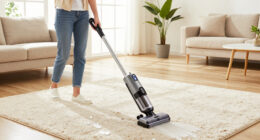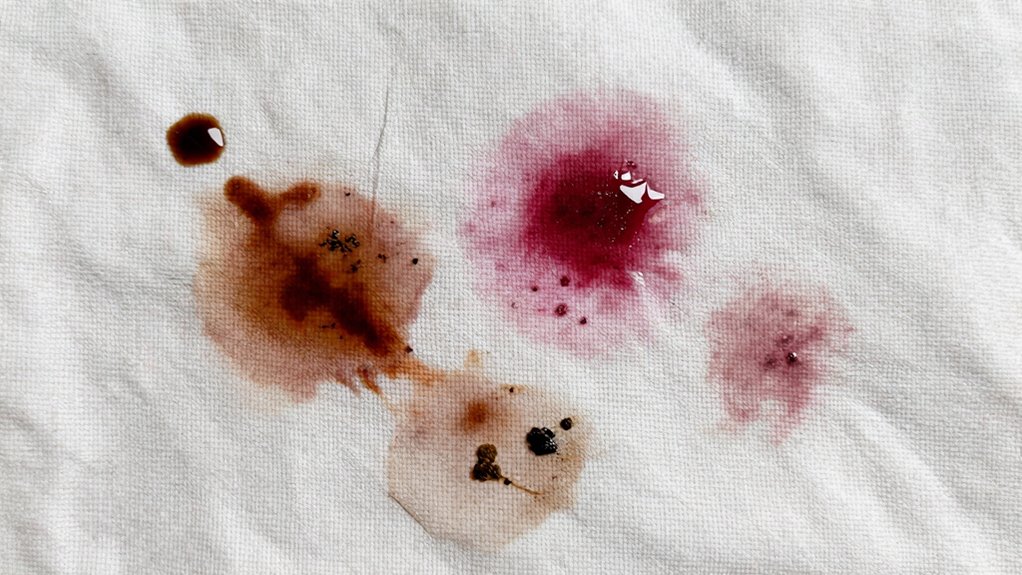

Dealing with coffee, wine, mud, and pet stains? Act quickly by blotting with a clean cloth or paper towel, never rubbing, to prevent setting. Use cold water or gentle cleaners suited to each surface or fabric. For stubborn stains, apply natural solutions like vinegar or enzyme cleaners. Let mud dry before brushing, and identify pet stains by type to treat odors effectively. Keep going to discover proven tips for making stains and odors disappear with ease.
Open a free Amazon Business account
Business pricing, bulk buying and tax-exempt orders.
As an affiliate, we earn on qualifying purchases.
Key Takeaways
- Act quickly with blotting and cold water to prevent stains from setting on fabrics and surfaces.
- Use targeted treatments like enzyme cleaners for organic stains and gentle blotting for best results.
- Allow mud to dry before brushing off, then rinse with cold water to loosen dirt and stains.
- Identify stain types (e.g., fresh vs. old urine) to select appropriate odor-neutralizing solutions.
- Test cleaning products on hidden areas first to avoid damage and ensure safe, effective stain removal.

Rocco & Roxie Enzyme Stain & Odor Eliminator, 32 Fl Oz
- Safe for Pets and Children: Chlorine free and residue free
- Effective Stain and Odor Removal: Eliminates pet urine, feces, vomit
- Versatile Surface Use: Suitable for carpets, furniture, clothing
As an affiliate, we earn on qualifying purchases.
As an affiliate, we earn on qualifying purchases.
How Do Coffee Stains Form and Why Are They Hard to Remove?
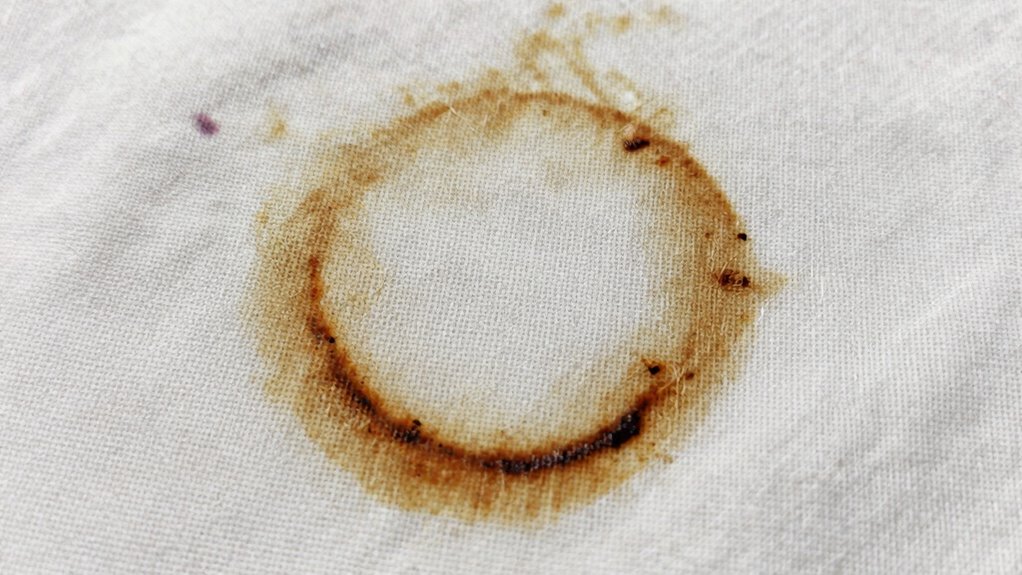
Understanding how coffee stains form can help you grasp why they’re so difficult to remove. Coffee chemistry plays a key role; it contains tannins and oils that bond strongly with fabrics and surfaces. When you spill coffee, these compounds quickly penetrate the material, creating deep stain penetration. The liquids seep into fibers or porous surfaces, making the stain more than just surface-level. As the coffee dries, the stain becomes embedded, setting the stain and making it tougher to lift. The combination of stain penetration and the chemical properties of coffee explains why it’s so persistent. Simply blotting isn’t enough—these stains require targeted treatment to break down the bonds formed during coffee chemistry. Understanding stain penetration helps you realize why coffee stains tend to linger if not properly addressed.
Quick Tips for Blotting and Treating Fresh Coffee Spills

When you spill coffee, acting quickly can make all the difference in preventing a stubborn stain. Immediately blot the spill with a clean, absorbent cloth or paper towel—avoid rubbing, which can push the stain deeper. If you used instant coffee or brewed a strong cup, the stain may set faster, so quick action is essential. For fresh spills, try to remove as much liquid as possible before it soaks in. Dabbing gently helps lift the coffee without spreading it further. If you have a spray bottle, lightly mist the area with cold water to dilute the stain, then blot again. The sooner you start, the easier it is to prevent the coffee from setting and becoming more difficult to remove later. Using effective stain removal techniques can further improve your chances of success.
How to Remove Coffee Stains From Different Fabrics and Surfaces

Removing coffee stains depends on the fabric or surface you’re cleaning. You’ll want to use specific treatment techniques for fabrics and effective surface cleaning tips for hard surfaces. Knowing the right approach guarantees you get the stain out quickly and without damage. Additionally, for hard surfaces, it’s important to maintain your cleaning tools to prevent spreading the stain or causing surface damage.
Fabric Treatment Techniques
Coffee stains can seem stubborn, but acting quickly and using the right techniques can make all the difference. For delicate fabrics, avoid harsh scrubbing; instead, gently blot with cold water or a mild detergent. When treating fabrics prone to dye bleeding, add a small amount of fabric softeners to help loosen the stain without damaging the fibers. Always test a hidden area first. To prevent color transfer, wash stained items separately. Additionally, understanding ethical consumer choices can guide you in selecting eco-friendly stain removers that are gentle on fabrics and the environment.
Surface Cleaning Tips
Stain removal techniques vary depending on the surface or fabric involved, making it important to tailor your approach. Different surface materials respond best to specific cleaning tools and methods. For example, delicate surfaces like marble require gentle cleaning, while sturdy surfaces like tile can handle stronger treatments. Always start by blotting the stain to prevent spreading. Use appropriate cleaning tools—soft cloths for fragile surfaces, scrub brushes for textured ones, and microfiber cloths for quick absorption. Here are some tips:
- For fabric surfaces, use a clean sponge or soft cloth with mild detergent.
- On glass or polished surfaces, avoid abrasive tools; opt for a microfiber cloth.
- For wood surfaces, use a damp cloth and dry immediately.
- For porous surfaces like concrete, apply a suitable stain remover with a stiff brush.
- Remember that understanding the different cleaning methods suited to each surface can help prevent damage and ensure effective stain removal.
How to Tackle Red Wine Stains Before They Set?
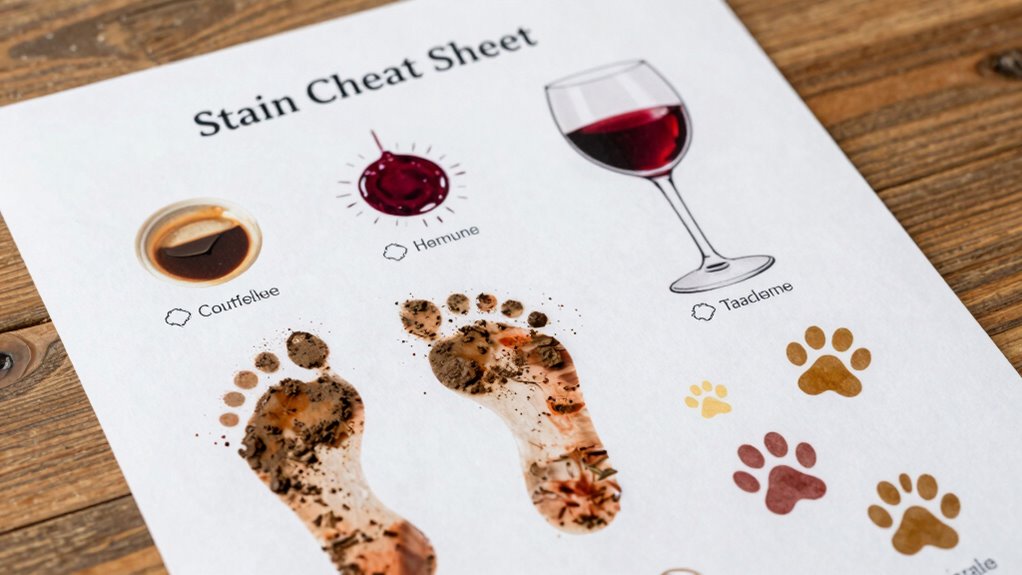
Ever spill red wine on your favorite shirt and wonder how to stop it from setting? Act quickly to prevent a permanent stain. Start by blotting the spill with a clean cloth or paper towel to absorb as much liquid as possible—don’t rub, just gently press. Immediate wine removal is essential for stain prevention. If you have salt nearby, sprinkle it over the stain to absorb the wine and prevent it from penetrating deeper. Pouring cold water over the stain can also help dilute the wine. Avoid using hot water, as it can set the stain. The key is to act fast and keep the fabric moist until you can treat it properly. Quick action minimizes the chances of the stain setting, making wine removal much easier later. Remember, understanding stain removal techniques can significantly improve your chances of success.
How to Blot and Clean Wine Stains Effectively?
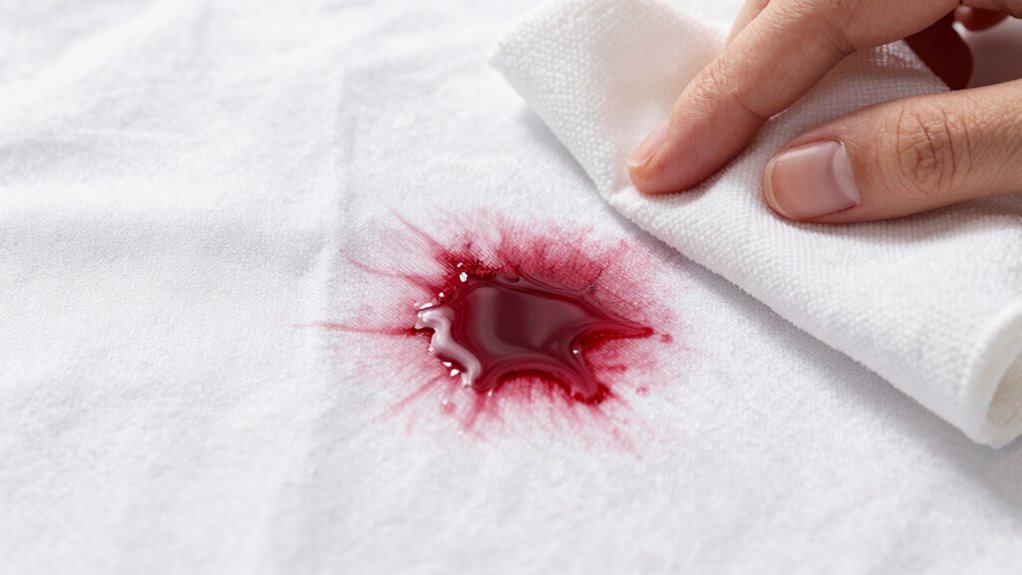
Wondering how to effectively blot and clean a wine stain? Start by acting quickly to prevent the stain from setting. Blot gently with a clean cloth or paper towel to absorb excess liquid, but don’t rub, as this can spread the stain. To improve wine removal and stain prevention, follow these steps:
- Use cold water to rinse the area immediately after blotting.
- Apply a mixture of dish soap and white vinegar for stubborn stains.
- Blot again with a clean cloth to lift the stain.
- Avoid using hot water, which can set the stain further.
- For persistent stains, consider employing deep cleaning fabrics techniques to fully eliminate the mark.
How to Remove Mud Stains From Clothes, Carpets, and Outdoor Gear
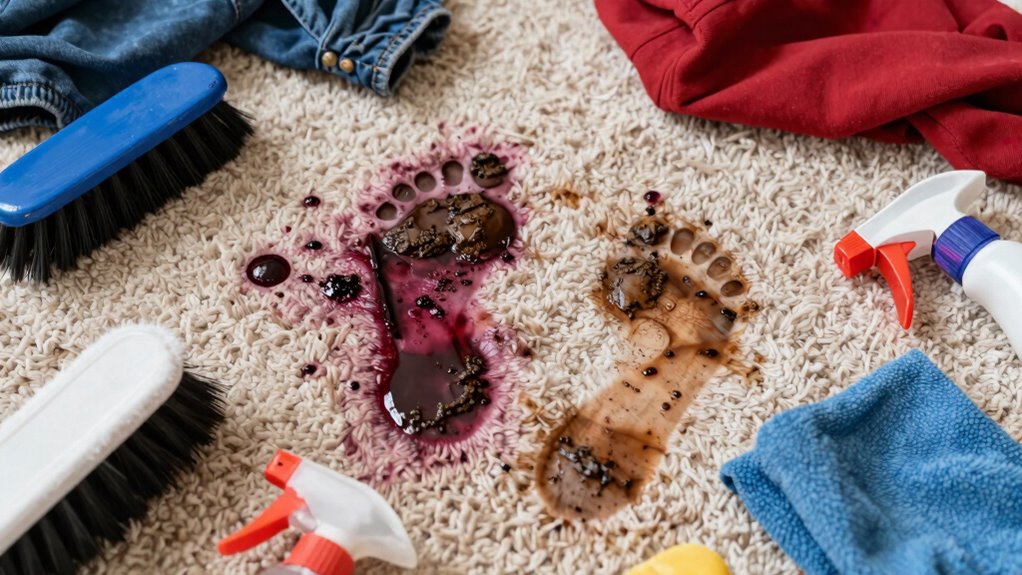
Mud stains can be tricky to remove, but acting quickly makes all the difference. For effective mud removal from clothes, start by letting the mud dry completely. Once dry, gently brush off excess dirt outside to prevent spreading. For fresh stains, rinse the fabric with cold water to loosen the mud. If you’re cleaning carpets or outdoor gear, scrape away excess mud with a spatula or cloth. Use a mixture of mild detergent and cold water to blot the stain, avoiding rubbing, which can embed the dirt deeper. For outdoor cleaning, a garden hose can help flush out stubborn mud from fabrics or gear. Remember, patience is key—quick, careful action prevents the stain from setting, making mud removal easier and more successful.
Pre-Treating and Washing Mud Stains: Quick and Easy Tips
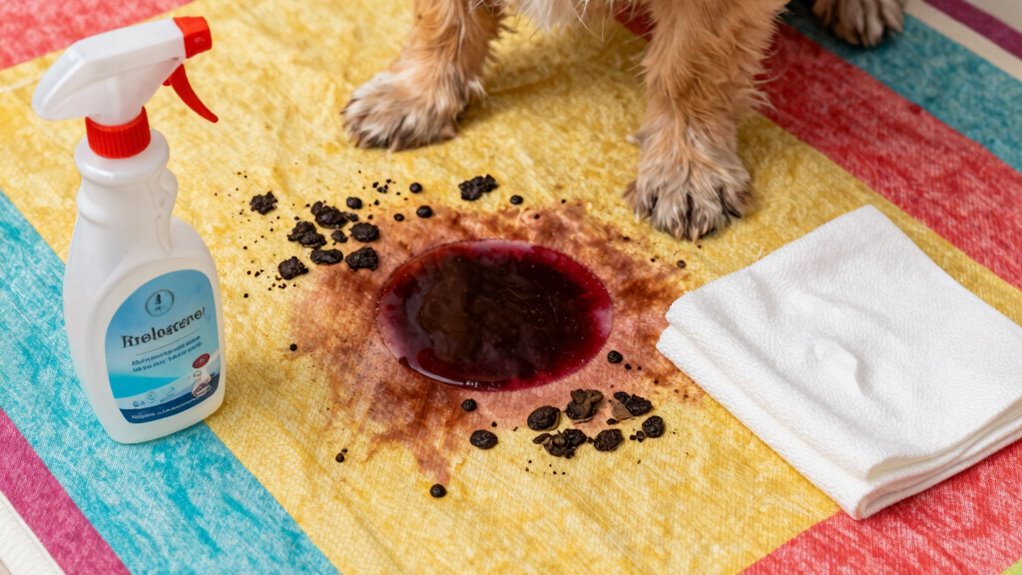
Pre-treating mud stains promptly increases your chances of complete removal. Start by gently scraping off excess mud without spreading it further. Rinse the stain with cold water to loosen dirt. Apply a stain reducer or a mixture of liquid detergent and water directly to the affected area, letting it sit for 10-15 minutes. For added effectiveness, consider using fabric softeners in the rinse cycle, which help loosen dirt and soften fibers. When washing, use the warmest water safe for your fabric. Check the stain before drying; if it persists, repeat pre-treatment. Avoid drying until the stain is gone, as heat can set it permanently. Remember, quick action and proper pre-treatment make mud stains much easier to remove.
How Pet Accidents Leave Stains and Odors: And How to Remove Them?

Pet accidents can leave stubborn stains and lingering odors if not treated properly. Knowing how to identify different stain types helps you choose the right removal method, while effective odor control keeps your home fresh. Let’s explore how to recognize these stains and eliminate odors for good. Regional flavors and unique ingredients like chicory can influence stain and odor removal strategies, especially when dealing with coffee or tea residues.
Identifying Pet Stain Types
Have you ever wondered how to tell if a stain is caused by a pet accident or something else? Recognizing pet stain types involves understanding stain identification. Pet stains often have distinct characteristics that set them apart. For example:
- Fresh urine stains are usually yellowish and damp.
- Older urine might turn brown and smell strong.
- Fecal stains are often darker, with a sticky texture.
- Vomit stains vary in color and may contain undigested food.
- Using the right cleaning products, such as enzymatic cleaners, can effectively break down stain residues and eliminate odors.
Knowing these differences helps you determine the type of pet stain you’re dealing with. This knowledge makes it easier to choose the right cleaning method and prevent lingering odors. Proper stain identification is essential for effective cleaning and keeping your home fresh and odor-free.
Effective Odor Removal Methods
Ever wondered why some stains seem to linger, leaving behind stubborn odors? It’s often because of common stain removal myths that suggest harsh chemicals are the only solution. In reality, eco friendly solutions can be highly effective. Start by blotting the area to absorb moisture, then use a mixture of white vinegar and baking soda to neutralize odors naturally. Enzymatic cleaners are another excellent choice, breaking down organic materials that cause smell. Avoid fake remedies that promise quick fixes but only mask the odor temporarily. Regular cleaning with eco friendly solutions not only removes the stain but also eliminates the source of the odor. This approach is safer for your pets and the environment, ensuring your space smells fresh and stays clean longer. Incorporating smart home technology such as automated cleaning devices can further help maintain a fresh environment effortlessly.
Proven Strategies for Cleaning Pet Stains From Upholstery and Floors
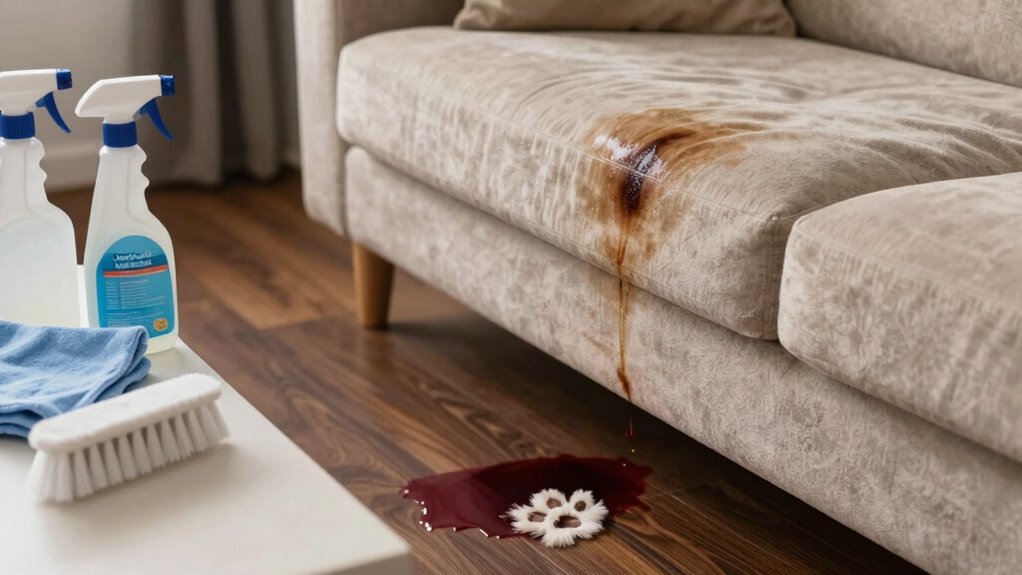
Cleaning pet stains from upholstery and floors can be straightforward if you act quickly and use proven techniques. First, identify the pet stain to choose the right cleaning approach. For upholstery cleaning techniques, start by blotting excess moisture with a clean cloth. Use a mixture of mild detergent and water or a pet-specific enzyme cleaner to break down stains and odors. For floors, gently scrape away solids before applying your cleaning solution. Always test cleaning products on a small, hidden area first. Remember, quick action prevents stains from setting. Here are helpful tips:
Act quickly with blotting and enzyme cleaners to effectively remove pet stains from upholstery and floors.
- Identify the stain quickly to select the right cleaning method
- Blot, don’t rub, to lift the stain
- Use enzyme cleaners for organic pet stains
- Rinse and dry thoroughly to prevent residue buildup
Frequently Asked Questions
Can Stain Removal Techniques Damage Delicate Fabrics or Surfaces?
Yes, stain removal techniques can damage delicate fabrics or surfaces if you’re not careful. Always check fabric compatibility and surface safety before applying any cleaner. Use gentle methods for fragile materials, like testing a small hidden area first. Avoid harsh chemicals that might cause discoloration or deterioration. Following proper guidelines guarantees you remove stains effectively without risking damage to your fabrics or surfaces.
Are Commercial Stain Removers Safe for All Clothing Types?
Think of commercial stain removers as powerful wizards with spells that can sometimes backfire. They aren’t safe for all clothing types because of potential chemical safety issues and environmental impact. Always check labels first, especially on delicate fabrics like silk or wool. Using the wrong product can damage your clothes and harm the environment, so choose eco-friendly options and test on small areas before full application.
How Can I Prevent Stains From Setting Permanently?
To prevent stains from setting permanently, act quickly with preventative measures. Blot the spill gently without rubbing, and rinse with cold water if possible. Use stain prevention tips like applying a stain repellent spray or treating fabric promptly. The sooner you address a stain, the less likely it is to set. Keep a cleaning kit handy and stay vigilant during messy activities to maintain your clothing’s appearance.
What Natural Remedies Are Effective Against Stubborn Stains?
You can try herbal remedies like lemon juice or baking soda paste to tackle stubborn stains. Essential oils such as tea tree or lavender can also help break down stains and disinfect the area. Apply these remedies directly to the stain, let them sit for a few minutes, then scrub gently or blot with a clean cloth. Always test a small area first to prevent any damage to your fabric or surface.
How Do I Remove Old, Set-In Stains From Fabrics?
Think of old, set-in stains like stubborn weeds in your garden. To remove them, start with a fabric pre-treatment, gently working it into the stain. Let it sit for at least 15 minutes, then wash with warm water. For extra power, try a stain removal tip like soaking in a mixture of water and white vinegar overnight. Persistence and proper treatment are your best tools.
Conclusion
Think of stain removal like tending a garden—you need patience, the right tools, and a gentle touch. I once spilled red wine on my favorite shirt, and with quick action, it disappeared like magic. Remember, acting fast can prevent stains from settling in forever. With these tips, you’ll be equipped to handle any spill—turning chaos into clean, just like nurturing a thriving garden from a wild patch.
Back to school Picks
back to school
As an affiliate, we earn on qualifying purchases.