To prevent dye bleed in your home laundry, you should sort clothes by color and fabric type, wash new clothes separately at first, and always use cold water to lock in dyes. Turning garments inside out, using color catcher sheets, and choosing gentle cycles for delicate items also help protect colors. Adding vinegar or salt can further set dyes. Follow these steps closely, and you’ll discover more tips to keep your clothes vibrant and colorfast.
Key Takeaways
- Sort laundry by colors and fabrics to minimize dye transfer during washing.
- Use cold water and gentle cycles to reduce dye bleeding and fabric stress.
- Incorporate natural color fixatives like vinegar or salt in the wash or pre-soak.
- Add color catcher sheets to absorb loose dyes and protect clothes.
- Properly dry clothes in shade, inside out, and with low heat to prevent fading and bleeding.
Sort Your Laundry by Color and Fabric Type
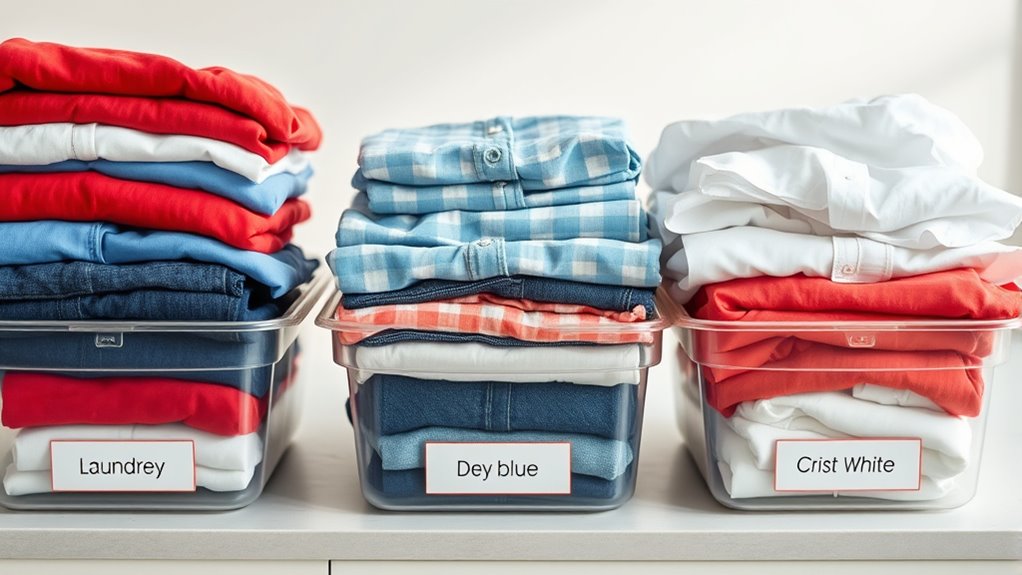
To prevent dye bleed, start by sorting your laundry into separate piles based on color and fabric type. This step keeps new, potentially bleeding clothes from contaminating others. Separate whites, light colors, and darks to minimize color transfer. Additionally, sort fabrics by their weight and weave—delicate fabrics like silk or lace need different care than sturdy items like denim or towels. Washing similar fabrics together ensures they respond equally to agitation and water, reducing the chance of dye transfer. Check garment labels for specific instructions, especially for new or brightly colored items. Taking the time to organize your laundry this way prevents accidental dye transfer, saves you from re-washing stained clothes, and prolongs the life of your garments. Proper sorting is a simple but essential step in preventing dye bleed. Understanding fabric care can help you select the appropriate washing techniques to further protect your clothes from dye transfer.
Use Cold Water for Washing Bright and Dark Clothes
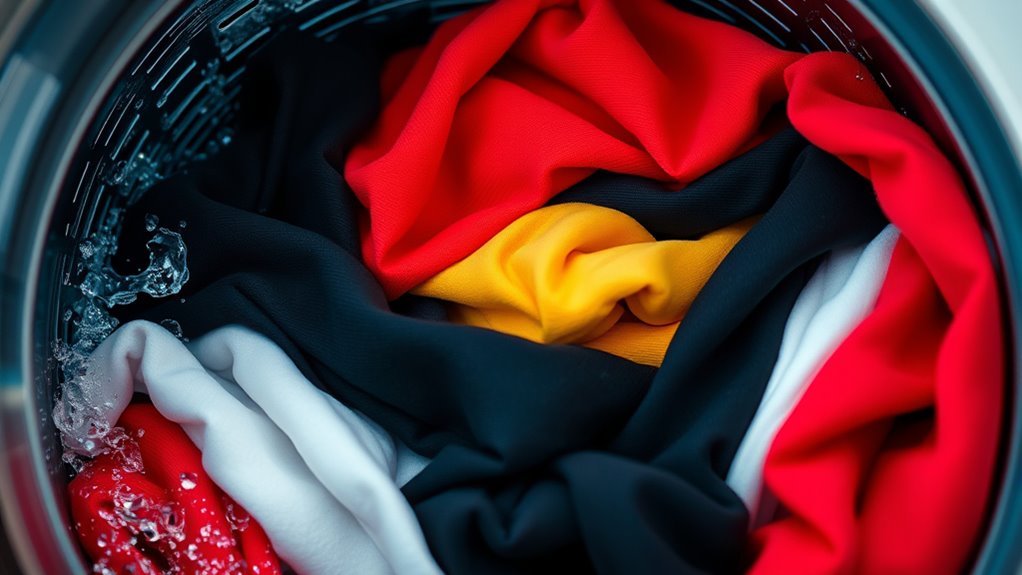
When washing bright and dark clothes, opting for cold water can considerably reduce the risk of dye bleeding. Hot water tends to loosen dyes, making them more likely to seep out and stain other garments. Cold water, on the other hand, helps to lock in colors and prevent this transfer. It’s especially effective for delicate fabrics or new clothing items that haven’t been fully color-set. Additionally, using cold water can help preserve the vibrancy of your clothes over time. Make sure to select the cold water setting on your washing machine before starting each load. This simple adjustment can go a long way in keeping your darks and brights looking fresh and preventing unwanted dye transfer.
Choose the Right Detergent to Preserve Colors
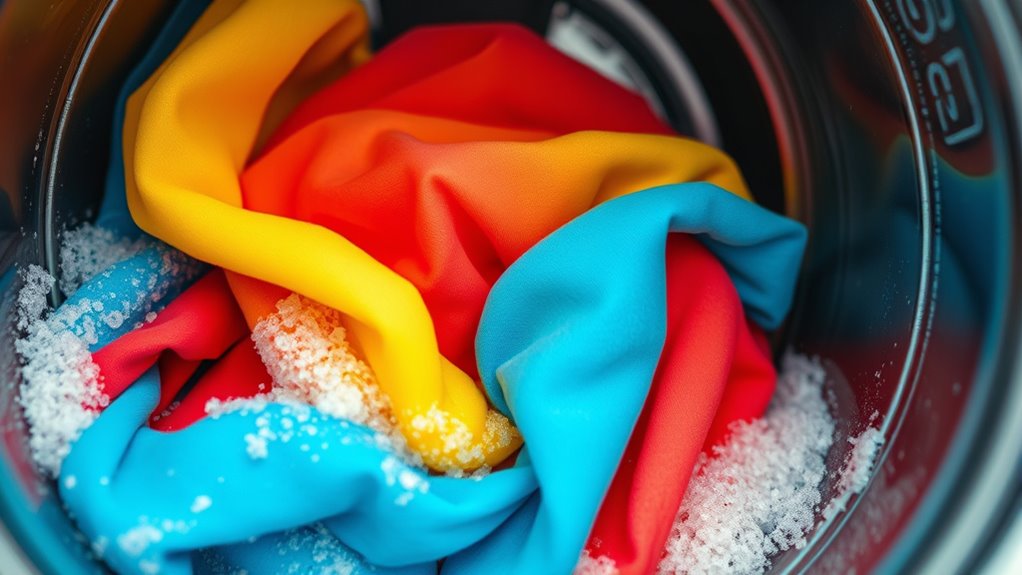
Choosing the right detergent is essential for maintaining the vibrancy of your clothes. Your detergent should be gentle yet effective in cleaning without stripping away dyes. Look for detergents labeled as color-safe or formulated specifically for colored fabrics. These contain mild surfactants and color-preserving agents that prevent dye loss and bleeding.
To help you select the best option, consider these points:
- Choose detergents with optical brighteners that enhance color brightness without damaging dyes
- Use liquid detergents over powders, as they dissolve better and are less abrasive
- Avoid harsh enzymes and bleach, which can weaken fabric dyes over time
Wash New Clothes Separately at First

When you wash new clothes for the first time, use cold water to help prevent color from bleeding. Check the color fastness by dampening a small area and testing it before washing. This simple step can protect your other garments from unexpected dye transfer. Incorporating sound healing science principles, such as gentle vibrations, can also help preserve fabric integrity during washing.
Use Cold Water
To prevent dye bleed, it’s best to wash new clothes separately in cold water. Cold water helps seal the dye within the fabric, reducing the chance of color transfer to other garments. When you use cold water, the dye molecules are less likely to loosen and bleed during the wash cycle. This simple step can save you from the frustration of ruined clothes and stained laundry.
To envision this, consider:
- A new, vibrant shirt soaking in a tub of icy water, the fabric holding its color tightly.
- Brightly colored towels being washed alongside whites, with cold water preventing any dye migration.
- A load of freshly purchased clothes, all being washed carefully in cold water to keep colors intact.
Check Color Fastness
Before washing new clothes with other items, it’s important to check how well their colors hold up. To do this, dampen a small hidden area of the garment, like inside the seam or hem, and press a white cloth or paper towel against it. If color transfers, the fabric isn’t colorfast. Wash the item separately from lighter or different-colored clothes for the first few washes. This prevents dye from bleeding onto other garments. Always follow the care label instructions, and consider using color-catching sheets for added protection. Checking color fastness helps you avoid surprises and keeps your laundry looking fresh. Taking this small step ensures you preserve the vibrancy of your new clothes and prevents dye transfer mishaps. Additionally, understanding color fastness can help you choose suitable washing methods for different fabrics.
Turn Garments Inside Out Before Washing
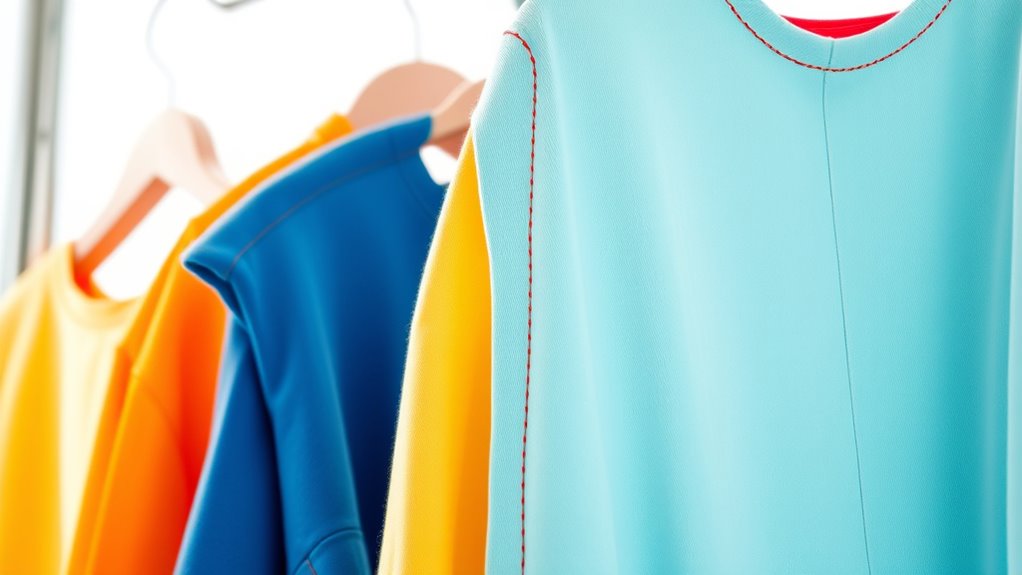
Ever wonder how to keep your clothes from losing their vibrant colors? Turning garments inside out before washing is a simple trick that helps. It protects the outer surface from friction and direct contact with other clothes, reducing the chances of dye bleeding. When you flip your clothes, the colors stay vibrant longer and the fabric endures less wear and tear. Think of it as a shield that preserves the dye’s integrity during the wash cycle. Additionally, proper fabric care techniques can extend the lifespan of your garments and maintain their appearance over time.
Avoid Overloading the Washing Machine
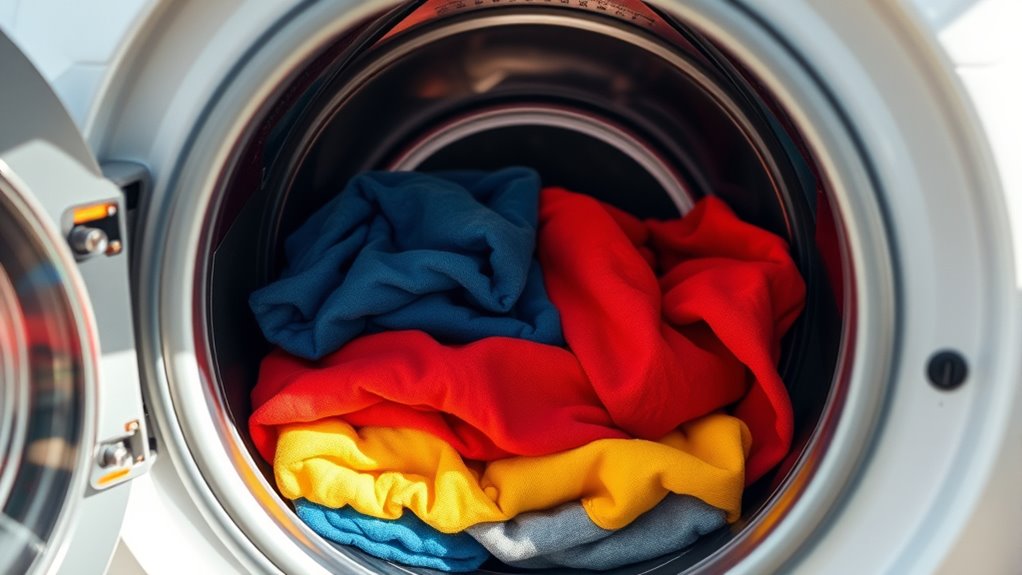
Make sure not to overload your washing machine, so clothes have enough room to move freely. This prevents tangling and reduces stress on the fabrics, helping colors stay vibrant. Keeping loads balanced also guarantees washing stays effective and minimizes dye transfer. Additionally, understanding the horsepower of electric dirt bikes can help in choosing durable and reliable appliances for your laundry room.
Room for Clothes
Overloading your washing machine can prevent clothes from cleaning properly and increase the risk of dye transfer. When you pack too many garments, water and detergent can’t circulate evenly, leaving some items unclean and causing colors to bleed. To avoid this, leave enough space for clothes to move freely. Proper loading also facilitates better water flow, which is essential for preventing dye bleed and ensuring thorough cleaning.
Prevents Tangling and Stress
When you overload your washing machine, clothes are more likely to tangle and experience unnecessary stress during the wash cycle. This can cause damage to fabric fibers and increase dye transfer risks. To prevent this, load your machine with a manageable amount of clothing, allowing them to move freely. Distributing clothes evenly helps reduce stress points and minimizes tangling. Avoiding overloading also helps maintain the effectiveness of essential oils and other cleaning agents, ensuring your clothes are thoroughly cleaned without damage.
Maintains Washing Efficiency
To maintain washing efficiency, it’s essential to avoid overloading your machine, as this can hinder proper cleaning. When you overload it, water and detergent can’t circulate freely, leaving dirt and dye residues behind. This leads to clothes not being thoroughly cleaned, increasing the risk of dye bleeding in future washes. Using eye patches with beneficial ingredients like collagen and hyaluronic acid can improve skin hydration, but proper laundry practices are key to preventing dye transfer. To prevent this, keep these tips in mind:
- Fill the machine loosely, allowing space for clothes to move.
- Don’t pack clothes tightly; leave room for agitation.
- Follow the manufacturer’s load size recommendations.
Incorporate Color Catcher Sheets Into Your Laundry Routine
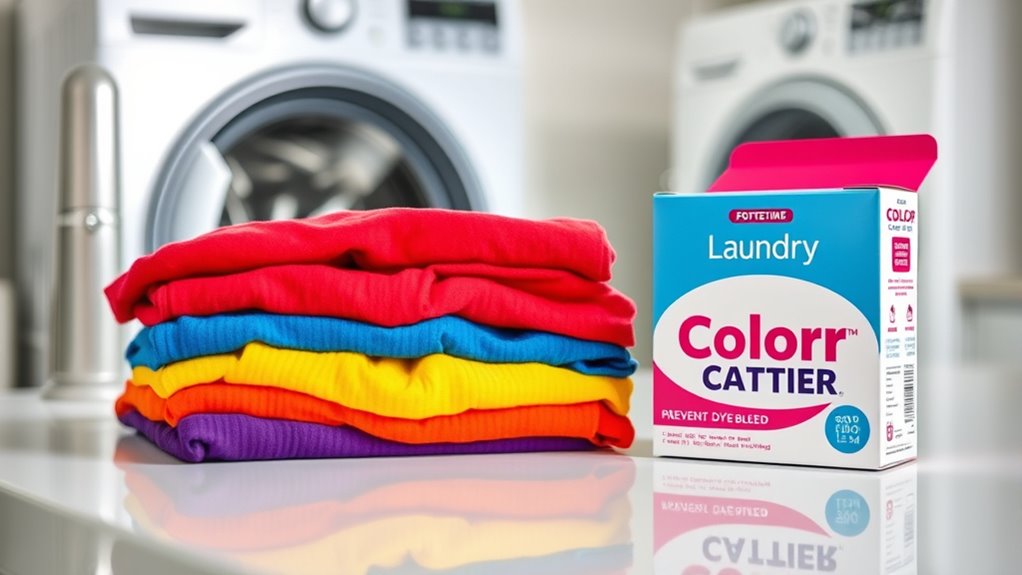
Adding color catcher sheets to your laundry routine can be a simple yet effective way to prevent dye bleed. These sheets are designed to absorb loose dyes released during washing, trapping them before they settle on other fabrics. To use them, toss a sheet into the washing machine with your clothes, especially when washing new or brightly colored items. You don’t need to change your usual washing settings; just add the sheet along with your detergent. After washing, discard the sheet—it’s done its job. Incorporating these sheets regularly can help protect your clothing and keep colors vibrant longer. They’re affordable, easy to use, and a smart addition to your laundry routine, giving you extra peace of mind when washing mixed or delicate loads. Using color-safe products can further help preserve your garments’ vibrancy and prevent fading over time.
Opt for Gentle Wash Cycles for Delicate Items
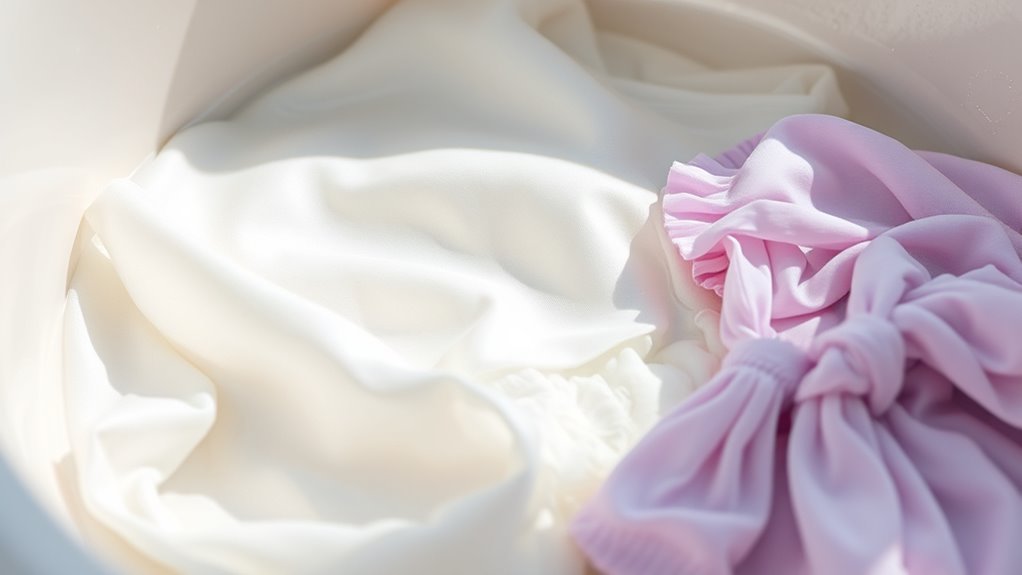
Using color catcher sheets helps protect your clothing during laundry, but choosing the right wash cycle can further prevent damage. Gentle wash cycles reduce agitation and spinning, which helps keep dyes from bleeding and fabric colors intact. When washing delicate items, like silk or lace, opt for these cycles to minimize stress on the fibers. This gentle approach prevents excessive friction that can cause dye transfer or fading. Additionally, using cold water in these cycles slows dye release, maintaining vibrant colors longer. For best results, always check clothing labels and select the shortest, most delicate cycle available. Proper wash cycle selection also minimizes fiber stress, further protecting your clothing.
- Reduce fabric agitation to keep dyes from spreading.
- Use cold water to slow dye bleeding.
- Shorten wash time to limit fiber stress.
Use Vinegar or Salt as Natural Color Setters
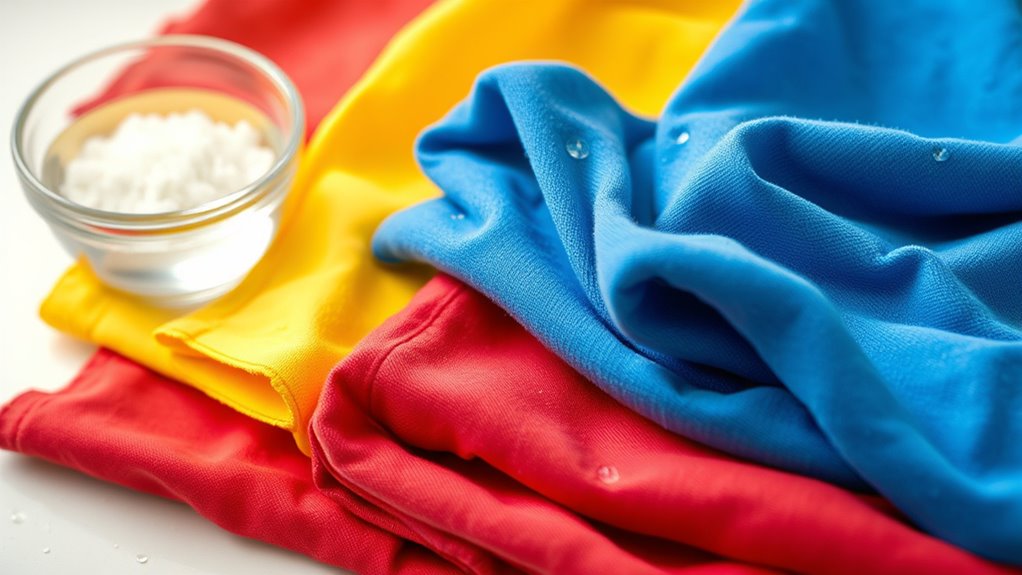
Vinegar and salt are natural, affordable options that can help set dyes and prevent bleeding during laundry. To use vinegar, add half a cup of white vinegar to your washing machine’s rinse cycle. This helps lock in colors and reduces bleeding. Salt works similarly; dissolve half a cup of salt in cold water and soak new, colorful garments for 30 minutes before washing. This pre-treatment helps stabilize dyes and prevent fading or bleeding in future washes. Both methods are simple, cost-effective, and safe for most fabrics. Keep in mind, vinegar is best used for cotton and natural fibers, while salt is versatile across fabrics. Incorporate these natural color-setters into your laundry routine to maintain vibrant, intact colors longer.
Dry Clothes Properly to Prevent Color Fading

Drying your clothes properly is essential for preventing color fading and maintaining vibrant hues. When you hang clothes to dry, how you do it can make a big difference. Avoid wringing out garments aggressively, as this can cause color loss. Instead, gently squeeze out excess water and hang clothes inside out to protect the colors from direct sunlight. Using a low heat setting if you opt for a dryer also helps preserve the dye. Proper drying techniques lock in color and prevent bleeding during future washes.
Proper drying preserves vibrant colors and prevents fading and bleeding during washes.
- Hang clothes in a shaded, well-ventilated area
- Turn garments inside out before drying
- Use low or no heat settings on dryers
Frequently Asked Questions
Can Fabric Softeners Affect Color Bleeding?
Yes, fabric softeners can affect color bleeding. They often contain chemicals that coat fibers, which might weaken dye bonds or cause dyes to loosen. This can lead to colors bleeding more easily during washes. To avoid this, it’s best to skip fabric softeners on new or brightly colored clothes, or use color-safe products. Always follow garment care labels and wash colorful items separately to protect their vibrant hues.
How Often Should I Wash New Clothes Separately?
Washing new clothes separately is like giving them a gentle first date—they need time to get comfortable. You should wash new garments separately for at least the first 2-3 washes, or until you’re sure their colors won’t bleed. Use cold water and a mild detergent to protect the fabric. This helps prevent dye transfer, keeping your clothes looking fresh and vibrant longer.
Are There Specific Brands Less Prone to Dye Transfer?
You wonder if some brands are less prone to dye transfer. While no brand guarantees zero bleeding, certain brands use better dyeing techniques and higher-quality materials, making them less likely to bleed. Look for reputable brands known for colorfast fabrics, and always check reviews. To be safer, wash new clothes separately or with similar colors first, regardless of brand, to prevent dye transfer and keep your wardrobe looking fresh.
Does Laundry Water Temperature Impact Dye Retention?
Think of laundry water temperature like a gentle breeze for your clothes—too hot, and it can cause colors to fade or bleed, like a watercolor painting in the rain. Warm or cold water helps preserve dye retention better than hot water, which can loosen dyes and cause bleeding. Always check clothing labels and opt for cooler settings to keep your colors vibrant and intact during each wash.
Can Drying Clothes Outside Increase Dye Fading?
Drying clothes outside can increase dye fading because sun exposure and outdoor elements like wind and dirt can weaken the dye’s color. UV rays break down the dye molecules, causing colors to fade faster. To protect your clothes, try drying them in the shade or indoors. This way, you’ll maintain vibrant colors longer and prevent unnecessary fading caused by outdoor environmental factors.
Conclusion
By following these simple tips, you’ll keep your clothes vibrant and prevent unwanted dye bleed. It’s funny how a little extra care can make such a difference—sometimes, the smallest adjustments save your favorite shirts from fading or staining other garments. With just a bit of attention, your laundry routine becomes easier and more effective. So next time, remember, a little prevention goes a long way in keeping your wardrobe looking fresh and new.