To tell when to rotate or replace your rug, check for worn areas like flattened, shiny fibers, frayed edges, or faded patches from UV exposure. Rotate your rug every 3-6 months to promote even wear, especially in high-traffic spots. If damage, bald patches, or odors persist despite cleaning, it’s time to replace. Knowing how to spot these signs helps prolong your rug’s life—more tips are just ahead to keep your space looking great.

Get cleaning gear delivered free — and shop member deals
- Fast, free delivery on millions of items
- Access to Prime Big Deal Days deals on October 6–7
- Prime Video, Amazon Music and more included
Key Takeaways
- Identify flattened, shiny, or discolored areas indicating uneven wear and the need for rotation.
- Rotate the rug every 3 to 6 months to promote even aging and prevent excessive wear in high-traffic zones.
- Look for frayed edges, bald patches, or persistent stains that suggest replacement is necessary.
- Check for uneven shedding or matted fibers, which signal aging and the need for either rotation or replacement.
- Consider replacing the rug if damage compromises safety, aesthetics, or if cleaning no longer restores its condition.
As an affiliate, we earn on qualifying purchases.
Recognizing Common Wear Patterns on Rugs
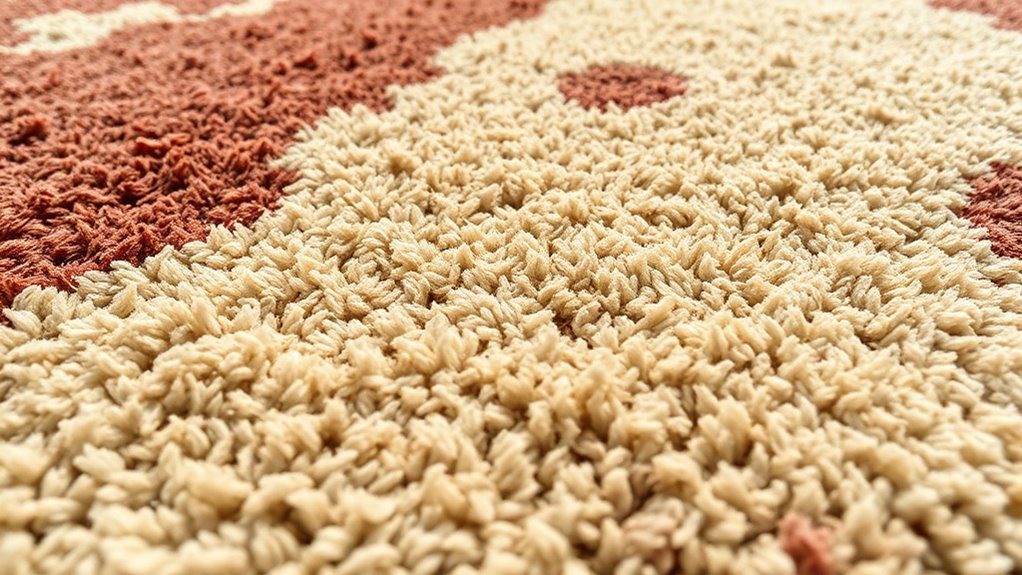
Understanding common wear patterns on rugs is essential for identifying areas that experience the most foot traffic and stress. Typically, you’ll notice high-traffic zones with flattened fibers, creating a smoother or shinier appearance compared to surrounding areas. These spots often develop a faded or discolored look because dirt and dust accumulate more quickly. Edges and corners tend to fray or curl as they endure constant movement. In contrast, less-trodden sections may remain plush and vibrant, highlighting uneven wear. You might also see indentations where furniture consistently rests, causing the fibers to compress and lose their original texture. Recognizing these patterns helps you determine which parts of your rug need attention, whether that’s cleaning, rotating, or planning for eventual replacement. Regularly assessing wear patterns aligns with the Maximize Space and Organization approach by helping you maintain a well-kept and functional living area.
Signs That Indicate It’s Time to Rotate Your Rug

Noticing uneven wear on your rug is a clear sign it’s time to rotate it. If certain areas look more faded, flattened, or frayed, your rug isn’t being used evenly. Look for patches where colors have faded faster or fibers are more worn down. Heavy foot traffic areas often show more damage, indicating rotation is needed. To help visualize, consider this table:
| Wear Pattern | What It Means |
|---|---|
| Faded or discolored patches | High foot traffic or sun exposure |
| Flattened pile in spots | Frequent walking or furniture placement |
| Frayed edges or loose fibers | Excessive use or dragging |
| Uneven shedding | Aging or underlying wear issues |
| Matted or compressed areas | Heavy use, requiring rotation to even out use |
Keep an eye out for these signs to maintain your rug’s lifespan. Regularly rotating your rug can also help prevent uneven wear patterns and extend its overall durability.
How to Properly Rotate Your Rug for Even Wear
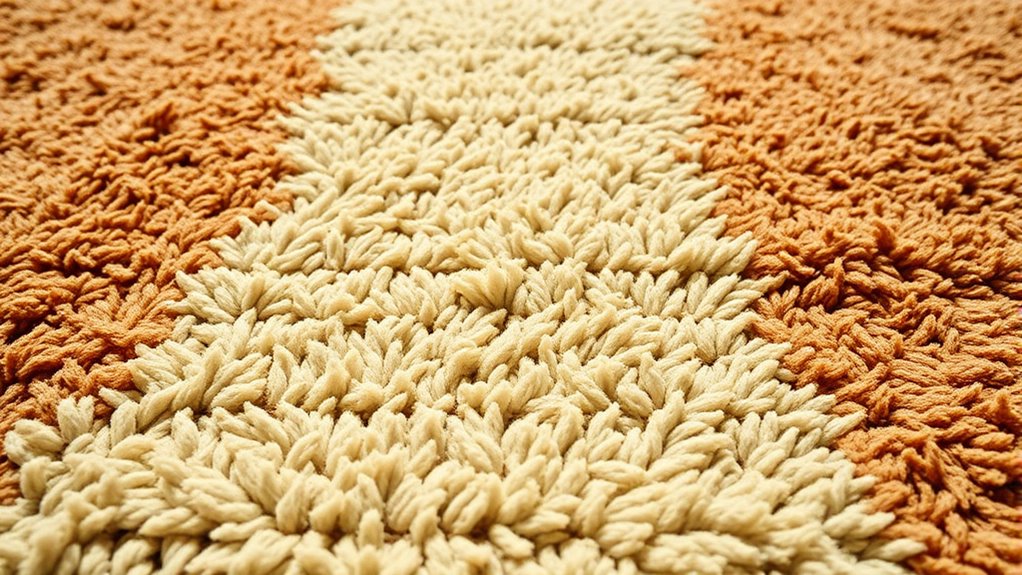
To keep your rug wearing evenly, you should rotate it regularly and consistently. Changing its orientation every few months prevents one area from thinning more than others. Also, use furniture placement strategically to distribute weight and minimize uneven wear. Additionally, consider using high-quality padding under the rug to protect the fibers and promote even wear over time.
Rotate Regularly and Consistently
Regularly rotating your rug helps guarantee it wears evenly over time. To do this effectively, set a schedule—every three to six months works well for most rugs. When rotating, turn the rug 180 degrees so the areas that face traffic or sunlight change positions. This prevents uneven fading and wear in high-traffic spots. Keep track of your rotations using a calendar or a reminder system. Consistency is key; sticking to your schedule ensures all parts of the rug age evenly. Also, check for any signs of uneven wear or fading during each rotation and adjust your timing if needed. By maintaining a regular rotation routine, you extend your rug’s lifespan and keep it looking fresh longer. Additionally, understanding the wear patterns common in rugs can help you identify when it’s time to rotate or replace your rug to maintain its appearance.
Change Rug Orientation Periodically
Changing the orientation of your rug is an effective way to guarantee even wear across its surface. By rotating the rug 180 degrees periodically, you ensure that foot traffic doesn’t consistently wear down the same spots. This simple step helps distribute the pressure more evenly, extending the rug’s lifespan. It’s best to do this every few months, especially in high-traffic areas. Before rotating, clear the rug and check for any dirt or debris that could cause uneven wear. Keep in mind that some patterns may look different when flipped, so consider that when choosing the direction. Regularly changing your rug’s orientation not only maintains its appearance but also helps prevent premature thinning or fraying. Additionally, pattern designs can influence how noticeable the rotation is, so select a pattern that accommodates flipping without disrupting the aesthetic. It’s a straightforward, effective way to keep your rug looking fresh and balanced.
Use Furniture Placement Strategically
Strategic furniture placement plays a crucial role in ensuring your rug wears evenly over time. To maximize this, consider these steps:
- Rotate furniture regularly to prevent constant pressure on the same rug areas.
- Use furniture pads or protectors beneath heavy pieces, reducing friction and indentations.
- Arrange furniture to distribute weight evenly, avoiding concentrated pressure on specific spots.
When to Consider Replacing Your Rug

You should consider replacing your rug when it shows significant wear and tear that can’t be fixed. Persistent odors or stubborn stains that cleaning won’t remove are also signs it’s time for a new one. Don’t wait too long, as continued use of a heavily worn or stained rug can impact your space’s appearance and air quality. Regular care and maintenance can extend the lifespan of your rug, but recognizing when it’s beyond repair is essential for preserving your interior environment.
Significant Wear and Tear
When a rug shows clear signs of significant wear and tear, it’s usually a good time to contemplate replacement. You’ll notice areas where the fibers are frayed, bald patches, or persistent thinning. These issues not only look unattractive but can also compromise safety. Consider these indicators:
- Extensive bald spots or threadbare patches that reveal the backing.
- Frayed edges or unraveling seams that can worsen over time.
- Worn-down sections that lose their cushioning and support.
If these signs persist despite cleaning or minor repairs, it’s a clear sign your rug has reached the end of its lifespan. Replacing it guarantees safety, aesthetics, and comfort in your space. Don’t wait until damage worsens; act now to preserve your home’s look.
Persistent Odors or Stains
Persistent odors or stains that refuse to fade after thorough cleaning are often signs that your rug has reached the end of its lifespan. If cleaning doesn’t eliminate bad smells or stubborn stains, bacteria and deep-seated dirt may have caused irreversible damage. These issues can impact air quality and create an unwelcoming environment. Repeated attempts at cleaning might make things worse, spreading odors or causing discoloration. When odors linger despite multiple cleanings, or stains become permanent, it’s time to contemplate replacing your rug. Continuing to use a damaged rug can also lead to further wear, increased health risks, and decreased home comfort. Recognizing these signs early helps you avoid ongoing frustration and ensures your space stays fresh and inviting. Additionally, AI-driven diagnostics can help assess whether your rug’s condition warrants replacement or targeted cleaning.
Factors That Contribute to Accelerated Wear

What factors cause tire or rug wear to accelerate beyond normal rates? Several elements can speed up the process. First, heavy foot traffic concentrates pressure on specific areas, causing those spots to wear faster. Second, improper cleaning methods—like using harsh chemicals or abrasive tools—can weaken fibers and accelerate deterioration. Third, environmental conditions such as high humidity or direct sunlight can break down fibers and fade colors, leading to uneven wear. Additionally, frequent dragging of furniture or shoes rubbing against the rug can cause localized damage. Using protective measures like rug pads or furniture coasters can help distribute weight evenly and reduce wear. Being mindful of these factors helps you prevent unnecessary wear and extends your rug’s lifespan. Recognizing what contributes to faster deterioration allows you to take proactive steps to protect your investment.
Tips for Extending the Life of Your Rug
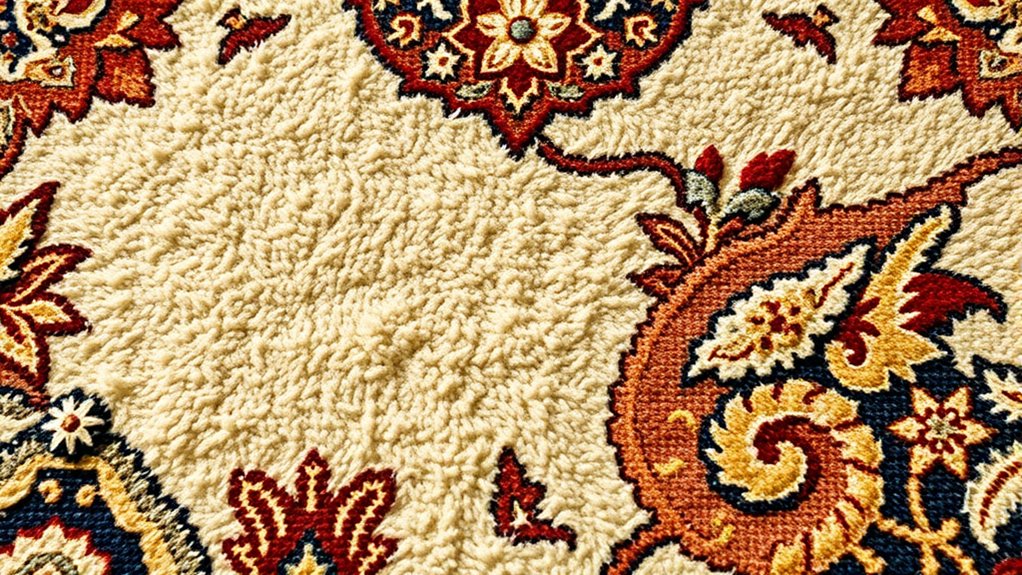
To extend the life of your rug, start by placing it in areas with less foot traffic and avoiding direct sunlight, which can cause fading and fiber damage. Regularly vacuum your rug to remove dirt and debris that can wear down fibers over time. Rotate your rug every few months to promote even wear, especially in high-traffic spots. Use rugs or mats at entryways to reduce dirt and moisture being tracked onto it. Address spills immediately by blotting with a clean, damp cloth—avoid rubbing, which can push stains deeper. Consider professional cleaning every 12 to 18 months to maintain its appearance and fiber integrity. Additionally, selecting dog-friendly rugs can help prevent damage caused by pet claws or accidents. Ultimately, avoid placing heavy furniture directly on the rug or use furniture pads to distribute weight evenly, preventing permanent indentations.
Choosing the Right Replacement When Needed
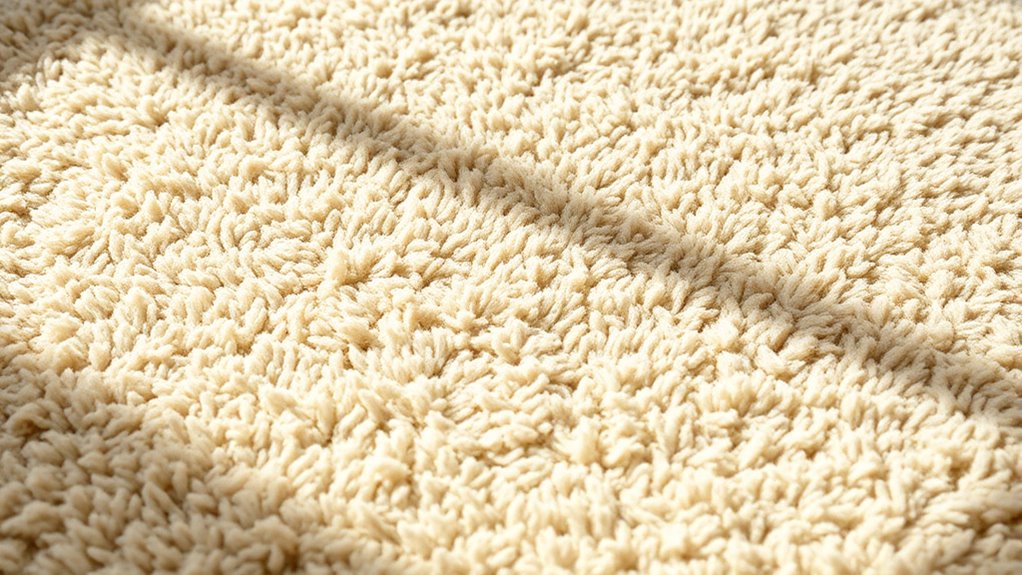
When it’s time to replace your rug, choosing the right one involves considering both your space and your lifestyle. First, assess the room’s traffic: high-traffic areas benefit from durable materials like wool or polypropylene. Second, think about your style preferences—do you want a bold pattern or a neutral tone? Third, consider maintenance needs: if you prefer low upkeep, opt for stain-resistant fibers. Being mindful of small mistakes can help you select a rug that minimizes future issues and enhances your space.
Frequently Asked Questions
How Often Should I Professionally Assess My Rug’S Condition?
You should have your rug professionally assessed at least once a year, especially if it’s in high-traffic areas. Regular inspections help identify early signs of wear, damage, or fading. If you notice uneven wear patterns or fraying, it’s time to call in a professional sooner. Routine checks keep your rug looking its best and extend its lifespan, ensuring you catch issues before they become costly or irreversible.
Can Specific Furniture Placement Prevent Uneven Rug Wear?
Imagine your rug as a canvas, where furniture acts like gentle hands pressing and shifting. By carefully arranging your furniture, you can distribute weight evenly, preventing patches from becoming flattened or worn. Using protective pads under legs also helps diminish friction. Regularly repositioning furniture and rotating your rug ensures even wear, keeping it vibrant and beautiful longer. Thoughtful placement is your first step toward preserving your rug’s integrity.
Are There Eco-Friendly Options for Rug Replacement?
If you’re looking to replace your rug eco-friendly, you have several options. You can choose rugs made from sustainable materials like bamboo, jute, or recycled fibers. Look for products with eco-friendly certifications, such as Green Seal or OEKO-TEX. Additionally, consider buying secondhand or vintage rugs to reduce waste. When it’s time to replace, these choices help minimize environmental impact while keeping your space stylish and sustainable.
How Does Indoor Humidity Affect Rug Longevity?
Think of your rug like a living garden; indoor humidity is its weather. Too much moisture causes fibers to weaken and mold, shortening its lifespan. Conversely, too little can make fibers brittle. To protect your rug, maintain a balanced humidity level—ideally between 30-50%. Regular ventilation and using a dehumidifier in damp seasons help keep your rug healthy, ensuring it stays beautiful and durable for years to come.
What Are the Best Cleaning Methods to Extend Rug Life?
To extend your rug’s life, you should regularly vacuum it to remove dirt and debris. Spot clean spills immediately with gentle solutions, avoiding harsh chemicals. Deep clean with professional steam cleaning or gentle washing every 12-18 months, depending on traffic. Rotate your rug every 6-12 months to promote even wear. Keep it out of direct sunlight and avoid excessive moisture to prevent fading and damage.
Conclusion
By paying attention to wear patterns and rotating your rug regularly, you keep it vibrant under your feet like a well-tended garden. When signs of thinning or uneven spots appear, it’s time to consider a fresh start, replacing it with a new piece that will continue to warm your space. With mindful care, your rug can remain a beautiful, inviting centerpiece, anchoring your home’s comfort and style for years to come.
Fall Picks
fall essentials
As an affiliate, we earn on qualifying purchases.