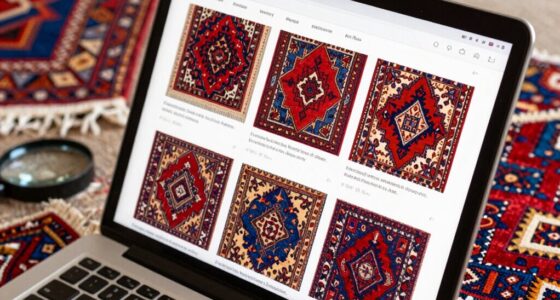
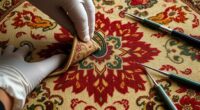
Antique carpet motifs tell powerful stories rooted in mythology, history, and cultural beliefs. You’ll see symbols like the Tree of Life, animals, and floral designs that represent protection, fertility, or spiritual growth. Each pattern reflects regional traditions, historic influences, and local myths, forming a visual language passed down through generations. Exploring these motifs reveals fascinating insights into ancient civilizations and their storytelling, so continue exploring to uncover the rich meanings woven into each design.
Key Takeaways
- Antique carpet motifs often depict mythological stories, symbolizing protection, fertility, or spiritual beliefs rooted in cultural narratives.
- Regional variations in motifs reflect local myths, religious influences, and historical interactions across different cultures.
- Symbols like the Tree of Life and animals convey meanings of growth, strength, and endurance, linking design to myth and history.
- Trade routes and cultural exchanges introduced new motifs, blending influences and creating a visual history of interconnected societies.
- Motifs serve as storytelling tools, preserving myths, cultural values, and historical events through intricate, meaningful patterns.

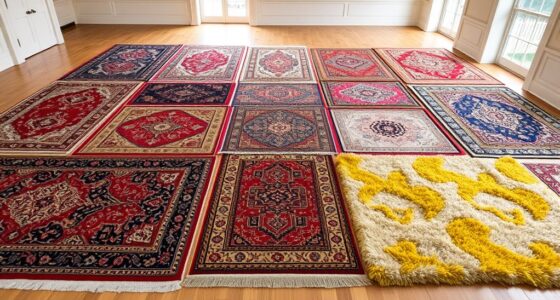
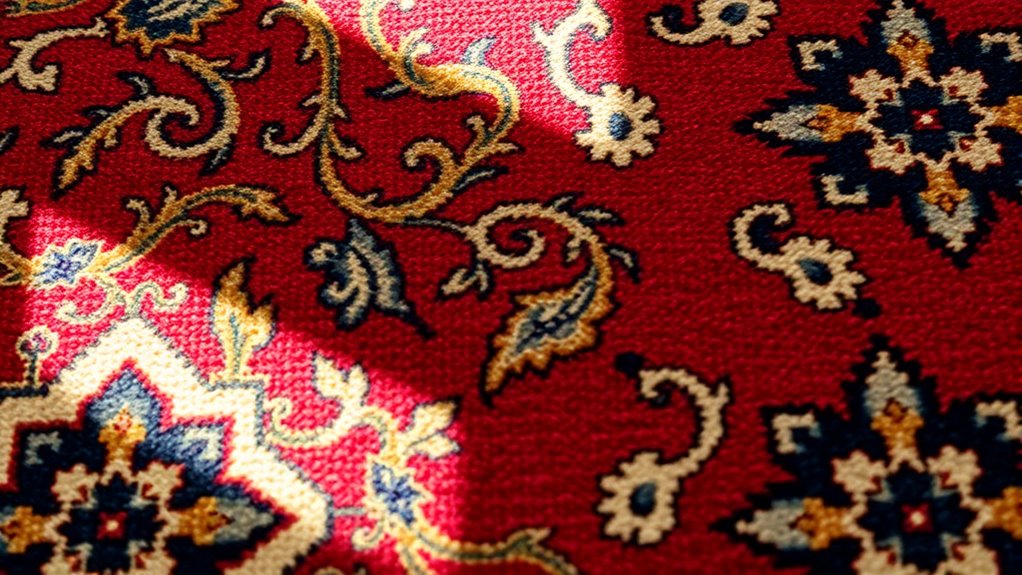
Antique carpet motifs are more than just decorative patterns; they are visual stories that reveal the history, culture, and beliefs of their creators. When you examine these intricate designs, you’re not just looking at art—you’re uncovering layers of symbolic meanings that have been passed down through generations. Each motif often carries specific significance, representing concepts like protection, fertility, or spiritual connection. For example, geometric shapes might symbolize the universe or life’s journey, while floral patterns can denote paradise or renewal. These symbols are deeply rooted in the cultural context of the region where the carpet was made, and understanding these regional variations helps you appreciate the diversity behind each piece. Different areas have distinct motifs, influenced by local myths, religious beliefs, and social customs. A Persian carpet might feature elaborate medallions and floral motifs that symbolize paradise, while a Central Asian rug may incorporate tribal symbols representing protection or status. Recognizing these regional variations allows you to trace the origins of a piece and gain insight into the cultural identity of its makers. Additionally, the use of antique dye techniques further enhances the motifs’ historical significance and authenticity. You’ll notice that motifs often serve dual purposes: they are both decorative and meaningful. These symbols act as a form of storytelling, conveying messages that might be sacred or protective. For instance, the “Tree of Life” motif appears in many cultures, symbolizing growth, fertility, and eternal life. Similarly, animals woven into the design—such as lions, birds, or camels—can represent strength, freedom, or endurance, depending on their cultural context. When you understand the symbolic meanings behind these motifs, you see beyond the surface beauty and appreciate the craftsmanship rooted in tradition and spiritual beliefs. Regionally, motifs reflect not just cultural identity but also historical influences. Trade routes, conquest, and cultural exchanges introduced new symbols and styles, which became integrated into local weaving traditions. As a result, some motifs may show a blend of influences, highlighting the interconnectedness of different cultures. By studying these regional variations, you can trace how ideas and beliefs traveled across borders, influencing the visual language of carpet weaving. Ultimately, antique carpet motifs serve as a rich tapestry of mythology and history, allowing you to connect with the stories and traditions of the artisans who created them. They’re more than just beautiful patterns—they’re timeless symbols of human expression and cultural heritage.

Tree of Life Rug 4×6 Bedroom, Red Vintage Fantasy Pattern Washable Area Rugs for Living Room, Tree of Life Home Decor Non Slip Carpet, Soft Ultra Thin Design (J27)
TREE OF LIFE HOME DECOR: Tree of life area rug, unique style, perfectly complement your house, ideal decorative…
As an affiliate, we earn on qualifying purchases.
As an affiliate, we earn on qualifying purchases.
Frequently Asked Questions
How Are Motifs Linked to Specific Regional Cultures?
You can see how motifs link to specific regional cultures through cultural symbolism and regional stylistic variations. Different regions develop unique patterns that reflect their beliefs, history, and environment, making motifs a visual language. When you observe these distinct motifs, you recognize their cultural significance, connecting you to the traditions and stories of that area. This regional diversity in motifs helps preserve and showcase each culture’s identity through textile art.
What Symbols Indicate the Age of an Antique Carpet?
To determine the age of an antique carpet, look for symbols that indicate longevity, such as trees, animals, or mythological figures, which often appear in older designs. Pay attention to motif evolution, as styles and patterns change over time, reflecting different periods. These subtle shifts help identify the carpet’s age, with more traditional symbols suggesting an earlier origin and more contemporary motifs indicating a newer piece.
Do Motifs Change Over Different Historical Periods?
Imagine you’re scrolling through a vintage website, and you notice how motifs evolve over time, like fashion trends. Yes, motifs change across different periods, reflecting stylistic transformations influenced by culture, trade, and artistry. During certain eras, motifs become more geometric or abstract, while others emphasize floral or symbolic designs. This motif evolution helps you trace a carpet’s historical roots and appreciate how artistic styles adapt over centuries.
Are Motifs Influenced by Trade Routes and Exchanges?
Yes, motifs are heavily influenced by trade influences and cultural exchanges. As you observe antique carpets, you’ll notice that trade routes introduce new ideas, symbols, and styles from different regions. These exchanges inspire motifs that blend local traditions with foreign aesthetics, creating unique designs. Trade influences shape motifs over time, reflecting the dynamic interactions between cultures and enriching the artistic diversity seen in antique carpets.
How Can Motif Analysis Help Authenticate Antique Carpets?
Motif analysis can be your ultimate tool in authenticating antique carpets, revealing the subtle differences that set genuine pieces apart. You’ll uncover symbolic meanings embedded in motif variations, which often reflect specific cultural or regional origins. By comparing these details to known historical patterns, you can confidently determine authenticity, avoiding counterfeit carpets that flood the market. This meticulous scrutiny transforms your appraisal into a legendary quest for true craftsmanship.
SherAvant Samurai Rug 5×7-4×6 Rug – Samurai Rug – Japanese Warrior Gothic Area Rug – Oriental Asian Rugs – Vintage Carpet – Samurai Home Decor
UNIQUE DESIGN: Are you tired of the boring designs of traditional rugs? Let our rugs add a touch…
As an affiliate, we earn on qualifying purchases.
As an affiliate, we earn on qualifying purchases.
Conclusion
Discover the deep, divine stories woven into antique carpet motifs. By deciphering these designs, you explore into history, mythology, and meaningful symbolism. Every thread tells a tale, every pattern preserves a past. So, step into the story, see the symbols, and savor the sense of history hidden in each intricate inch. Uncover the universal unity behind unique designs, and let the timeless tales transform your appreciation of antique carpets.

Unique Loom Versailles Collection Traditional Classic Floral Motif Area Rug (5' 0 x 8' 0 Rectangular, Green/ Ivory)
DELIGHTFUL ESCAPE: Featuring hues of brown, cream, red, and tan amidst a stunning classical floral medallion motif and…
As an affiliate, we earn on qualifying purchases.
As an affiliate, we earn on qualifying purchases.

Aubelin Tapestry Antique Map Medieval Fine Art Tapestry Wall hanging 100% Cotton Size 38"x55"
NOT PRINTED, This Wall Hanging is WOVEN on Jacquard Looms and Hand Finished.
As an affiliate, we earn on qualifying purchases.
As an affiliate, we earn on qualifying purchases.