
When deciding between restoration and conservation for valuable rugs, understand that restoration aims to improve appearance often through repairs or replacements, which can alter the rug’s original character. Conservation, however, focuses on preserving the rug’s current state, maintaining its age, wear, and history. Restoration might make a rug look new, but conservation respects its authenticity. To learn how each approach impacts a rug’s value and story, keep exploring these essential differences.

Get cleaning gear delivered free — and shop member deals
- Fast, free delivery on millions of items
- Access to Prime Big Deal Days deals on October 6–7
- Prime Video, Amazon Music and more included
Key Takeaways
- Restoration aims to improve appearance by repairing or replacing damaged areas, potentially altering the rug’s original features.
- Conservation prioritizes preserving the rug’s current condition, including age, wear, and historical marks.
- Restoration can influence the rug’s authenticity, while conservation maintains its original materials and patina.
- Ethical considerations favor conservation to respect the rug’s cultural significance and avoid over-restoring.
- Techniques differ: restoration involves invasive repairs; conservation emphasizes gentle cleaning and minimal intervention.
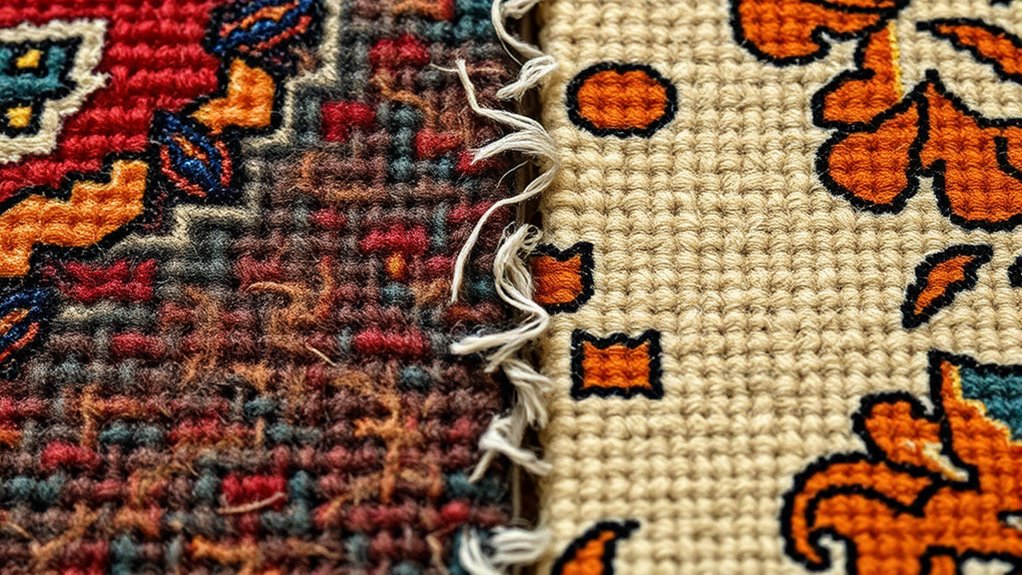
When it comes to protecting and maintaining our natural and cultural heritage, understanding the difference between restoration and conservation is vital. This is especially true when dealing with valuable rugs that carry historical significance. These textiles are more than just decorative items; they are tangible links to the past, embodying cultural stories, craftsmanship, and tradition. As you consider how to care for such pieces, it’s essential to recognize that your approach impacts not only their appearance but also their historical integrity. Restoration often involves making significant changes to return a rug to a perceived original state, which can sometimes alter or erase parts of its history. Conversely, conservation emphasizes preserving the rug’s current condition, respecting its age, wear, and story without attempting to erase time’s marks. Ethical considerations come into play here because you have a responsibility to honor the rug’s historical significance without overstepping boundaries that might compromise its authenticity.
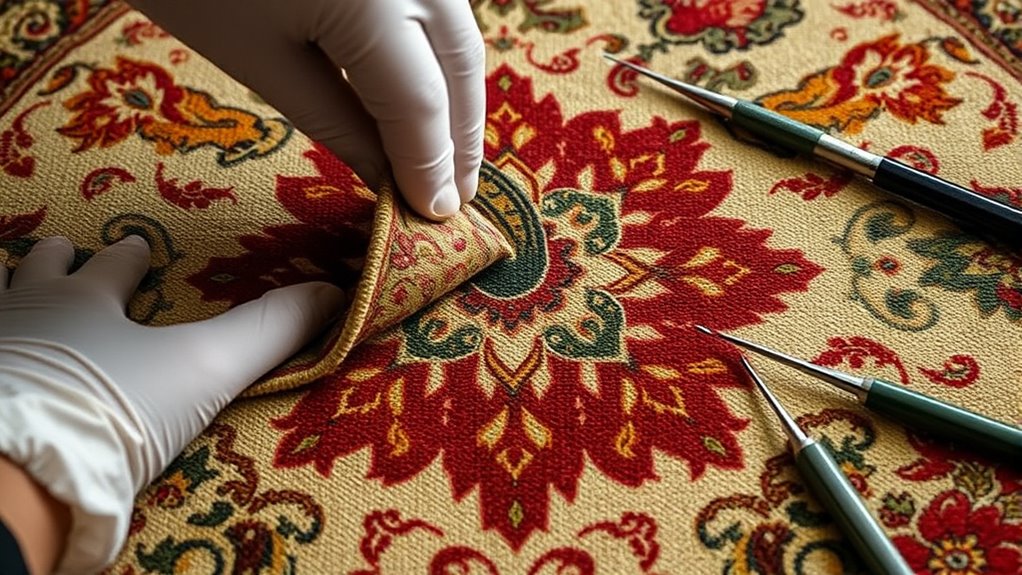
Additionally, understanding the value of authenticity in preserving historical textiles guides ethical decision-making in preservation practices. When you think about restoration, you’re often focused on aesthetic appeal—removing stains, repairing tears, or replacing missing sections to make the rug look “like new.” While this can enhance its visual appeal, it risks erasing important historical data. For example, a rug with signs of age—fading dyes, frayed edges, or patches—tells a story of use and time. Over-restoring it might strip away those stories, which are part of its cultural value. Ethical considerations remind you to ask whether such interventions are necessary or respectful of the rug’s history. Restoration might be appropriate if the goal is to showcase the piece in a museum or display, but it should be done with transparency about what has been altered.
Conservation, on the other hand, prioritizes safeguarding the rug’s original materials and appearance, ensuring future generations can appreciate its historical significance. It involves gentle cleaning, proper storage, and minimal intervention—respecting the fabric, dyes, and craftsmanship. This approach aligns with ethical practices that value authenticity and integrity, acknowledging that age and wear are part of the rug’s narrative. When you choose conservation, you’re fundamentally acting as a steward, ensuring the rug’s story remains intact without risking damage through aggressive restoration techniques.
As an affiliate, we earn on qualifying purchases.
Frequently Asked Questions
How Do I Determine if My Rug Needs Restoration or Conservation?
You can determine if your rug needs restoration or conservation by inspecting its condition closely. If the dye has substantially faded or bled, dye stabilization may be necessary. If fibers are weak, frayed, or have holes, fiber reinforcement is essential. Restoration typically involves repairing extensive damage, while conservation focuses on preserving and stabilizing. Consult a professional to assess whether your rug requires delicate preservation or more extensive restoration efforts.
What Are the Typical Costs Associated With Each Approach?
Did you know that restoration can cost up to five times more than conservation? When doing a cost analysis, expect restoration to range from $1,000 to $10,000 or more, depending on the rug’s condition and size. Conservation typically costs between $500 and $3,000. Your budget considerations should factor in the value of your rug, the extent of work needed, and the long-term benefits of preservation versus repair.
How Long Does the Restoration or Conservation Process Usually Take?
You can expect the restoration or conservation process to take anywhere from a few weeks to several months, depending on the rug’s condition and the work needed. During this time, skilled professionals use specialized cleaning techniques to remove dirt and stains while focusing on material preservation. The duration varies because they carefully assess the rug’s fibers and dyes, ensuring the process maintains its integrity and value throughout each step.
Can Restoration or Conservation Be Reversed if Needed Later?
Think of restoration and conservation as delicate threads in a tapestry—you can carefully unweave and reweave them if reversibility concerns arise. Usually, these processes are designed with future adjustments in mind, allowing experts to reverse or modify work if needed. You should discuss reversibility concerns upfront with your conservator, ensuring they use methods that enable future changes, preserving your rug’s integrity and your peace of mind.
What Are the Risks of Improper Restoration or Conservation Techniques?
Improper restoration or conservation can cause serious risks like chemical damage and color bleeding. If you don’t use the right techniques, you might weaken the rug’s fibers or alter its appearance permanently. Poorly applied chemicals can cause discoloration, and incorrect cleaning methods can lead to color bleeding, ruining the rug’s value and beauty. Always trust experienced professionals to avoid these risks and make certain of your rug’s preservation.
Conclusion
Now that you understand the differences between restoration and conservation, you can make informed decisions about your valuable rugs. Restoration aims to bring back the original look, while conservation preserves what’s left. Which approach best suits your needs depends on your goals and the rug’s condition. Don’t you want to guarantee your treasured piece remains beautiful for generations? Choose wisely, and your rug will continue to tell its story for years to come.
Fall Picks
fall essentials
As an affiliate, we earn on qualifying purchases.