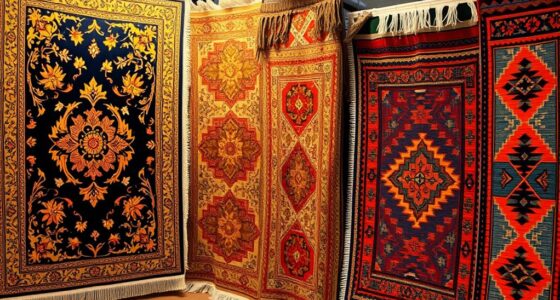

To quickly tell if a rug is hand-knotted, hand-tufted, or machine-made, examine its back and fringes. Hand-knotted rugs have tightly packed, irregular knots, a dense backing, and fringes that are part of the foundation. Hand-tufted ones show a less intricate back and punched surface, while machine-made rugs have uniform knots, perfect edges, and a backing that blocks light. Continuing your exploration will reveal key details to confidently identify authentic craftsmanship.

Get cleaning gear delivered free — and shop member deals
- Fast, free delivery on millions of items
- Access to Prime Big Deal Days deals on October 6–7
- Prime Video, Amazon Music and more included
Key Takeaways
- Examine the rug’s back for tightly packed, irregular knots indicating hand-knotted craftsmanship.
- Check fringes; uneven, hand-finished fringes suggest authentic hand-knotting, while uniform fringes imply machine-made.
- Perform a light test: genuine hand-knotted rugs allow more light through, revealing irregularities.
- Look for natural fibers and subtle color variations, which are signs of authentic hand-crafted rugs.
- Assess edges; hand-finished edges are irregular, whereas machine-made rugs have precise, uniform finishes.
As an affiliate, we earn on qualifying purchases.
Why Knowing Rug Authenticity Matters
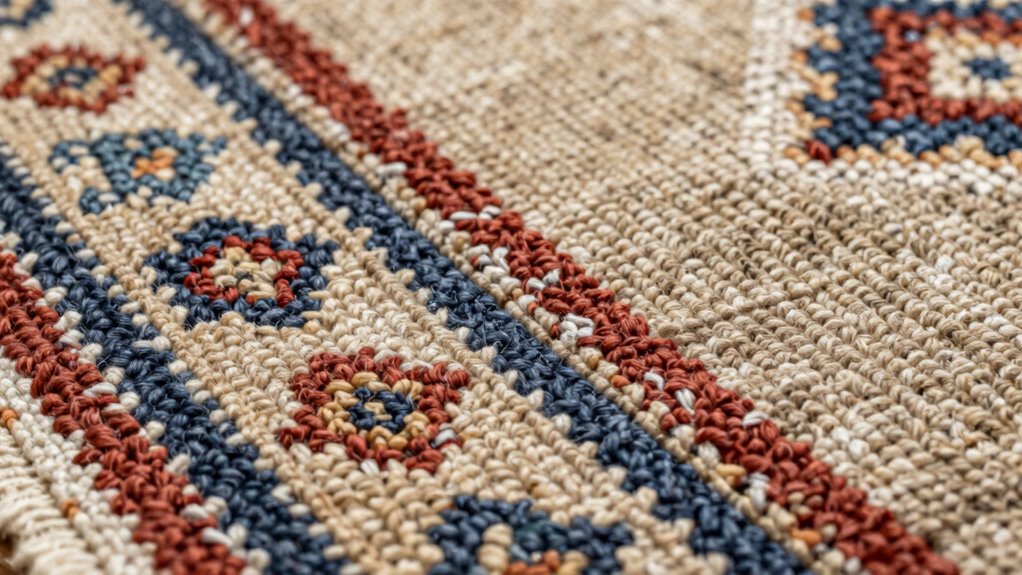
Understanding rug authenticity is essential because it directly affects the durability, value, and craftsmanship of your purchase. When selecting rugs in interior design, knowing whether a piece is authentic can make all the difference in how it performs and how long it lasts. Authentic rugs often carry cultural significance, reflecting the history and traditions of their region of origin. Recognizing genuine craftsmanship not only ensures you invest in a high-quality piece but also honors the artisans who created it. Whether you’re decorating a single room or an entire space, understanding the true nature of your rug helps you make informed decisions. This knowledge allows you to appreciate the unique stories behind each piece and ensure your décor remains authentic and meaningful over time. Additionally, craftsmanship quality plays a crucial role in determining a rug’s overall authenticity and longevity.
Differences Between Hand-Knotted, Hand-Tufted, and Machine Rugs
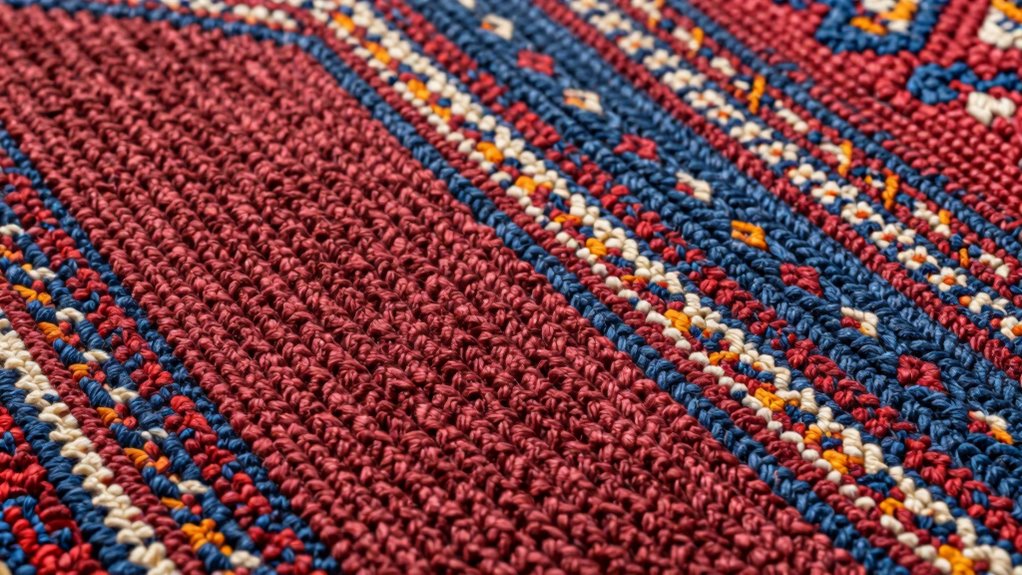
Knowing the differences between hand-knotted, hand-tufted, and machine-made rugs helps you make smarter choices when selecting pieces for your space. Hand-knotted rugs are crafted through intricate rug manufacturing, where each knot is tied by hand, making them highly durable and valuable. They tend to have higher rug pricing due to the labor-intensive process. Hand-tufted rugs are created with a tool that punches yarn through a backing, offering a quicker, more affordable option without sacrificing style. Machine-made rugs are produced on automated looms, making them the most affordable and consistent, but often less unique. Understanding these distinctions allows you to assess quality, price, and longevity, ensuring you choose a rug that fits your budget and meets your aesthetic and functional needs. Rug construction methods play a key role in determining the durability and craftsmanship of each rug type.
How to Spot a Hand-Knotted Rug by Examining the Back

Have you ever wondered how to tell if a rug is truly hand-knotted? When examining the back, look for tightly packed knots per inch. Hand-knotted rugs typically have a high knot density, resulting in more intricate patterns and greater durability. The knots should be uniform and clearly visible, not loose or uneven. Pay attention to pile thickness; hand-knotted rugs often have a consistent, dense pile that feels plush yet firm. Unlike machine-made rugs, the back of a genuine hand-knotted rug will show individual knots and a slight irregularity, reflecting the craftsmanship. Additionally, the knots per inch can serve as a reliable indicator of authenticity, with higher counts generally signifying better quality. Avoid rugs with a perfectly uniform backing, which can indicate machine production. By inspecting these details, you can confidently distinguish a hand-knotted rug from others.
Checking Knot Density and Pile for Authenticity

To verify a rug’s authenticity, focus on knot density indicators, which reveal how tightly the fibers are woven. Check for differences in pile height, as hand-knotted rugs typically have more variation than machine-made ones. Also, examine the backing material, since genuine rugs often use specific materials that can help distinguish them from imitations. Incorporating inclusive casting practices in the selection process can also highlight authentic craftsmanship and cultural significance.
Knot Density Indicators
Knot density is a key indicator of a rug’s authenticity, as it directly reflects the craftsmanship involved in its creation. Higher knot density usually means more detailed and durable work, often associated with genuine hand-knotted rugs. To assess this, look closely at the back of the rug; authentic hand-knots create a dense, firm foundation. Material quality also plays a crucial role—premium wool or silk typically accompanies higher knot densities, resulting in a richer, more intricate appearance. When examining knot density, count the knots per square inch, but keep in mind that a higher count isn’t always better if the knots appear uneven or sloppy. Authentic rugs showcase consistent, tight knots that demonstrate careful craftsmanship and superior material quality. knot density is also affected by the type of material used, with natural fibers generally allowing for finer, more precise knots.
Pile Height Differences
Examining pile height can reveal a lot about a rug’s authenticity, especially when paired with knot density. Authentic hand-knotted rugs typically have consistent pile height, showing minimal pile height variations. In contrast, hand-tufted or machine-made rugs often display uneven rug thickness differences, with some areas noticeably thicker or thinner. These inconsistencies can indicate shortcuts in craftsmanship or machine production. By carefully checking the pile, you can spot subtle differences that point to the rug’s origin. Genuine hand-knotted rugs usually maintain uniform pile height, reflecting meticulous craftsmanship. Conversely, irregularities in pile height or rug thickness differences suggest a rug that’s not hand-woven, helping you distinguish authentic pieces from imitations. Additionally, material quality can influence the overall appearance and durability of the rug, offering further clues to its authenticity.
Backing Material Clues
The backing material of a rug offers crucial clues about its authenticity, especially when you look closely at knot density and pile consistency. Authentic hand-knotted rugs typically have a tightly woven backing that reflects the knot count, indicating quality craftsmanship. Check the dyeing techniques used; natural dyes often result in subtle variations and less color bleeding, while machine-made rugs may show uniform coloration and more dye bleed. The pile should be uniform and dense, with no loose threads or uneven areas. Hand-tufted rugs may have a backing that appears less refined, and machine-made rugs often feature a synthetic backing with consistent, precise stitches. Examining these details helps you distinguish genuine artisanal pieces from imitations.
Surface Texture Clues: Hand-Tufted vs. Hand-Knotted Rugs
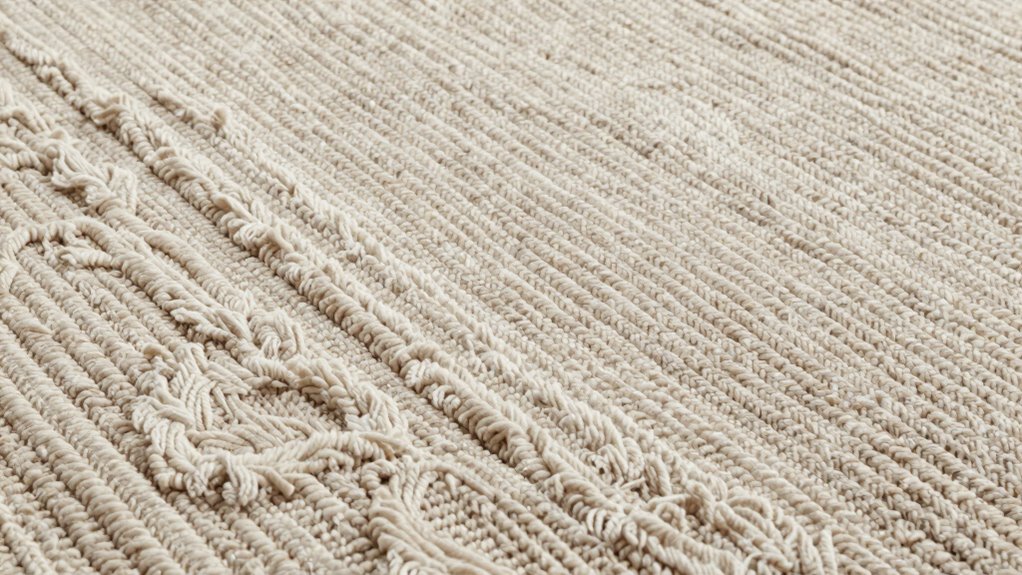
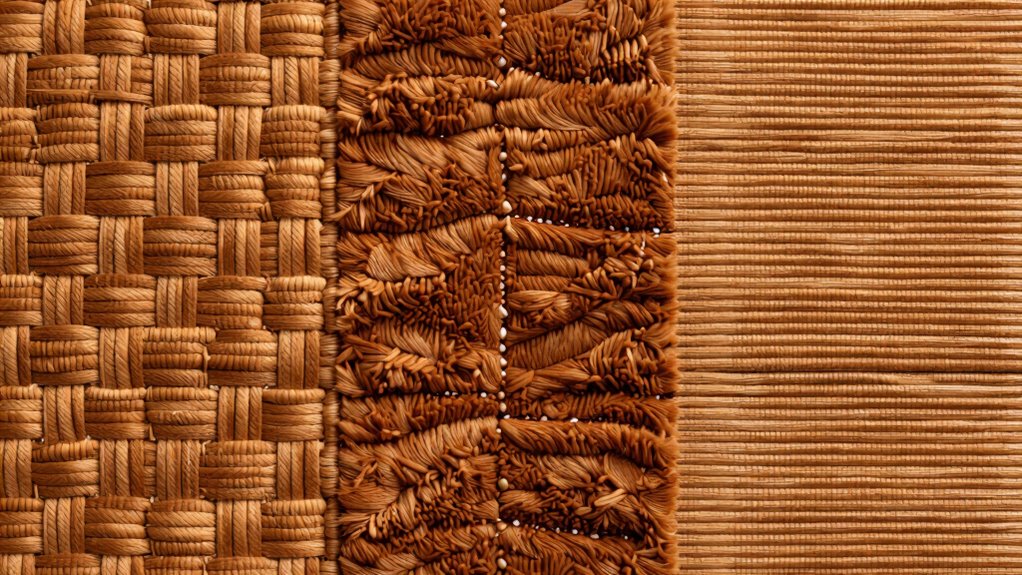
While both hand-tufted and hand-knotted rugs showcase craftsmanship, their surface textures offer clear differences. Hand-knotted rugs feature intricate knotting patterns that create a dense, plush pile, giving a rich, textured feel. In contrast, hand-tufted rugs are made by punching pile materials through a fabric backing, resulting in a less dense surface with a softer, more uniform texture. The pile height and density differ markedly: knotted rugs often have varied pile heights based on knotting techniques, while tufted rugs tend to have a consistent, shorter pile. Additionally, the surface of a hand-knotted rug reveals individual knots, whereas a tufted rug shows rows of looped or cut pile created with a tufting gun. These subtle texture clues help you distinguish authentic craftsmanship from machine-made imitations. Surface Texture Clues are essential for identifying genuine handmade rugs.
Edges and Fringes: Signs of Handmade or Machine Production

Look closely at the fringes and edges of the rug; they reveal whether it’s handmade or machine-made. Notice if the fringes are uniform or have irregularities, and pay attention to how the edges are finished. These details can help you distinguish between hand-crafted craftsmanship and machine production. Additionally, the presence of regional craftsmanship techniques can often indicate authenticity and origin.
Fringe Uniformity and Irregularities
Fringe uniformity and irregularities can reveal whether a rug is handmade or machine-made. Fringe irregularities often indicate a handcrafted rug, as artisans may vary the length or knot tightness. Conversely, machine-made rugs tend to have highly uniform fringes with consistent length and placement. Look closely at the edges; uneven fringes or slight variations suggest hand finishing. Tight, perfect fringe uniformity typically points to machine production. Handmade fringes may have slight imperfections or irregularities, reflecting the artisan’s touch. These small differences are clues to authenticity. Understanding rug manufacturing techniques can help you better identify these subtle signs of craftsmanship.
Edge Finishing Techniques
Edge finishing techniques can reveal a lot about whether a rug is handmade or machine-made. Carefully examining the edges and fringe details is a quick way to gauge authenticity. Handmade rugs often feature hand-finished edges, with slight irregularities that add character. Fringe details on authentic pieces are typically an extension of the rug’s foundation, sewn in or knotted directly into the weave. Conversely, machine-made rugs tend to have uniform, precisely finished edges created with automated processes. The fringes on machine rugs are often sewn or glued on afterward, lacking the natural integration seen in handmade pieces. By paying attention to the edge finishing techniques, you can better identify whether a rug’s craftsmanship aligns with authentic hand-knotting or machine production. Additionally, mobility tips can help you handle and examine rugs more effectively, ensuring you assess every detail carefully.
Fringes Versus Bound Edges
While examining a rug, noticing the difference between fringes and bound edges can quickly reveal whether it’s handmade or machine-made. Fringes are often a sign of superior fringe craftsmanship, as they’re typically an extension of the rug’s foundation. Hand-knotted rugs usually feature fringes that are an integral part of the rug’s structure, with each strand carefully finished by artisans. In contrast, bound edges are common in machine-made rugs, where edge finishing involves sewn or glued borders that lack the natural feel of handmade work.
- Fringes are part of the rug’s foundation, indicating hand craftsmanship
- Bound edges are sewn or glued, often seen in mass-produced rugs
- Fringe craftsmanship shows the skill of the artisan
- Edge finishing quality can help identify a rug’s authenticity
Materials and Finishing Touches That Confirm Craftsmanship
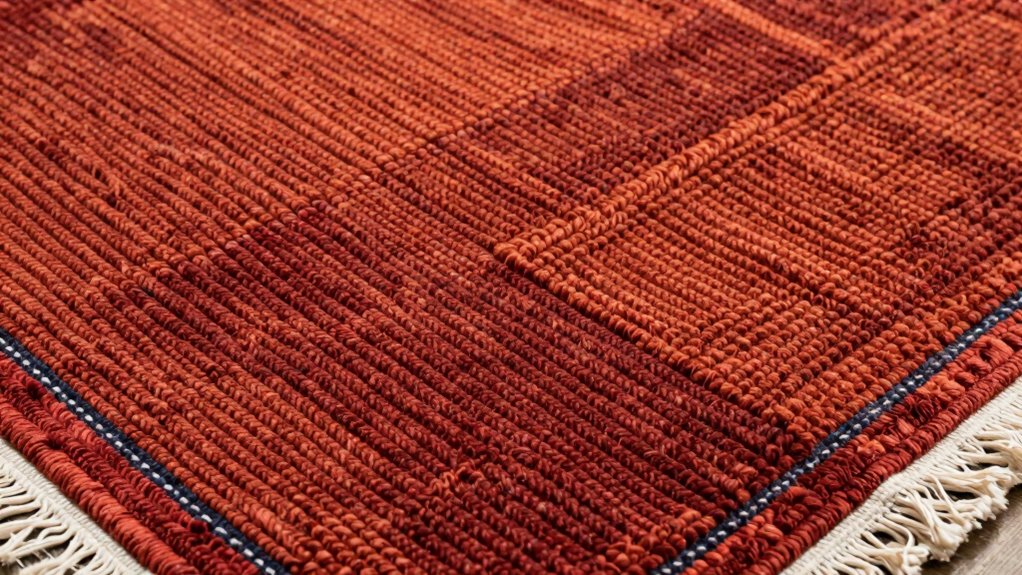
High-quality materials and meticulous finishing touches are essential indicators of true craftsmanship in rugs. You can spot genuine artistry by examining dye techniques; hand-dyed rugs often feature subtle color variations, showcasing skillful craftsmanship. Look closely at knot patterns—hand-knotted rugs have precise, consistent knots that form intricate designs, unlike the uniformity seen in machine-made pieces. The quality of materials also matters: natural fibers like wool, silk, or cotton signal authenticity, while synthetic fibers suggest mass production. Finishing touches such as carefully sealed edges and well-secured fringes reflect attention to detail. These elements collectively confirm that the rug was crafted with skill and care, distinguishing authentic handmade rugs from machine-made imitations.
Simple Light Test to Verify Rug Authenticity
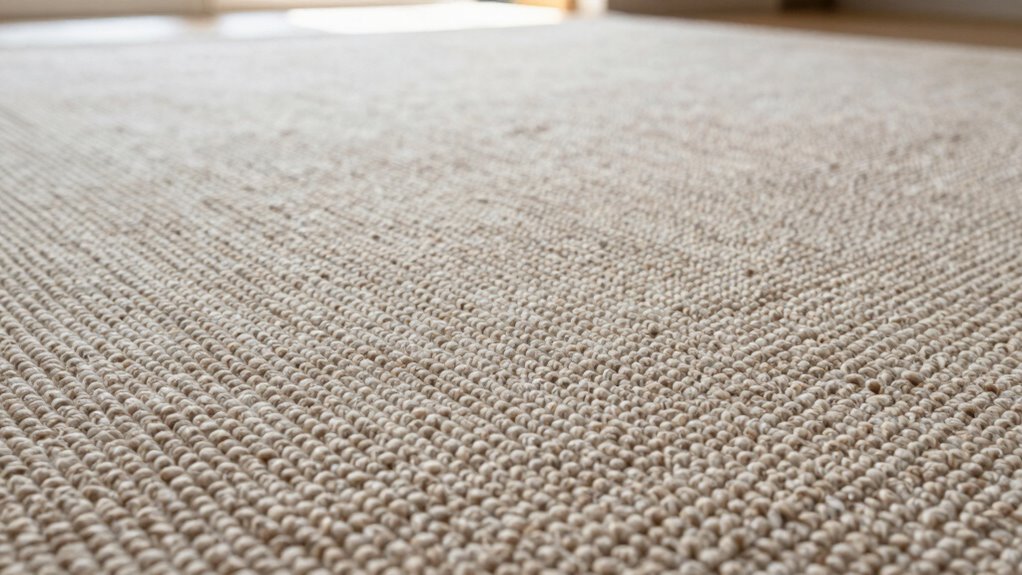
The simple light test is an easy way to spot whether a rug is authentic or a machine-made imitation. Hold the rug up to a bright light source and observe the light passing through the fibers. Genuine hand-knotted rugs typically have irregularities that allow more light to filter through, while machine-made rugs often have a dense backing that blocks light. This test helps verify authenticity without damaging the rug. Remember, proper rug cleaning and maintenance are essential to preserve its quality and appearance. Regularly inspecting your rug with this light test can catch issues early and guide your cleaning routine. Keep in mind, a properly maintained rug retains its authenticity longer and looks better over time. Use this simple method regularly for peace of mind.
Tips for Buying Authentic Rugs in Store or Online
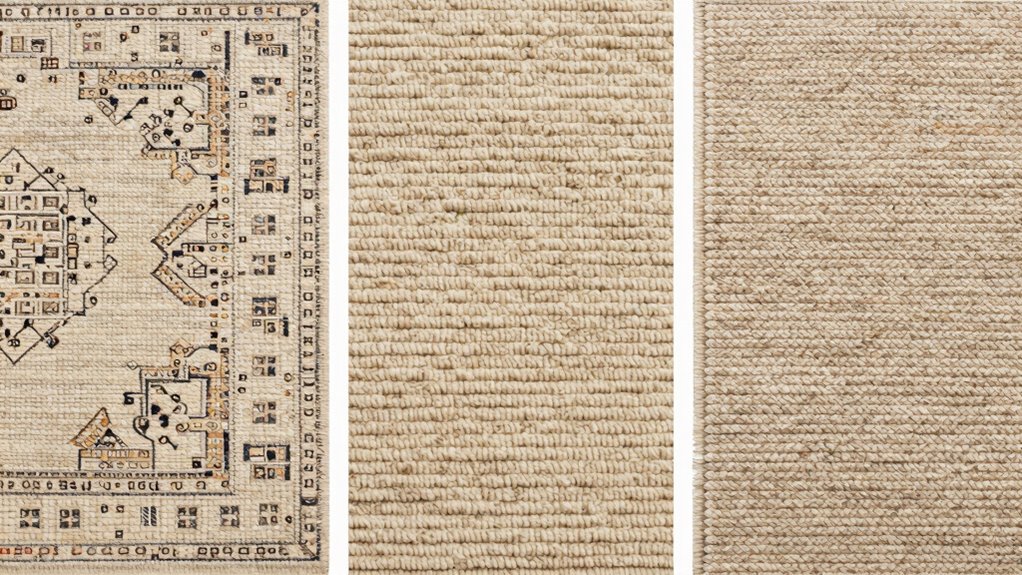
Buying an authentic rug requires careful attention to detail, whether you’re shopping in-store or online. Look for rugs that clearly display the manufacturing processes, such as hand-knotting or hand-tufting, which reflect traditional craftsmanship and cultural significance. Verify the rug’s origin and ask for detailed photos or descriptions, especially when purchasing online. Be cautious of overly perfect machine-made patterns; authentic rugs often have slight imperfections that add character. Use this table to compare key ideas:
| Idea | Explanation |
|---|---|
| Manufacturing processes | Identify hand-knotting or hand-tufting techniques |
| Cultural significance | Understand the rug’s origin and traditional value |
| Authentic indicators | Look for irregularities and quality craftsmanship |
Frequently Asked Questions
Can Rug Authenticity Affect Its Durability and Lifespan?
Yes, rug authenticity considerably impacts its durability and lifespan. When you choose an authentic rug, you’re ensuring better quality assurance, which translates to increased rug longevity. Hand-knotted rugs, for example, are usually more durable because of their intricate craftsmanship. Conversely, machine-made rugs might not last as long. So, investing in authentic, well-made rugs guarantees you a long-lasting piece that maintains its beauty over time.
Are There Specific Color Patterns Unique to Handmade Versus Machine-Made Rugs?
Think of rugs as a painter’s canvas—you’ll notice that handmade rugs often feature subtle color variations and intricate, complex patterns that tell a story. Machine-made rugs tend to have uniform colors and repetitive, simpler designs. These unique color variations and pattern complexities help distinguish authentic handmade rugs from mass-produced ones, making each piece a masterpiece of craftsmanship. So, observe carefully; your eye is the best tool for authenticity.
How Does Rug Size Influence the Likelihood of It Being Hand-Crafted?
You’re more likely to find hand-crafted rugs in smaller sizes because size variability and craftsmanship complexity are easier to manage. Larger rugs demand extensive skill, time, and precision, making them less common as handmade pieces. When you see a big rug, it’s often machine-made or tufted, since maintaining quality and craftsmanship across a large area is challenging for artisans. Small rugs, however, more often showcase the detailed work of skilled hand-weavers.
What Are Common Manufacturing Defects Indicating a Machine-Made Rug?
You can spot a machine-made rug by looking for manufacturing flaws like uneven stitching, visible seams, and inconsistent pile height. Quality inconsistencies, such as irregular dye colors or pattern misalignments, also indicate it’s machine-produced. These flaws occur because machines often lack the craftsmanship of handmade rugs, so carefully examine the rug’s details. If you notice these issues, chances are it’s a machine-made piece rather than a handcrafted one.
Is Price a Reliable Indicator of Rug Authenticity?
While pricing can sometimes suggest a rug’s market value, it isn’t always a foolproof sign of authenticity. You might find a beautifully priced piece that’s genuinely worth it or an overvalued one that doesn’t meet true craftsmanship standards. Rely on detailed inspection and knowledge of manufacturing techniques rather than relying solely on pricing accuracy. Authentic rugs often carry a price reflecting their true artisanship, but always verify before making a decision.
Conclusion
So, next time you’re eyeing that beautiful rug, remember—spotting authenticity isn’t rocket science. Or is it? Sometimes, the most obvious signs are the hardest to see. Whether it’s hand-knotted or machine-made, your keen eye will save you from a rug faux pas. After all, buying a genuine piece isn’t just about looks—it’s about knowing you’re truly getting craftsmanship, not just a pretty, synthetic illusion. Happy rug hunting!
Fall Picks
fall essentials
As an affiliate, we earn on qualifying purchases.