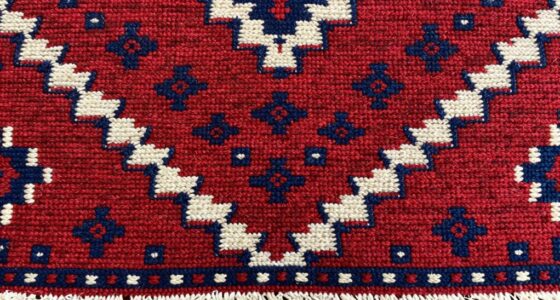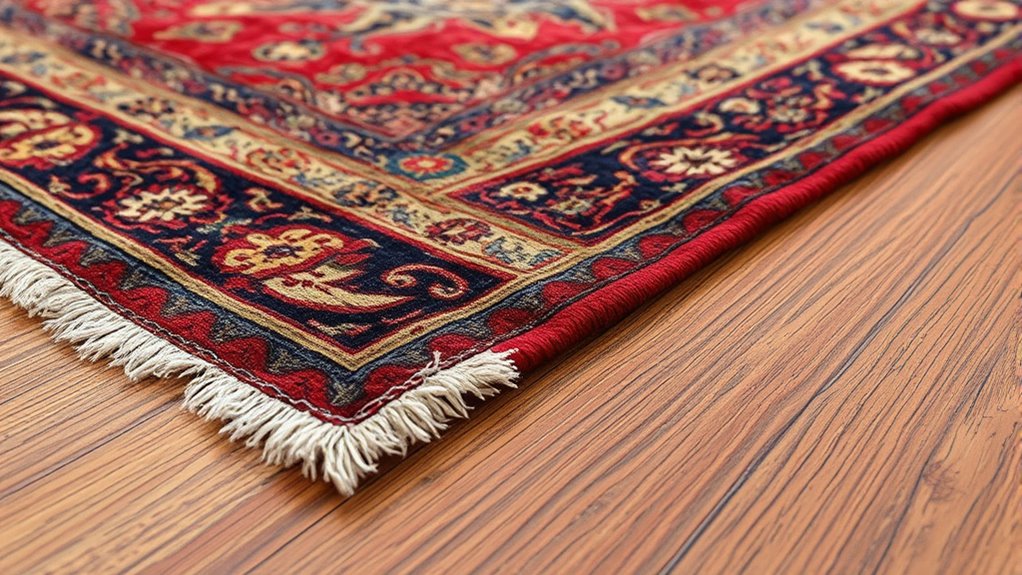

To assess a rug’s condition before buying, start by examining the knot density—look for tightly woven knots per inch to gauge craftsmanship and durability. Check for signs of fading, damage, or repairs, and look closely at the edges and pile for wear. Smell the rug for any musty odors that might indicate mold. Combining these visual and sensory checks helps you make an informed choice—continue exploring to learn more tips for evaluating your future rug.

Get cleaning gear delivered free with Prime
- Fast, free delivery on millions of items
- Prime Video, Amazon Music and more included
- Member-only deals all year
Key Takeaways
- Examine knot density and craftsmanship by counting knots per inch for durability and quality.
- Inspect the surface for color fading, uneven patches, or signs of exposure that affect visual appeal.
- Check for damage such as frayed edges, worn pile, or poor repairs that may compromise longevity.
- Conduct a sensory check for musty odors indicating mold, mildew, or poor storage conditions.
- Assess overall condition by combining visual, tactile, and scent evaluations for an informed purchase.

When you’re considering purchasing a rug, evaluating its condition carefully can save you from surprises later on. One of the most important aspects to examine is the rug’s craftsmanship, particularly the knots per inch, which indicates its quality and durability. A higher knots per inch count suggests a finer, more tightly woven rug, often worth more and more resilient over time. Gently lift a corner and look closely at the weave—if the knots are sparse or uneven, it might not hold up well with regular use. Conversely, a dense knot count usually means better craftsmanship and a longer lifespan. This detail helps you understand the rug’s construction and value at a glance.
Next, pay attention to the rug’s surface for signs of color fading, which is a common issue especially with older or heavily used pieces. Fading can occur from exposure to sunlight or improper cleaning methods, and it diminishes the visual appeal and value of the rug. To assess this, hold the rug at different angles under natural light, observing whether the colors remain vibrant or appear washed out. Slight fading in certain areas might be acceptable if the rug has historical significance, but widespread or uneven fading indicates poor preservation or prolonged exposure to damaging elements. Keep in mind that some rugs may have been intentionally distressed for aesthetic reasons, so compare the fading to the overall wear and tear before making a judgment.
Check for color fading from sunlight or cleaning, and assess if it affects the rug’s value and appeal.
While inspecting the rug, also look carefully for signs of damage or repairs. Frayed edges, worn pile, or patched areas can compromise the integrity of the piece. Check the backing for loosened or missing stitches, which might suggest previous repairs or poor craftsmanship. If the rug’s pile is uneven or thinning in high-traffic areas, it’s a sign that the rug has seen extensive use and might need restoration sooner rather than later. Be cautious of overly shiny or new-looking patches, as these could indicate recent repairs that might not match the original quality.
In addition to physical inspection, consider the rug’s smell—musty odors can indicate mold or mildew, which can be difficult to eliminate and affect its longevity. Smell also gives clues about how well the rug has been stored or cared for over the years. Moreover, understanding the knots per inch can help you gauge the rug’s overall craftsmanship and longevity, as a higher knot count generally correlates with better quality and durability. Combining these visual and sensory assessments will help you determine whether the rug’s condition aligns with its price and your expectations. Approaching the evaluation with a keen eye and thorough inspection ensures you’re making a wise investment and avoiding unpleasant surprises after the purchase.
As an affiliate, we earn on qualifying purchases.
Frequently Asked Questions
How Can I Identify Hidden Damages Beneath the Rug’s Surface?
To identify hidden damages beneath the rug’s surface, you should start with a thorough surface inspection, looking for uneven areas, discoloration, or loose fibers. Gently lift corners or edges to check for signs of repairs, stains, or warpings underneath. Pay attention to any musty odors or soft spots, which can indicate hidden damages like mold or water damage. These steps help reveal issues not immediately visible, ensuring you make an informed purchase.
What Are the Signs of Authentic Antique Rug Wear?
You’ll notice authentic antique rug wear through subtle fading, gentle fraying, and softened pile, which develop over time. Look for areas with slightly more color variation, indicating natural aging, and check for signs of antique restoration like patched sections or reinforced edges. Proper rug cleaning techniques can help preserve these signs, but avoid overly restored rugs that lack genuine wear. These details confirm the rug’s age and authenticity.
How Do I Distinguish Between Repairs and Original Craftsmanship?
You can tell repairs from original craftsmanship by examining the rug closely. Restorations often have uneven stitching, mismatched fibers, or visible patches, while authentic craftsmanship maintains consistent weave and dye. Look for signs of modern glue or stitching, which indicate repairs. Authentic pieces showcase the original artisanship, with uniform knots and natural dyes. Comparing areas of wear and inspecting the back of the rug help distinguish between restoration efforts and genuine, original craftsmanship.
What Tools Are Best for Inspecting Rug Fibers Closely?
You should use a fiber magnification tool, like a jeweler’s loupe or a high-powered magnifying glass, to inspect rug fibers closely. This helps with fiber identification, letting you see fiber details, damage, or repairs. Make sure the tool provides at least 10-20x magnification. Carefully examine the fibers for consistency, signs of wear, or repairs, which are essential for evaluating the rug’s true condition and authenticity.
How Does Rug Provenance Affect Its Condition Assessment?
Provenance notably impacts your condition assessment because provenance documentation provides insight into a rug’s history and previous ownership. If a rug has a well-documented historical ownership, you can better gauge its authenticity and how well it’s been preserved. Knowing its background helps you identify potential repairs or restorations that might affect value. Always ask for provenance records to guarantee you’re making an informed decision about the rug’s true condition and worth.
Conclusion
So, next time you’re eyeing that gorgeous antique rug, remember: a little inspection goes a long way—unless you’re secretly hoping it’s more “vintage charm” than “hidden damage.” Don’t let shiny colors fool you; sometimes, the worst damage is hiding beneath the surface. After all, what’s a collector’s guide without a little irony? Trust your eyes, trust your instincts, and enjoy the thrill of uncovering a true treasure—flaws and all. Happy rug hunting!
Halloween Picks
halloween
As an affiliate, we earn on qualifying purchases.