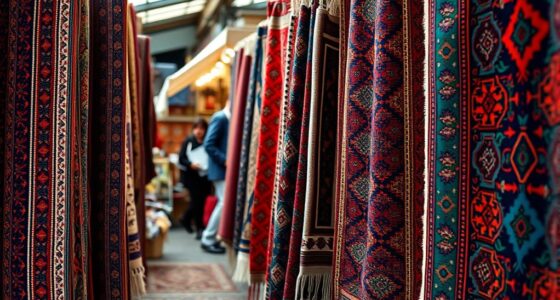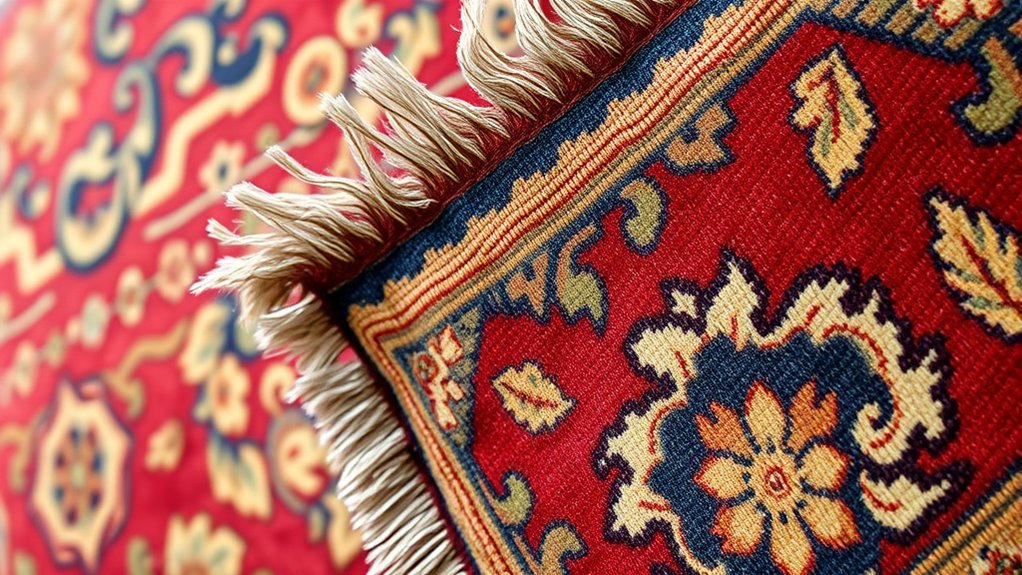

Tracing a rug’s history helps you understand its cultural origins, craftsmanship, and age. Look for regional styles, materials, and dyeing techniques to find clues about where it started and how old it is. Hand-knotting, knot density, and materials like wool or silk reveal skill and authenticity. Expert guidance and reference guides can deepen your knowledge, making the rug’s story richer and clearer. Continue exploring to uncover more fascinating details about your rug’s unique journey.

Get cleaning gear delivered free — and shop member deals
- Fast, free delivery on millions of items
- Access to Prime Big Deal Days deals on October 6–7
- Prime Video, Amazon Music and more included
Key Takeaways
- Analyzing regional styles, patterns, and signatures helps identify the rug’s origin and cultural background.
- Examining materials, dyes, and weaving techniques reveals the rug’s age, authenticity, and craftsmanship quality.
- Knot density and weaving methods indicate the level of artisanship and historical craftsmanship practices.
- Provenance clues like design elements and materials can trace trade routes and cultural exchanges.
- Consulting experts and reference guides ensures accurate verification of the rug’s history and cultural significance.
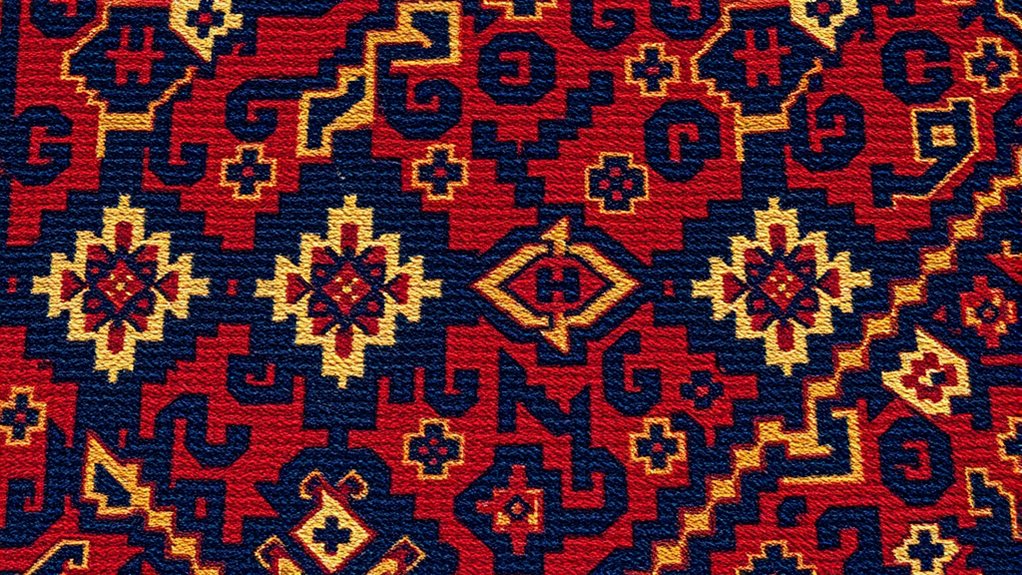
Every rug has a story woven into its fibers, reflecting the culture, craftsmanship, and history of its origin. When you examine a rug closely, you start to uncover clues about its cultural origins, which reveal where it was made and the traditions it embodies. Different regions have distinct styles, motifs, and color palettes that serve as markers of their unique artistic identities. For instance, Persian rugs often feature intricate floral patterns and rich reds, while Turkish textiles might showcase bold geometric shapes. Recognizing these regional signatures helps you trace the rug’s provenance and appreciate its cultural significance.
Equally important are the craftsmanship techniques used to create the piece. The way a rug is woven, knotted, or embroidered can tell you a lot about its history and the skills of its artisans. For example, hand-knotting requires meticulous work and results in durable, high-quality rugs. The density of knots per square inch can indicate the level of craftsmanship and the rug’s value. Different weaving methods, such as flatweaving or pile weaving, are characteristic of specific cultures and time periods. Understanding these techniques allows you to distinguish between handmade masterpieces and machine-made imitations, providing insight into the rug’s authenticity and origin.
Tracing a rug’s history involves more than just identifying its regional styles and techniques; it also requires paying attention to subtle details. For example, the materials used—such as wool, silk, or cotton—can hint at the rug’s age and the geographic area it came from. Natural dyes, which age beautifully over time, contrast with synthetic dyes that might have been introduced more recently. These elements, combined with weaving styles and motifs, form a complex puzzle that, once assembled, offers a clear picture of the rug’s journey through history. Additionally, dyeing techniques and the use of authentic materials can help verify the rug’s provenance and craftsmanship.
When you seek to understand a rug’s provenance, it’s helpful to consult experts or reference guides that specialize in regional textiles. Authenticity can often be verified through these insights, and you might even discover stories of trade routes or cultural exchanges embedded in the design. By appreciating the cultural origins and craftsmanship techniques behind each piece, you deepen your connection to its history. This knowledge allows you to not only value the aesthetics but also recognize the skill, tradition, and cultural narratives woven into every fiber of the rug.
As an affiliate, we earn on qualifying purchases.
Frequently Asked Questions
How Does Rug Provenance Affect Its Market Value?
Your rug’s provenance markedly influences its market value, especially when you consider weaving techniques and knot density. Rugs with authentic origins often feature superior knot density, which indicates skilled craftsmanship. When you know a rug’s provenance, you can better assess its quality and rarity, making it more desirable to collectors. As a result, a well-documented history can increase your rug’s value, reflecting its authenticity and craftsmanship.
Can Modern Reproductions Be Accurately Traced in History?
Sure, modern reproductions can be traced, but don’t hold your breath for perfect accuracy. Reproduction techniques and modern manufacturing often blend historical styles with contemporary methods, making it tricky to pinpoint exact origins. While some experts use fiber analysis and weaving patterns to track these rugs, many just see a cleverly made imitation. So, yes, you can try to trace them, but don’t expect a flawless historical record.
What Role Do Dyes Play in Identifying a Rug’s Origin?
Dyes play a vital role in identifying a rug’s origin, as they reveal the materials and techniques used. Natural dyes, derived from plants and minerals, are often associated with traditional, older rugs and specific regions. Synthetic dyes, developed in the 19th century, are more uniform and vibrant. By analyzing dye types, you can determine whether a rug is authentic or a reproduction, and even pinpoint its geographic source.
How Can I Verify the Authenticity of a Provenance Claim?
Don’t take claims at face value; it’s a case of “trust, but confirm.” You verify a provenance claim by using appraisal techniques like examining craftsmanship, materials, and weaving style. Additionally, seek expert authentication from reputable appraisers or rug specialists who can assess the rug’s history and provenance documentation. Cross-referencing records and consulting well-known provenance sources ensures you’re not caught in a web of falsehoods.
Are There Specific Signs Indicating a Rug’s Age or Provenance?
You can spot a rug’s age or provenance by examining weaving techniques and fiber analysis. Older rugs often feature hand-knotted or specific regional weaving styles, while newer pieces may show machine-made details. Fiber analysis helps identify natural materials used historically versus modern synthetics. Look for signs of wear, patina, and traditional craftsmanship, which indicate age and origin. Combining these clues gives you a clearer idea of the rug’s provenance.
Conclusion
Knowing a rug’s provenance isn’t just fascinating—it’s essential. Nearly 60% of collectors say that a clear history increases a rug’s value markedly. By tracing its origins, you connect with the craftsmanship and stories woven into every thread. So, next time you admire a rug, remember that uncovering its past adds depth and authenticity. It’s not just a piece of decor; it’s a story waiting to be told. Your knowledge makes all the difference.
Fall Picks
fall essentials
As an affiliate, we earn on qualifying purchases.