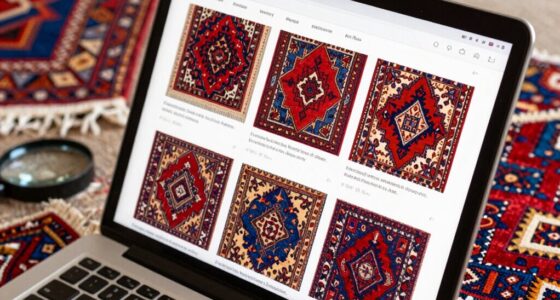
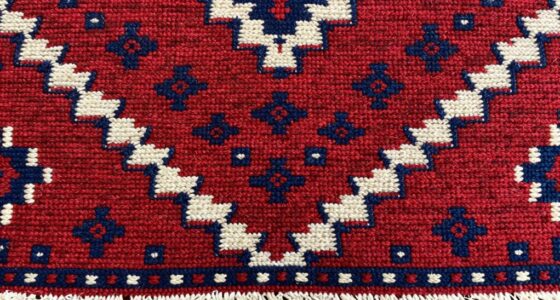
To document your rug collection effectively, start by creating a detailed catalog with key details like origin, age, size, materials, and design features. Take clear photos from multiple angles and record the rug’s condition, repairs, and unique design aspects. Keep notes on cleaning and preservation methods. Periodically seek professional appraisals to track value. Maintaining organized records of these details guarantees your collection’s value lasts—continue to learn how to enhance your documentation process.
Key Takeaways
- Create a detailed catalog with origin, age, size, materials, and unique design features, supported by multiple clear photographs.
- Record the rug’s condition, damages, repairs, and any preservation or maintenance routines for ongoing care.
- Use specialized storage solutions and document storage conditions to ensure long-term preservation.
- Obtain periodic appraisals, noting appraiser details and values, and update records accordingly for valuation tracking.
- Keep organized, comprehensive records including descriptions, photos, appraisals, and maintenance notes for easy reference and protection.

Keeping track of your rug collection is essential to preserve its value and enjoy it fully. Proper documentation helps you understand each piece’s history, condition, and worth, making it easier to manage, insure, or sell your rugs in the future. To start, you should develop a detailed catalog that includes key information such as the rug’s origin, age, dimensions, materials, and unique design features. Use clear photographs from multiple angles to capture color, pattern, and texture. These images serve as visual proof of the rug’s condition over time, especially if you need to document any damages or repairs. When creating this record, be consistent and thorough, as this will make future reference much smoother. Incorporating self-watering plant pots into your collection management can be an example of how specialized storage solutions help preserve items by maintaining optimal conditions.
Incorporating maintenance tips into your documentation process is vital for preserving your rugs. Regular upkeep ensures they stay in good condition and retain their value. For example, you might note the recommended cleaning methods based on the rug’s material—whether it’s wool, silk, or synthetic fibers. Highlighting preservation techniques, such as avoiding direct sunlight, rotating rugs periodically, or using padding to prevent wear, helps you stay proactive in protecting your collection. Documenting these practices not only extends the life of each piece but also provides a record of how you’ve cared for your collection over time. This information can be useful when consulting professionals or appraisers, especially if you plan to sell or insure your rugs.
Appraisals are another crucial aspect of documenting your collection. You should seek expert evaluations periodically to determine current market values. When you get an appraisal, make sure to record the appraiser’s details, the date, and the appraised value. Keep this information together with your catalog, so you have a comprehensive overview of your rugs’ worth over time. Updating your records after each appraisal allows you to track appreciation or depreciation, which is invaluable for insurance purposes and estate planning. Additionally, if you ever decide to sell, having well-documented appraisals can strengthen your negotiating position and provide proof of authenticity and value.
In essence, the key to successful documentation of your rug collection lies in being organized, diligent, and proactive. Maintaining accurate records, including detailed descriptions, photographs, and appraisal data, ensures that your collection remains protected and appreciated. Incorporate maintenance tips and preservation techniques into your routine, and keep your documentation current. Doing so not only preserves your rugs’ beauty and integrity but also maximizes their long-term value and enjoyment.
rug cataloging and appraisal kit
As an affiliate, we earn on qualifying purchases.
As an affiliate, we earn on qualifying purchases.
Frequently Asked Questions
How Often Should I Update My Rug Collection Documentation?
You should update your rug collection documentation at least once a year or whenever you acquire new pieces. Regular maintenance schedules help identify any damage early, while inventory updates keep your records accurate. By staying consistent with these updates, you guarantee your collection remains well-documented and protected. Set reminders to review and revise your records annually or after significant events, like restorations or appraisals, to keep everything current and reliable.
What Tools Are Best for Digital Rug Cataloging?
Imagine a sleek digital rug cataloging system that turns your collection into a vibrant, organized tapestry. Rug inventory software like RugVault or TMS offers intuitive digital cataloging tools, letting you upload photos, add details, and track values effortlessly. These tools make managing your collection simple and accessible, ensuring you always know what you have at a glance. Embrace digital cataloging to keep your rugs beautifully arranged and easily searchable.
How Do I Determine the Value of an Antique Rug?
To determine the value of an antique rug, start with an expert rug appraisal to get an accurate antique rug valuation. Use rug appraisal methods like comparing similar rugs, evaluating age, condition, and origin. Look for signs of wear or damage that affect worth, and consider historical significance. Consulting a professional ensures you understand market trends, helping you set a realistic price based on current demand and the rug’s unique qualities.
Should I Include Repairs or Restorations in My Documentation?
Yes, you should include repairs and restorations in your documentation. Record restoration details and repair history to provide a complete picture of your rug’s condition and authenticity. This information helps future appraisals and guarantees transparency. Be specific about the types of repairs and restorations, when they occurred, and who performed them. Accurate documentation preserves your rug’s story and value for years to come.
How Can I Protect My Collection’s Documentation From Damage?
To safeguard your collection’s documentation from damage, you should implement preservation techniques like storing records in acid-free folders or digital formats. Keep physical copies in a cool, dry, dark place to prevent deterioration, and back up digital files regularly. Using protective sleeves or covers also helps prevent damage from handling. These damage prevention methods ensure your documentation stays intact and accessible, preserving your collection’s history for years to come.
Conclusion
Now that you’ve cataloged each rug’s intricate patterns and rich colors, your collection becomes a vibrant tapestry of memories and artistry. Imagine flipping through your detailed records, each entry a window into a story woven with time and tradition. With your rugs carefully documented and appraised, you’ll cherish their beauty even more, knowing every thread and knot is preserved. Your collection isn’t just a display; it’s a living, breathing mosaic of culture and craftsmanship.