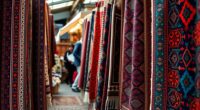
To master bidding on rugs at auction, do your homework first by researching rug styles, origins, and market values. Always verify authenticity through provenance and condition reports, and set clear bidding limits. Use disciplined strategies, such as incremental bids and waiting until the last moment, to stay in control. Remember to account for extra costs like premiums and shipping. Keep honing your approach, and you’ll improve your chances of securing genuine, valuable pieces—if you continue exploring, you’ll discover more expert tips.
Key Takeaways
- Research rug styles, provenance markers, and market values to make informed bidding decisions.
- Verify authenticity through condition reports, provenance documents, and expert consultation before bidding.
- Set clear bidding limits and employ strategic, incremental bids to maintain discipline and avoid overbidding.
- Factor in additional costs like buyer’s premiums, taxes, and shipping when planning your budget.
- Use patience and experience to refine your approach, ensuring genuine, high-quality rugs that add value to your collection.

Buying rugs at auction can be an exciting way to find unique pieces at a potentially lower price. When you step into the auction room, you’re entering a competitive environment where knowing the right auction strategies can make all the difference. To succeed, you need to be prepared, confident, and strategic. Start by researching the specific types of rugs you’re interested in, understanding their typical market value, and familiarizing yourself with common styles and origin markers. This knowledge helps you set realistic bidding limits and avoid overpaying.
One of the most critical aspects of successful bidding is rug authentication. It’s essential to verify the provenance, age, and authenticity of a rug before making a bid. Reputable auction houses often provide detailed condition reports and provenance documents, but it’s wise to supplement this information with your own research or consultation with an expert. Look for signs of authenticity, such as specific weaving techniques, dye types, and material qualities that correspond with the rug’s claimed origin. If something seems off or too good to be true, don’t hesitate to ask for additional verification or to walk away. Remember, the goal isn’t just to buy a beautiful rug but to ensure you’re investing in a genuine piece that will hold or increase its value over time.
Verifying rug authenticity is essential to ensure genuine investment and long-term value.
During the auction, keep a clear head and stick to your predetermined limits. It’s easy to get caught up in the excitement and overbid, but disciplined bidding will save you money and prevent buyer’s remorse. Pay close attention to the auctioneer’s cues and the bidding activity of others—sometimes a quiet but strategic bid can outmaneuver more aggressive bidders. Use auction strategies like bidding incrementally or waiting until the last moment to place your bid, which can help you secure the rug at a better price. Also, consider setting a maximum bid beforehand so you don’t get carried away in the heat of the moment.
Additionally, understanding the benefits of airless paint sprayers can inform your home improvement projects, making tasks faster and more efficient. Finally, don’t forget to factor in additional costs, such as buyer’s premiums, taxes, and shipping, when calculating your total investment. By combining thorough preparation, vigilant rug authentication, and disciplined bidding strategies, you’ll improve your chances of acquiring a beautiful, authentic rug at auction. Remember, every auction is an opportunity to learn and refine your approach, making each subsequent bid more strategic and rewarding. With patience and practice, you’ll become confident in steering these sales and finding exceptional pieces that add value and character to your collection.

Washable Area Rug 8' x 10' Vintage Traditional Persian Mat – Foldable Distressed Non-Slip Machine Washable Carpet for Living Room Bedroom Kitchen Home Decor – Indigo and Crimson
- Machine Washable: Easy to clean in washing machine
- Stain-Resistant Material: Resists spills, stains, and shedding
- Non-Slip Backing: Secure grip with TPR rubber backing
As an affiliate, we earn on qualifying purchases.
As an affiliate, we earn on qualifying purchases.
Frequently Asked Questions
How Can I Identify Genuine Antique Rugs at Auction?
To identify genuine antique rugs at auction, look closely at antique rug characteristics like worn areas, color fading, and handmade knots. Authentic rug indicators include irregularities in design, natural dyes, and an uneven back showing hand-knotted construction. Trust your instincts and examine the rug’s provenance. If possible, bring a knowledgeable expert or appraiser for a second opinion, ensuring you spot real antiques and avoid fakes.
What Are Common Pitfalls for First-Time Rug Bidders?
First-time rug bidders often fall into traps like overlooking bid strategy and bidder psychology. You might get caught up in emotion or overbid, thinking a higher bid guarantees success. To avoid this, stay calm, set a clear limit, and stick to it. Pay attention to how other bidders act, and don’t chase the price. Understanding these pitfalls helps you make smarter bids and increases your chances of winning without overspending.
How Do Auction House Fees Impact My Total Purchase Price?
They say “know what you’re in for,” and that’s true when it comes to auction house fees. These fees, like auction house commissions or buyer’s premiums, can substantially raise your total purchase price. You might bid confidently, only to find extra costs added at checkout. Always check the auction house’s terms beforehand, so you’re not caught off guard and can budget accordingly for your perfect rug.
What Should I Consider Regarding Rug Condition and Restoration?
You should carefully assess the rug’s condition and consider restoration authenticity before bidding. Examine the condition thoroughly, looking for signs of wear, stains, or repairs that might affect value. Ask about restoration work to ensure it’s genuine and professionally done, as poor or fake restorations can reduce a rug’s worth. A detailed condition assessment helps you determine if the rug aligns with your budget and expectations, avoiding surprises later.
How Can I Estimate the True Value of a Rug Before Bidding?
To estimate a rug’s true value before bidding, start with appraisal techniques like examining age, origin, and craftsmanship. Use market comparison by researching recent sales of similar rugs to gauge current prices. Check for unique features or flaws that could affect value. Visiting multiple auctions or consulting experts also helps refine your estimate. Combining these methods guarantees you bid confidently, knowing you’re paying a fair price.
Conclusion
Remember, over 70% of auctioned rugs sell for less than their estimated value, giving you a golden opportunity to acquire beautiful pieces at a bargain. Keep your eyes open, do your research, and stay confident during bidding. With patience and a keen eye, you can turn an auction into a rewarding experience and add unique, valuable rugs to your collection without overspending. Happy bidding!