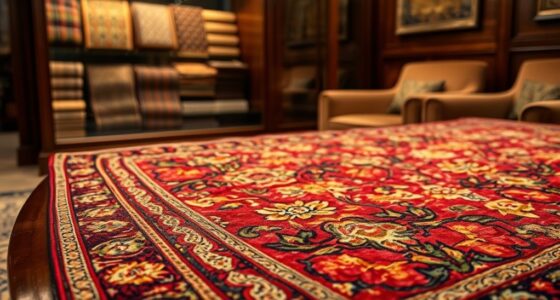
Explore the vibrant world of rug weaving across regions like Persia, Turkey, Caucasus, and Central Asia, each offering unique knotting techniques and dyeing traditions. Persian rugs showcase floral motifs with deep reds and blues, while Turkish kilims feature geometric patterns with bright colors. Variations in craftsmanship reveal rich cultural heritages, making these rugs prized for collectors. To uncover more about these fascinating styles and their stories, keep exploring the diversity of regional weaving traditions.

Get cleaning gear delivered free with Prime
- Fast, free delivery on millions of items
- Prime Video, Amazon Music and more included
- Member-only deals all year
Key Takeaways
- Persian rugs from Iran are renowned for intricate motifs, dense knotting techniques, and rich color palettes like deep reds and blues.
- Turkish and Caucasian rugs feature symmetrical knots and geometric designs, emphasizing durability and bold visual patterns.
- Central Asian regions such as Uzbekistan and Turkmenistan produce distinctive rugs with natural dyes and unique regional patterns.
- Anatolian rugs from Turkey showcase vibrant colors like yellows and greens, using flatweave and traditional knotting methods.
- Recognizing regional knotting and dyeing techniques enhances the value and cultural appreciation of collectible rugs worldwide.
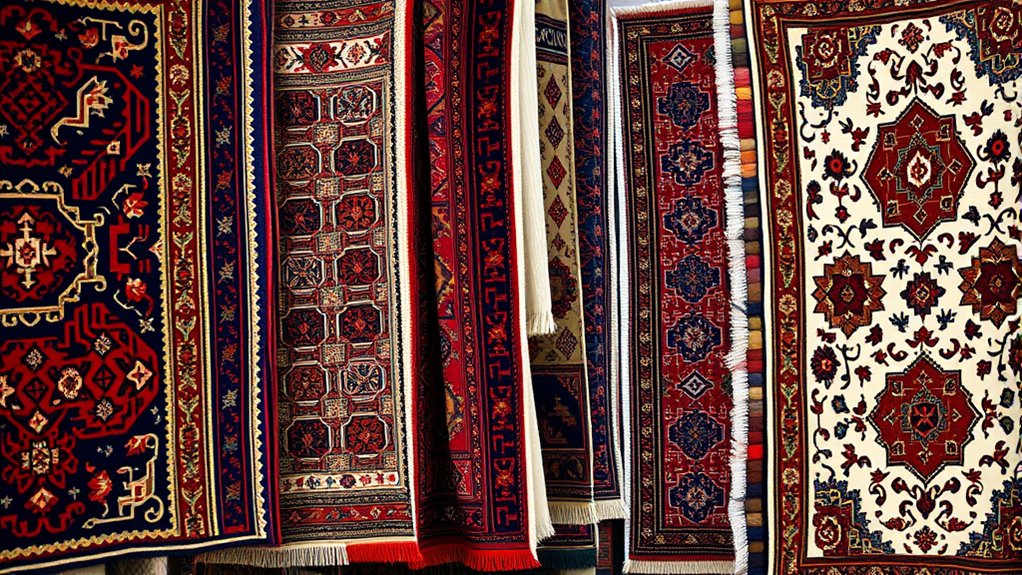
Rug weaving has a rich history rooted in various regions around the world, each known for its unique styles and craftsmanship. As a collector or enthusiast, you’ll notice how the knotting techniques used in different areas create distinct textures and patterns. In Persia, for example, the Persian knot, also called the asymmetrical or Turkish knot, allows for intricate detailing and a dense pile, showcasing the weavers’ mastery. Conversely, Turkish and Caucasian rugs often feature symmetrical knots, giving a more uniform appearance. These knotting techniques directly influence the rug’s durability and visual complexity, making each region’s work easily identifiable.
Dyeing traditions also play an essential role in defining the character of regional rugs. In Central Asia, natural dyes derived from plants, insects, and minerals have been used for centuries, producing rich, earthy tones that deepen over time. You’ll find that Persian rugs often feature a palette of deep reds, blues, and ivory, achieved through traditional dyeing methods that emphasize longevity and vibrancy. In Anatolia, bright colors like yellows and greens come from locally available dyes, resulting in lively, energetic designs. The dyeing process isn’t just about color; it’s an art form that requires skill to guarantee colorfastness and consistency. Weavers in each region develop their own techniques, sometimes passing them down through generations, preserving the authenticity of their craft. Additionally, the influence of cultural heritage and environment on dyeing practices can be seen in the distinct color combinations and patterns unique to each region.
As you explore these regions, you’ll see how knotting techniques and dyeing traditions merge to create distinctive visual narratives. For instance, Persian rugs often feature floral motifs and medallions, their colors glowing with natural dyes, while Turkish kilims tend to utilize flatweave techniques with geometric patterns and brighter, more straightforward color schemes. Each piece tells a story of its cultural origins, reflecting the environment, materials, and techniques passed down through centuries. Your appreciation deepens when you understand the skill involved—the precision of knotting, the patience in dyeing, and the artistry behind each design.
In essence, the regional differences in knotting techniques and dyeing traditions give each rug its own personality. Whether you’re drawn to the luxurious textures of Persian carpets or the bold simplicity of Caucasian kilims, recognizing these elements helps you appreciate the heritage embedded within each piece. When you seek out a rug, you’re not just purchasing a decorative item; you’re acquiring a work of history crafted through centuries of tradition, skill, and cultural expression.
As an affiliate, we earn on qualifying purchases.
Frequently Asked Questions
How Can I Distinguish Authentic Rugs From Reproductions?
To distinguish authentic rugs from reproductions, focus on authenticity verification by examining craftsmanship, materials, and knotting techniques. Authentic rugs typically have uneven knots and natural dyes, while reproductions often use machine-made knots and synthetic dyes. Look closely at the rug’s design and age indicators, and consult experts or reputable sources for verification. Being detail-oriented helps you confidently identify genuine pieces versus reproductions, ensuring your collection remains authentic.
What Are the Best Methods for Rug Maintenance and Cleaning?
To maintain your rug, you should regularly remove dirt by gently vacuuming without the beater bar to avoid damage. For stain treatment, act quickly using a mild detergent or a mixture of water and vinegar, gently blotting rather than rubbing. Avoid harsh chemicals and deep cleaning too often. These methods help preserve your rug’s beauty, ensuring it stays vibrant and well-maintained for years to come.
Which Regions Produce the Most Valuable Antique Rugs?
You’ll find that Persian and Oriental regions produce the most valuable antique rugs, like treasure chests woven with history. These areas, renowned for rare regional patterns, dominate antique rug markets with their timeless craftsmanship. Their intricate designs and rich colors make them sought-after collectibles. When hunting for valuable pieces, focus on these regions, as their rugs are prized for rarity and exquisite artistry, turning your collection into a genuine masterpiece.
How Do Rug Dyes Impact Their Longevity and Value?
Natural dyes markedly impact a rug’s longevity and value because they tend to be more vibrant and develop a beautiful patina over time. You should look for rugs with natural dyes, as they often have better colorfastness, meaning the colors resist fading with age and exposure. Rugs made with natural dyes are highly prized by collectors, enhancing their overall worth and desirability.
Are There Specific Symbols or Motifs Indicating a Rug’s Origin?
Think of rug motifs as a secret language, revealing their origin like a map’s compass. You’ll find specific symbols and motifs, such as boteh or medallions, that act as signs pointing to regions like Persia or Anatolia. By mastering symbol meanings and motif identification, you uncover stories woven into each rug. These details help you trace its roots, adding depth and value to your collection.
Conclusion
As a collector, you’ll find that exploring regions like Persia, Turkey, and India reveals stunning craftsmanship rooted in centuries of tradition. Did you know that the global rug market is valued at over $10 billion, highlighting its lasting appeal? By understanding these regions’ unique styles, you deepen your appreciation and enhance your collection. So, keep exploring and discovering the rich stories woven into each rug—you’re part of a vibrant, timeless art form.
Columbus Day / Indigenous Peoples' Day Picks
long weekend sales
As an affiliate, we earn on qualifying purchases.