To tell if an old rug’s fibers are natural or synthetic, look closely at the surface and feel. Natural fibers like wool or cotton often feel softer, warmer, and may have irregular textures, while synthetics are smoother and more uniform. You can safely perform a burn test—natural fibers burn slowly with a hair-like smell, while synthetics melt and emit chemical odors. Keep exploring for more ways to confidently identify them.

Get cleaning gear delivered free with Prime
- Fast, free delivery on millions of items
- Prime Video, Amazon Music and more included
- Member-only deals all year
Key Takeaways
- Examine the rug’s surface: natural fibers are irregular and softer, while synthetics are smooth and uniform.
- Check for a subtle oily feel and slight sheen, characteristic of wool and silk, versus the slick texture of synthetics.
- Perform a burn test: natural fibers burn slowly with a hair or paper smell; synthetics melt and emit chemical odors.
- Observe color retention: synthetics often maintain vibrant colors longer, whereas natural fibers may fade gradually over time.
- Consider wear patterns: natural fibers soften and become more comfortable with age, while synthetics resist wear and retain structure.
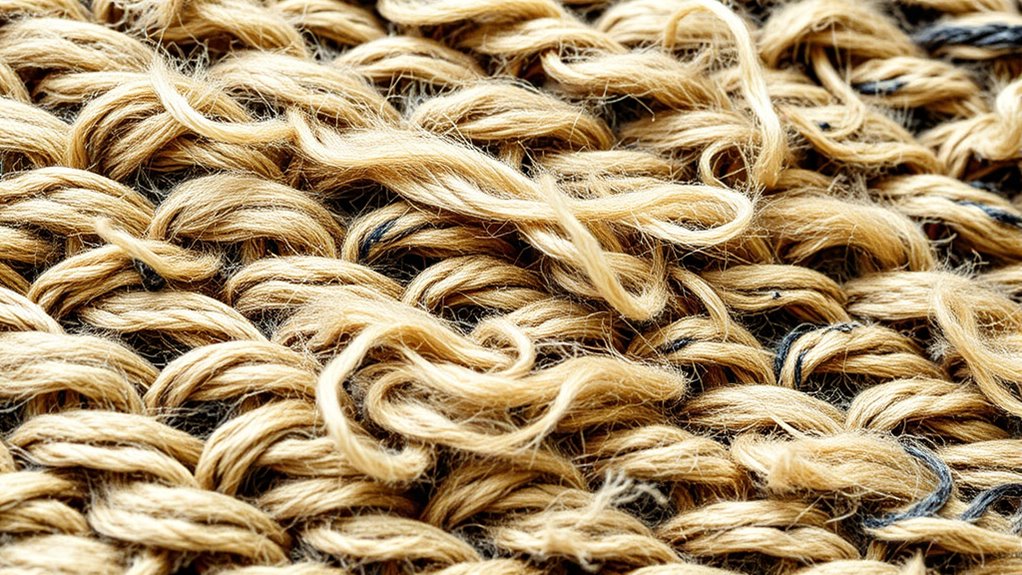
When evaluating an old rug, distinguishing between synthetic and natural fibers is essential for understanding its value and care needs. Recognizing these fibers helps you determine how durable the rug is and how well its colors will hold over time. Natural fibers like wool, silk, and cotton have specific characteristics that set them apart from synthetic ones such as nylon, polyester, or acrylic. Examining fiber durability is key because natural fibers generally wear differently, often becoming softer and more comfortable with age, while synthetics tend to resist wear and maintain their structure longer. However, synthetics can sometimes be more resistant to stains and environmental damage, making them appear more durable at first glance. Natural fiber qualities are important to recognize because they influence how the rug ages and responds to cleaning. Dye stability is another critical factor. Over the years, natural fibers usually retain dyes well, especially if they were originally high-quality dyes, but they can fade gradually with exposure to sunlight or cleaning. Synthetic fibers, on the other hand, often feature more stable dyes that resist fading, which is why they sometimes look more vibrant even after decades. To test dye stability, you can gently press a damp, white cloth onto a small, inconspicuous area of the rug. If color transfers easily, it might be a sign of natural fibers with less colorfast dyes, or lower-quality synthetic dyes. Conversely, if the color remains firmly attached, it indicates good dye stability, common in well-made synthetics. Another way to differentiate fibers involves simple visual and tactile inspection. Natural fibers tend to have irregular, sometimes slightly uneven surfaces, and can feel warmer or softer to the touch. Wool, for example, often has a slightly oily feel due to its natural lanolin content, which can also give it a subtle sheen. Synthetic fibers are usually smoother, more uniform, and can feel plasticky or slick. When you bend or stretch the fibers, natural ones often show slight irregularities, whereas synthetics tend to be more uniform and resilient. Burn testing can provide a definitive identification but should be approached with caution. If you decide to perform this test, carefully snip a small fiber sample and burn it. Natural fibers like wool or cotton tend to burn slowly, smell like burning hair or paper, and produce ash. Synthetic fibers melt, drip, and emit chemical odors. While this test is effective, it’s best to use it only if you’re confident and in a safe environment. Ultimately, understanding fiber durability and dye stability helps you assess an old rug’s authenticity, condition, and care requirements. Paying close attention to these details allows you to make informed decisions about preservation, cleaning, or restoration, ensuring your rug remains beautiful and well-maintained for years to come.
natural fiber rug identification kit
As an affiliate, we earn on qualifying purchases.
As an affiliate, we earn on qualifying purchases.
Frequently Asked Questions
Can Synthetic Fibers Be Eco-Friendly?
Synthetic fibers can be eco-friendly if they’re made from recycled materials or renewable resources. These eco-friendly alternatives reduce waste and lessen environmental impact. While synthetic fiber benefits include durability and affordability, choosing products made from recycled plastics or bio-based sources enhances their sustainability. So, yes, synthetic fibers can be eco-friendly when produced responsibly, helping you make greener choices for your home and the planet.
Do Synthetic Fibers Stain More Easily Than Natural Ones?
Think of synthetic fibers as a sponge at a picnic—eager to soak up every spill. They tend to stain more easily than natural fibers because of their fiber stain susceptibility. This makes cleaning challenges more frequent, as synthetic fibers can trap stains deeper. Natural fibers, like wool or cotton, often resist stains better and are easier to clean. So, if you’re prone to spills, natural fibers might be your better bet.
Are Synthetic Fibers More Durable Than Natural Fibers?
Synthetic fibers generally outlast natural fibers when it comes to durability. Their fiber composition makes them resistant to wear, abrasion, and moisture, which enhances rug longevity. You’ll find that synthetic materials like nylon or polyester tend to stay intact longer, especially in high-traffic areas. However, natural fibers such as wool or cotton can still be quite durable if properly maintained, but they usually don’t match the longevity of synthetic options.
How Does Fiber Age Affect Rug Value?
You might be surprised, but fiber aging considerably impacts rug valuation. As fibers age, they often lose vibrancy and strength, reducing the rug’s overall appeal and worth. Natural fibers tend to age gracefully, sometimes increasing its charm, while synthetic fibers may become brittle and less attractive. Keeping fibers well-maintained preserves your rug’s value, so understanding fiber aging helps you make better decisions about restoration or sale.
Can Fiber Type Influence Allergen Presence in Rugs?
Fiber type can definitely influence allergen presence in rugs. Natural fibers like wool or cotton often harbor more allergens, especially if you have fiber allergies, while synthetic fibers tend to resist dust and allergens better. To be sure, you should consider fiber testing, which helps identify specific fiber types and allergen levels. This way, you can choose rugs that minimize allergy symptoms and improve indoor air quality.
Conclusion
By mastering these simple tests, you’ll be able to distinguish synthetic from natural fibers in old rugs faster than a cheetah chasing prey. Imagine uncovering the secret identities of fibers so well-hidden, they might as well be undercover agents! With this knowledge, you’re now armed with the superpower to decode rug mysteries that could baffle experts for centuries. So go ahead—unravel those fibers and impress everyone with your newfound detective skills!
Columbus Day / Indigenous Peoples' Day Picks
long weekend sales
As an affiliate, we earn on qualifying purchases.