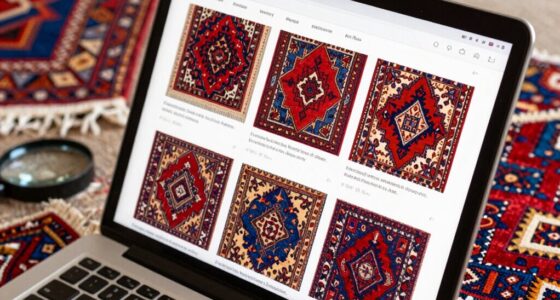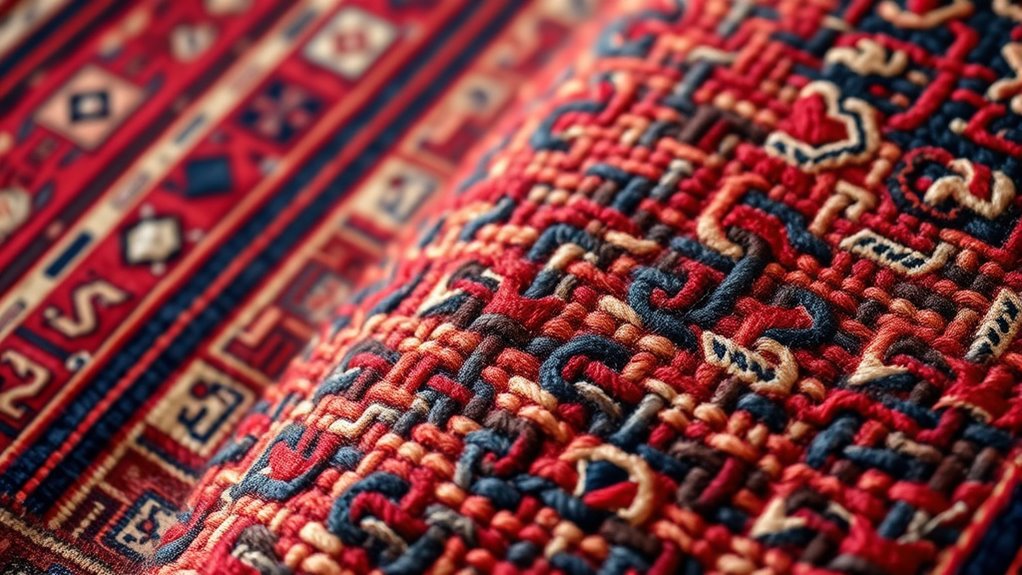
Collecting cultural heritage rugs helps preserve centuries-old weaving and dyeing techniques that embody the traditions and stories of diverse communities. By valuing these handcrafted textiles, you support the continuation of artisanal skills and protect cultural identities tied to specific regions. Each rug serves as a vibrant reminder of history, craftsmanship, and environmental knowledge. To understand why these pieces matter beyond their beauty, exploring their cultural significance reveals a deeper appreciation of heritage craft traditions.
Key Takeaways
- Collecting heritage rugs preserves traditional weaving and dyeing techniques, maintaining cultural craftsmanship across generations.
- Heritage rugs serve as tangible symbols of regional history, identity, and artisanal skills worth safeguarding.
- Preserving authentic handcrafted rugs supports the continuity of unique regional styles and cultural narratives.
- Engaging with traditional dyes and weaving methods deepens understanding of a community’s environmental and cultural heritage.
- Showcasing and caring for these rugs promotes appreciation of their cultural significance and helps prevent techniques from fading.
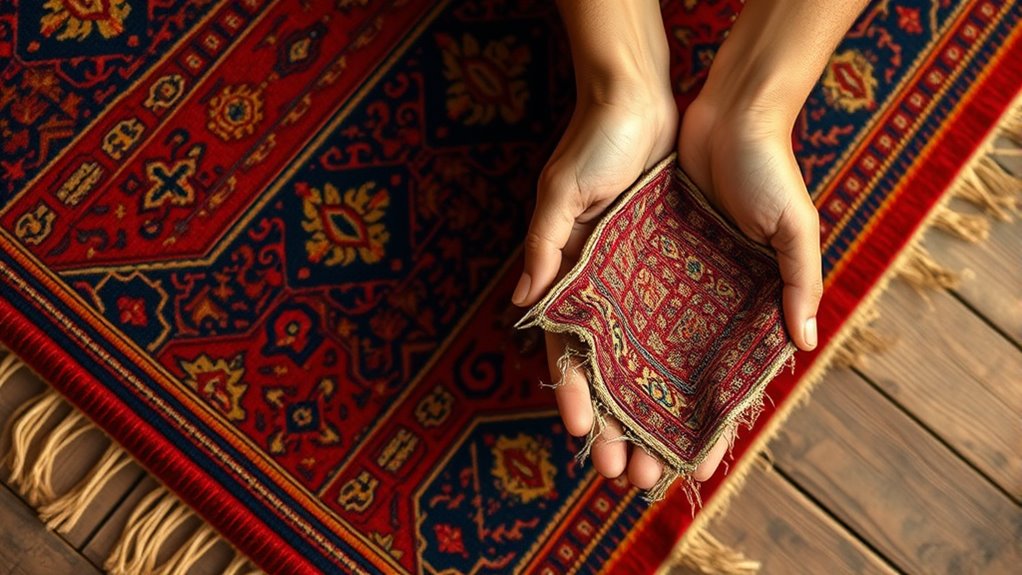
Have you ever wondered what makes a rug truly special? It’s not just the colors or patterns, but the craftsmanship behind its creation. The weaving techniques and dyeing methods used in traditional rugs carry centuries of cultural stories and artisanal skills. When you examine a cultural heritage rug closely, you realize it’s a tapestry of history, artistry, and identity woven into every thread. These rugs are more than decorative pieces; they’re a testament to the communities that crafted them, passed down through generations. The weaving techniques vary widely depending on the region, from the intricate knotting of Persian rugs to the flatweave styles of Central Asia. Each technique reflects the climate, resources, and aesthetic preferences of the local population. You might notice how some rugs have a dense, plush texture, achieved through knotting methods that require great skill and patience, while others are more lightweight, created with different weaving patterns suited for their environment. The dyeing methods also play an essential role in defining a rug’s character. Traditional dyeing often involves natural dyes extracted from plants, minerals, and insects, giving the rugs rich, vibrant hues that have stood the test of time. These natural dyes require meticulous preparation and knowledge of local flora, connecting the craft to the land itself. When you see a deep indigo or a fiery red in a heritage rug, you’re witnessing centuries-old dyeing techniques that have been carefully preserved. Modern dyes have made production faster and more consistent, but many collectors and artisans still value the depth and authenticity of natural dyes. This connection to traditional dyeing methods guarantees that every color tells a story, rooted in the environment and cultural practices of its creators. Preserving these weaving techniques and dyeing methods isn’t just about maintaining the beauty of the rugs; it’s about safeguarding the cultural identities embedded within them. When you choose to collect or display a cultural heritage rug, you’re helping keep alive the skills and stories of artisans from long ago. Each rug becomes a cultural artifact, a tangible link to the past that continues to inspire and educate. By understanding the craftsmanship behind these textiles, you deepen your appreciation for their artistry and significance. In a world dominated by mass production, these handcrafted rugs remind us of the value of tradition, skill, and cultural pride. They’re not just beautiful objects but living symbols of the communities and histories that shaped them, deserving of preservation and admiration. Recognizing the natural dyeing techniques used in these textiles enhances your appreciation of their historical and cultural significance.

SAFAVIEH Area Rug 8×10 – Heritage Collection – Large – Red, Handmade Wool, Traditional Oriental Medallion Design, Ideal for Living Room, Bedroom, Dining Space (HG625A)
[HANDMADE CRAFTSMANSHIP]: Hand-tufted by skilled artisans for a richly textured surface and enduring quality; subtle variations in size…
As an affiliate, we earn on qualifying purchases.
As an affiliate, we earn on qualifying purchases.
Frequently Asked Questions
How Can I Authenticate the Age of a Cultural Heritage Rug?
To authenticate the age of a cultural heritage rug, you should focus on age verification techniques and identify authenticity markers. Examine the rug’s dye colors, weaving techniques, and wear patterns, which can reveal its historical period. Consult experts or appraisers who specialize in antique textiles. They can analyze fibers, knots, and craftsmanship details, helping you determine whether your rug is genuinely old and preserves its cultural significance.
What Are the Best Methods for Preserving Antique Rugs?
To conserve antique rugs, you should focus on proper storage, regular cleaning, and avoiding direct sunlight. Use rug dye analysis to guarantee the colors remain vibrant and identify any fading or damage early. Additionally, apply fiber preservation techniques like gentle vacuuming with a soft brush and professional cleaning when needed. These steps help maintain the rug’s integrity, ensuring it stays beautiful and authentic for generations to come.
How Do Regional Differences Influence Rug Designs?
You’ll notice that regional motifs and weaving techniques shape rug designs uniquely. When you explore different areas, you find that local cultures influence motifs, colors, and patterns, making each rug a story of its origin. These regional differences are like a fingerprint, reflecting history and environment. By understanding these elements, you can appreciate how regional styles influence the artistry, helping you preserve and honor these cultural traditions through your collection.
Are There Specific Cleaning Techniques for Delicate Heritage Rugs?
You should use gentle cleaning techniques to protect delicate heritage rugs, avoiding harsh chemicals or vigorous scrubbing. Regular vacuuming with a soft brush attachment helps remove dirt without damage. For more thorough cleaning or repairs, it’s best to seek professional restoration specialists who understand the rug’s material and history. This approach guarantees your cherished piece remains preserved and vibrant for generations to come.
How Can I Determine the Cultural Significance of a Rug Pattern?
To determine a rug’s cultural significance, look at its symbolic motifs and weaving techniques. You’ll notice specific patterns that represent local stories, beliefs, or history, which vary by region. Examine the craftsmanship, including knotting style and dyeing methods, to identify its origin. Research the symbolism behind motifs, as they often reveal the traditions and identity of the community that made it, helping you appreciate its cultural value.

Loloi Magnolia Home by Joanna Gaines Millie Collection MIE-05 Stone/Natural 7'-10" x 10', .25" Pile Height, Area Rug
The Millie Collection is a vintage-inspired area rug based on Turkish Oushak designs with timeless floral motifs
As an affiliate, we earn on qualifying purchases.
As an affiliate, we earn on qualifying purchases.
Conclusion
Think of cultural heritage rugs as the threads of a grand tapestry, each one contributing to a vibrant story that spans generations. By collecting and preserving these rugs, you’re not just safeguarding intricate patterns and colors—you’re holding onto the spirit of traditions, like a gardener tending to delicate blooms. Your efforts guarantee that these stories remain alive, weaving a future where culture continues to flourish, vibrant and unbroken, just like the rugs themselves.

FRELISH DECOR Wool and Jute Premium Handwoven Chunky Stripes Rug – Contemporary Throw Rug for Bedroom Entryway Kitchen (3' x 5' – Natural Ivory)
Material: 60% Jute, 30% Wool, 10% Cotton, Made by skilled artisans in India
As an affiliate, we earn on qualifying purchases.
As an affiliate, we earn on qualifying purchases.

Rugs Restoration and Renovation Irregular Shaped Throw Rug Illusion Pattern | Handmade 100% Wool Modern Colourful Stripe Hand-Tufted Area Rugs (5×5 Feet)
[DURABLE QUALITY HANDMADE CONSTRUCTION]: Hand-tufted by skilled artisans for a truly unique textured look and feel
As an affiliate, we earn on qualifying purchases.
As an affiliate, we earn on qualifying purchases.