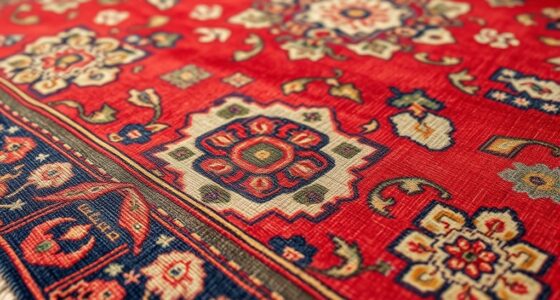
Explore rare rug styles like Tabriz, Malayer, and Kilim, each showcasing unique craftsmanship and techniques. Tabriz rugs feature intricate patterns with high knot densities and natural dyes, making them highly detailed and durable. Malayer rugs emphasize sturdiness with simpler designs, often dyed with natural or synthetic colors. Kilims are flatweave rugs known for bold geometric patterns and vivid vegetable dyes. Discover how these techniques create timeless treasures and deepen your appreciation for their cultural artistry.

Get cleaning gear delivered free with Prime
- Fast, free delivery on millions of items
- Prime Video, Amazon Music and more included
- Member-only deals all year
Key Takeaways
- Tabriz rugs are renowned for intricate patterns, high knot density, and vibrant natural dyes, reflecting exceptional craftsmanship.
- Malayer rugs feature durable, rustic designs with simpler motifs and sturdy weaving suited for everyday use.
- Kilim rugs are flatweave, reversible textiles with bold geometric patterns and vivid vegetable dyes.
- The weaving techniques and dyeing methods significantly influence each rug style’s uniqueness, value, and cultural heritage.
- Understanding these craftsmanship details enhances appreciation for the artistry and historical significance of rare rug treasures.

Have you ever wondered what makes certain rugs truly stand out? It often comes down to the craftsmanship behind their creation—the weaving techniques and dyeing methods that give each piece its unique character. When exploring rare rug styles like those from Tabriz, Malayer, and Kilim, understanding these techniques helps you appreciate their beauty and value more deeply. For example, the knot density in Tabriz rugs is a key factor in their detailed patterns and fine craftsmanship, reflecting the high level of skill involved. Starting with Tabriz rugs, you’ll notice their intricate patterns and fine details. The secret lies in their meticulous weaving techniques. Artisans use a high knot density, often over 200 knots per square inch, which allows for detailed motifs and complex designs. This requires patience and exceptional skill, making each rug a work of art. The dyeing methods also play an essential role; traditional Tabriz rugs often utilize natural dyes derived from plants, minerals, and insects. These dyes produce vibrant, long-lasting colors that develop a rich patina over time. The combination of precise weaving and natural dyeing results in rugs that are both visually stunning and durable.
Malayer rugs, on the other hand, tend to have a more rustic charm, characterized by simpler patterns and a sturdier weave. Their weaving techniques emphasize durability, often with a lower knot density compared to Tabriz, which makes them suitable for everyday use. When it comes to dyeing methods, Malayer artisans traditionally relied on natural dyes as well, but they often incorporated synthetic dyes later on, affecting the palette’s vibrancy and longevity. The dyeing process can range from simple immersion techniques to more complex methods that enhance color richness. This combination of techniques lends Malayer rugs a warm, earthy appeal that reflects their practical origins.
Kilim rugs differ markedly from the piled styles of Tabriz and Malayer. These flatweave textiles are created using a different weaving technique altogether, involving interweaving the warp and weft threads to produce a smooth, reversible surface. Kilims often feature bold geometric patterns, crafted with a focus on symmetry and color contrast. Their dyeing methods typically involve vegetable dyes, which provide a limited but vivid color palette. The absence of pile means these rugs are lightweight, making them versatile for various decor styles. The craftsmanship in Kilims emphasizes precision in their weaving techniques and consistency in dyeing, resulting in striking, functional pieces with a rich cultural heritage.
In each of these styles, the weaving techniques and dyeing methods are the backbone of their uniqueness. Whether it’s the dense knotting of Tabriz, the robust construction of Malayer, or the flatweave artistry of Kilims, these techniques define their appearance and longevity. Recognizing these elements allows you to better appreciate the artistry and history behind each rare rug style, turning a simple piece into a treasured heirloom.
As an affiliate, we earn on qualifying purchases.
Frequently Asked Questions
How Do I Identify Authentic Tabriz, Malayer, or Kilim Rugs?
To identify authentic Tabriz, Malayer, or Kilim rugs, start with authenticity verification by examining the rug’s material, craftsmanship, and age. Look for regional motif identification—each region has distinct patterns and color palettes. Tabriz rugs often feature intricate floral designs, Malayer rugs have bold geometric shapes, and Kilims display flat-woven, tribal motifs. Trust reputable dealers and consider professional appraisals to confirm genuine regional qualities.
What Are the Current Market Values for These Rare Rugs?
Imagine holding a piece of history in your hands—these rare rugs have market valuation that can range from a few thousand to tens of thousands of dollars, depending on age, craftsmanship, and condition. You’ll find their investment potential promising, especially for well-preserved Tabriz, Malayer, and Kilims. Keep an eye on current trends, and you might discover a treasure that appreciates in value over time.
How Should I Properly Care for Antique Rugs?
To properly care for your antique rugs, use gentle cleaning techniques like vacuuming with a soft brush and avoiding harsh chemicals. Regularly inspect for pests and stains, and address them promptly. When storing, keep your rugs in a cool, dry place away from direct sunlight, and roll them with the pile facing inward. Use breathable materials for storage, and avoid folding to prevent creases, ensuring your treasured pieces stay pristine.
Are There Any Specific Regional Symbols or Motifs to Look For?
Think of regional motifs as the signature stamps of a rug’s origin. You’ll find Tabriz rugs with intricate floral patterns, Malayer often showcasing geometric shapes, and Kilims featuring bold, symbolic symbols. These cultural symbols tell stories unique to their regions, revealing history and tradition. When examining a rug, look for these motifs—each one a visual language that connects you to its cultural roots and craftsmanship.
Where Can I Find Reputable Dealers Specializing in These Styles?
You should start by visiting reputable antique rug appraisers and specialists knowledgeable about Tabriz, Malayer, and Kilim styles. Look for dealers who work closely with regional weaving communities, ensuring authenticity and quality. Attend major rug shows, auctions, or reputable online marketplaces with strong credentials. These sources often connect you with trusted experts, giving you confidence in your purchase and helping you discover rare, authentic pieces from skilled regional artisans.
Conclusion
So, next time you stumble upon a Tabriz, Malayer, or Kilim treasure, remember—you’re not just buying a rug; you’re investing in a slice of history, woven with stories and secrets. Who knew that these rare styles could turn your living room into a museum, right? So go ahead, indulge in these treasures—because nothing says “refined taste” quite like flaunting a piece of ancient artistry while pretending you knew all along.
Halloween Picks
halloween
As an affiliate, we earn on qualifying purchases.