Flatweave, Kilim, and Dhurrie rugs each have unique features that matter when choosing one for your space. Flatweaves are thin, reversible, and easy to clean, perfect for high-traffic areas. Kilims are geometric, bold, and originate from Turkey, Iran, and the Caucasus, making them great as statement pieces. Dhurries are thicker, vibrant, and from India and Pakistan, suited for casual or modern settings. Knowing these differences helps you pick the best fit for your style and needs.
Key Takeaways
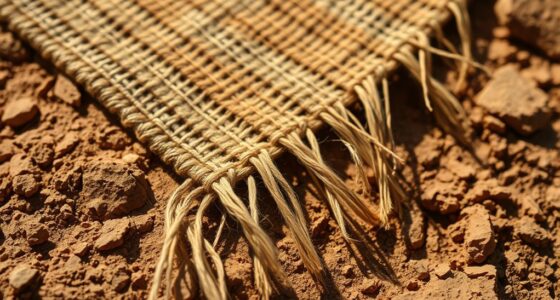
- Flatweave rugs are thin, reversible, with no pile, made by interlacing weft and warp threads, emphasizing practicality and portability.
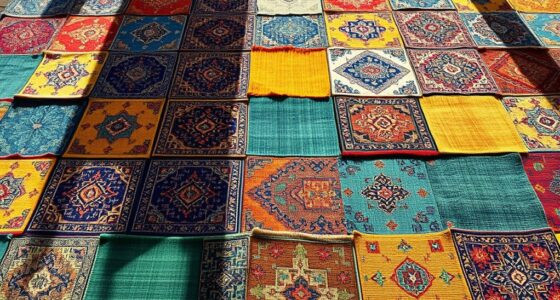
- Kilims feature geometric, symbolic patterns with minimal pile, woven using slit tapestry or interlocking techniques from Turkey, Iran, or the Caucasus.
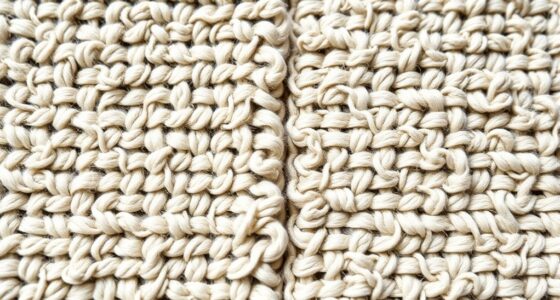
- Dhurries are thicker, combining flatweave with low pile, often made from wool or cotton, originating from India and Pakistan for durability and texture.
- Construction methods differ: flatweaves have no knots, kilims use tightly interwoven weft and warp, while dhurries incorporate low knot counts for added thickness.
- Material and regional origins influence appearance, durability, design motifs, and cultural significance of each rug type.

Nourison Home Reversible Indoor Outdoor Natural 8' x 10' Area Rug – Easy Clean, Non Shedding, Bed Room, Living Room, Dining Room, Kitchen (8' x 10')
Ultra-versatile indoor-outdoor rug with a bold geometric pattern
As an affiliate, we earn on qualifying purchases.
As an affiliate, we earn on qualifying purchases.
What Are Flatweave, Kilim, and Dhurrie Rugs?
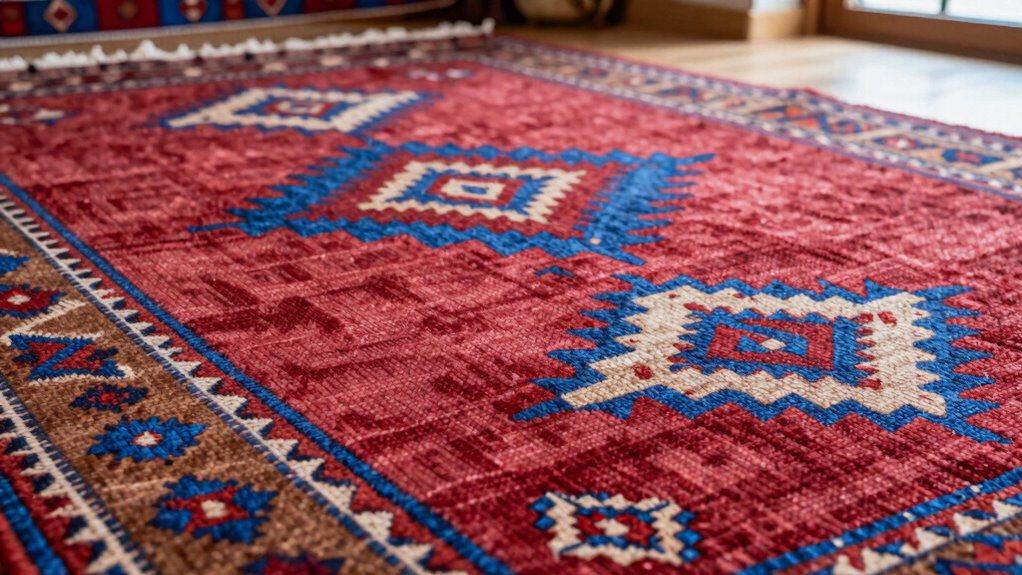
Flatweave, Kilim, and Dhurrie rugs are traditional floor coverings that each have unique weaving techniques and cultural origins. These rugs influence modern design by adding texture and visual interest to contemporary spaces. Flatweave rugs are created without pile, making them lightweight and easy to roll up, perfect for a minimalist aesthetic. Kilim rugs feature intricate geometric patterns with cultural symbolism, reflecting the heritage of their regions. Dhurrie rugs are often thicker and made with wool, offering durability and warmth. Understanding these differences helps you choose the right piece for your style. weaving techniques also affect the rug’s texture and durability, making it an important factor in selection. Beyond their aesthetic appeal, these rugs carry cultural significance, connecting your home to rich traditions and stories. They’re more than decorative; they’re woven expressions of history and identity.

Geometric Kilim Wool Jute Rug – Natural Handwoven Flatweave, Bohemian Southwestern Style, Sustainable and Eco-Friendly Vintage Tribal Design, Perfect for Living Room or Bedroom, Multicolor 2X3
Give your home a stylish, classic look with this beautiful kilim rug. It has detailed patterns and bright…
As an affiliate, we earn on qualifying purchases.
As an affiliate, we earn on qualifying purchases.
Where Do Flatweave, Kilim, and Dhurrie Rugs Come From?
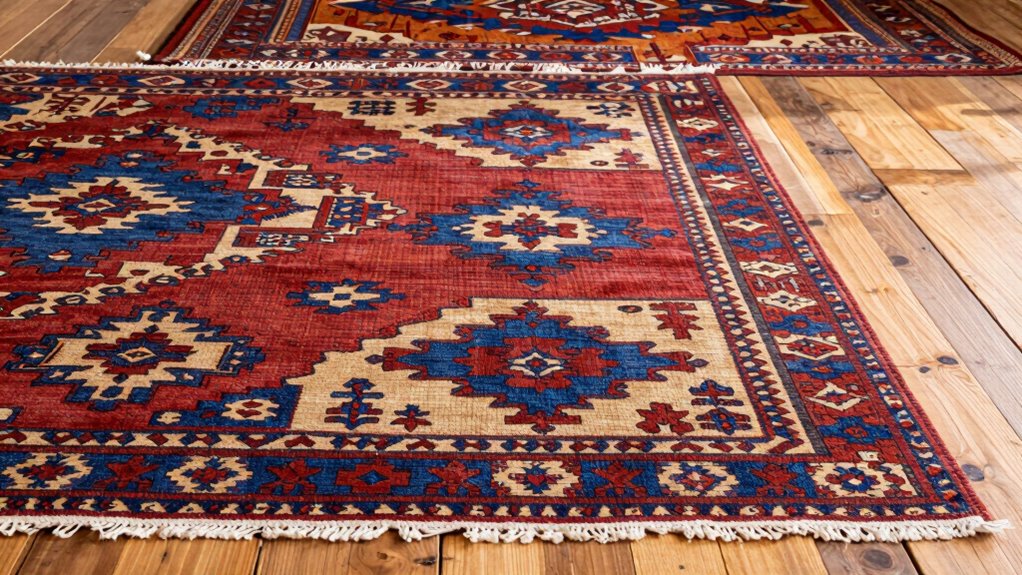
These rugs originate from diverse regions across Asia, the Middle East, and North Africa, each reflecting the distinct cultural traditions of their areas. Their origins influence their regional variations and cultural significance. For example:
- Kilims come from Turkey, Iran, and the Caucasus, showcasing geometric patterns rooted in their nomadic history.
- Dhurries hail from India and Pakistan, often featuring vibrant colors and intricate motifs linked to local traditions.
- Flatweaves are produced across North Africa and Central Asia, emphasizing practicality and regional storytelling through design.
Understanding where these rugs come from helps you appreciate their cultural significance and regional variations, making each piece more meaningful and unique. Their origins tell stories of the people and traditions that crafted them.

Vanya Navajo Kilim Area Rug | 100% Handspun Wool | Southwestern Tribal Design | Flatweave Dhurrie | Handwoven Indian Artisan Rug for Entryway, Bedroom & Living Room
Premium Handwoven Craftsmanship – Expertly handcrafted by skilled Indian artisans using traditional weaving techniques, ensuring each rug is…
As an affiliate, we earn on qualifying purchases.
As an affiliate, we earn on qualifying purchases.
How Are These Rugs Constructed?
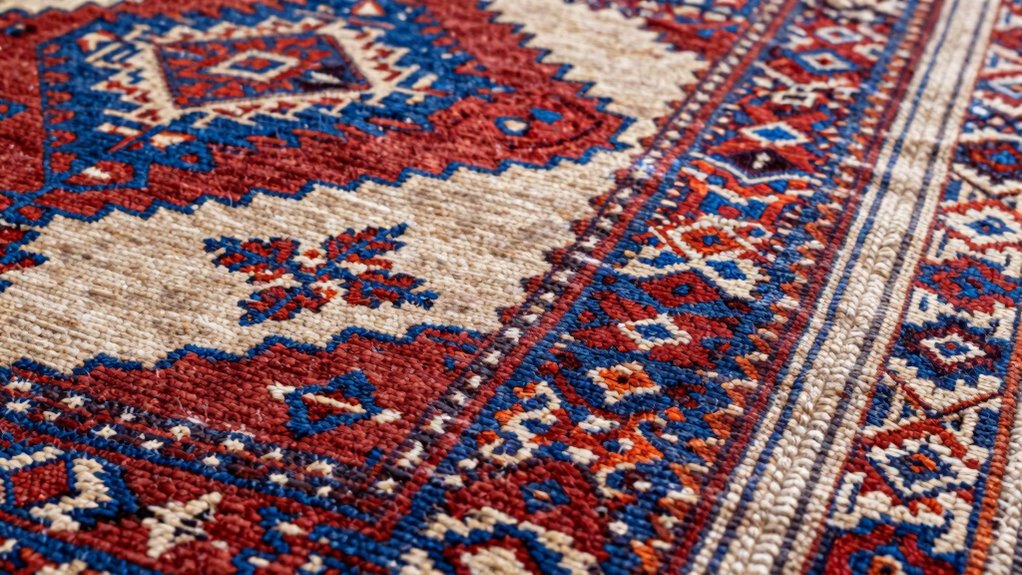
You’ll notice that these rugs are made using different weaving techniques, which influence their appearance and durability. The materials chosen, like wool or cotton, also play a key role in their construction and feel. Additionally, finishing methods determine the final texture and how well the rug holds up over time. Understanding weaving techniques can help you choose the right rug for your space and needs.
Weaving Techniques Used
The weaving techniques used in flatweave, kilim, and dhurrie rugs involve different methods of interlacing yarns to create their distinct textures and patterns. These techniques hold significant history and cultural symbolism, reflecting regional identities. Free Floating is a common technique used in many traditional rugs, allowing for versatility and unique design possibilities. 1. flatweave uses a plain weaving method, interlacing weft and warp without knots, resulting in a thin, reversible rug. 2. kilim employs slit tapestry or interlocking techniques, creating bold geometric patterns with minimal pile, emphasizing symbolic motifs. 3. dhurrie often combines flatweave with pile weaving, adding texture and durability, showcasing a blend of tradition and functionality.
These methods are passed down through generations, embodying cultural stories and historical significance in each rug’s craftsmanship.
Materials and Finishing Methods
Materials and finishing methods vary considerably among flatweave, kilim, and dhurrie rugs, shaping their durability, appearance, and cultural significance. You’ll notice that knot density differs: kilims typically have no knots, while dhurries may feature a low knot count, affecting their texture and strength. Flatweaves like kilims use tightly interwoven weft and warp threads, often with minimal finishing, giving a thin, lightweight feel. Dye techniques also vary; natural dyes are common, but kilims often feature bold, geometric colors achieved through specific dyeing methods. Dhurries may incorporate resist dyeing, creating intricate patterns. These materials and finishing techniques influence not only how the rugs look but also how long they last, making understanding these differences essential when choosing your perfect piece. Additionally, the finishing processes can impact the rug’s overall lifespan and maintenance requirements, which are important factors to consider.
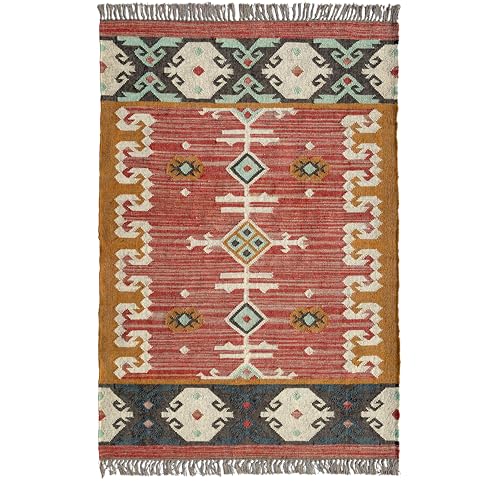
Weaving Village Jute Traditional Kilim Rug Boho Flatweave Area Rug for Living Room, Living Room Entryway, Tribal Series, 4'x6'
Each Kilim rug showcases intricate patterns and vibrant colors, reflecting traditional craftsmanship and adding a touch of bohemian…
As an affiliate, we earn on qualifying purchases.
As an affiliate, we earn on qualifying purchases.
What Do They Look Like? Style and Appearance Differences

You’ll notice that flatweaves, kilims, and dhurries each have distinct patterns and motifs that reflect their cultural origins. Their color palettes also vary, from bold, vibrant hues to more subdued tones, giving each rug a unique look. Additionally, the texture and weave appearance differ, influencing how the rugs feel and how they add character to a space. Recognizing weaving techniques can help you distinguish between these types and appreciate their craftsmanship.
Pattern and Motif Styles
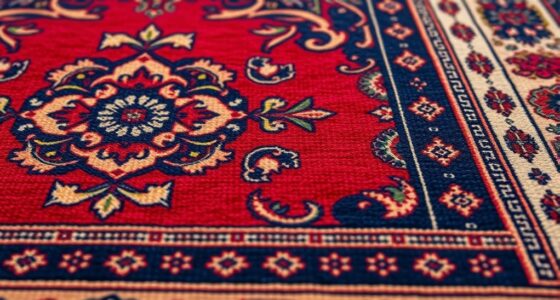
Pattern and motif styles reveal much about each type of rug, showcasing distinct visual characteristics. You’ll notice that flatweaves often feature geometric or abstract decorative motifs that emphasize symmetry. Kilims utilize bold, symbolic patterns that reflect pattern symbolism rooted in cultural traditions. Dhurries tend to have more intricate, detailed motifs with floral or figurative designs, blending decorative motifs with storytelling elements. Additionally, the visual characteristics of each style are deeply connected to their cultural origins and traditional techniques. Understanding these differences helps you identify each rug’s cultural significance and style, making your selection more meaningful.
Color Palette Variations
Color palettes in flatweaves, kilims, and dhurries vary considerably, giving each rug its unique visual identity. You’ll notice differences in how colors harmonize and how dye techniques influence their appearance. Flatweaves often feature bold, contrasting colors created with natural dyes, emphasizing vibrant color harmony. Kilims tend to use earthy tones and geometric patterns, achieved through precise dyeing methods. Dhurries, meanwhile, display warm, rich hues with subtle gradations, thanks to layered dye techniques. The dyeing process used significantly impacts the overall look, affecting both the saturation and depth of colors.
Texture and Weave Appearance
Each rug type exhibits distinct textures and weave appearances that give them their signature styles. Flatweaves, like Kilims and Dhurries, are tightly woven, resulting in a smooth, thin surface with no pile. Their fiber options—such as wool, cotton, or synthetic—affect their texture and durability. Kilims often feature geometric patterns influenced by cultural traditions, with a slightly rougher feel due to their flat, slit-woven technique. Dhurries, on the other hand, tend to have a softer, more pliable texture thanks to their cotton or wool fibers and weaving style. Additionally, the weaving technique used in each type influences their overall appearance and feel. To summarize:
- Flatweaves have a smooth, pile-less surface with a tight weave.
- Kilims showcase intricate geometric designs influenced by cultural heritage.
- Dhurries offer a softer, more flexible texture with varied fiber options.
Which Rug Types Are Best for Specific Spaces and Uses?
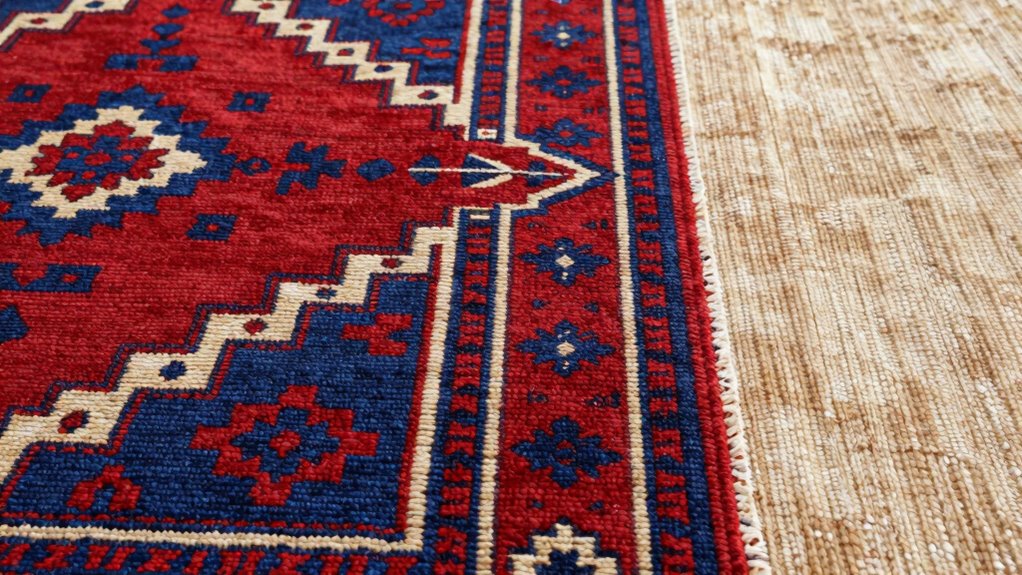
Choosing the right rug type depends on the space and how you plan to use it. For high-traffic areas like living rooms or hallways, flatweave rugs offer durability and easy maintenance, making them ideal for decorating with rugs that see daily wear. Kilims add a pop of color and pattern, perfect for creating focal points or layering with other rugs through rug layering techniques. Dhurries work well in casual spaces such as kitchens or sunrooms due to their lightweight nature and versatility. Consider your activity level and style goals when selecting a rug. For example, a Kilim can serve as a statement piece, while a Dhurrie adds a relaxed vibe. Matching rug types to specific spaces guarantees both aesthetic appeal and functional longevity. Incorporating sound therapy principles can enhance the ambiance of a space, creating a calming environment that complements your rug choice.
How Do Price, Durability, and Maintenance Compare?
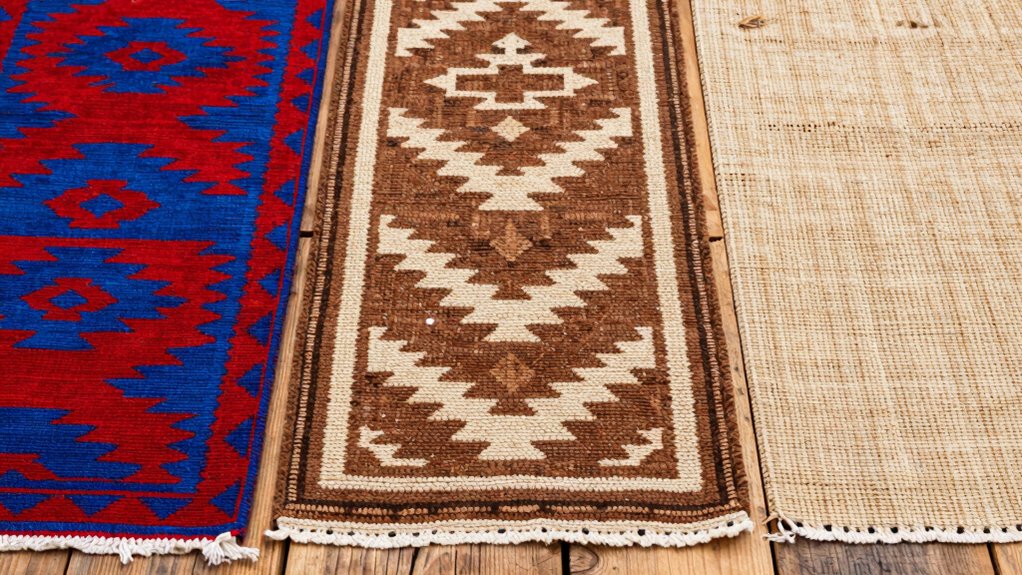
When comparing flatweave rugs, kilims, and dhurries, their price, durability, and maintenance needs vary considerably. Your choice depends on your budget and lifestyle. Consider these factors:
- Pricing strategies: Flatweaves tend to be more affordable, while authentic kilims and dhurries can be pricier due to craftsmanship.
- Longevity factors: Kilims often last longer because of dense weaving, whereas flatweaves may show wear faster.
- Maintenance: Flatweaves are easy to clean with regular vacuuming, while kilims and dhurries may require professional cleaning for deep maintenance.
- Additionally, the environmental impact of each type varies depending on their materials and production methods.
Understanding these differences helps you select a rug that fits your budget and fits your space’s durability needs. Your decision should balance initial cost, expected lifespan, and upkeep requirements.
What Common Mistakes Should You Avoid When Choosing or Caring for These Rugs?
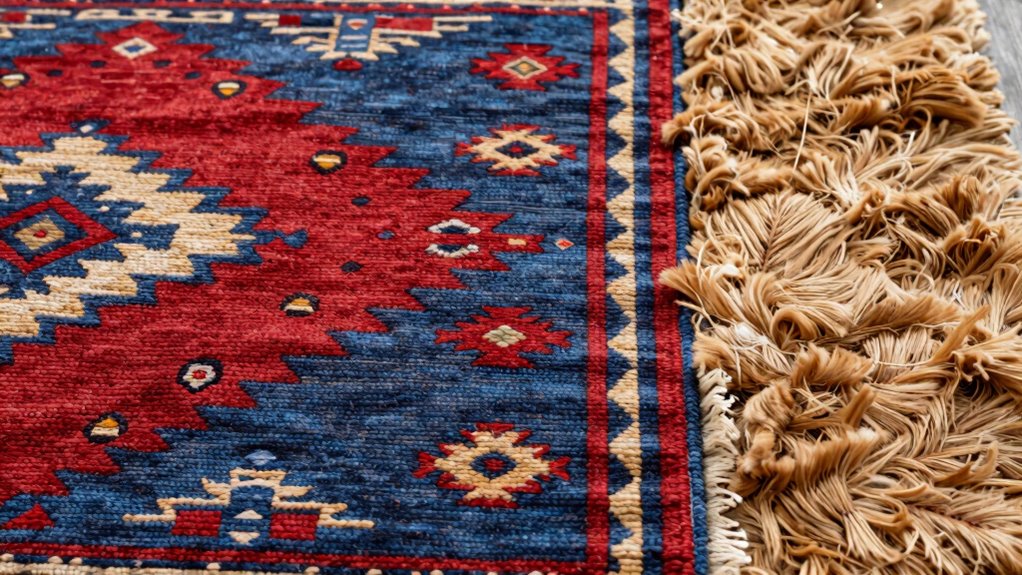
To guarantee your flatweave, kilim, or dhurrie rug remains beautiful and functional, it’s important to avoid common mistakes during selection and care. One mistake is neglecting proper care and cleaning; avoid harsh chemicals or excessive water that can damage fibers. When purchasing, don’t ignore authentic craftsmanship—fake or poorly made rugs won’t last. Additionally, avoid placing rugs in high-traffic areas without proper backing or padding, which can cause premature wear. Regular vacuuming and prompt stain removal are essential, but don’t overdo it. Use these tips to preserve your rug’s beauty and longevity.
| Mistake to Avoid | Why It Matters |
|---|---|
| Ignoring care and cleaning | Leads to damage and wear |
| Buying low-quality rugs | Reduces durability |
| Placing rugs in high-traffic areas | Causes quick deterioration |
| Using harsh cleaning agents | Fades colors and weakens fibers |
| Skipping professional maintenance | Shortens lifespan |
How Does Understanding These Rugs Help You Find the Perfect Fit?

Understanding the unique characteristics of flatweave, kilim, and dhurrie rugs allows you to select pieces that truly match your space and lifestyle. Recognizing their cultural significance helps you appreciate their origins and choose designs that resonate with your aesthetic. Modern adaptations now incorporate these traditional styles into contemporary decor, making them versatile options. To find your perfect fit, consider:
- Your lifestyle—do you need durable, easy-to-clean rugs for high-traffic areas?
- The aesthetic—are you after bold geometric patterns or subtle textures?
- Cultural appreciation—do you want to honor traditional craft or explore modern twists?
Frequently Asked Questions
Can Flatweave, Kilim, and Dhurrie Rugs Be Used Outdoors?
You can use flatweave, kilim, and dhurrie rugs outdoors, but their outdoor durability depends on their materials and construction. Flatweaves generally hold up better outside due to their tighter weave, while kilims and dhurries may need additional UV resistance treatments to withstand sun exposure. To guarantee longevity, pick rugs specifically designed for outdoor use with UV-resistant fibers, and regularly clean and protect them from harsh weather conditions.
Are There Specific Weaves or Dyes Unique to Each Rug Type?
You’ll find that each rug type uses specific weaves and dyes. Flatweaves often feature traditional dyeing techniques with natural, earthy colors, and a tight, durable weave. Kilims showcase unique weaving patterns with bold, geometric designs, also using traditional dyes. Dhurries combine vibrant dyes with a looser weave, making them softer yet resilient. These unique weaving styles and natural dyes give each rug its characteristic look and cultural significance.
How Do These Rugs Perform in High-Traffic Areas?
Think of these rugs like trusted racehorses in a marathon—they handle high-traffic areas well. Flatweaves and Kilims excel in durability comparisons, resisting wear and tear, while Dhurries may show more signs of use over time. Maintenance considerations include regular vacuuming and spot cleaning for longevity. You’ll find that flatweaves and Kilims are especially resilient, making them ideal choices for busy hallways or living rooms.
Can These Rugs Be Layered or Combined With Other Flooring?
Yes, you can layer or combine these rugs with other flooring using layering techniques and rug combination tips. Start by placing a larger, neutral rug as a base and layer a smaller, patterned rug on top for added texture and style. Make sure the rugs complement each other’s colors and patterns. Secure them with non-slip pads to prevent shifting, creating a cozy, stylish look that enhances your space.
What Are Eco-Friendly or Sustainable Options for These Rug Types?
You can choose eco-friendly options by selecting rugs made from natural fibers like wool, jute, or cotton, which are renewable and biodegradable. Look for those dyed with plant-based dyes instead of synthetic chemicals, reducing environmental impact. These sustainable choices not only help the planet but also add authentic, natural beauty to your space. Always check for certifications or labels indicating eco-friendly practices to guarantee you’re making a responsible choice.
Conclusion
So, next time you’re tempted to pick the cheapest rug or the flashiest one, remember—what looks good on the surface might hide a lifetime of surprises. Whether it’s a flatweave’s resilience, a kilim’s bold patterns, or a dhurrie’s cozy charm, knowing the differences means you’re less likely to end up with a floor covering that’s more headache than highlight. After all, your perfect rug should be a lasting story, not just a fleeting trend.