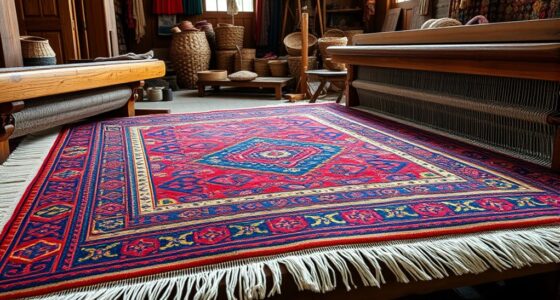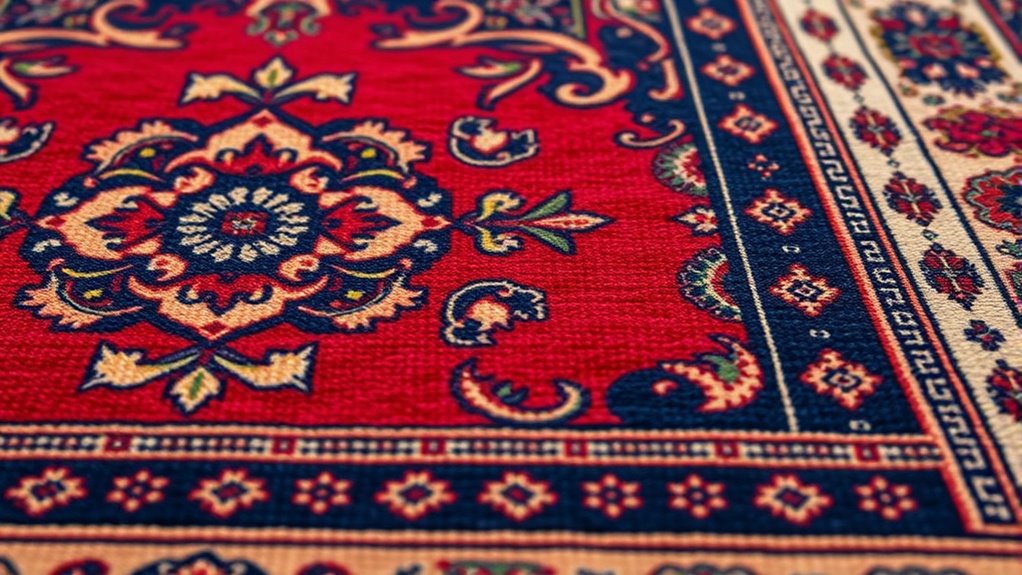

Persian rugs display diverse regional styles and motifs that reflect Iran’s rich cultural heritage. You’ll notice differences like the geometric patterns of Qom, floral designs in Kashan, and medallions in Tabriz. Knotting techniques and natural dyes add unique textures and colors, making each rug a storytelling piece. Exploring these regional features helps you appreciate their artistry and history even more—there’s much more to discover about the craftsmanship behind each exquisite design.

Get cleaning gear delivered free with Prime
- Fast, free delivery on millions of items
- Prime Video, Amazon Music and more included
- Member-only deals all year
Key Takeaways
- Regional knotting techniques influence rug texture and detail, with Tabriz known for fine, symmetrical knots and Kerman for thicker, durable rugs.
- Natural dyes from regional plants and minerals create unique, vibrant colors like deep reds in Shiraz and blues in Isfahan.
- Motifs vary by region: geometric patterns in Qom, floral designs in Kashan, and medallions in Tabriz, reflecting local cultural influences.
- Craftsmanship and traditional techniques are passed down through generations, ensuring distinctive regional styles and storytelling through designs.
- Each Persian rug embodies regional symbolism, craftsmanship, and artistry, making them valuable cultural artifacts beyond mere decoration.

Have you ever wondered what makes Persian rugs so highly prized around the world? It all comes down to the intricate craftsmanship rooted in centuries of tradition. When you examine a Persian rug, you’re looking at more than just a decorative piece; you’re witnessing an art form that reflects regional history, culture, and skill. Central to this craftsmanship are the knotting techniques and dyeing processes that artisans have perfected over generations. These elements are what give each rug its unique character and value.
Persian rugs embody centuries of tradition, artistry, and regional craftsmanship that make them truly unique and valuable.
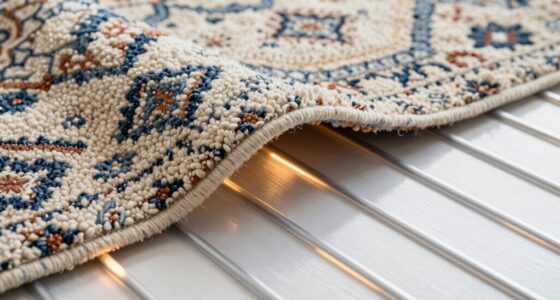
Knotting techniques, in particular, differ from one region to another, influencing the rug’s texture and durability. For example, the Persian city of Tabriz is known for its fine, symmetrical knots, which allow for highly detailed patterns and a smooth surface. In contrast, the city of Kerman employs a slightly different knotting style that results in thicker, more robust rugs, suited for high-traffic areas. As you observe a Persian rug, notice the density of the knots—denser knots typically indicate a higher quality and longer-lasting piece. These techniques require precision and patience, often taking months or even years to complete a single rug, depending on size and complexity.
The dyeing processes also play a pivotal role in defining the regional style of Persian rugs. Traditional dyeing involves natural dyes derived from plants, minerals, and insects, giving each rug a rich, vibrant palette that can’t be replicated with synthetic dyes. For instance, the deep reds of Shiraz rugs come from madder root, while the blues of Isfahan pieces are often created using indigo. The natural dyeing process isn’t just about color; it affects how the colors age and develop over time, adding to the rug’s character and charm. When you look at a Persian rug, pay attention to the subtle variations in color—these are the result of skillful dyeing techniques that guarantee each rug is one of a kind. Additionally, some regions employ innovative dyeing methods that enhance colorfastness and vibrancy, contributing to the rug’s overall quality and longevity.
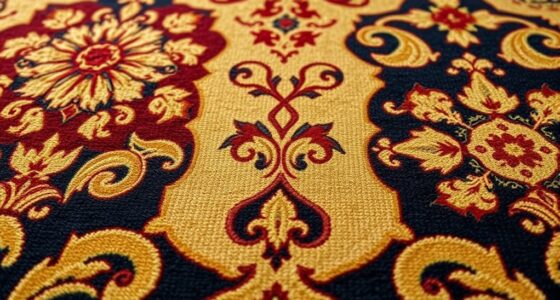
Both knotting techniques and dyeing processes are essential in creating the regional motifs that make Persian rugs so distinctive. Different regions favor specific patterns—geometric designs in Qom, floral motifs in Kashan, or intricate medallions in Tabriz—that reflect local cultural influences. These motifs are carefully woven using techniques passed down through generations, making each rug a storytelling piece. When you appreciate a Persian rug, you’re not just admiring its beauty; you’re honoring a long history of craftsmanship rooted in regional expertise and tradition.
As an affiliate, we earn on qualifying purchases.
Frequently Asked Questions
How Do Persian Rug Motifs Evolve Over Centuries?
You’ll notice that Persian rug motifs evolve over centuries through changing motif symbolism and design evolution. As you examine different eras, you see how traditional symbols adapt, reflecting cultural shifts and regional influences. This ongoing transformation allows you to appreciate the deep history behind each rug, revealing stories and beliefs woven into the intricate patterns. The design evolution makes each piece unique, showcasing the dynamic artistry of Persian craftsmanship.
What Materials Are Traditionally Used in Persian Rug Weaving?
You’ll find that traditional Persian rug weaving mainly uses high-quality wool, prized for its durability and softness. Natural dyes, derived from plants, minerals, and insects, add vibrant, lasting colors to the designs. These materials, combined with skilled craftsmanship, create rugs that are both beautiful and long-lasting. By choosing rugs made from quality wool and natural dyes, you guarantee a timeless piece that reflects centuries of Persian weaving tradition.
How Do Regional Styles Influence Rug Durability?
Regional styles substantially shape rug durability through distinct weaving techniques and dye stability. You’ll notice that some areas use tighter, more complex weaving, making rugs stronger and more resilient. Others prioritize vibrant dyes with excellent colorfastness, ensuring longevity. By understanding how regional techniques and dye stability blend, you can choose a Persian rug that’s not only stunning but also durable, standing the test of time and traffic.
Are There Specific Symbols Indicating a Rug’s Origin?
Yes, you can identify a rug’s origin through symbol identification and regional markings. Many Persian rugs feature specific symbols, motifs, or patterns unique to their region, such as floral designs from Kashan or geometric shapes from Bakhtiari. By examining these regional markings, you can determine where the rug was made. Look closely at the motifs and symbols, as they serve as clues to the rug’s authentic origin and regional style.
How Has Modern Design Impacted Traditional Persian Rug Craftsmanship?
Modern design has markedly influenced traditional Persian rug craftsmanship by introducing contemporary adaptations that blend classic techniques with minimalist aesthetics. You’ll notice cleaner lines, simplified motifs, and a focus on subtle color palettes, making these rugs versatile for modern interiors. While preserving their cultural essence, artisans now create pieces that appeal to current tastes, allowing you to enjoy timeless artistry in a fresh, streamlined form that complements contemporary spaces.
Conclusion
Think of Persian rugs as a vibrant tapestry woven from the threads of history and culture, each pattern a chapter in a timeless story. As you explore their regional styles and motifs, you’re like a traveler uncovering hidden treasures in a vast, ornate map. Let these rugs be your compass, guiding you through centuries of craftsmanship and tradition. Embrace their beauty, and you’ll find yourself immersed in a living, breathing allegory of Persian heritage.
Halloween Picks
halloween
As an affiliate, we earn on qualifying purchases.