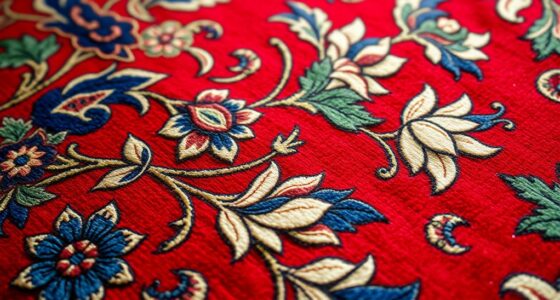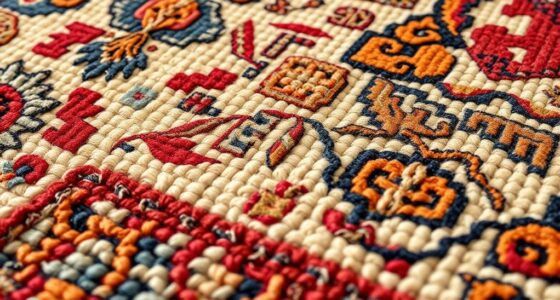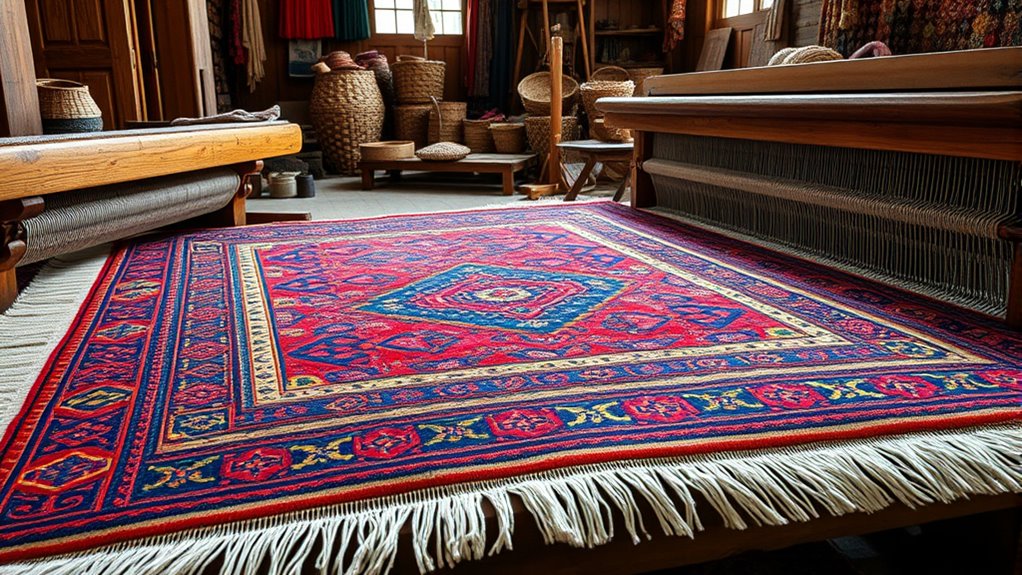
Turkish rug traditions showcase rich symbols and expert craftsmanship that tell stories and reflect regional identities. You’ll notice intricate patterns, each with specific meanings, representing beliefs, nature, or protection. Skilled artisans use natural dyes and traditional weaving techniques, like the symmetrical knot, to create durable, vibrant pieces. These rugs are more than decorations—they embody centuries of cultural history. If you continue exploring, you’ll discover how these symbols and techniques make every rug uniquely meaningful.
Key Takeaways
- Turkish rugs incorporate symbols like stars, trees, and animals, representing protection, fertility, and spirituality.
- Traditional weaving techniques, such as the symmetrical knot, demonstrate the high craftsmanship involved.
- Natural dyes from plants and minerals add cultural significance and ensure vibrant, long-lasting colors.
- Patterns often reflect regional identities and storytelling, preserving local history and beliefs.
- Each rug embodies centuries-old craftsmanship, blending artistry, symbolism, and cultural heritage.
Have you ever wondered what makes Turkish rugs so unique? It’s not just their vibrant colors or intricate patterns; it’s the craftsmanship behind every knot and the centuries-old traditions woven into each piece. Turkish rugs are crafted through a combination of specialized weaving techniques and dyeing methods that have been passed down through generations. These techniques give each rug its distinct character, making them more than just decorative items—they’re cultural symbols.
Turkish rugs embody centuries of craftsmanship, tradition, and cultural symbolism through their unique weaving and dyeing techniques.
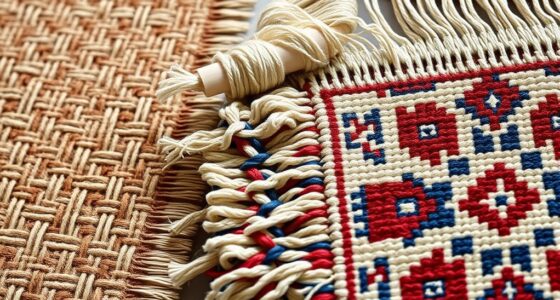
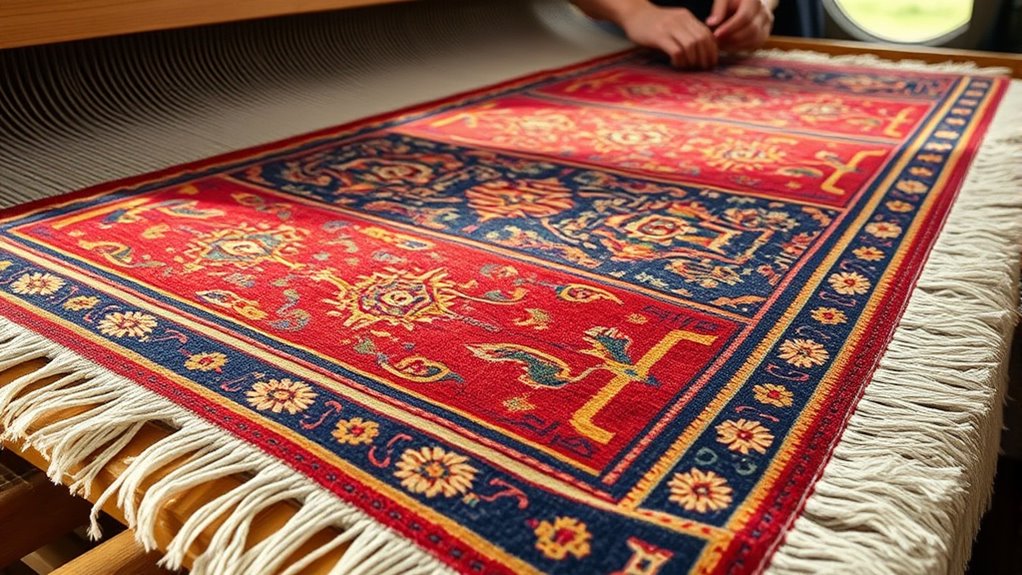
When you look closely at a Turkish rug, you’ll notice the weaving techniques used to create its durability and detailed design. The most common method is the symmetrical knot, also known as the Turkish knot, which involves looping the yarn around two warp threads. This technique results in a dense, sturdy pile that can withstand years of use, making these rugs practical heirlooms. The craftsmanship demands precision and patience, as each knot is tied meticulously by hand, often taking weeks or even months to complete a single piece. The tightness of the knots and the pattern complexities reflect the skill level of the artisan, and no two rugs are exactly alike, preserving the uniqueness of each creation.
Dyeing methods also play a vital role in defining the beauty and authenticity of Turkish rugs. Traditional dyeing techniques involve natural dyes derived from plants, insects, and minerals. For example, the deep reds often come from madder root, while the rich blues are obtained from indigo. These natural dyes are carefully prepared and applied through a process called dyeing by immersion, which enhances the vibrancy and longevity of the colors. Because these dyes are natural, they tend to age gracefully, developing a subtle patina that adds character over time. The use of natural dyes also means that each rug has a slightly different hue, further emphasizing its handcrafted origin. Incorporating natural dyes not only preserves traditional techniques but also contributes to the eco-friendly aspect of handmade Turkish rugs.
The combination of skilled weaving techniques and authentic dyeing methods results in rugs that are not only visually stunning but also steeped in cultural history. Each pattern, symbol, and color choice often carries a specific meaning, reflecting stories, beliefs, and regional identities of the Turkish people. So, when you admire a Turkish rug, remember the centuries of craftsmanship, tradition, and symbolism embedded in every thread. It’s this rich heritage that makes Turkish rugs truly special—more than just floor coverings, they’re wearable pieces of history.

Hand-Tufted Oushak Wool Rug – Handmade Unique Turkish Traditional Design, Boho Inspired Rug in Soft Pastel Colors for Living Room, Bedroom & Entryway Décor (Dusty Blue, 5' x 8')
- Handmade Turkish Design: Timeless Oushak wool rug in pastel hues
- Plush and Durable: Premium wool for comfort and longevity
- Artisan Craftsmanship: Hand-tufted with natural wool for authenticity
As an affiliate, we earn on qualifying purchases.
As an affiliate, we earn on qualifying purchases.
Frequently Asked Questions
How Do Turkish Rug Symbols Vary Across Regions?
You’ll notice that Turkish rug symbols vary across regions through unique regional motifs reflecting local cultures. These cultural variations influence the patterns, colors, and symbols used, making each area’s rugs distinct. For example, motifs in the Aegean differ from those in Central Anatolia, highlighting local traditions and stories. By studying these symbols, you can trace a rug’s origin and appreciate the rich diversity within Turkish craftsmanship.
What Is the History Behind Turkish Rug Weaving Techniques?
Imagine weaving a story with each knot, like threading a tapestry of history. Turkish rug weaving techniques date back centuries, evolving through intricate knotting patterns and dyeing techniques passed down generations. You see, artisans used natural dyes from plants and insects, creating vibrant colors that tell stories. These traditions, rooted in practicality and artistry, reflect a rich cultural heritage that continues to inspire and influence rug craftsmanship today.
Are Turkish Rug Symbols Influenced by Ottoman Culture?
Yes, Turkish rug symbols are influenced by Ottoman culture. You’ll notice Ottoman motifs integrated into the designs, reflecting their artistic and cultural symbolism. These motifs often represent protection, fertility, or spirituality, and you can see how they blend traditional Turkish craftsmanship with Ottoman influences. The symbols tell stories and convey cultural values, making each rug not just decorative but also a meaningful piece rooted in history and tradition.
How Do Modern Designs Incorporate Traditional Symbols?
You see how modern designs incorporate traditional symbols through thoughtful symbol evolution, blending old motifs with contemporary styles. Designers seamlessly integrate these symbols into new rug patterns, ensuring cultural authenticity while updating the aesthetic. This design integration respects heritage, allowing you to appreciate the rich history while enjoying fresh, stylish rugs. The blend creates a harmonious balance, making traditional symbols relevant and appealing in today’s modern home decor.
What Are the Best Methods for Authenticating Turkish Rugs?
To authenticate Turkish rugs, you should examine their dyeing techniques and knotting styles. Authentic rugs often use natural dyes, like madder or indigo, which age beautifully. Look closely at the knotting style—Turkish rugs typically feature symmetrical (Ghiordes) knots, which are tightly woven and uniform. Check the back of the rug for consistent knot density and clear pattern details. These indicators help confirm genuine craftsmanship.
Conclusion
As you explore Turkish rug traditions, you discover a vibrant tapestry woven with history, symbols, and craftsmanship—each rug a living story. These textiles are more than decorative pieces; they’re a delicate dance of culture and artistry, like a timeless melody echoing through generations. Embrace their beauty and significance, letting each intricate pattern guide you into the rich soul of Turkish heritage. Just as a rug unites threads, these traditions weave you into a lasting cultural fabric.