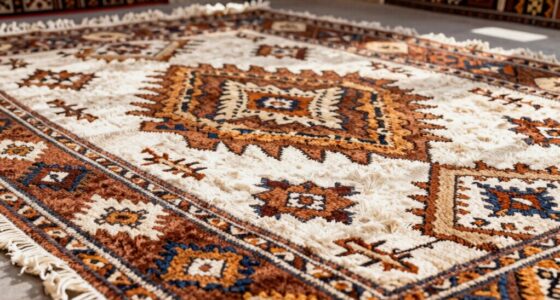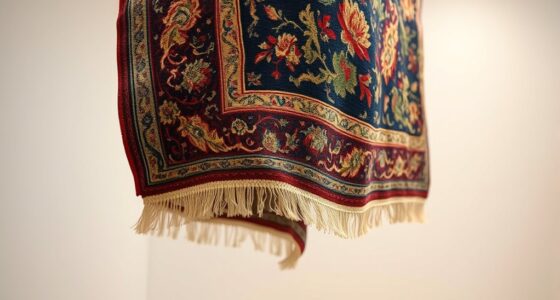
To understand rug weaving techniques, start with flatweaving, where you interlace warp and weft threads to create thin, reversible pieces like kilims. Pile weaving involves inserting additional yarns to form a plush surface, common in rugs with depth and texture. Hand-knotting is a meticulous process, tying individual knots around warp threads for intricate patterns and durability. Knowing these methods helps you choose the right approach for your style—keep exploring to discover more about their unique characteristics.

Get cleaning gear delivered free with Prime
- Fast, free delivery on millions of items
- Prime Video, Amazon Music and more included
- Member-only deals all year
Key Takeaways
- Flatweave rugs are created by interlacing warp and weft threads without pile, resulting in lightweight, reversible designs.
- Pile weaving involves knotting yarns onto warp threads, producing plush, textured surfaces like Persian and Oriental rugs.
- Hand-knotted techniques require tying individual knots around warp strings, allowing intricate patterns and high durability.
- Flatweave methods include techniques like Kilim and Beni Ourain, emphasizing simplicity and geometric patterns.
- The choice of material affects the weaving technique, with wool and cotton commonly used for both pile and flatweave rugs.
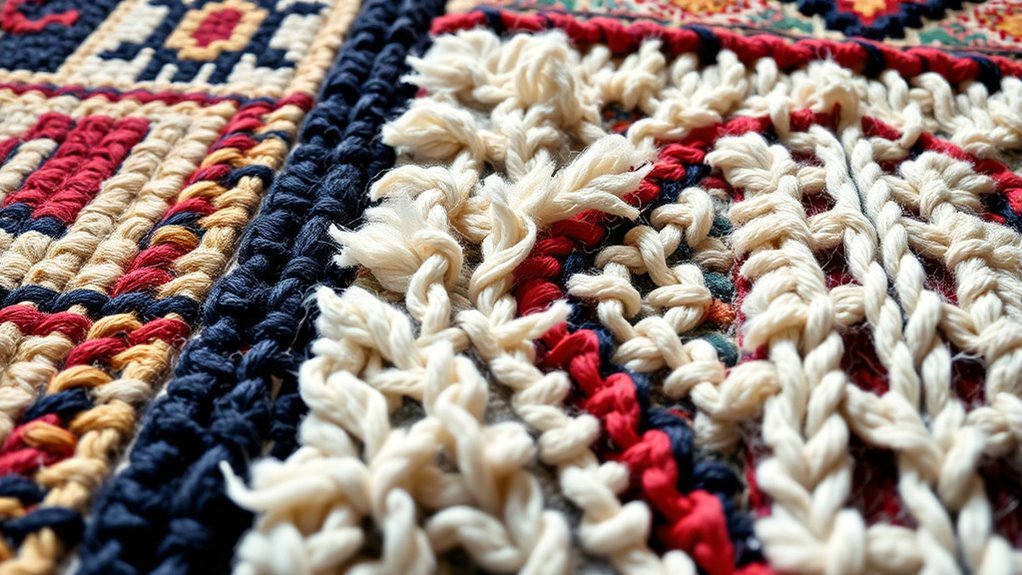
Rug weaving is an ancient craft that combines artistry with technique, allowing you to create durable and beautiful floor coverings. When you start your project, one of the first decisions you’ll make is selecting the right weaving material. The choice of weaving material selection is vital because it determines the rug’s durability, texture, and overall appearance. Natural fibers like wool, cotton, and jute are popular options, each offering unique qualities. Wool, for instance, provides softness and resilience, making it ideal for high-traffic areas. Cotton is smooth and easy to work with, perfect for detailed designs, while jute has a rustic charm suited for casual or eco-friendly styles. Your choice impacts not only the rug’s look and feel but also how it responds to wear and cleaning over time.
Once you’ve chosen your materials, you can focus on creating decorative border designs. Borders serve both aesthetic and functional purposes, framing your central design and adding a finishing touch that elevates the overall look. Decorative border designs can range from simple, clean lines to intricate patterns featuring geometric shapes, floral motifs, or traditional motifs from different cultures. When designing borders, consider how they complement the rest of your rug. You might opt for contrasting colors to make the border stand out or use subtle hues for a more unified appearance. The border pattern also guides your weaving technique, as it requires consistent tension and precise patterning to ensure symmetry and neatness. Thoughtful border design enhances the visual appeal and can even help disguise any irregularities in your weaving.
As you weave, pay close attention to your material’s properties. For example, if you’re working with wool, you might choose a specific weave style that showcases its natural luster and texture. When incorporating decorative border designs, plan your pattern carefully, sketching out your ideas beforehand or using stencils if needed. These borders also act as a boundary that contains your central design, helping you stay organized and focused during the weaving process. Whether you’re creating a simple striped border or an elaborate floral motif, the border design is your opportunity to add a personalized touch that reflects your style. With patience and precision, your choice of weaving material and thoughtful border design work together to produce a finished rug that’s both beautiful and enduring.
As an affiliate, we earn on qualifying purchases.
Frequently Asked Questions
Which Weaving Technique Is Most Durable for High-Traffic Areas?
You should choose hand-knotted rugs for high-traffic areas because they offer the best durability comparison. These rugs withstand daily wear better than flatweaves or pile rugs, making them ideal for busy spaces. Keep maintenance considerations in mind; hand-knotted rugs may require more regular cleaning but preserve their appearance longer. Their dense construction ensures longevity, so investing in one ensures your space stays stylish and durable over time.
How Long Does It Typically Take to Complete a Hand-Knotted Rug?
Like a painstaking symphony, a knotted rug’s weaving duration can span from several months to over a year, depending on its size and intricacy. You should expect to spend anywhere from 300 to 1,200 hours on a hand-knotted rug. The process demands patience and dedication, as each knot adds to its beauty and durability, making it a true masterpiece crafted over time.
Can Flatweave Rugs Be Customized With Specific Patterns or Colors?
Yes, flatweave rugs can be customized with specific patterns and color options. You can choose your preferred designs or create unique patterns that match your decor. Many artisans offer custom dyeing, so you can select colors that suit your style perfectly. This flexibility allows you to personalize your flatweave rug, ensuring it fits your space beautifully with the exact patterns and colors you envision.
What Are the Best Cleaning Methods for Pile Rugs?
To clean your pile rug effectively, you should vacuum regularly to maintain its appearance and remove dirt. Use gentle vacuum maintenance, avoiding beater bars that can damage fibers. For stain removal, act quickly with appropriate stain removal techniques—blot, don’t rub, and use mild detergents or specialized products. Always test cleaning solutions on a small area first, and avoid excessive moisture to preserve your rug’s quality.
Are There Eco-Friendly or Sustainable Rug Weaving Options Available?
Yes, you can find eco-friendly rug weaving options by choosing rugs made with organic dyes and recycled fibers. These materials reduce environmental impact and promote sustainability. When shopping, look for artisans or brands committed to eco-conscious practices, ensuring your rug supports both style and eco-awareness. By selecting these options, you help conserve resources, reduce waste, and enjoy a beautiful, sustainable piece for your space.
Conclusion
Now that you’ve explored flatweave, pile, and hand-knotted techniques, you’re equipped to choose the perfect rug for your space. Think of these methods as different strokes on a canvas—each creating a unique masterpiece. Whether you prefer the sleekness of flatweave, the plushness of pile, or the intricate beauty of hand-knotting, your choice will add warmth and personality to your home. Immerse yourself and bring your personal touch to every woven thread!
Columbus Day / Indigenous Peoples' Day Picks
long weekend sales
As an affiliate, we earn on qualifying purchases.