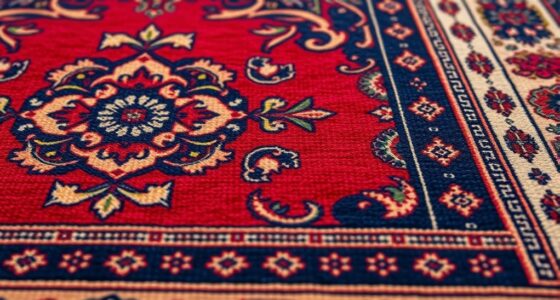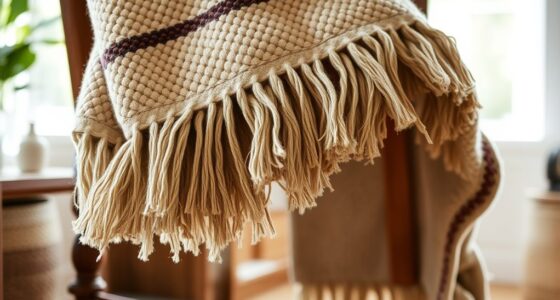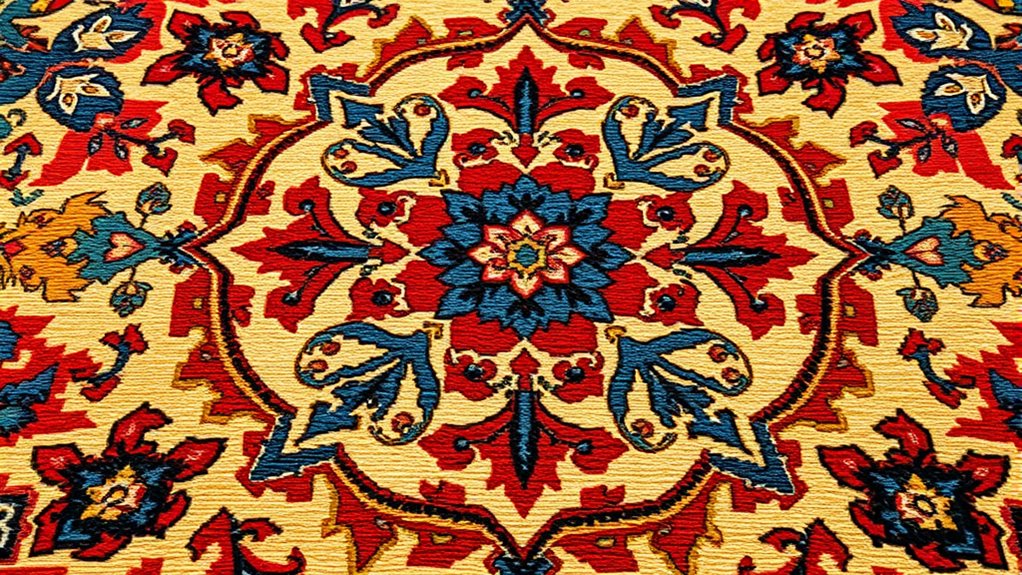

When you explore iconography in rugs, you discover that symbols like geometric shapes, floral patterns, and animals each carry cultural meanings. These motifs often represent protection, fertility, strength, or spiritual beliefs, acting as visual stories passed down through generations. Recognizing these symbols helps you understand the community’s values, history, and worldview embedded in each design. To uncover the rich stories behind these motifs, you’ll find fascinating details if you keep exploring.
Key Takeaways
- Recognize symbols like stars or crosses as representations of divine guidance or protection.
- Understand geometric shapes such as diamonds or squares as symbols of stability and strength.
- Identify floral motifs indicating life, growth, and spiritual renewal within cultural contexts.
- Interpret animal icons, like lions or birds, as symbols of strength, courage, or spiritual ascent.
- Appreciate that motifs encode stories, beliefs, and cultural values, transforming textiles into storytelling narratives.
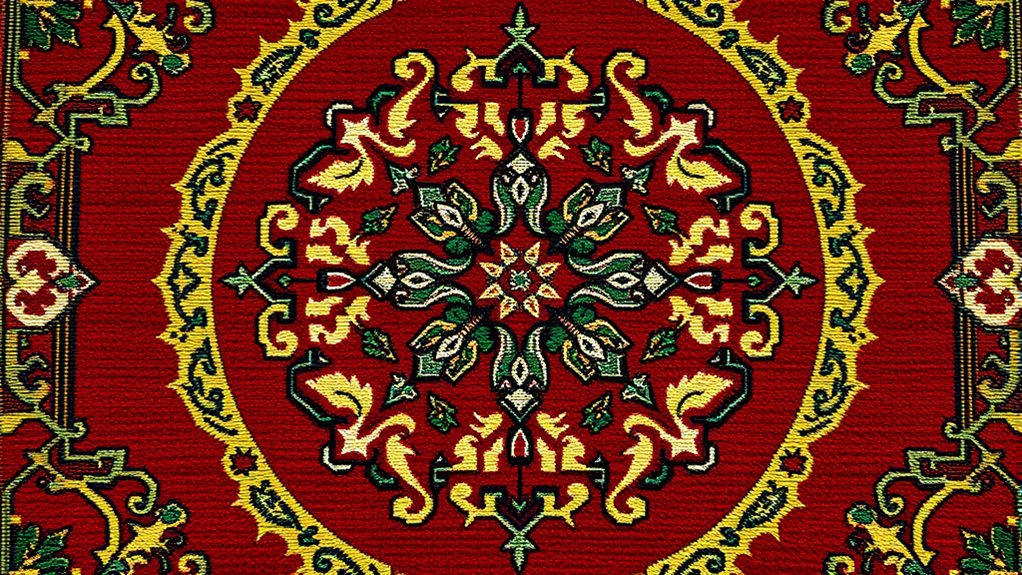
Have you ever wondered what stories and symbols are woven into the intricate patterns of rugs? When you examine these textiles, you’re not just looking at decorative art—you’re uncovering a visual language rich with meaning. Each motif often carries symbolism in motifs, reflecting beliefs, hopes, and traditions passed down through generations. These symbols aren’t random; they’re deliberate, serving as messages embedded within the fabric. Understanding them allows you to appreciate the cultural significance behind each design, revealing more than just aesthetic appeal.
Exploring rug patterns reveals a visual language filled with meaningful symbols and cultural stories.
Take, for example, the recurring geometric patterns found in many tribal rugs. These shapes often symbolize concepts like protection, fertility, or the universe itself. For instance, stars or cross-like motifs can represent guidance or divine protection, while repeated diamonds or squares might stand for strength and stability. Recognizing these symbols helps you see beyond the surface, understanding that each motif is a reflection of the community’s worldview and values. These symbols often serve as talismans, believed to ward off evil or bring good fortune, underscoring their cultural importance.
Floral motifs are another common element in rug iconography. They often symbolize life, growth, and renewal, echoing the natural environment from which many rug-making traditions originate. A blooming flower might represent beauty and vitality, while vines or leaves indicate growth and continuity. In some cultures, specific flowers hold particular meanings—like the lotus symbolizing purity or spiritual awakening. When you notice these floral designs, you’re witnessing a visual expression of cultural ideals and spiritual beliefs, making each rug a microcosm of its community’s worldview. Additionally, the presence of floral motifs can signify fertility and prosperity within the culture.
Animals also feature prominently in rug iconography, each carrying its own symbolism. A lion can symbolize strength and courage, while a bird might stand for freedom or spiritual ascent. In many traditions, animals are seen as messengers or protectors, and their depiction on rugs signifies these qualities. Recognizing these animal motifs helps you interpret the messages that the weavers intended to convey, often linked to societal virtues or protective charms. The cultural significance of animal symbols varies, but they universally serve as carriers of meaning, connecting the textile to larger stories and traditions.
In essence, the iconography in rugs transforms them from mere decorative objects into storytelling tapestries. By paying attention to symbolism in motifs, you gain insight into the cultural significance behind each design. These patterns are more than aesthetic choices—they’re visual narratives, holding centuries of history, belief, and identity within their intricate weaves. So, as you study a rug, remember that every motif has a story, a purpose, and a place within the cultural fabric it represents. Understanding the symbolism in motifs enhances appreciation and reveals the rich cultural heritage woven into every piece.
Frequently Asked Questions
How Do Regional Differences Influence Rug Iconography?
Regional differences greatly influence rug iconography by reflecting tribal variations and stylistic evolutions unique to each area. You’ll notice distinct motifs, color schemes, and patterns that tell stories of local traditions, beliefs, and history. These variations help you identify a rug’s origin and cultural background. As you explore, you’ll see how regional influences shape iconography, making each piece a unique expression of its community’s identity and artistic evolution.
What Symbols Indicate Cultural or Religious Significance?
You can identify cultural or religious significance in rug symbols through sacred symbols like the Tree of Life, which represents life and growth, or the Medallion, symbolizing spiritual protection. Ritual motifs such as prayer rugs often feature mihrabs or prayer niches. These motifs reflect cultural beliefs and religious practices, making them key indicators of the rug’s deeper meaning and the community’s spiritual traditions.
Are Certain Motifs Associated With Specific Historical Periods?
You might notice that certain motifs are linked to specific historical periods. As you explore rug designs, you’ll see how the evolution of motifs reflects changing cultural influences—this is the story of historical motif evolution. Over time, motif symbolism shifts, revealing new meanings and styles. Pay close attention to these details, and you’ll uncover hidden layers of history woven into each pattern, making your discovery all the more fascinating.
How Can One Identify the Origin of a Rug Based on Motifs?
To identify a rug’s origin based on motifs, examine its design elements, fiber materials, and dye techniques. You’ll notice regional motifs often reflect cultural symbols, while unique fiber types like wool or silk hint at specific areas. Dye techniques, such as natural or synthetic dyes, also help trace origins. By analyzing these features, you can better determine where the rug was made and its cultural background.
Do Motifs Change Over Time Within the Same Culture?
Motifs in rugs definitely evolve over time within the same culture, reflecting changing tastes, influences, and historical events. You might notice a shift in style or symbolism, yet, surprisingly, many motifs maintain cultural continuity, preserving core meanings. This evolution tells a story of cultural resilience and adaptation, making each rug a unique blend of tradition and innovation that captures the dynamic spirit of its creators.
Conclusion
By understanding the symbols, you gain insight into history, culture, and tradition. By recognizing motifs, you connect with stories, beliefs, and identities. By appreciating iconography, you deepen your appreciation for craftsmanship, artistry, and heritage. Embrace the symbols in rugs to see more than decoration, to uncover meaning, to celebrate history. Let each motif tell its story, let each pattern speak its truth, and let your journey through rug iconography be a discovery of wonder and wisdom.