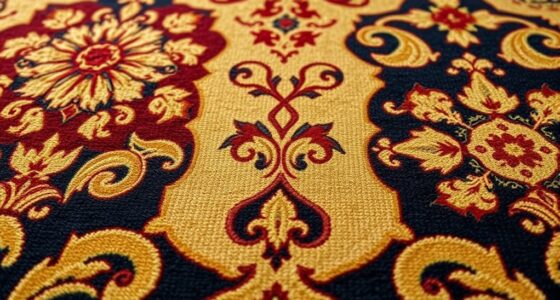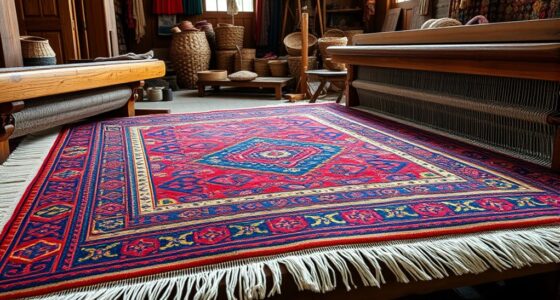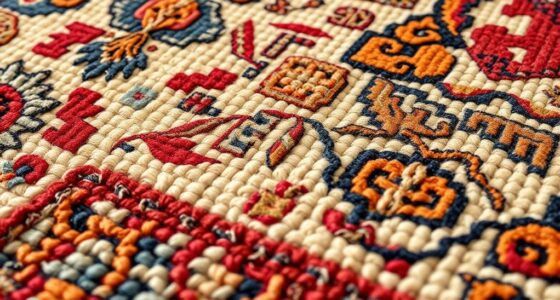
Turkish (Ghiordes) and Persian (Senneh) knots shape rug textures and durability. Ghiordes knots wrap around two warp threads, creating a dense, sturdy pile ideal for heavy use. Persian (Senneh) knots wrap around a single warp thread, allowing for finer, intricate designs and lighter rugs. Their differences influence style, strength, and pattern detail, giving each technique unique advantages. If you keep exploring, you’ll discover how these traditional methods continue to inspire modern craftsmanship.
Key Takeaways
- Turkish (Ghiordes) knots are symmetrical, wrapping around two warp threads for durability, while Persian (Senneh) knots are asymmetrical, wrapping around one warp for detail.
- Ghiordes knots produce dense, sturdy piles suitable for heavy foot traffic; Senneh knots allow finer, intricate designs with a smoother surface.
- Ghiordes weaving involves looping around two warp threads, creating a straightforward, secure knot; Senneh involves wrapping around a single warp, offering flexibility.
- Ghiordes knots generate thicker, bold patterns; Senneh knots enable delicate motifs and complex patterns for aesthetic appeal.
- Modern weaving techniques replicate traditional knots, combining craftsmanship with innovations like machine-assisted weaving and synthetic materials.
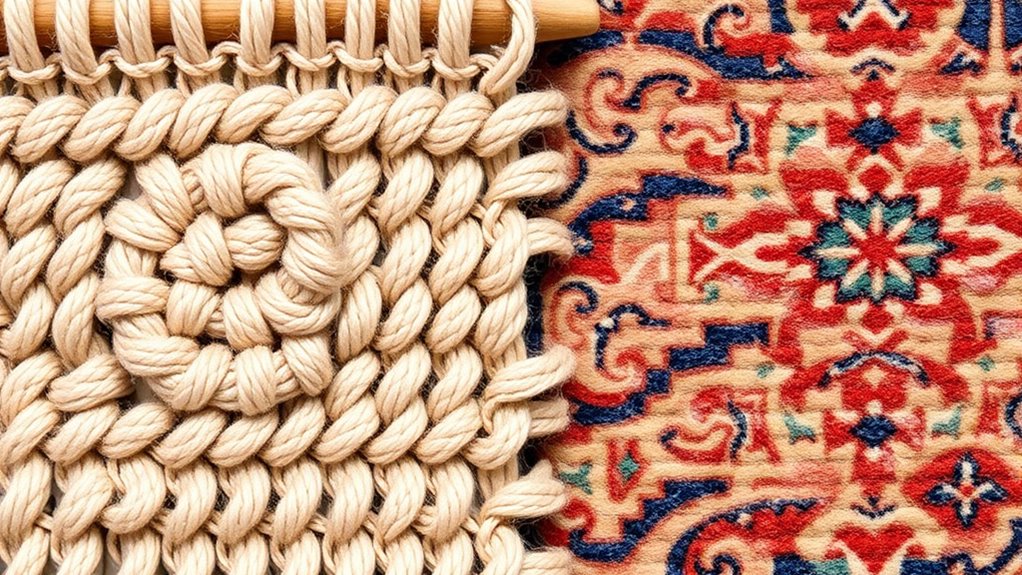
Have you ever wondered how to tie a knot that’s both secure and easy to undo? When it comes to knotting techniques in antique rugs, understanding the differences between Turkish (Ghiordes) and Persian (Senneh) knots can substantially influence the durability and aesthetic of the finished piece. These traditional methods have been refined over centuries, yet modern knotting innovations continue to enhance how artisans approach rug weaving today.
The Turkish knot, also known as the Ghiordes knot, is a symmetrical knot. As you work through your rug, you’ll notice that each knot wraps around two warp threads, creating a balanced, sturdy structure. This technique is favored in many antique Turkish and Anatolian rugs because it produces a dense, durable pile that withstands foot traffic and time. The knotting process involves looping the wool or silk around both warp threads, then passing the excess back through the weave to secure it. It’s straightforward, highly secure, and easy to tighten, making it ideal for rugs meant for heavy use. The symmetrical nature of the Ghiordes knot also simplifies knot removal if needed, which is a vital aspect of antique rug restoration.
In comparison, the Persian (Senneh) knot is asymmetrical, wrapping around only one warp thread. This allows for a finer, more intricate design, as you can pack more knots into a smaller area, resulting in detailed motifs and a smoother surface. When you weave using the Senneh knot, you’ll notice a different tension pattern—since it’s tied around a single warp, the knot is slightly more flexible, enabling subtle shading and complex patterns that are characteristic of Persian rugs. This knotting technique has been embraced in many modern innovations, where artisans push the boundaries of traditional designs to incorporate new colors and motifs. The precision of the Senneh knot also facilitates the creation of thinner, lighter rugs, which are increasingly popular today.
Both knotting techniques have their roots in ancient traditions, yet today’s weavers benefit from modern knotting innovations that improve efficiency and consistency. Machine-assisted weaving and synthetic materials have expanded possibilities, but the core principles of knotting remain rooted in these age-old methods. For example, modern innovations include the use of synthetic fibers and advanced weaving machinery that can replicate traditional techniques more efficiently. Whether you prefer the robustness of the Turkish Ghiordes knotGhiordesor the fine detail of the Persian Senneh, understanding these techniques allows you to appreciate the craftsmanship behind every antique and contemporary rug. Mastering these knots not only enhances your ability to create beautiful textiles but also helps preserve the rich history behind each knot, ensuring these traditions continue to thrive amid modern advancements.

Morocon Rug Hand Knotted in Turkish Ghiordes Knots from Premium high-Plateau Wool for Living Room Bedroom Guest Room,Hall Room (7×11 ft)
* MOROCCAN RUG ** HANDMADE HIGH RECOMONDED MOROCCO RUG
As an affiliate, we earn on qualifying purchases.
As an affiliate, we earn on qualifying purchases.
Frequently Asked Questions
Which Knotting Technique Is More Durable for Everyday Use?
You’ll find the Turkish (Ghiordes) knot more durable for everyday use. Its knot durability offers greater resilience against daily wear, making the rug sturdier over time. The Ghiordes knot’s tight construction guarantees it withstands foot traffic and cleaning better than the Persian (Senneh) knot. If you want a rug that maintains its appearance and strength through daily wear, the Turkish knot is your best choice.
Are Turkish and Persian Knots Interchangeable in Rug-Making?
Think of Turkish and Persian knots as different brushes for the same artist—each brings unique character to your rug. You can’t directly swap them, as knot strength and aesthetic variation differ considerably. Turkish knots create durable, dense textures perfect for everyday wear, while Persian knots offer intricate, delicate patterns. Choosing one depends on your desired look and durability, making them not interchangeable but complementary in the art of rug-making.
How Do Knotting Techniques Affect Rug Maintenance and Cleaning?
Your knotting technique impacts rug maintenance and cleaning considerably. Turkish knots, being tightly packed and symmetrical, make knot cleaning easier and reduce maintenance challenges. Persian knots, with their asymmetrical design, can trap more dirt, making cleaning more difficult over time. Proper care involves gentle vacuuming and avoiding harsh chemicals to prevent damage. Understanding your knot type helps you maintain your rug’s appearance and longevity with appropriate cleaning methods.
Can These Knotting Styles Be Combined in a Single Rug?
Yes, you can blend styles to create a hybrid rug. Combining Turkish (Ghiordes) and Persian (Senneh) knotting techniques allows for unique textures and visual effects. While some might worry about consistency, skilled artisans guarantee seamless integration, resulting in a beautiful, one-of-a-kind piece. This blending showcases cultural richness and craftsmanship, giving you a versatile rug that highlights the best of both knotting styles.
Which Technique Is More Time-Consuming to Produce?
The Persian (Senneh) technique generally takes more time to produce than the Turkish (Ghiordes) due to its intricate knotting style. You’ll notice slower knotting speed with Senneh, which increases overall production time. Its detailed, asymmetric knots require more attention and precision, making it more labor-intensive. If you’re aiming for quicker results, the Turkish method offers faster knotting speed, but if you value detail, Persian knots will demand more of your time.
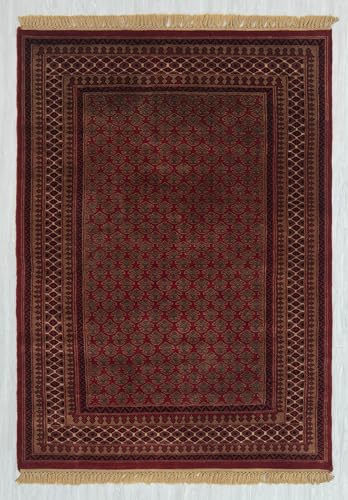
4×6 Ft Red Fine Weave Soft Silky Feel Persian Senneh Hand Knotted Wool Rug
AUTHENTIC CRAFTSMANSHIP: Hand-knotted by skilled artisans in rural India using traditional Persian Senneh weaving techniques with high knots…
As an affiliate, we earn on qualifying purchases.
As an affiliate, we earn on qualifying purchases.
Conclusion
Now that you’ve explored Turkish (Ghiordes) and Persian (Senneh) knotting techniques, you see how each method weaves a unique story through its structure. Think of these knots as two different melodies—one steady and strong, the other intricate and flowing. By understanding their differences, you can appreciate the art behind each knot, just like listening to a song that moves you in its own special way. Both techniques are treasures waiting to be mastered, like a dance you can’t forget.

Weaver House Handwoven Jute Scalloped Bohemian Rug – Custom 9×12 ft Decorative Area Rug
Generous Size: Custom-sized at 9×12 ft, perfect for living rooms, bedrooms, dining areas, and entryways.
As an affiliate, we earn on qualifying purchases.
As an affiliate, we earn on qualifying purchases.

BelleCosy Large Heavy Duty Door Mat Indoor Outdoor, 5′ x 8′ Low Profile Non Slip Commercial Floor Mat for High Traffic, Grid-Pattern Dirt Trapping All-Weather Entryway Rug for Garage, Patio
Traps Dirt & Grid-Pattern: The deep grooves and firm raised patterns of this front door mat locks in…
As an affiliate, we earn on qualifying purchases.
As an affiliate, we earn on qualifying purchases.