Pictorial rugs act as woven stories that showcase rich histories, cultural symbols, and personal expressions through detailed scenes and motifs. They’re more than decorative pieces—they capture myths, landscapes, and traditions, connecting you to centuries of craftsmanship. With contemporary twists, they also reflect modern themes and ideas. Each design invites you to explore deeper meanings and cultural identities. If you continue exploring, you’ll uncover how these textiles preserve history while inspiring new artistic interpretations.
Key Takeaways
- Pictorial rugs serve as woven narratives that depict myths, landscapes, and symbolic scenes, conveying cultural stories.
- Traditional motifs like medallions and floral patterns connect modern designs to historical and cultural contexts.
- Contemporary artists innovate by blending traditional motifs with abstract forms and bold colors for modern storytelling.
- Each stitch and motif in pictorial rugs contributes to visual storytelling, preserving history and personal expression.
- These rugs evolve with artistic trends, acting as timeless artifacts that reflect cultural identity and creative expression.
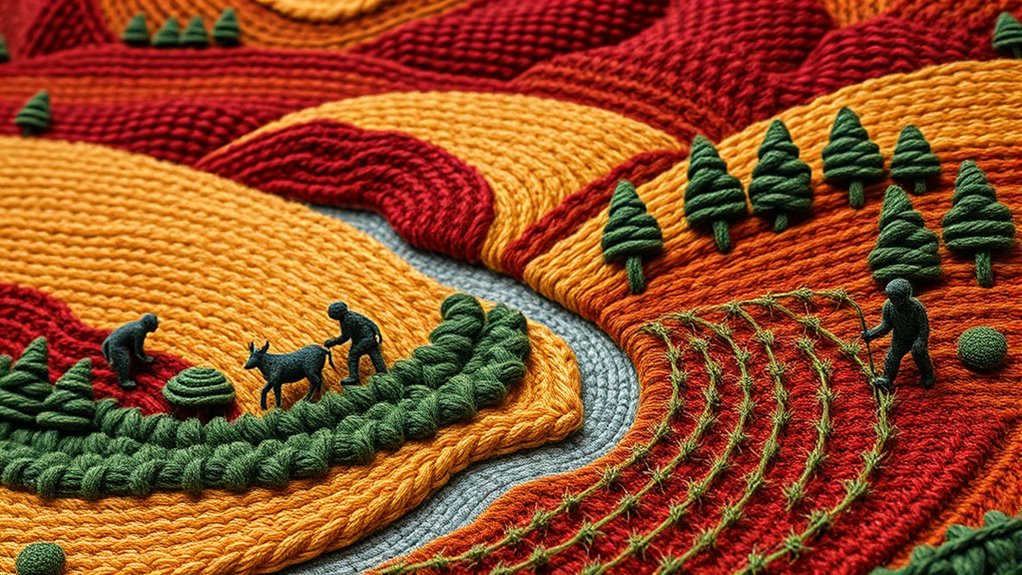
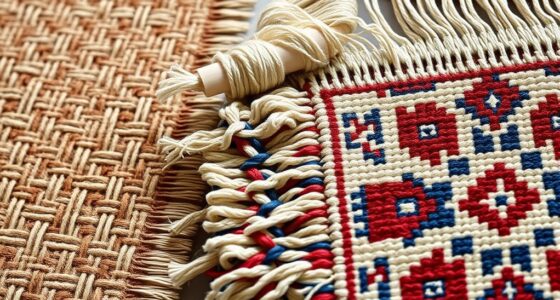
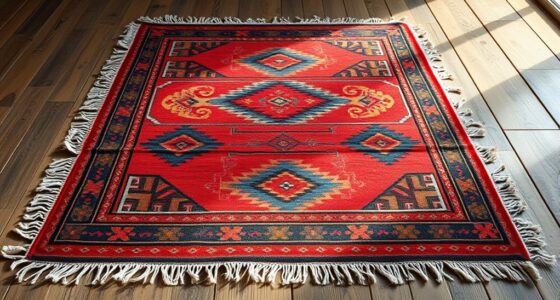
Have you ever wondered how a rug can tell a story? Pictorial rugs are more than just decorative pieces; they’re woven narratives that capture history, culture, and personal expression. These rugs often feature detailed scenes, symbols, and motifs that reflect specific moments or beliefs. When you look closely, you’ll notice that many incorporate historical motifs—traditional designs rooted in a region’s past, such as medallions, floral patterns, or mythological symbols. These motifs serve as visual clues, connecting you to centuries of craftsmanship and storytelling. They honor time-honored traditions, preserving cultural identities through intricate weaving techniques passed down through generations.
But it’s not just about preserving history. Today, modern interpretations breathe new life into these pictorial rugs, blending age-old motifs with contemporary themes. You might see abstract forms, bold color schemes, or unexpected materials integrated into traditional designs. This fusion creates a bridge between the past and present, allowing artists and weavers to express current ideas while respecting their roots. When you observe a modern interpretation of a pictorial rug, you’ll notice how it challenges conventional storytelling, turning familiar motifs into fresh, innovative statements. It’s a way for artists to comment on modern life, politics, or personal identity, all woven into a tapestry that still echoes historical motifs but with a contemporary twist.
The beauty of pictorial rugs lies in their ability to adapt and evolve. Whether they depict a scene from a myth, a landscape, or a symbolic pattern, they invite you to explore deeper meanings. Each stitch, color choice, and motif is deliberate, telling a story that can be decoded over time. As you examine these rugs, think about how they serve as visual archives—preserving history while inviting reinterpretation. This textile art technique allows for a rich combination of craftsmanship and storytelling that continues to inspire new generations of artists. They’re a tribute to the skill of artisans who combine storytelling with craftsmanship, creating pieces that are both decorative and meaningful.
Ultimately, pictorial rugs are a form of visual storytelling that transcends time. They connect you to the historical motifs of the past while encouraging modern interpretations that reflect current trends and ideas. So next time you see a rug with intricate scenes and symbolic patterns, remember that you’re looking at a woven story—an artful narrative that captures the essence of culture, history, and contemporary creativity.
Frequently Asked Questions
How Do Pictorial Rugs Influence Contemporary Interior Design?
Pictorial rugs influence your contemporary interior design by adding rich cultural symbolism and visual interest. Their modern reinterpretation brings a unique, artistic touch to your space, blending tradition with current trends. You can use these rugs as statement pieces that spark conversation and reflect your appreciation for craftsmanship. Incorporating pictorial rugs helps create a warm, personalized atmosphere while celebrating cultural stories through intricate weaving.
What Materials Are Traditionally Used in Creating Pictorial Rugs?
Imagine a canvas woven from natural fibers like wool, silk, or cotton—these are traditionally used in creating pictorial rugs. You’ll find vibrant colors achieved through ancient dye techniques, such as vegetable or mineral dyes, that breathe life into the designs. These materials symbolize durability and artistry, allowing you to appreciate the rich cultural heritage and craftsmanship woven into each piece.
Are Pictorial Rugs Unique or Mass-Produced?
You’ll find that pictorial rugs are usually unique pieces rather than mass-produced, reflecting artistic individuality. Artisans craft each rug with careful attention to detail, making every one a distinct work of art. While some may be replicated in larger production scales, most pictorial rugs are one-of-a-kind creations that showcase personal storytelling and craftsmanship, emphasizing their value as artistic expressions rather than mass-market items.
How Long Does It Typically Take to Craft a Pictorial Rug?
Crafting a pictorial rug takes considerable time, typically spanning several weeks to months, depending on complexity. You’ll witness the weaving duration weave through meticulous craftsmanship, as each detail demands dedication and precision. The craftsmanship timeline reflects artistry and patience, transforming raw materials into a storytelling tapestry. As you observe this process, you’ll appreciate that creating such a masterpiece requires unwavering dedication, making each rug a unique, woven work of wonder.
Can Pictorial Rugs Be Restored if Damaged?
Yes, pictorial rugs can be restored if damaged. You should consult expert restoration techniques, which often involve careful cleaning, patching, and color matching to preserve the rug’s storytelling integrity. Preservation methods include gentle handling and proper storage to prevent future damage. Skilled artisans can carefully repair tears or fading, ensuring your rug maintains its beauty and historical value for years to come.
Conclusion
Imagine walking into a home where a vibrant pictorial rug tells a story you can’t help but feel connected to. Just like Sarah, who inherited her grandmother’s woven masterpiece depicting family memories, you realize these rugs aren’t just decoration—they’re living histories. By appreciating their artistry and stories, you keep cultural traditions alive and add meaningful character to your space. Pictorial rugs invite you to see weaving as a timeless form of storytelling that bridges past and present.