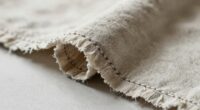
Rug backings like latex, cotton, and jute serve as supportive layers that keep your rug stable, durable, and looking good longer. Latex provides slip resistance and is great for high-traffic areas, while cotton offers a soft, breathable option for lighter use. Jute is eco-friendly and gives a rustic feel, perfect for natural decor. Understanding these options helps you pick the right backing for your space—keep exploring to learn more about their benefits and care tips.

Get cleaning gear delivered free with Prime
- Fast, free delivery on millions of items
- Prime Video, Amazon Music and more included
- Member-only deals all year
Key Takeaways
- Latex backing provides flexibility and slip resistance, ideal for high-traffic or outdoor rugs.
- Cotton backing is breathable and eco-friendly but may wear out faster in busy areas.
- Jute backing offers durability and a rustic look, suitable for eco-conscious and natural decor styles.
- Choosing the right backing depends on rug thickness, room activity, and floor type for optimal safety and longevity.
- Proper backing selection prevents slipping, extends rug lifespan, and enhances overall safety and appearance.
As an affiliate, we earn on qualifying purchases.
What Are Rug Backings and Why Do They Matter?
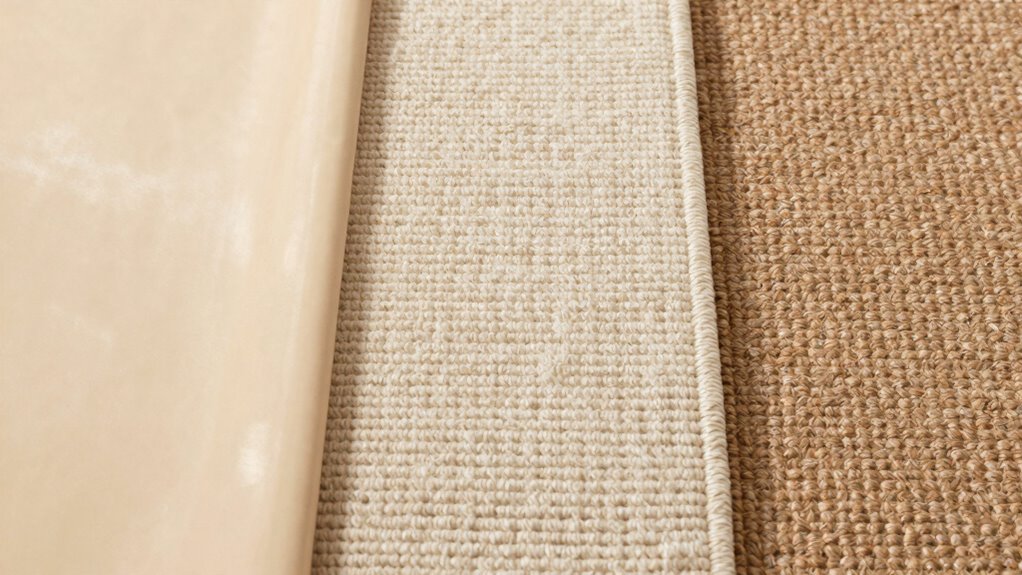
Have you ever wondered what keeps a rug from slipping or bunching up? It all comes down to rug backings. These materials are attached to the underside of the rug and play a vital role in stability. Different fiber types, like wool, cotton, or synthetic fibers, influence how well the backing works and its durability. Backing materials vary from fabric to latex, jute, or felt, each offering distinct benefits. Quality backing ensures your rug stays in place, prevents sliding, and helps it wear evenly over time. Without a proper backing, your rug might shift or crease, causing safety hazards and rapid wear. Understanding these components helps you choose the right rug and maintain its appearance and safety for years to come. For example, latex backing is known for its excellent grip and longevity, making it a popular choice for high-traffic areas.
What Is Latex Backing? Benefits and Best Applications
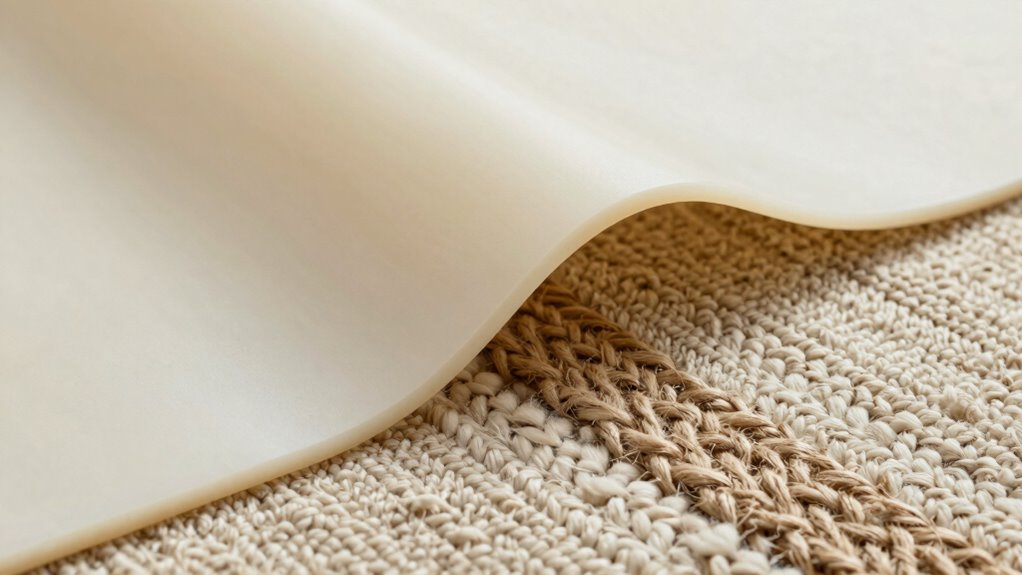
What exactly is latex backing, and why has it become a popular choice for rug backing? Latex backing is made from a synthetic or natural rubber fiber composition that provides flexibility, durability, and a non-slip surface. It’s widely used because it helps keep rugs in place and prevents fraying. However, if you have allergy concerns, it’s noteworthy that latex can trigger reactions in sensitive individuals. Many manufacturers now offer latex-backed rugs with reduced allergy risks or latex-free options. Latex backing is best suited for high-traffic areas, outdoor use, or rugs that need extra stability. Its resilient fiber composition ensures longevity, making it a practical choice for both residential and commercial spaces. Understanding the types of backing materials can help you make better choices for your specific needs.
What Is Cotton Backing? Advantages and Things to Consider
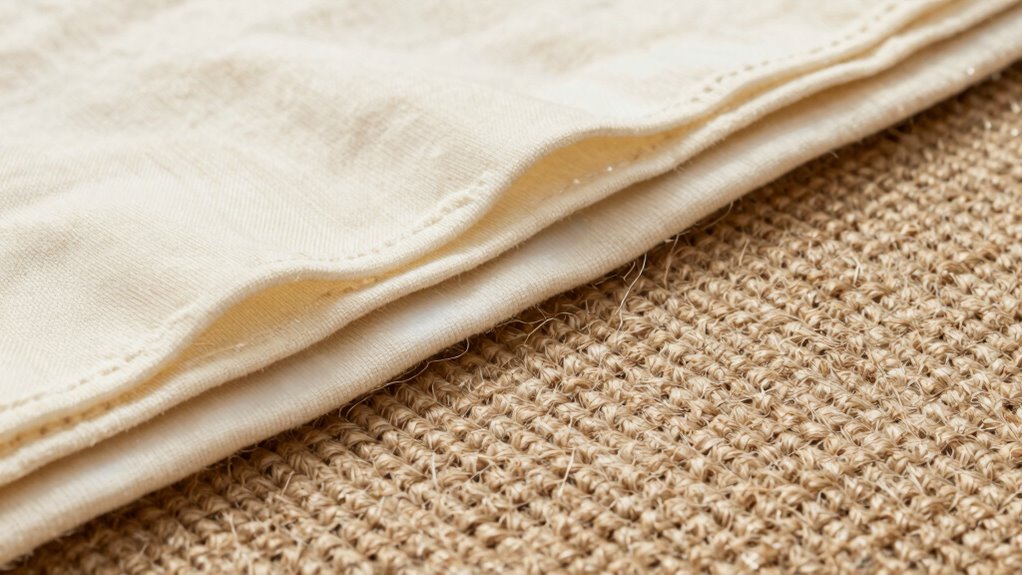
Cotton backing offers a natural and breathable option for securing rugs, making it a popular choice among homeowners and designers alike. This type of rug backing is lightweight, eco-friendly, and easy to handle, which appeals to those seeking sustainable options. When comparing rug backing types, cotton stands out for its softness and breathability, providing a comfortable feel underfoot. However, it may lack the durability of other materials like jute or latex, especially in high-traffic areas. Additionally, cotton backing is biodegradable and eco-friendly, which contributes positively to environmental sustainability. Consider these points:
Cotton backing is a soft, breathable, eco-friendly choice for lightweight rugs but may wear faster in high-traffic areas.
- Cotton backing is biodegradable and eco-friendly.
- It’s ideal for lightweight or decorative rugs.
- It may require more frequent replacement compared to more durable options.
Understanding how cotton compares to other materials helps you make an informed decision based on your rug’s use and environment.
What Is Jute Backing? Durability, Eco-Friendliness, and Style
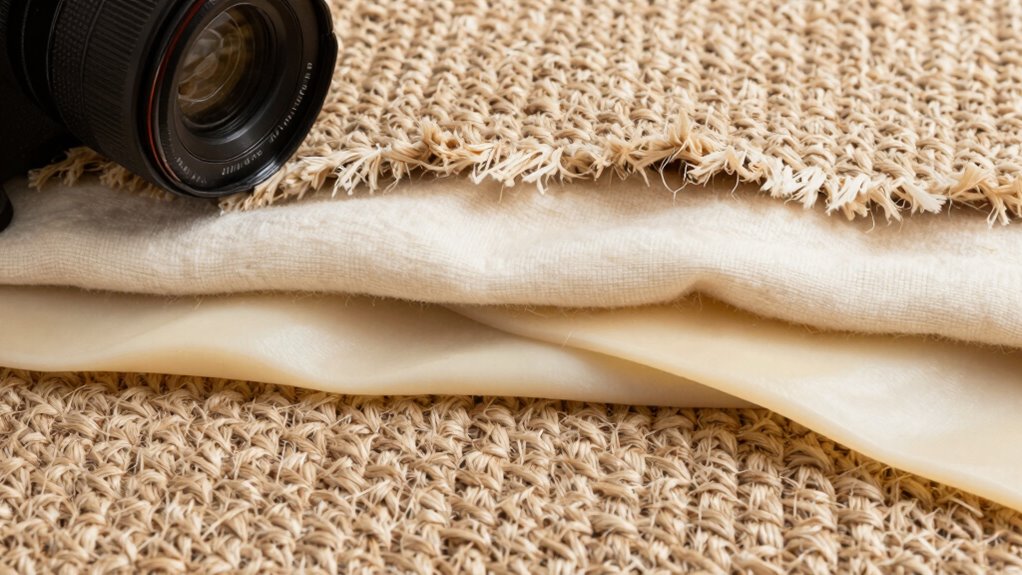
Jute backing offers a strong, natural alternative to cotton, combining durability with eco-friendliness. Its rustic, textured appearance enhances jute aesthetics, giving your rug a charming, organic look. Made from eco-friendly fibers, jute is biodegradable and sustainable, making it an excellent choice for environmentally conscious homeowners. You’ll find that jute backing provides excellent grip and stability, resisting wear over time. Its natural fibers are resistant to pests and mold, contributing to longevity. Whether your style is minimalist or rustic, jute adds a touch of earthy sophistication. Plus, its eco-friendly qualities mean you’re reducing your carbon footprint. Giveaways, gear, and monetization tips can help you find ways to showcase eco-friendly products like jute rugs to a wider audience. With its blend of durability, style, and sustainability, jute backing is a practical and stylish option for many rug applications.
How to Choose the Right Rug Backing for Your Space
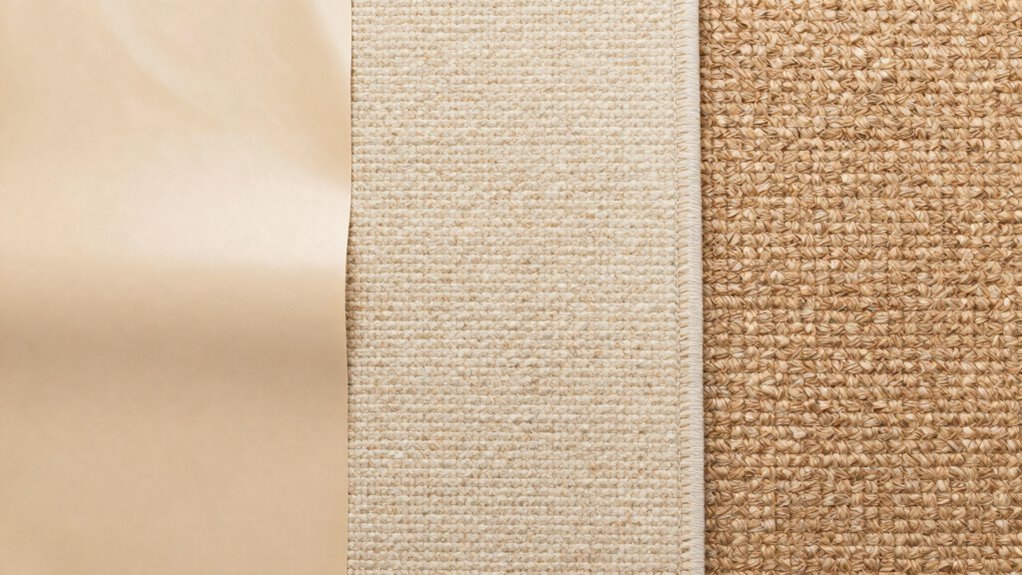
Choosing the right rug backing depends on your space’s specific needs and layout. Consider the room’s activity level, flooring type, and foot traffic to find the best match. Keep in mind where you plan to place the rug to guarantee it stays secure and looks great long-term. Additionally, understanding content formats can help you select backing materials that complement your overall decor and usage.
Room Compatibility Factors
When selecting a rug backing for your space, considering the room’s specific conditions is vital to guarantee proper support and safety. The right backing depends on factors like area rug styles, rug thickness, and foot traffic. For high-traffic zones, choose durable backings like jute or latex that prevent slipping and wear. If your space has a specific aesthetic, match the backing material to enhance the rug’s look while ensuring stability. Additionally, consider the rug’s thickness—thinner rugs may need a non-slip backing, while thicker rugs can benefit from padding that adds comfort. Understanding the contrast ratio and how it affects visual clarity can also help in selecting the best backing to achieve the desired appearance and durability.
Rug Placement Considerations
Selecting the right rug backing hinges on how and where you plan to place your rug. If you’re placing it on smooth, hard floors, consider area rug padding to improve comfort and prevent slipping. For high-traffic areas, choose backing materials that enhance rug adhesion, reducing movement and extending durability. If your space is prone to moisture or spills, opt for backing that resists moisture absorption and mold growth. For outdoor or semi-outdoor settings, look for backing designed to withstand weather conditions. Additionally, consider whether you want extra cushioning or a non-slip solution. Proper backing selection guarantees your rug stays in place, looks good, and lasts longer, making your space safer and more comfortable. Using a backing that aligns with the appropriate material properties can further enhance your rug’s performance and longevity.
Common Problems Caused by Rug Backings and How to Prevent Them
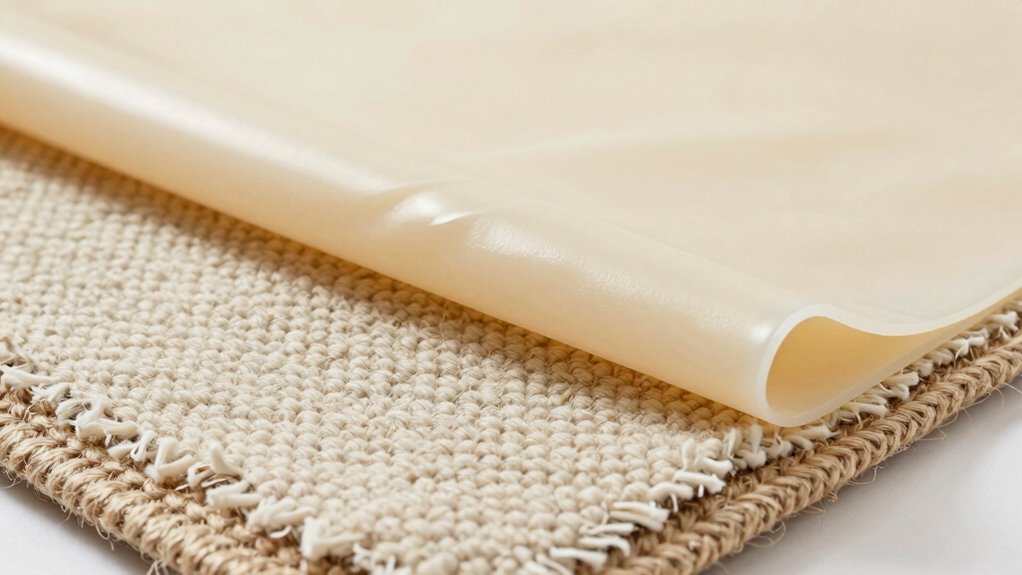
Rug backings can sometimes cause issues like off-gassing and allergies that affect your indoor air quality. If you don’t choose the right backing or maintain it properly, mold and mildew can develop, leading to health concerns and damage. Being aware of these problems helps you take steps to prevent them and keep your space safe and comfortable. Additionally, selecting appropriate rug materials can minimize potential health risks associated with indoor air quality.
Off-Gassing and Allergies
Off-gassing from rug backings can lead to unpleasant odors and trigger allergic reactions, especially for sensitive individuals. Chemical off gassing releases volatile organic compounds (VOCs) that may cause headaches, respiratory issues, or skin irritation. These allergy triggers can develop soon after unpacking or over time, making your space uncomfortable. To minimize risks, consider the following:
- Choose rugs with natural or low-emission backings
- Ventilate your room regularly after unrolling a new rug
- Use air purifiers with activated charcoal to absorb VOCs
- Regularly check and maintain your air purification systems to ensure optimal removal of airborne pollutants air purifier maintenance.
Being aware of chemical off gassing helps you prevent allergy symptoms and maintain healthier indoor air quality. Selecting the right backing and proper ventilation are key steps to safeguard your well-being.
Mold and Mildew Growth
Have you ever noticed a musty smell or seen unsightly spots on your rug? Mold and mildew growth thrive in damp environments, especially on certain backings like jute or cotton. To prevent mold, make sure your rug stays dry and well-ventilated. Regularly check for excess moisture, and immediately address spills or leaks. Choosing rug backings with built-in mildew resistance or applying mold prevention treatments can help protect your rug. Proper cleaning also plays a key role—vacuum frequently and avoid harsh chemicals that can trap moisture. If you notice signs of mold or mildew, act quickly by cleaning with a mixture of vinegar and water or consulting a professional. Maintaining proper ventilation is essential for preventing mold growth and keeping your rug fresh, safe, and mold-free.
Caring for and Maintaining Your Rug Backing Over Time

To guarantee your rug remains in great condition over time, proper care and maintenance of its backing are essential. Regularly inspect your rug’s backing materials for signs of wear or damage. Use appropriate cleaning techniques suited to the specific backing—whether latex, cotton, or jute—to prevent deterioration. Keep the backing dry and avoid excessive moisture, which can cause mold or weaken the material. Rotate your rug periodically to distribute wear evenly and reduce stress on the backing. When cleaning, gently vacuum both sides to remove dirt and debris. For stubborn stains or deep cleaning, consult a professional to ensure you’re using the right methods without harming the backing. Proper maintenance extends your rug’s lifespan and preserves its structural integrity.
Frequently Asked Questions
How Do Rug Backings Affect Indoor Air Quality?
Your rug backing can impact indoor air quality by releasing chemical emissions, especially if it contains latex or synthetic materials. These emissions may cause respiratory irritation or allergies over time. Additionally, some backings, like jute or cotton, can trap moisture, promoting mold growth that worsens air quality. To keep your indoor air safe, choose natural, breathable backings and make certain of proper ventilation and moisture control in your space.
Are Certain Backings Better for Allergy Sufferers?
Yes, certain backing materials are better for allergy sufferers. For example, cotton and jute backings tend to be hypoallergenic and resist mold and dust mites, reducing allergy triggers. Latex backings may cause allergic reactions in some individuals. You should look for rugs with natural, breathable backings that minimize dust and mold buildup. Choosing the right backing helps create a healthier indoor environment and reduces allergy symptoms.
Can Rug Backings Impact the Rug’s Lifespan?
Rug backings can totally make or break your rug’s lifespan! If you ignore fiber durability and backing maintenance, the rug could wear out way faster than you think. A sturdy backing supports the fibers, preventing premature fraying or tearing. Regular maintenance, like cleaning and inspecting, keeps the backing in top shape. So, yes, your rug’s longevity depends heavily on choosing the right backing and caring for it properly.
What Environmental Factors Influence Backing Selection?
Environmental factors like humidity, temperature, and indoor air quality influence your backing choice. You should opt for eco-friendly materials and biodegradable options to reduce environmental impact. For humid spaces, breathable options like jute work well, while for dry areas, cotton or latex provide durability. By selecting backing materials suited to your environment, you help prolong your rug’s lifespan and support sustainable practices, making your space both beautiful and eco-conscious.
Are There Hypoallergenic Backing Options Available?
Yes, there are hypoallergenic backing options available for rugs. You can choose allergy-friendly materials like natural latex free of synthetic chemicals or specially treated cotton designed to minimize allergens. These options help reduce dust, mold, and other irritants, making your space safer for allergy sufferers. Always check product labels to verify the backing is truly hypoallergenic, and consult with manufacturers if you need specific allergy-friendly solutions.
Conclusion
So, now you’re practically a rug backing expert—congratulations! Whether you choose latex, cotton, or jute, just remember that behind every beautiful rug is a tiny secret weapon keeping it in place and looking fabulous. Just don’t forget to give your backing some love and occasional checkups, or you might end up with a rug that’s more “mystery” than “masterpiece.” Happy decorating—your floor’s new best friend awaits!
Fall Picks
fall essentials
As an affiliate, we earn on qualifying purchases.