Understanding rug terminology helps you better appreciate Persian rugs, from their intricate patterns and symbolic motifs to construction details like knot count and pile height. Knowing terms such as “reweaving,” “patching,” and “backing” guides your decisions on restoration and care. This vocabulary makes conversations with experts more meaningful and empowers you to assess quality, origin, and value confidently. Continue exploring these key terms to deepen your connection with rug artistry and craftsmanship.
Key Takeaways
- Familiarize yourself with common terms like knot count, pile height, and construction methods to assess rug quality and origin.
- Learn design elements such as medallions, floral motifs, and borders to identify regional patterns and historical significance.
- Understand restoration techniques like reweaving, refringing, and backing to communicate effectively with experts.
- Recognize valuation terms like patching and reweaving to make informed decisions on repair and preservation.
- Building a rug terminology vocabulary enhances appreciation, confidence, and meaningful conversations with collectors and restorers.
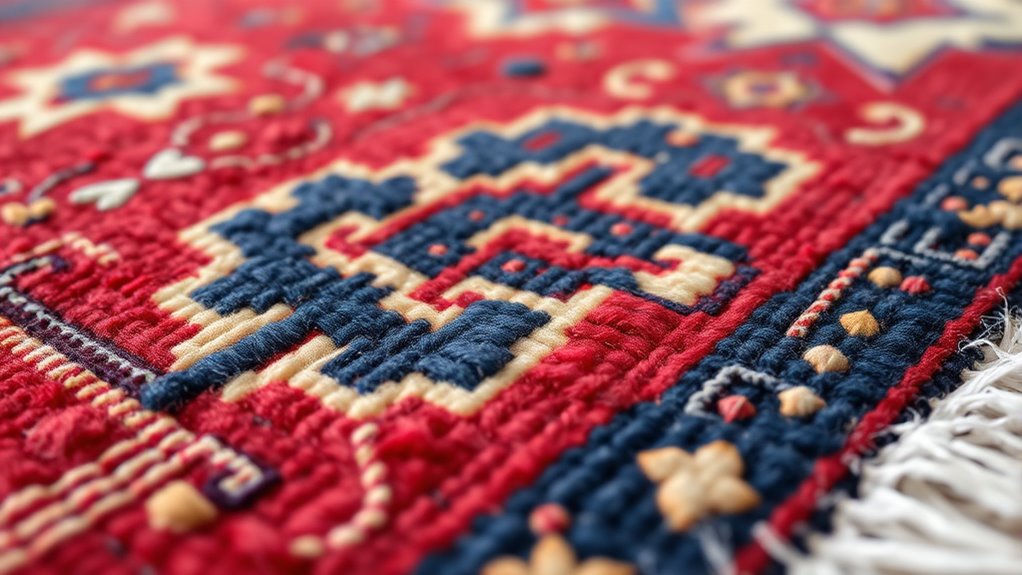
Have you ever wondered what all those rug-related terms mean? Navigating the world of rugs can feel overwhelming at first, especially with so many specialized words floating around. But understanding these terms can greatly enhance your appreciation and ability to care for your collection. For instance, when you come across descriptions of Persian rug patterns, you’re delving into a rich tradition of design that’s deeply rooted in history. These patterns often feature intricate medallions, floral motifs, and geometric borders, each with symbolic meanings and regional variations. Knowing what to look for helps you identify the origin and age of a rug, making your experience more meaningful.
If you’re considering antique rug restoration, understanding the terminology becomes even more important. Restoration isn’t just about cleaning; it involves meticulous techniques to preserve or bring back the rug’s original beauty. Terms like “reweaving” refer to repairing damaged areas by carefully replacing worn or missing threads, often matching the original colors and patterns. “Refringing” describes restoring the fringes, which are essential for both the aesthetic and structural integrity of the piece. When discussing antique rug restoration, you’ll also hear about “backing,” which involves reinforcing the foundation of a fragile or aged rug, ensuring it remains durable for years to come. Additionally, understanding rug construction helps you appreciate the craftsmanship behind each piece, whether it’s hand-knotted or machine-made.
Getting familiar with these terms also helps you communicate effectively with experts like restorers, appraisers, and collectors. If you’re purchasing a Persian rug, knowing the difference between a “knot count” and a “pile height” can influence your decision and budget. The knot count, for example, indicates the rug’s craftsmanship and quality, with higher counts generally denoting finer detail. When it comes to restoration, understanding the difference between “patching” and “reweaving” allows you to choose the best approach based on the rug’s value and condition. These terms aren’t just jargon—they’re tools that give you a clearer perspective on your rugs’ history, value, and care needs.
Getting familiar with these terms also helps you communicate effectively with experts like restorers, appraisers, and collectors. If you’re purchasing a Persian rug, knowing the difference between a “knot count” and a “pile height” can influence your decision and budget. The knot count, for example, indicates the rug’s craftsmanship and quality, with higher counts generally denoting finer detail. When it comes to restoration, understanding the difference between “patching” and “reweaving” allows you to choose the best approach based on the rug’s value and condition. These terms aren’t just jargon—they’re tools that give you a clearer perspective on your rugs’ history, value, and care needs.
In short, familiarizing yourself with rug terminology turns a confusing array of words into a valuable vocabulary that deepens your connection to your collection. Whether you’re admiring Persian rug patterns or seeking expert help for antique rug restoration, knowing the right terms ensures you’re well-informed and confident. It empowers you to make better decisions, ask the right questions, and truly enjoy the artistry and craftsmanship behind each piece. With a little effort, you’ll find yourself more engaged and knowledgeable, turning the world of rugs from a mystery into a fascinating journey of discovery.
Persian rug knot count gauge
As an affiliate, we earn on qualifying purchases.
As an affiliate, we earn on qualifying purchases.
Frequently Asked Questions
How Do I Determine Rug Pile Height Preferences?
To determine your rug pile height preferences, consider how you’ll use the rug. If you want softness underfoot, look for a higher pile that offers plush fiber softness. For durability and ease of cleaning, a lower pile with dense rug pile density is ideal. Test different rugs by walking on them to feel the fiber softness and observe the rug pile height, ensuring it matches your comfort and practicality needs.
What Are the Signs of a Genuine Handmade Rug?
You can spot a genuine handmade rug by inspecting the knots per inch; higher counts usually indicate craftsmanship. Look closely at the back for uneven, irregular knots—these show hand work. Feel the wool; hand-spun wool has a unique texture, often softer and more varied. Genuine handmade rugs also have slight imperfections, reflecting the artisan’s touch, and the design often aligns perfectly with traditional patterns.
How Do Rug Dyes Affect Longevity and Color Fading?
Rug dyes are like a painter’s palette—impacting your rug’s lifespan and color vibrancy. Natural dyes, derived from plants and minerals, tend to fade gracefully over time, adding character, and generally last longer. Synthetic dyes, however, provide more vibrant, consistent colors initially but can fade faster and may degrade the rug’s fibers sooner. Your choice affects how long your rug stays beautiful and colorful.
What Maintenance Tips Preserve a Rug’s Value?
To preserve your rug’s value, you should follow proper cleaning techniques, like gentle vacuuming and professional cleaning when needed, to prevent damage. Store it in a cool, dry place, rolling it rather than folding, and use breathable covers to avoid moisture buildup. Regular maintenance keeps colors vibrant and fibers intact, ensuring your rug remains a valuable piece for years to come.
How Does Rug Origin Influence Its Terminology?
Ever wonder how rug origin shapes its terminology? Your rug’s cultural influences and regional terminology play key roles here. For example, Persian rugs often feature specific patterns and names unique to Iran, while Turkish rugs have distinct knot styles and terminology. Recognizing these differences helps you better understand and value your rug. The origin provides a rich context, making each piece more meaningful and true to its heritage.

Rusty Crow Rag Rug Book and Tool
Rusty Crow Rag Rug Book and Tool is easy to turn scraps into wonderful rugs
As an affiliate, we earn on qualifying purchases.
As an affiliate, we earn on qualifying purchases.
Conclusion
So there you have it—your crash course in rug lingo. Now, armed with all these fancy terms, you’re practically an expert, right? Just don’t go showing off at your next party; nobody needs to hear about “knot density” over drinks. Remember, whether it’s a “Persian” or “Shag,” it’s all about what makes your space feel just right—so go ahead, impress yourself (and maybe a few others).

RugTex Arts Hand-Knotted Oushak Rug 5×8 Elegant Newzealand Wool Artisan Floor Rug for Living & Dining Area, Home Decor
When you purchase this rug, you’re not just decorating your home – you’re making a difference. Your order…
As an affiliate, we earn on qualifying purchases.
As an affiliate, we earn on qualifying purchases.
rug fringe restoration kit
As an affiliate, we earn on qualifying purchases.
As an affiliate, we earn on qualifying purchases.