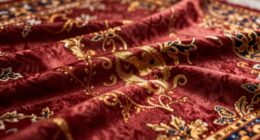
Using hypoallergenic rug pads is an effective way to reduce allergens like dust mites, pet dander, and mold spores in your home. Choose pads made from natural rubber or synthetic fibers that resist dust collection and are easy to clean. Proper installation and regular maintenance, such as vacuuming and cleaning, help keep allergens at bay. Investing in quality, low-VOC pads further improves indoor air quality. Keep exploring to learn more about making your space healthier.
Key Takeaways
- Choose rug pads made from natural rubber or synthetic fibers that resist dust and allergen buildup.
- Ensure proper installation with a snug fit to prevent debris accumulation and allergen dispersal.
- Regularly vacuum and clean both the rug and pad to maintain allergen resistance.
- Select hypoallergenic, low VOC emission pads to improve indoor air quality.
- Opt for washable or easy-to-clean rug pads to support ongoing hygiene and allergy prevention.
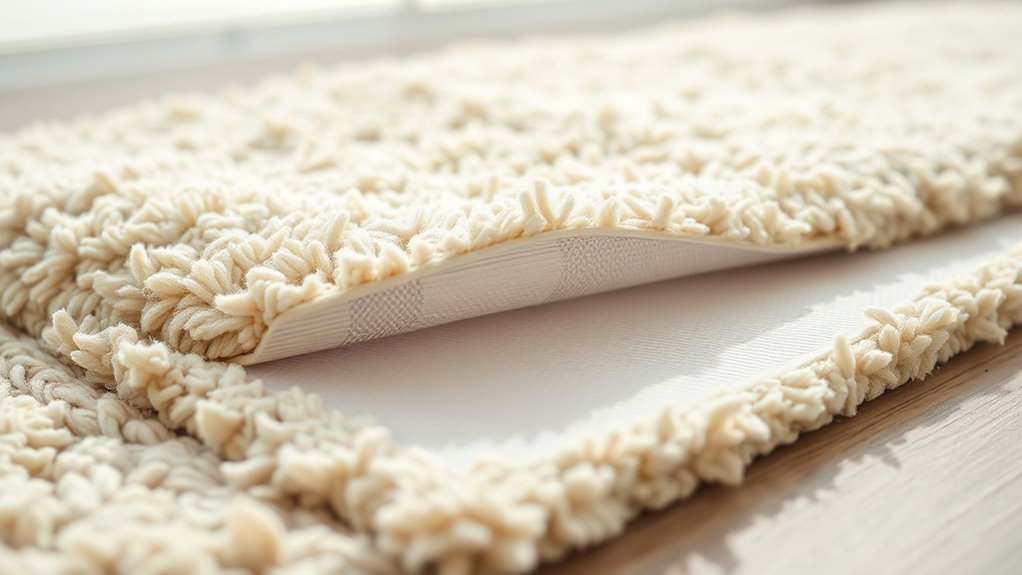
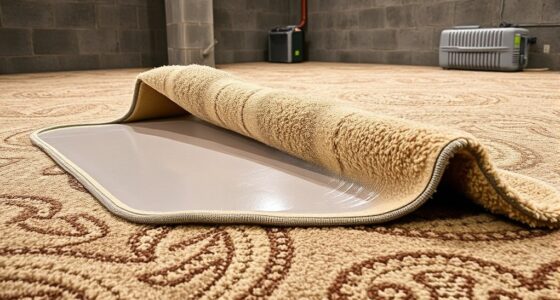
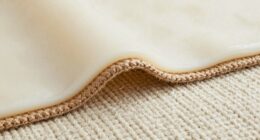
If you or your family members suffer from allergies, choosing the right rug pad can make a substantial difference in indoor air quality. Allergens like dust mites, pet dander, and mold spores tend to settle into rugs and their pads, aggravating allergy symptoms. That’s why selecting a hypoallergenic rug pad is essential for creating a healthier living environment. One of the first considerations is the fiber options available. Some materials, like natural rubber or synthetic fibers designed specifically for allergy sufferers, resist dust accumulation and are less prone to harboring allergens. Avoid fiber options that trap dust easily, such as wool or certain types of felt, which can become breeding grounds for mold and dust mites over time. Instead, look for rug pads made from non-porous or tightly woven fibers that prevent allergen buildup and are resistant to mold growth. Additionally, choosing a rug pad with a mold-resistant finish can further reduce the risk of mold development and allergen accumulation. When it comes to installation tips, proper placement and secure fitting are imperative. You want your rug pad to fit snugly beneath your rug without any wrinkles or gaps that can trap dirt and allergens. Measure your rug accurately before purchasing a rug pad, and consider using a pad slightly smaller than the rug itself to ensure a smooth, secure fit. When installing, lay the pad flat and smooth out any wrinkles to minimize debris collection. If your rug is on a hard surface like wood or tile, consider using double-sided tape or non-slip backing to keep the pad in place, preventing shifting that can cause dust and allergens to become airborne. Regular cleaning is also necessary; vacuum both the top of the rug and beneath the pad frequently. For added allergy protection, opt for washable or easily cleanable rug pads, and follow manufacturer instructions for cleaning to prevent allergen buildup. In addition, choosing a rug pad with a low VOC (volatile organic compound) emission rating can contribute to improved indoor air quality. Many traditional rug pads emit fumes that can irritate allergies and respiratory issues. Look for labels indicating hypoallergenic, environmentally friendly, or low-emission products. This small detail can markedly reduce airborne irritants in your home. Overall, making mindful decisions about fiber options and following proper installation tips will help you reduce allergens and breathe easier. Investing in a quality hypoallergenic rug pad is an effective step toward creating a safer, healthier space for everyone, especially those sensitive to airborne allergens. Keep in mind that maintenance and regular cleaning are key to maintaining these benefits over time.

Veken Non Slip Cushioned Rug Pad Gripper 8 x 10 Ft, Felt and Silicone Backing, 1/4 inch Thick Carpet Liner for Hardwood Floors and Finishes, Under Area Rugs Anti Skid Mat, Keep Rugs Safe and in Place
Helps Prevent Rug Slippage: Designed with a unique high-density cross-bar texture and silicone backing, this carpet underlay provides…
As an affiliate, we earn on qualifying purchases.
As an affiliate, we earn on qualifying purchases.
Frequently Asked Questions
Are Hypoallergenic Rug Pads Suitable for All Types of Carpets?
Yes, hypoallergenic rug pads are suitable for most carpets, but you should consider your carpet’s durability and thickness. If your carpet is delicate or thin, opt for a thinner, gentler pad to prevent damage. For thicker, more durable carpets, a denser pad can provide extra support and longevity. Always check the rug pad’s specifications to make sure it complements your carpet type, preserving its quality and maintaining comfort.
How Often Should Hypoallergenic Rug Pads Be Replaced?
You should replace your hypoallergenic rug pad at least once every 1 to 3 years, depending on your maintenance schedule and usage. Neglecting this could turn your pad into a breeding ground for allergens and dust mites! Regular inspections help determine if it’s time for a change. Keep your home healthy by sticking to the recommended replacement lifespan, ensuring your rug remains comfortable and allergy-free.
Can Hypoallergenic Rug Pads Prevent Mold Growth?
Yes, hypoallergenic rug pads can help prevent mold growth by providing proper airflow and moisture control underneath your rugs. They create an environment that discourages mold, which is essential for allergy control. To maximize mold prevention, make sure you regularly clean and inspect your rug pads, especially in humid areas. Proper ventilation and moisture management work together with hypoallergenic rug pads to keep your space healthier and mold-free.
Do Hypoallergenic Rug Pads Emit Any Odors?
You might notice a slight odor concern when first unrolling a hypoallergenic rug pad, similar to a faint chemical emission. This smell usually dissipates quickly, as these pads are made from non-toxic, hypoallergenic materials. For example, some users report a mild odor initially, but it fades within a few days. Rest assured, high-quality hypoallergenic rug pads minimize chemical emissions, ensuring your space stays fresh and safe.
Are Hypoallergenic Rug Pads Safe for Pets?
Yes, hypoallergenic rug pads are safe for pets. They help reduce pet allergy triggers by preventing dust and dander buildup underneath your rugs. To keep your pet safe, regularly maintain your rug pad by cleaning it and checking for any signs of wear. This maintenance minimizes allergens and keeps the environment healthier for your furry friends, ensuring your home stays comfortable and allergy-free for everyone.

Waterproof Non-Slip Rug Pad 8×10 for Large Area Rugs Durable Felt Floor Protection pad for All Floors, Suitable for Cutting. Rug Pads Keep Rugs in Place and Provide Cushioning
【Waterproof Rug Pad】 1/8 inch low-profile felt rug pad with waterproof TPR backing, designed for use under area…
As an affiliate, we earn on qualifying purchases.
As an affiliate, we earn on qualifying purchases.
Conclusion
Choosing a hypoallergenic rug pad can markedly improve your indoor air quality and reduce allergy symptoms. For example, imagine someone with allergies notices fewer sneezing fits after switching to a hypoallergenic pad under their living room rug. By making this simple change, you create a healthier environment for yourself and your family. Don’t underestimate the power of a good rug pad—it’s a small step that can make a big difference in allergy prevention and overall comfort.

Non-Slip Rug Pads 8 x 10 ft, 100% Waterproof Extra Large Area Rugs Non Skid Rug Pad for All Floors and Finishes Durable Hardwood Floor Protective Felt Keeps Rugs in Place, Safe and Secure
【 Waterproof Rug Pad】–Felt + Waterproof TPR carpet pad for all types of carpeting. The rough fabric of…
As an affiliate, we earn on qualifying purchases.
As an affiliate, we earn on qualifying purchases.

GORILLA GRIP Felt with Rubber Stay in Place Slip Resistant Rug Pad, 1/8 inch Thick, 2×8 FT Protective Padding Under Area Rugs, Cushioned Gripper Pads, Carpet Runners, Hardwood Floors Protection
THE ORIGINAL CUSHION + GRIP: unlike other brands that only have felt, our rug pads also feature a…
As an affiliate, we earn on qualifying purchases.
As an affiliate, we earn on qualifying purchases.