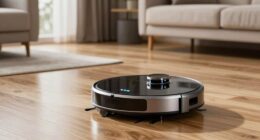
To improve indoor air quality and reduce dust and pollutants from rugs, vacuum frequently with a HEPA-filtered cleaner, especially in high-traffic areas. Regular deep cleaning, like steam treatments, helps remove embedded dirt and allergens. Keep humidity levels low and ventilate your space whenever possible. Removing shoes before entering your home also helps prevent tracking in debris. For more effective strategies to keep your indoor air cleaner, continue exploring proven methods.

Get cleaning gear delivered free — and shop member deals
- Fast, free delivery on millions of items
- Access to Prime Big Deal Days deals on October 6–7
- Prime Video, Amazon Music and more included
Key Takeaways
- Regular vacuuming with HEPA filters removes surface dust and allergens from rugs effectively.
- Deep cleaning methods like steam cleaning eliminate embedded dirt and bacteria, improving air quality.
- Maintaining proper humidity levels reduces mold growth and dust mite populations in rug fibers.
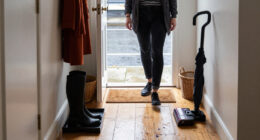
- Removing shoes before entering prevents tracking in dirt, pollutants, and allergens onto rugs.
- Increasing ventilation and opening windows help circulate fresh air and decrease indoor pollutant buildup.
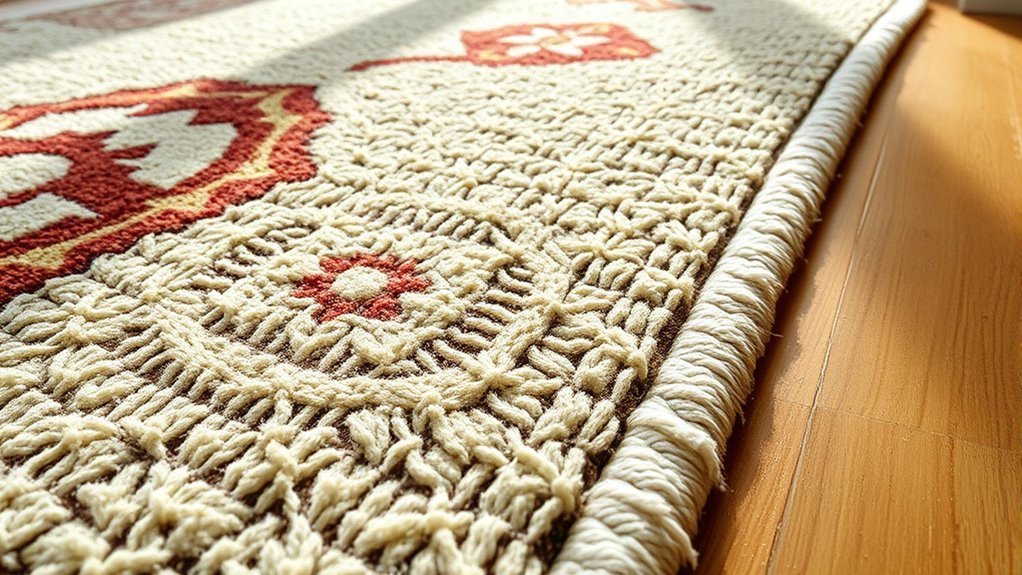
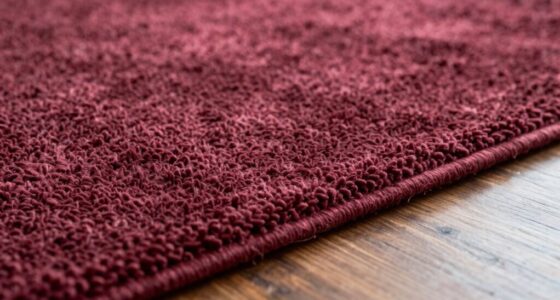
Rugs can substantially impact your indoor air quality, often serving as both a source of comfort and potential pollutants. They trap dust, pet dander, pollen, and other allergens, which can become airborne when disturbed. Over time, these particles accumulate deep within the fibers, posing a risk to your respiratory health, especially if you have allergies or asthma. That’s why maintaining your rugs properly is essential for allergen control and ensuring a healthier indoor environment.
One of the most effective ways to reduce airborne allergens is through diligent vacuum maintenance. Regularly vacuuming your rugs with a high-quality vacuum cleaner equipped with a HEPA filter can considerably decrease the amount of dust and allergens present. Make sure to vacuum slowly and thoroughly, paying extra attention to high-traffic areas and seams where dirt tends to settle. Using the right vacuum attachment, such as a beater bar or brush roll, helps loosen and remove embedded particles more effectively. Consistency is key—vacuum at least two to three times a week, or more if you have pets or allergies, to keep allergen levels in check.
Beyond just vacuum maintenance, it’s important to think about the overall cleanliness of your rugs. Professional cleaning every 12 to 18 months can help eliminate deeply embedded pollutants that regular vacuuming might miss. Steam cleaning or hot water extraction can kill bacteria and remove stubborn dirt, further improving your indoor air quality. If you’re sensitive to chemical cleaners, look for eco-friendly or hypoallergenic options to avoid introducing new irritants into your home. Additionally, maintaining proper humidity levels helps inhibit mold growth and dust mite proliferation, which are common indoor pollutants linked to poor air quality.
In addition to regular cleaning routines, controlling the environment around your rugs can improve allergen control. Use dehumidifiers to reduce moisture, which discourages mold growth and dust mites. Keep windows open when possible to increase ventilation and allow fresh air to circulate. You might also consider removing shoes before walking on the rugs, which prevents tracking in dirt and pollutants from outside.
Ultimately, your efforts in vacuum maintenance and allergen control directly influence the air you breathe indoors. Consistent cleaning, timely professional treatments, and environmental adjustments create a cleaner, healthier space. Rugs add warmth and style, but they don’t have to compromise your air quality. By staying proactive with these practices, you can enjoy the comfort of your rugs while minimizing their potential to harbor harmful pollutants. Your lungs will thank you for your commitment to a cleaner, fresher indoor environment.
HEPA filter vacuum cleaner for rugs
As an affiliate, we earn on qualifying purchases.
As an affiliate, we earn on qualifying purchases.
Frequently Asked Questions
How Often Should I Replace My Rugs to Improve Air Quality?
You should replace your rugs every 5 to 10 years to improve air quality. The rug lifespan varies depending on use and maintenance, but regular cleaning helps extend it. Frequent vacuuming and professional deep cleaning can reduce dust and pollutants. If your rug shows signs of wear, stains, or persistent odors, it’s time for a replacement. Doing so minimizes allergens and improves your indoor air environment.
Are Natural Fiber Rugs Better for Indoor Air Than Synthetic Ones?
Natural fiber rugs are like a breath of fresh air compared to synthetic fibers, making them generally better for indoor air quality. They tend to trap fewer pollutants and emit fewer volatile organic compounds (VOCs). Synthetic fibers, on the other hand, can release more allergens and chemicals over time. If you want a healthier environment, opt for natural fibers like wool or cotton, which help reduce dust and improve air freshness.
Can Professional Rug Cleaning Eliminate All Airborne Pollutants?
Professional rug cleaning can considerably reduce airborne pollutants, but it might not eliminate all. Regular vacuuming, especially with high-quality filters, helps maintain indoor air quality. The durability of your rug material influences how often you should clean it; natural fibers may trap more dust, requiring more frequent cleaning. While professional cleaning improves air quality, combining it with consistent vacuuming and choosing durable rugs offers the best results.
Do Area Rugs Attract More Dust Than Wall-To-Wall Carpets?
Think of your space as a sponge, soaking up dust like a magnet. Area rugs, with their intricate carpet fibers, often trap more dust accumulation than wall-to-wall carpets. Their surface area and fibers provide a cozy hideaway for dust and pollutants, making them more likely to attract and hold onto debris. Regular cleaning keeps this dust at bay, preventing it from becoming airborne and improving your indoor air quality.
What Are the Best Practices for Maintaining Low Dust Levels in Rugs?
To keep dust levels low in your rugs, vacuum regularly using slow, overlapping strokes with a high-efficiency particulate air (HEPA) filter vacuum. Focus on effective vacuum techniques, like going over areas multiple times and paying attention to edges. Proper rug placement also matters; avoid placing rugs in high-traffic or dusty areas. These practices help reduce dust buildup and improve indoor air quality.
Conclusion
Just as a rug can trap dust and pollutants, your choices shape your home’s air quality. By regularly cleaning and choosing materials wisely, you’re tending a garden of freshness beneath your feet. Each decision is a seed that grows into a healthier space, where clarity and comfort flourish. Remember, the rug’s silent role mirrors your silent efforts—together, they create an environment that breathes life and significance into your everyday moments.
Halloween Picks
halloween
As an affiliate, we earn on qualifying purchases.