
TL;DR

Get cleaning gear delivered free — and shop member deals
- Fast, free delivery on millions of items
- Access to Prime Big Deal Days deals on October 6–7
- Prime Video, Amazon Music and more included
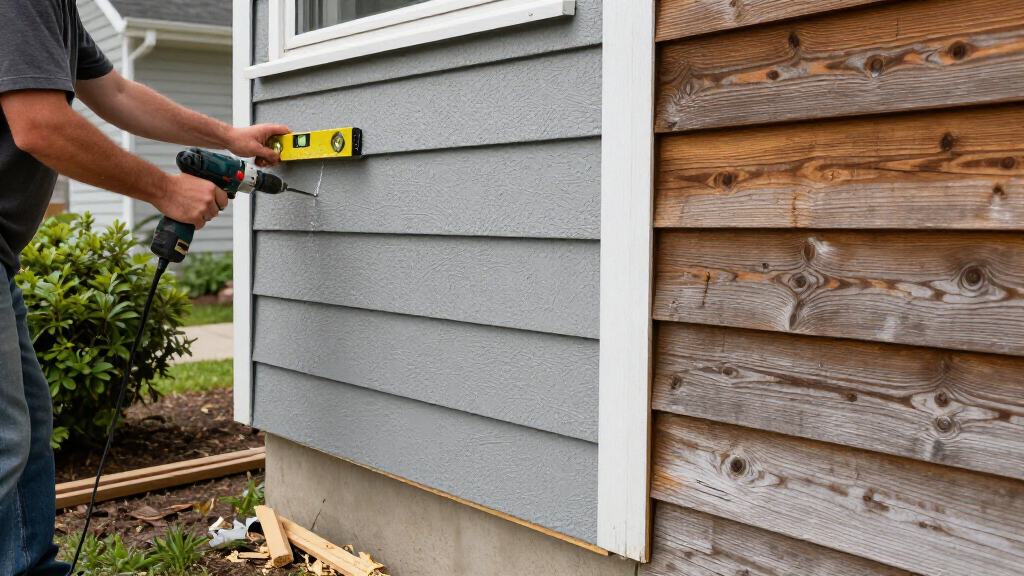
A Hunker report describes fiber cement siding as a lower-maintenance alternative to wood, citing resistance to moisture, rot and pests and durable factory-applied finishes. It can cost more upfront—reported at $7 to $18 per square foot in some areas—and installation is best handled by professionals because the material is heavy and brittle. Long-term savings depend on local prices, product choice and maintenance costs.
Fiber cement siding may cost more to install than some wood options, but its resistance to moisture, rot and pests can reduce ongoing upkeep, according to a report by Hunker. The material offers homeowners a wood-like appearance with a different maintenance profile, though the savings over time are not guaranteed and depend on local costs and product choices.
Fiber cement is made from a composite of Portland cement, sand and cellulose fibers. Hunker says it is designed to resemble wood while avoiding some vulnerabilities of natural timber, including warping and rot from moisture and damage from pests such as termites. The report also describes it as less flammable than wood siding; it does not provide comparative fire-rating data or specify performance across particular products.
Many products have a factory-applied, baked-on finish, which Hunker says is more durable than standard paint. The report notes that some manufacturers offer warranties against fading for 15 or 25 years. Those warranty terms are manufacturer-specific; buyers would need to check the coverage, exclusions and maintenance conditions for the particular product.
The report gives a possible installed-material price range of $7 to $18 per square foot in some areas, while warning that prices vary by region and product line. It describes maintenance as generally limited to occasional washing or spot cleaning, in contrast with the recurring repainting or restaining that wood may require. Fiber cement is heavier and more brittle than wood, so Hunker recommends professional installation rather than a do-it-yourself approach.
Upfront Price Versus Ongoing Upkeep
The central decision is not simply which siding costs less at purchase. Homeowners weighing options need to compare the initial material and installation bill with expected maintenance, repainting and repair costs over the years they plan to own the property. Fiber cement could be less costly over time if reduced upkeep offsets its higher starting price, but the source does not provide a lifecycle-cost calculation proving that outcome for every home.
Its durability claims may also matter in areas where moisture, pests or fire exposure are concerns. Those benefits do not remove the need to check local building requirements or product specifications. Buyers should compare warranties and seek itemized quotes that include preparation, labor and finishing, since those factors affect the actual cost.
As an affiliate, we earn on qualifying purchases.
Wood-Look Siding Without Timber
Wood siding is used for its traditional appearance, including on coastal and rural homes, but it can require repeated care. Hunker says moisture can contribute to warping and rot, sun exposure can fade stains, and pests can damage the material. Painting or restaining may add recurring expenses, although the amount depends on the home, climate, finish and maintenance schedule.
Fiber cement is available in several profiles, including horizontal lap, vertical panels and shingle-style boards. Homeowners can select pre-primed products for custom painting or factory-finished panels in manufacturer-selected colors. These choices affect the look and may affect price; the source does not identify a single product or project as representative of all installations.
“Fiber cement siding is specifically designed to look like wood, without any of its vulnerabilities.”
— Hunker report
Savings Depend on Local Project Costs
The source does not provide a direct, like-for-like cost comparison between wood and fiber cement, a defined time period for calculating savings, or evidence that fiber cement will be cheaper over its full service life in every location. Its $7-to-$18-per-square-foot range applies only to some areas and is not specified as a universal or fully itemized price. Labor, removal of existing siding, repairs to the wall beneath, finish selection and local pricing may change a project’s total.
Product performance also varies. The report does not identify the manufacturers behind the cited 15- and 25-year fading warranties or set out their terms. It does not compare specific fire ratings, quantify expected service life, or describe installation requirements for particular buildings. Homeowners should treat lower long-run cost as a possibility to evaluate, not a confirmed result.
Compare Quotes and Warranty Terms
Homeowners considering a siding replacement can request itemized estimates for both wood and fiber cement, then compare projected maintenance and finishing costs over the period they expect to own the home. They should confirm the product warranty, finish options and local building requirements before choosing a material.
Because fiber cement is heavy and brittle, installation should be planned with a qualified contractor who can assess the building and explain labor and preparation costs. The source provides no announced next milestone or new policy; the next useful information for an individual project will come from local bids and the selected manufacturer’s specifications.
Key Questions
Is fiber cement siding always cheaper than wood?
No. Hunker says it can cost more upfront than some wood options. It may reduce maintenance expenses, but whether total costs are lower depends on local prices, product choice, labor and upkeep over time.
How much does fiber cement siding cost?
The report cites $7 to $18 per square foot in some areas, with costs varying by region and product line. The source does not specify a universal price or whether every project cost is included.
Does fiber cement siding need painting?
Some boards are pre-primed and can be painted in a chosen color; others come with a factory-applied finish. Hunker says factory finishes can reduce routine upkeep, but homeowners should check the chosen product’s care instructions and warranty.
Can homeowners install fiber cement siding themselves?
Hunker recommends professional installation because fiber cement is heavier and more brittle than wood. A contractor can account for product handling, installation requirements and local building rules.
What makes fiber cement different from wood siding?
Fiber cement is made from Portland cement, sand and cellulose fibers. The report describes it as more resistant to moisture, rot and pests than wood, while noting it can be heavier, more brittle and more expensive initially.
Source: rss
Fall Picks
fall essentials
As an affiliate, we earn on qualifying purchases.