
TL;DR

Get cleaning gear delivered free with Prime
- Fast, free delivery on millions of items
- Prime Video, Amazon Music and more included
- Member-only deals all year
Hunker describes a DIY TikTok idea from Hometalk that turns one shower curtain into two panels with a cut down the middle. The panels can be hemmed with iron-on tape or sewn, then hung to meet at the center; magnets may help hold them together.
Hunker has reported on a DIY idea from TikTok creator Hometalk that turns an existing shower curtain into two panels with a cut down the middle. The panels are hemmed and hung to meet at the center, offering a way to change a bathroom’s appearance without buying another curtain.
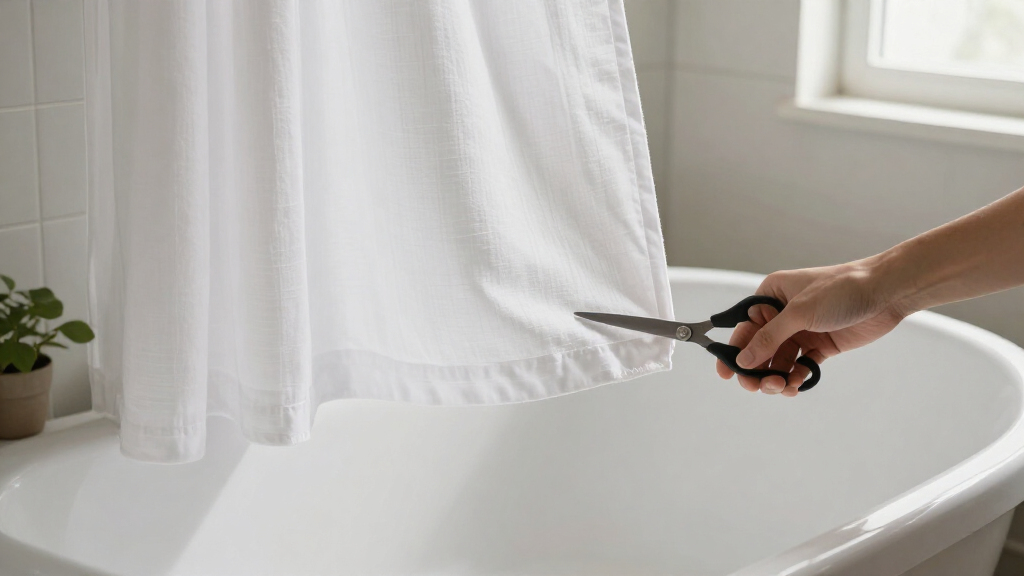
The method starts by taking the curtain off its rod and cutting it into two equal pieces. Hunker’s instructions say to lay each panel with its reverse side facing up, fold the raw cut edge by about half an inch, and secure the fold with iron-on hem tape. The article recommends using a low iron setting to seal the tape and says sewing the edge is another option for added durability.
After finishing the cut edges, both panels go back on the rod, arranged so they meet in the middle rather than sliding as one piece. Hunker suggests adding magnets along the panels’ inner edges to help keep them together and reduce the chance of water escaping. It also mentions tiebacks as an optional way to hold the panels open when the shower is not in use.
The report presents the project as a decorative reuse idea, not as a tested product review or a guarantee that the converted curtain will perform like a purpose-made shower enclosure. Its practical advice depends on the curtain’s material and construction: the article does not specify which fabrics are suitable for cutting, ironing or sewing.
A New Look Without a New Curtain
The idea may appeal to renters and homeowners who want a visible bathroom update without replacing a serviceable curtain. By dividing one panel into two, the design borrows the appearance of center-opening window drapes, adding a softer, more tailored look to a room that often gets treated as purely functional.
The budget benefit is conditional, rather than a measured saving: it depends on already owning a curtain that can be altered and having access to tools or supplies for finishing the edges. The approach also involves a trade-off. Cutting is irreversible, and a poorly finished edge or panels that do not stay together could make the curtain less useful. Hunker’s suggestion to add magnets addresses the gap between the panels, but the article does not report a performance test.
Products Worth Considering

Philips Hue White and Color Ambiance Smart Light Starter Kit with Bridge and 4 A19 Bulbs

Ring Alarm 8-Piece Kit (2nd Gen) Home Security System

Ring Alarm 14-Piece Wireless Security System Kit
As an affiliate, we earn on qualifying purchases.
How the Curtain Becomes Two Panels
Hunker frames the project as an alternative to discarding an old curtain simply because its appearance feels dated. The source attributes the idea to Hometalk, a DIY TikTok creator, and describes a transformation that changes the curtain’s shape rather than replacing it with a new product.
The steps are limited: remove the curtain, cut it into two panels, finish the cut edges, and hang the pieces so they part at the center. Hunker describes iron-on hem tape as one finishing method and sewing as another. Its report also suggests magnetic joins and tiebacks as optional details. It does not provide a video link, a full materials test, or evidence that the method works equally well with every curtain type.
“Instead of having a plain, uninspiring shower curtain, you make one cut in the material to turn it into two panels.”
— Hunker, describing the Hometalk idea
Material Suitability Is Not Specified
Hunker does not identify which curtain materials tolerate a low iron setting, hem tape or sewing, or how the result holds up after repeated exposure to water and laundering. Readers should check the curtain’s care label and the tape manufacturer’s directions before applying heat; some materials may not be suitable for ironing.
The report also does not say whether Hometalk tested the finished panels for water containment or long-term durability. Magnets are suggested as a way to bring the center edges together, but the source provides no measured results on how well they prevent splashing or floor leaks. The project’s cost, time and outcome will vary with the curtain and supplies already on hand.
Check the Curtain Before Cutting
Anyone considering the project should first inspect the curtain’s construction and care instructions, then decide whether it can be cut and its edges finished safely. Because the cut cannot be undone, measuring the panel and marking the center before using scissors can help avoid uneven pieces. If using iron-on tape, follow its instructions and the fabric’s heat limits; sewing is the alternative Hunker names.
After hanging the panels, check that they meet closely and that water stays inside the shower during normal use. Add magnets or tiebacks only if they work with the curtain and bathroom setup. No follow-up testing or broader results are included in the source report, so durability and water containment remain matters for users to evaluate themselves.
Key Questions
What does the shower-curtain makeover involve?
It involves cutting one curtain into two panels, finishing the cut edges and hanging the panels so they meet in the middle.
How can the cut edges be finished?
Hunker suggests folding each raw edge by about half an inch and securing it with iron-on hem tape. Sewing is another option. Check the fabric’s care label and product directions before applying heat.
How are the panels meant to stay together?
The panels are arranged to meet at the center. Hunker suggests adding magnets along the inner edges to help hold them together, but does not report testing their effectiveness.
Will this work with every shower curtain?
The source does not establish that it will. It gives no material compatibility testing, so check the curtain’s construction and care instructions before cutting, ironing or sewing it.
Is this guaranteed to save money?
No. Reusing a curtain could avoid buying another one, but the source gives no overall cost comparison. Any savings depend on the curtain and finishing supplies already available.
Source: hunker.com