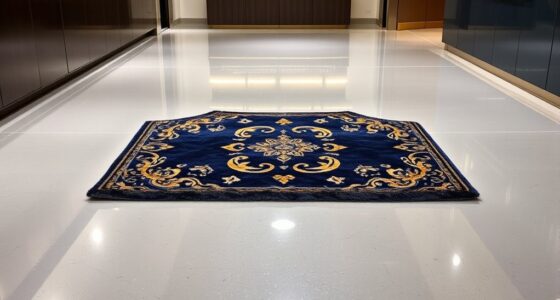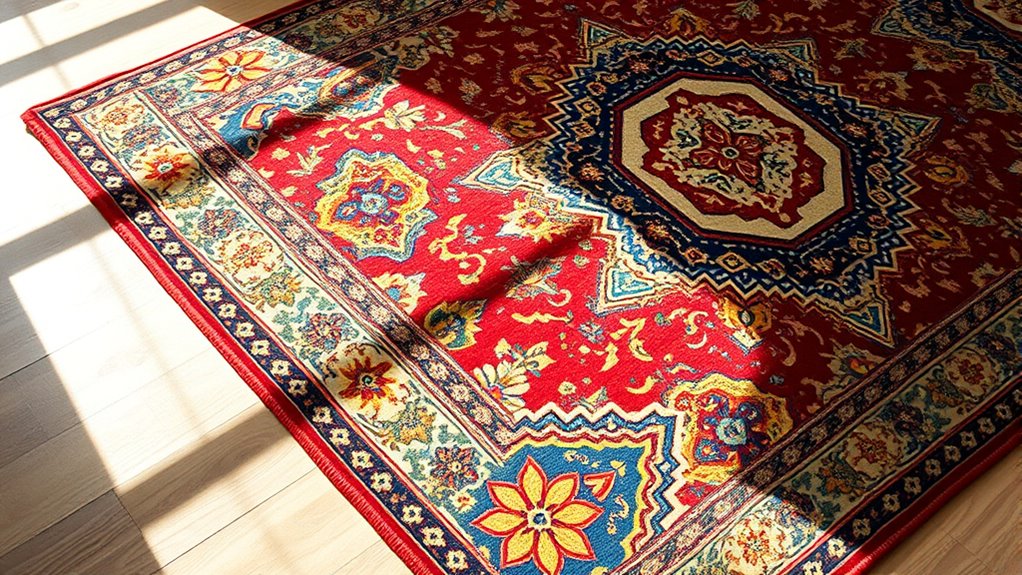
Global inspired rugs featuring Moroccan, Turkish, and Persian patterns bring cultural stories into your home through intricate designs, bold colors, and meaningful motifs. Moroccan rugs often symbolize protection and luck with geometric shapes, while Turkish designs reflect Anatolian traditions with floral patterns and medallions. Persian rugs showcase elaborate imagery rooted in spiritual and natural themes. Each piece supports artisans’ centuries-old craftsmanship. Keep exploring to discover how these rich traditions can add depth and character to your space.
Key Takeaways
- Moroccan rugs feature bold geometric designs and vibrant colors symbolizing protection and luck, crafted through traditional hand-knotting techniques.
- Turkish rugs display detailed floral motifs, medallions, and rich colors representing stories of Ottoman and Anatolian heritage.
- Persian rugs are known for elaborate patterns and natural dyes, symbolizing paradise, nature, and spiritual themes with exceptional craftsmanship.
- All three styles preserve cultural symbolism and artisan craftsmanship, connecting homes to rich traditions and storytelling.
- These global-inspired rugs add meaningful, worldly aesthetic elements to interior decor, celebrating cultural artistry and history.
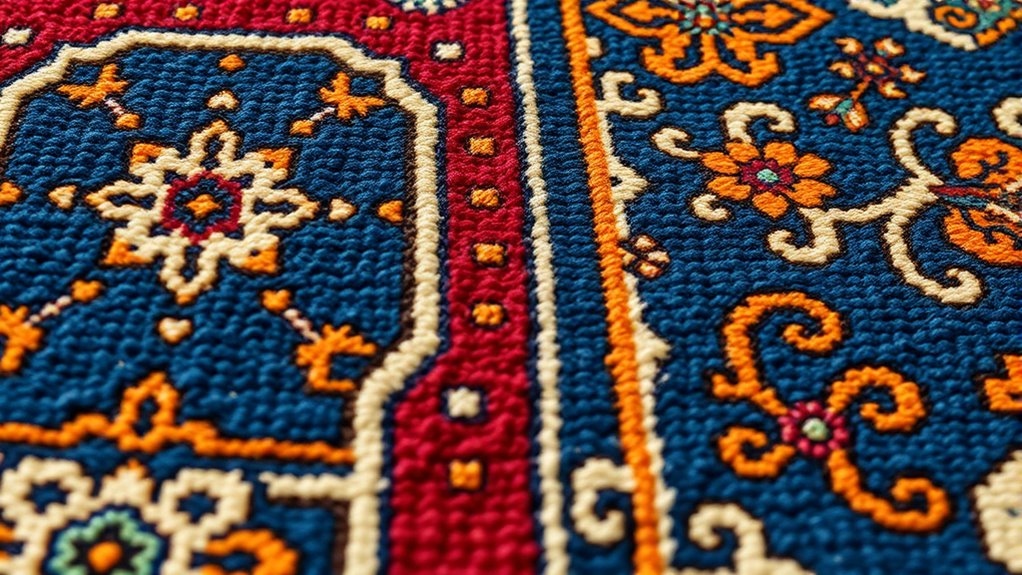
Global inspired rugs bring a vibrant touch of the world’s diverse cultures into your home. When you choose Moroccan, Turkish, or Persian patterns, you’re not just adding a decorative piece—you’re embracing centuries of cultural symbolism and artisan craftsmanship. These rugs serve as more than floor coverings; they are storytellers, each design reflecting the history, beliefs, and artistry of their origins. You’ll notice that every motif and color carries meaning, whether it’s a symbol of protection, fertility, or spirituality. Incorporating these rugs into your space connects you to a rich cultural heritage, making your home feel both worldly and meaningful.
Global inspired rugs connect your home to centuries of cultural artistry and meaningful symbolism.
As you explore Moroccan rugs, you’ll see how their intricate patterns often symbolize protection and good luck. Traditional Moroccan designs incorporate bold geometric shapes and vibrant colors, crafted with a deep respect for cultural symbolism. You might find motifs inspired by desert landscapes, spiritual symbols, or tribal patterns, each woven with a purpose rooted in history. The artisan craftsmanship behind these rugs is evident in the meticulous hand-knotting or hand-weaving process, which can take weeks or even months. By choosing a Moroccan rug, you’re supporting skilled artisans whose work preserves age-old techniques, ensuring that each piece is unique and imbued with cultural significance.
Turkish rugs, on the other hand, are renowned for their detailed patterns and rich color palettes. These rugs often feature floral motifs, medallions, and intricate borders that tell stories of Ottoman history and Anatolian traditions. Every knot and dye reflects a specific cultural symbolism—protection, fertility, or prosperity—making each rug a meaningful addition to your home. The artisan craftsmanship involved in Turkish rug-making is highly valued, often passed down through generations. When you select a Turkish rug, you’re investing in a piece that showcases centuries of tradition, with each detail carefully crafted by artisans dedicated to their craft.
Persian rugs are celebrated worldwide for their elaborate designs and extraordinary craftsmanship. Their complex patterns often symbolize paradise, nature, or spiritual concepts, creating a sense of harmony and beauty in your space. The art of Persian rug-making involves intricate knotting techniques and natural dyes, ensuring that each rug is a masterpiece of artisan craftsmanship. These rugs are often considered collectibles, representing a deep cultural heritage. When you bring a Persian rug into your home, you’re not only adding visual beauty but also honoring a tradition rooted in centuries of artistic excellence and cultural symbolism.
In all, these global inspired rugs do more than decorate—they connect you to a world of history, artistry, and meaning. By choosing them, you celebrate cultural symbolism and support artisans keeping age-old traditions alive.

Living Room Rugs 8×10: Washable Moroccan Geometric Boho Rug Farmhouse Non Slip Stain Resistant Large Rug Low Pile Soft Carpet for Bedroom Dining Room Children Room (Beige,8'x10')
Machine Washable Rug: The 8×10 area rugs are machine washable and easy to clean. You can use a…
As an affiliate, we earn on qualifying purchases.
As an affiliate, we earn on qualifying purchases.
Frequently Asked Questions
How Do I Authenticate Genuine Moroccan, Turkish, or Persian Rugs?
To authenticate genuine Moroccan, Turkish, or Persian rugs, you should focus on rug material identification and authentic pattern verification. Check the material—authentic rugs often use natural wool, silk, or cotton, not synthetic fibers. Examine the patterns closely; genuine rugs feature traditional, intricate designs specific to their region. Additionally, inspect the craftsmanship and knot density, as these details help confirm the rug’s authenticity and origin.
What Are the Best Cleaning Methods for Delicate Vintage Rugs?
Did you know that proper cleaning can extend a vintage rug’s life by up to 50%? For delicate vintage rugs, use gentle rug cleaning tips like vacuuming without a beater bar and avoiding harsh chemicals. Spot clean stains immediately with mild solutions, and consider professional cleaning for deep dirt. These steps help preserve the rug’s intricate patterns and vibrant colors, ensuring long-term vintage rug preservation.
How Can I Tell if a Rug Is Handmade or Machine-Made?
You can tell if a rug is handmade by examining knot density and color variation. Handmade rugs typically have uneven, intricate knots and slight color differences due to hand-dyeing, giving them a unique character. Machine-made rugs usually have uniform knots and consistent colors. Look closely at the back of the rug; handmade ones show irregularities, while machine-made rugs have a more perfect, grid-like pattern.
What Are the Traditional Symbols and Their Meanings in These Patterns?
You’ll notice that traditional symbols in these patterns hold deep cultural significance. For example, Moroccan rugs often feature the “Hand of Fatima,” symbolizing protection, while Turkish motifs like the “Tree of Life” represent growth and eternity. Persian patterns frequently include floral and geometric motifs that convey beauty and spirituality. These symbolic motifs tell stories and reflect the cultural heritage behind each rug, making them more meaningful and unique.
How Do I Choose the Right Rug Size for My Space?
Choosing the right rug size transforms your space entirely. Measure your area carefully—imagine it’s the canvas for your masterpiece—and consider furniture placement to create harmony. For a living room, let the rug extend beyond furniture edges; for a dining area, ensure it’s large enough for chairs to stay on it when pulled out. Oversized rugs create grandeur, while smaller ones define cozy corners. Make certain your choice balances style and function perfectly.

Casa Loom Hand Tufted Oushak Wool Area Rug – Vintage Turkish Traditional Floral Medallion Design, Soft Pastel Boho Carpet for Living Room, Bedroom, Entryway Decor (Teal Grey, 6' x 9')
PREMIUM HAND TUFTED WOOL CONSTRUCTION-Expertly hand tufted from 100% premium wool, this Oushak area rug offers a thick,…
As an affiliate, we earn on qualifying purchases.
As an affiliate, we earn on qualifying purchases.
Conclusion
Think of these rugs as vibrant tapestries woven from the world’s rich stories, each pattern a thread connecting distant lands. As you bring one home, you’re not just adding decor—you’re inviting a piece of history, culture, and artistry into your space. Like a traveler’s keepsake, these rugs transform your home into a journey’s end, where every pattern whispers tales of tradition and creativity, turning your space into a living, breathing mosaic of global inspiration.
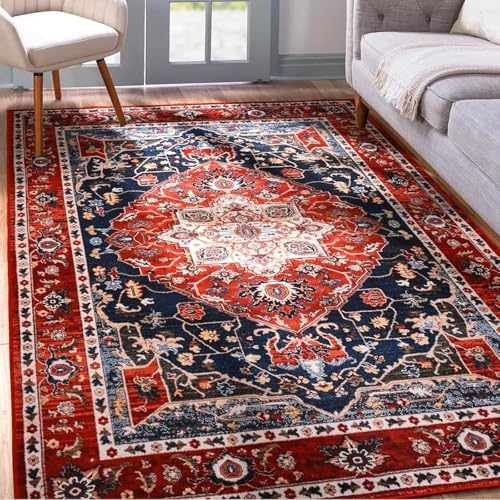
YJ.GWL Area Rug for Living Room, 4×6 Machine Washable Boho Rug for Bedroom, Low Pile Lightweight Thin Rugs Floral Vintage Distress Print Pattern Carpet for Dining Room, Red
Ultra thin & Easy to clean: This machine washable rug is made with premium polyester fibers, the surface…
As an affiliate, we earn on qualifying purchases.
As an affiliate, we earn on qualifying purchases.

Restoration and Renovation Handmade Irregular Shape Wool Area Rug | Unique Contemporary Botanical Design, Thick & Soft Carpet | Perfect for Living Room, Bedroom Decor (Multi, 4' x 6')
100% PURE WOOL MATERIAL: Made from 100% Natural Wool, this rug is soft, yet robust enough to withstand…
As an affiliate, we earn on qualifying purchases.
As an affiliate, we earn on qualifying purchases.