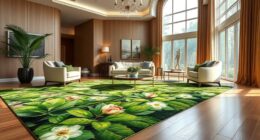
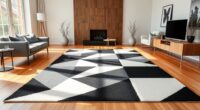
Layering rugs lets you add depth and texture to your space by mixing different sizes, shapes, and textiles. Start with a main rug as a foundation, then layer smaller or patterned rugs on top for visual intrigue. Experiment with contrasting textures and colors to reflect your style while maintaining harmony. Use techniques like peeking edges and varying pile heights to create dimension. Keep experimenting, and you’ll discover how to craft a cozy, stylish look that truly personalizes your home.

Get cleaning gear delivered free with Prime
- Fast, free delivery on millions of items
- Prime Video, Amazon Music and more included
- Member-only deals all year
Key Takeaways
- Select a primary rug to anchor the space and add smaller overlays for visual interest.
- Use contrasting shapes, sizes, and textures to create depth and layered dimension.
- Incorporate different pile heights and materials, like shaggy over flat-woven rugs, for tactile richness.
- Secure layered rugs with double-sided tape or grippers to prevent shifting and maintain arrangement.
- Balance patterns and textures to avoid visual overload and enhance the cozy, inviting atmosphere.

Layering rugs is a stylish way to add depth and personality to any space. When you start experimenting with different rugs, you’re not just covering your floors—you’re creating a visual story that reflects your taste and enhances your decor. One of the key elements to successful rug layering is rug color coordination. You want your rugs to complement each other without clashing, so think about color palettes that tie the space together. For example, if your main rug has neutral tones, you can add a smaller rug on top with pops of color or intricate patterns to create contrast and interest. Conversely, if your larger rug boasts bold hues, choose a more subdued overlay to avoid overwhelming the room. The goal is harmony; so, pay attention to how different shades and patterns interact.
Mix neutral tones with bold patterns for balanced, harmonious rug layering.
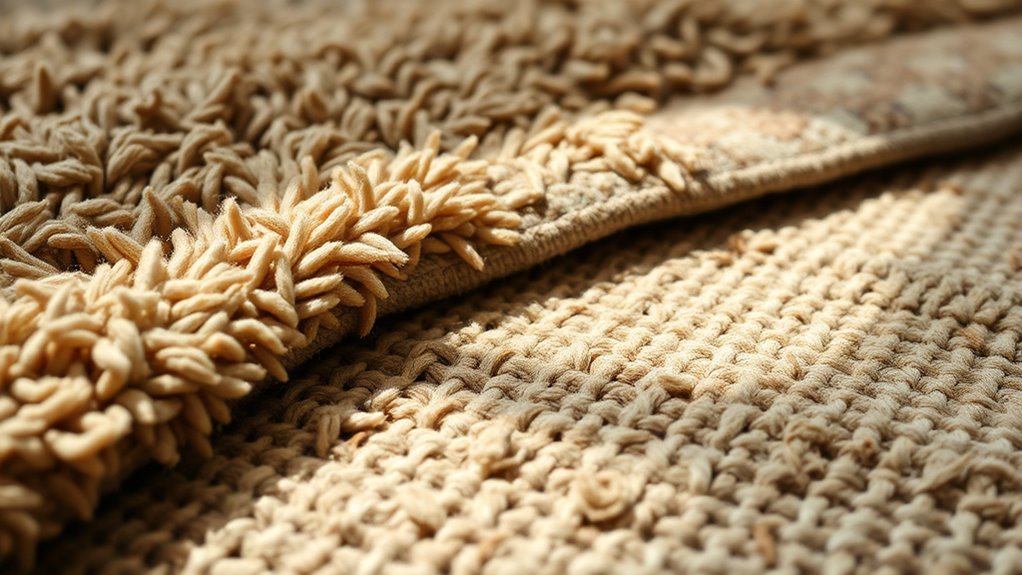
Layering techniques are essential in achieving a balanced and cohesive look. Start by selecting a primary rug that anchors the space—this could be a large, plush rug or one with a subtle pattern. From there, you can add smaller rugs on top, playing with sizes, shapes, and textures. For example, a rectangular rug layered over a larger round one creates visual intrigue. Be mindful of the edges—allow some of the underlying rug to peek out, which adds depth and dimension. When stacking rugs, consider their pile heights; mixing different textures, such as a shaggy top rug over a flat-woven base, adds tactile interest and makes the space feel more layered and inviting. Incorporating natural materials like wool or jute can further enhance the authenticity of your layered decor.
To make your layering effective, pay close attention to how the rugs sit on the floor. You might want to secure the rugs with double-sided tape or rug grippers to prevent slipping and shifting. This ensures your layered arrangement stays intact and looks intentional. Also, don’t be afraid to experiment with different layering techniques, such as overlapping edges or creating asymmetrical stacks. These approaches can add a playful, curated feel to your room. Remember, balance is key—if one rug is heavily patterned, opt for a simpler overlay to avoid visual overload. Conversely, if your main rug is plain, you can get creative with patterned or textured rugs on top to add personality.
Ultimately, rug layering is about expressing your style while creating a cozy, inviting atmosphere. By carefully considering rug color coordination and employing thoughtful layering techniques, you transform a plain floor into a dynamic focal point. Keep experimenting with different combinations until you find a look that feels authentic and visually appealing. Layering rugs isn’t just decorating; it’s an artful way to make your space truly your own.
layering area rugs for living room
As an affiliate, we earn on qualifying purchases.
As an affiliate, we earn on qualifying purchases.
Frequently Asked Questions
How Do I Choose Rug Colors That Complement Each Other?
To choose rug colors that complement each other, focus on color harmony by selecting shades that naturally blend or enhance each other. You can also create contrasting palettes by pairing neutral tones with bold hues for visual interest. Consider your existing decor and aim for balance, making sure the colors work together to create a cohesive look. Trust your instincts and test different combinations to see what feels right in your space.
Can Layering Rugs Work in Small or Narrow Spaces?
Yes, layering rugs can work in small or narrow spaces when you focus on space optimization. Opt for smaller rugs that fit well without crowding, and layer them to create visual illusions of depth. Use contrasting textures or patterns to add interest without overwhelming the area. This technique helps make your space feel larger and more dynamic, turning even tight spots into stylish, inviting zones.
What Are the Best Materials for Layered Rugs?
You should choose materials that balance durability and texture contrast for layered rugs. Natural fibers like jute or sisal offer durability and a rough texture, adding visual interest. Wool rugs provide softness and resilience, perfect for high-traffic areas. Combining different textures, such as a woven jute beneath a plush wool, enhances depth. Opt for materials that complement each other, ensuring your layered rug setup remains stylish and long-lasting.
How Do I Prevent Rug Slippage When Layering?
To keep your layered rugs from slipping, you need to get your ducks in a row. Use non-slip rug pads underneath each layer to grip the floor firmly, and consider rug securing tapes for extra hold. These simple steps prevent dangerous sliding, ensuring your space stays stylish and safe. With the right tools, you’ll keep your rugs in place, no matter how much foot traffic they face.
Are There Seasonal or Thematic Layering Ideas for Rugs?
You can incorporate seasonal accents and thematic motifs into your rug layering to refresh your space. Use cozy, warm-toned rugs in winter, like plush textures or plaid patterns, and lighter, breezy styles in summer. For thematic motifs, select rugs with floral designs for spring or nautical patterns for coastal themes. Mixing different textures and colors tied to seasons or themes creates visual interest and keeps your decor feeling timely and personalized.
Conclusion
Layering rugs is like painting a masterpiece—you add depth, texture, and personality to your space. Don’t be afraid to experiment and let your style shine through. With each rug you layer, you’re creating a cozy sanctuary that feels uniquely yours. So, immerse yourself and start layering—your room will transform into a vibrant tapestry, inviting everyone to relax and enjoy the rich, textured harmony you’ve crafted.
Fall Picks
fall essentials
As an affiliate, we earn on qualifying purchases.