New rugs often release VOCs from dyes, adhesives, and treatments, which can cause health issues like headaches, irritation, or long-term effects. To avoid this, choose rugs with transparent labels, natural fibers, or certifications like OEKO-TEX or Green Label Plus. Ventilate your space, air out your rug before use, and clean regularly to reduce VOC levels. Continuing to explore these tips will help you guarantee a healthier indoor environment.
Listen free for 30 days with Audible
Thousands of audiobooks and originals — cancel anytime.
As an affiliate, we earn on qualifying purchases.
Key Takeaways
- New rugs often emit VOCs from synthetic dyes, adhesives, and chemical treatments, which can affect indoor air quality.
- Signs of VOC off-gassing include chemical odors, eye or throat irritation, headaches, and persistent smells that don’t fade.
- To avoid VOC exposure, air out rugs in well-ventilated areas for several days before bringing them indoors.
- Choose low-VOC or natural fiber rugs with reputable certifications like OEKO-TEX or Green Label Plus.
- Proper ventilation, cleaning, and selecting eco-friendly rugs help minimize ongoing VOC emissions and health risks.

JONATHAN Y Haze Solid Low-Pile Gray Indoor Area Rug 8×10, Coastal,Bohemian,Minimalist,Classic, Easy-Cleaning for Living Room,Bedroom,Kitchen,Pet Friendly,Non-Shedding (SEU100A-8)
- Pet-Friendly and Durable: Suitable for high-traffic areas and families
- Stain-Resistant and Non-Shedding: Water and stain resistant synthetic fibers
- Easy to Maintain: Vacuum regularly and spot clean stains
As an affiliate, we earn on qualifying purchases.
As an affiliate, we earn on qualifying purchases.
What Are VOCs in Rugs and Why Do They Matter?
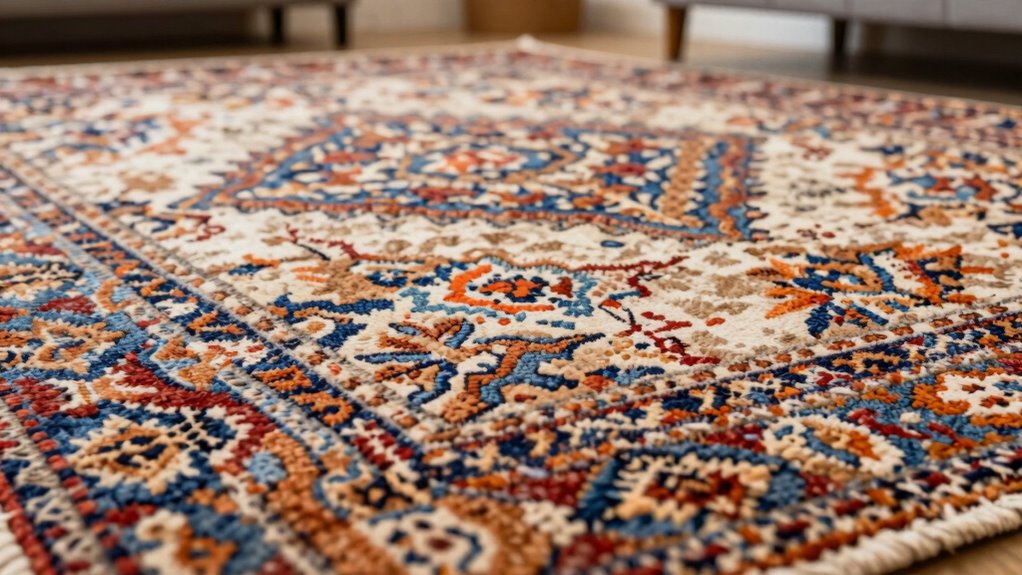
Have you ever wondered what makes some rugs smell strange or cause allergies? Many new rugs release volatile organic compounds (VOCs), which are chemicals that evaporate into the air. VOCs can come from synthetic dyes used to color rugs or from treatments applied during manufacturing. Rugs made from natural fibers like wool, cotton, or jute tend to emit fewer VOCs, but synthetic dyes often contain chemicals that off-gas over time. These emissions can irritate your respiratory system, trigger allergies, or cause headaches. It’s important to understand that VOCs aren’t always visible and can linger long after your rug is new. Recognizing what causes these emissions helps you make better choices and reduce indoor air pollution, keeping your indoor air healthier.
Where Do VOCs Come From in New Rugs?
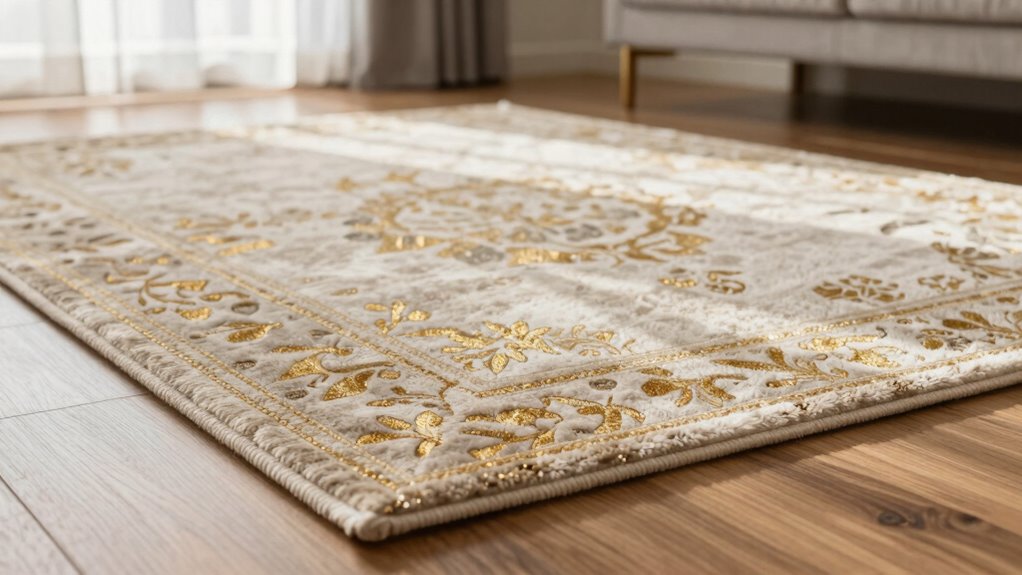
VOCs in new rugs mainly come from manufacturing chemicals and the materials used. These substances can off-gas over time, releasing harmful compounds into your home. Understanding where they originate helps you make safer choices when buying a new rug. Additionally, some manufacturers use environmentally friendly electric power generation methods, which can reduce the emission of VOCs during production.
Manufacturing Chemical Use
Many of the chemicals responsible for VOC emissions in new rugs originate during the manufacturing process. Manufacturing chemical use involves applying adhesives, dyes, and flame retardants that often contain volatile organic compounds. These chemicals can off-gas over time, contributing to indoor air pollution. Synthetic fiber concerns also play a role, as materials like nylon, polyester, and polypropylene are made with chemical treatments to enhance durability and colorfastness. These treatments often contain VOCs that are trapped within the fibers. When you bring a new rug into your home, these chemicals can slowly release into the air, creating a hidden VOC problem. Understanding how manufacturing chemical use impacts VOC presence helps you make more informed choices and reduce exposure to harmful emissions from new rugs.
Material Composition Factors
The materials used in your new rug are a primary source of VOC emissions, as different fibers and backing components contain or trap volatile chemicals. Material sourcing plays a pivotal role; synthetic fibers like nylon, polyester, or polypropylene often involve chemical treatments during manufacturing, which can release VOCs over time. Natural fibers such as wool or cotton may also be treated with flame retardants or dyes that emit volatile compounds. Additionally, fiber treatments—used to improve durability or appearance—can introduce residual chemicals that off-gas after installation. Even the backing or adhesive layers contribute to VOC emissions, especially if composed of synthetic materials or treated with chemical binders. Understanding the composition and sourcing of your rug helps you identify potential VOC sources and choose healthier options.
How Do VOCs Affect Your Health and Home?
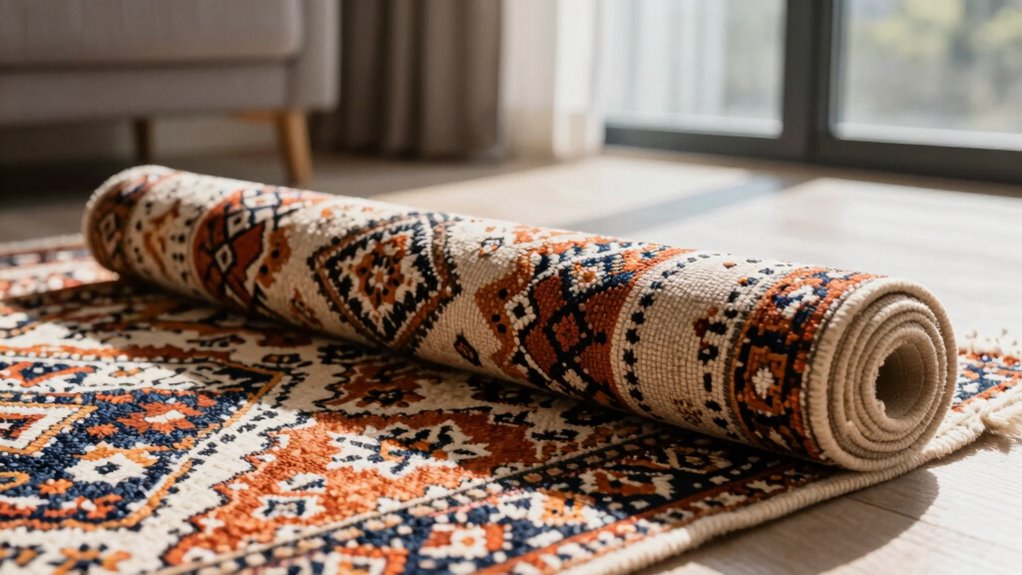
VOCs can lower your indoor air quality, making your home less healthy to breathe. You might notice breathing issues or irritations in your eyes and throat, especially after bringing in new rugs. Over time, continuous exposure could lead to more serious health concerns, affecting your long-term well-being. Implementing supportive care strategies can help mitigate these risks and promote a healthier environment.
Indoor Air Quality Impact
Even when you’re unaware of it, VOCs released from new rugs can considerably impact your indoor air quality. These chemical emissions can linger in your home, reducing overall air quality and potentially causing discomfort. Poor air quality from VOCs may lead to headaches, dizziness, or irritation. To understand the impact, consider how VOCs spread:
| Effect on Indoor Air Quality | Potential Health Impact |
|---|---|
| Chemical emissions linger | Respiratory irritation, headaches |
| Accumulate over time | Long-term health effects |
| Pollute indoor environments | Reduced air freshness |
| Persist without ventilation | Increased exposure risk |
Reducing VOCs involves proper ventilation and choosing rugs with low or no VOC emissions, helping maintain a healthier home environment.
Respiratory Health Risks
How do VOCs from new rugs pose risks to your respiratory health? VOC emission sources, like new rugs, release chemicals through chemical off gassing that can irritate your airways and trigger breathing issues. When you walk into a room with a freshly unwrapped rug, you’re exposed to these harmful compounds. Short-term exposure can cause symptoms like coughing, throat irritation, and shortness of breath. Prolonged exposure may worsen asthma or contribute to respiratory infections. Be aware of these risks and take steps to reduce your exposure. VOC off gassing can occur rapidly after unpacking, making it important to ventilate the space.
Long-Term Exposure Concerns
Over time, continuous exposure to VOCs from new rugs can gradually harm your health and damage your home environment. Long-term exposure to these chemicals contributes to indoor pollution, which can lead to ongoing respiratory issues, headaches, and even more serious health problems. VOCs released from rugs linger in the air, especially in poorly ventilated spaces, increasing your risk of chronic health effects. Prolonged exposure can also degrade indoor air quality, making your home less safe and comfortable. To protect yourself, it’s crucial to minimize your contact with VOCs by choosing low-emission rugs and ensuring proper ventilation. Being aware of indoor pollution sources helps you reduce long-term health risks and maintain a healthier living environment.
How Can You Tell If Your Rug Is Off-Gassing?
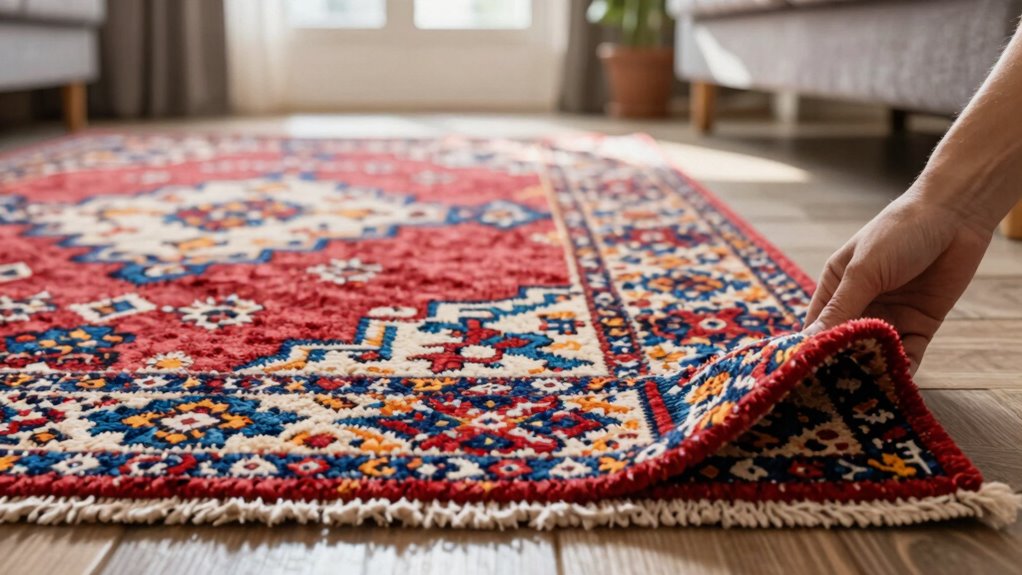
Wondering if your rug is off-gassing? You can often tell by paying attention to certain clues. Look out for:
- A strong or chemical-like rug smell that lingers
- Immediate eye irritation or breathing discomfort
- Persistent headaches or dizziness after being in the room
- Off gassing signs like a persistent, chemical odor even after airing out
- Unusual or lingering odors that don’t fade over time
If your rug smells strongly or the off gassing signs are obvious, it’s likely releasing VOCs. Keep in mind that new rugs often have a distinct chemical aroma, but if it persists, it’s a sign to take action. Recognizing these cues helps you avoid prolonged exposure to harmful fumes.
How to Choose Safe, Low-VOC Rugs When Shopping

When shopping for rugs, prioritizing low-VOC options can substantially reduce your exposure to harmful fumes. Focus on rugs with transparent information about rug dyeing and fiber sourcing. Look for rugs made with natural dyes rather than synthetic ones, which often emit more VOCs. Additionally, choose fibers sourced sustainably, such as organic wool or bamboo, to ensure fewer chemicals are involved. Use the table below to evaluate options:
| Rug Type | Dyeing Process | Fiber Sourcing |
|---|---|---|
| Natural wool | Plant-based dyes | Organic, local farms |
| Cotton | Low-impact dyeing | Fair-trade, sustainable |
| Jute | No dyeing needed | Certified organic fibers |
| Synthetic | Chemical dyes | Non-sustainable sources |
In addition, considering natural fiber rugs can help minimize chemical exposure and promote healthier indoor environments.
How to Reduce VOCs in Your Home After Buying a Rug
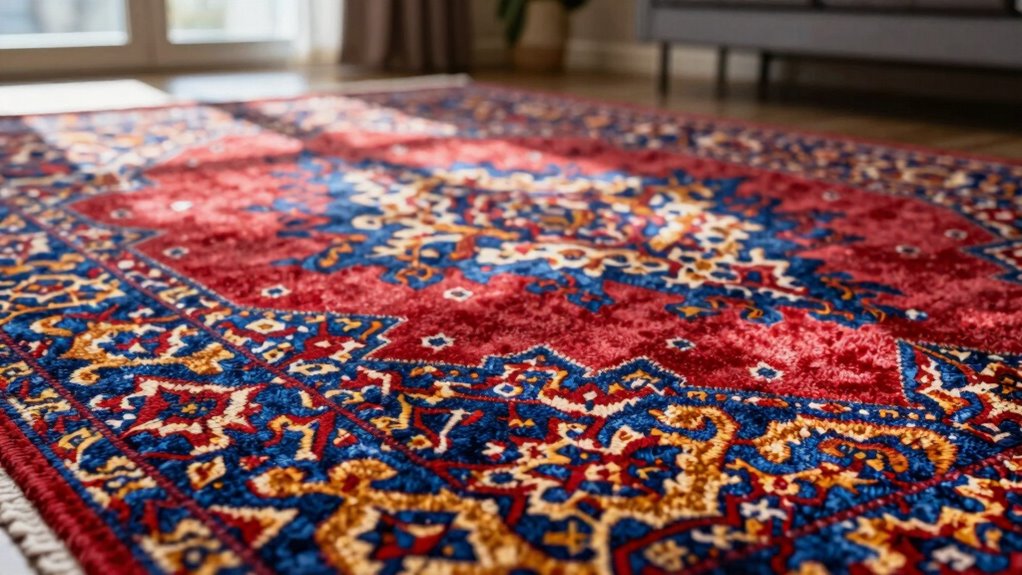
Once you’ve selected a low-VOC rug, you can take additional steps to further reduce airborne VOCs and chemical emissions in your home. This helps minimize indoor pollutants and improves air quality. To do so, consider these actions:
Enhance air quality by ventilating, using air purifiers, and airing out new rugs before bringing them inside.
- Increase ventilation by opening windows or using fans
- Use air purifiers with activated carbon filters
- Place rugs in well-ventilated areas for a few days before bringing them inside
- Regularly clean your rug to reduce dust and chemical buildup
- Avoid placing rugs in direct sunlight, which can accelerate VOC off-gassing
- Be aware of halal-certified rugs and textiles, which are produced with consideration for chemical safety and cultural standards
Implementing these simple strategies helps clear indoor pollutants and ensures a healthier environment, especially during the initial period after bringing a new rug into your space.
How to Verify Rug Safety With Certifications and Labels
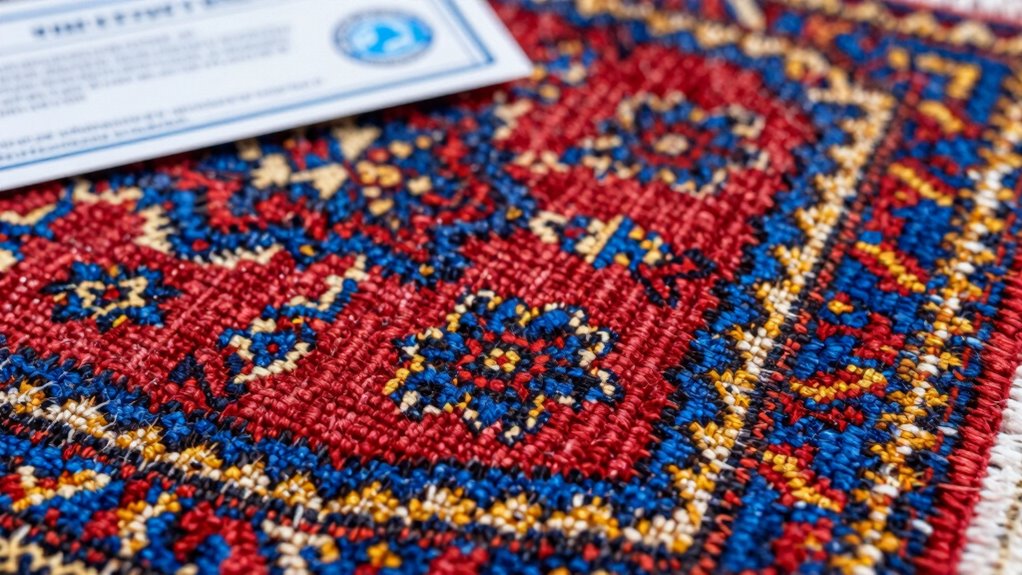
To make certain your rug is safe and low in harmful chemicals, it’s essential to check for certifications and labels from reputable organizations. Rug certification provides assurance that the product meets strict safety standards for VOC emissions and chemical content. When you examine the label, verify that it includes recognizable certifications, such as Green Label Plus or OEKO-TEX. Label verification involves reading the details carefully to confirm the rug’s safety claims and expiration dates, if applicable. Don’t rely solely on marketing promises; instead, cross-check the certification logos with official sources. This process helps you identify genuine safety assurances and avoid rugs with hidden VOCs. Being diligent with rug certification and label verification ensures you choose healthier options for your home. Additionally, understanding VOC emission standards can further help you select rugs that contribute to a safer indoor environment.
Frequently Asked Questions
Are There Natural Alternatives to Chemical-Treated Rugs?
Yes, you can find natural alternatives to chemical-treated rugs by choosing those made from natural fibers like wool, jute, or sisal. Look for rugs dyed with eco-friendly dyes, which avoid harsh chemicals and VOCs. These options are safer for your indoor air quality and better for the environment. Always ask sellers about their sourcing and dyeing processes to guarantee you’re selecting truly natural, chemical-free rugs for your home.
How Long Do VOCS Typically Off-Gas From New Rugs?
VOC off-gassing from new rugs typically lasts from a few days to several weeks, depending on the rug’s materials and ventilation. During this period, you might notice a chemical smell, which gradually diminishes. Proper ventilation can speed up VOC off-gassing and help maintain rug longevity by reducing chemical buildup. To minimize exposure, consider airing out your rug outdoors and using air purifiers, ensuring your rug stays fresh and safe for years.
Can Ventilation Completely Eliminate VOCS From Rugs?
Ventilation can considerably reduce chemical off-gassing, but it can’t completely eliminate VOCs from rugs. Studies show that proper ventilation improves indoor air quality by dispersing volatile compounds, yet some VOCs linger for weeks or months. To truly minimize exposure, you need a combination of good ventilation, choosing low-VOC rugs, and allowing ample curing time. Ventilation effectiveness varies, so don’t rely on it alone for full VOC removal.
Are Certain Rug Materials Safer Than Others Regarding VOC Emissions?
Some rug materials are safer than others regarding VOC emissions, which can impact your indoor air quality. Natural fibers like wool or cotton tend to emit fewer pollutants compared to synthetic materials like nylon or polyester. Choosing rugs made from natural or low-VOC certified materials helps reduce indoor pollutants, creating a healthier environment. Always check labels and opt for products designed to minimize VOC emissions to protect your air quality.
What Are the Long-Term Health Risks of Chronic VOC Exposure From Rugs?
Chronic VOC exposure from rugs can lead to long-term health risks, including respiratory issues and allergic reactions. Indoor air quality suffers, causing persistent coughing, throat irritation, and asthma flare-ups. Over time, these chemicals may also impact your immune system and contribute to more serious conditions. To protect yourself, make certain of good ventilation, choose low-VOC or VOC-free rugs, and regularly clean your indoor air environment.
Conclusion
To enjoy the comfort of your new rug without any subtle worries, taking a few simple steps can make all the difference. By choosing wisely and staying informed, you create a safer, more inviting space for yourself and your loved ones. Remember, a little extra care now can gently steer you away from any lingering concerns, letting your home truly become the cozy haven you deserve. Trust your instincts and keep safety at the heart of your decorating journey.
Back to school Picks
back to school
As an affiliate, we earn on qualifying purchases.