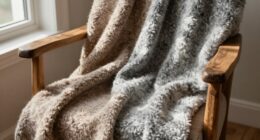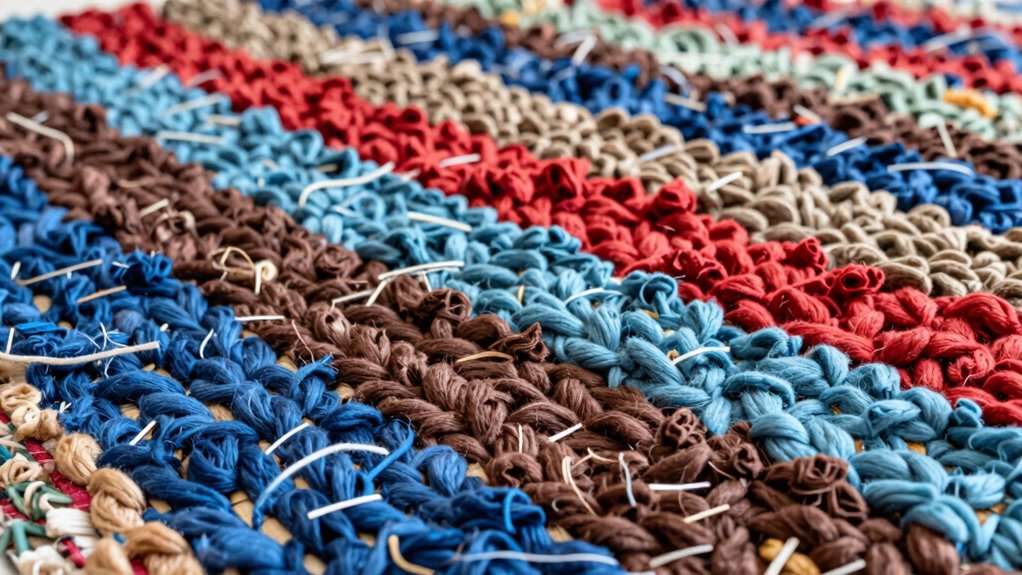
Recycled fiber rugs are made from materials like plastic bottles, textile scraps, and industrial waste, transformed into fibers through sustainable processes. The type of fiber—such as recycled cotton, polyester, or natural fibers—affects the rug’s durability and softness. Be mindful of chemical treatments, dyes, and additives used, as these can impact safety and environmental health. To choose the best eco-friendly option, learn more about what to watch for in sustainable rug manufacturing.
Key Takeaways
- Recycled fiber rugs are made from post-consumer plastics, textile scraps, and industrial waste transformed into durable, eco-friendly fibers.
- Common fibers include recycled polyester (rPET), cotton, wool, jute, sisal, and hemp, each affecting durability and softness differently.
- Watch for chemical treatments, dyes, and additives like flame retardants or antimicrobial agents, which may impact indoor air quality and health.
- Quality indicators include fiber tightness, construction durability, eco-certifications, and eco-friendly dyes; avoid rugs with chemical odors or weak spots.
- Proper care and selecting rugs with responsible sourcing and low chemical emissions ensure safety, longevity, and environmental sustainability.
What Are Recycled Fiber Rugs Made Of?
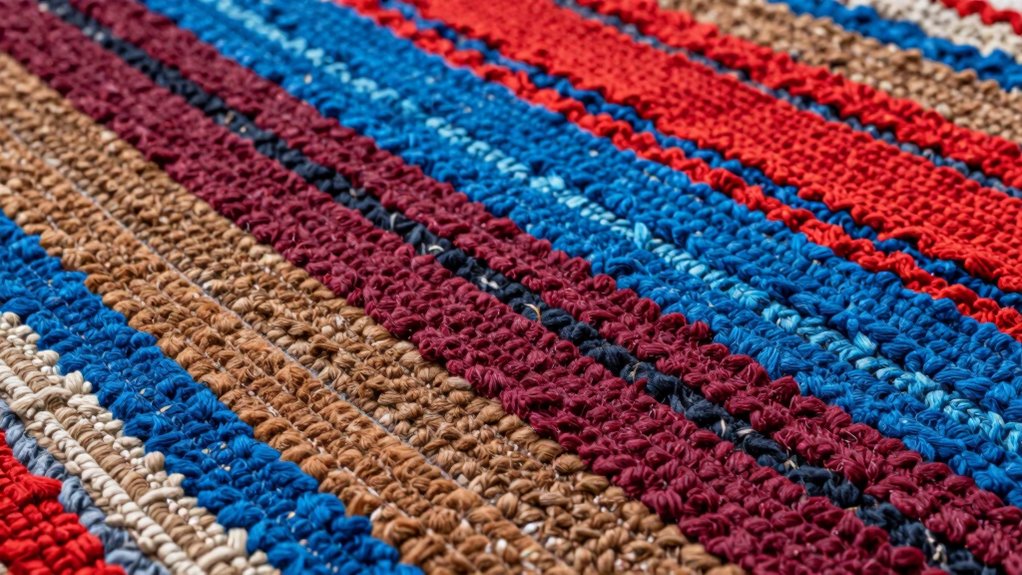
Recycled fiber rugs are made from a variety of post-consumer and industrial materials that have been repurposed into new fibers. This process begins with sustainable sourcing, where materials like plastic bottles, textile scraps, and industrial waste are collected responsibly. The fiber recycling process involves cleaning, shredding, and transforming these materials into durable fibers suitable for rug production. By choosing recycled fibers, you participate in reducing waste and conserving natural resources. These fibers can come from synthetic plastics or natural fibers that have been processed to create eco-friendly alternatives to virgin materials. The focus on sustainable sourcing and efficient fiber recycling makes recycled fiber rugs an environmentally conscious choice for your home. Additionally, advancements in fiber recycling technology continue to improve the quality and sustainability of these eco-friendly products.
How Do Material Choices Affect the Durability and Feel of Recycled Rugs
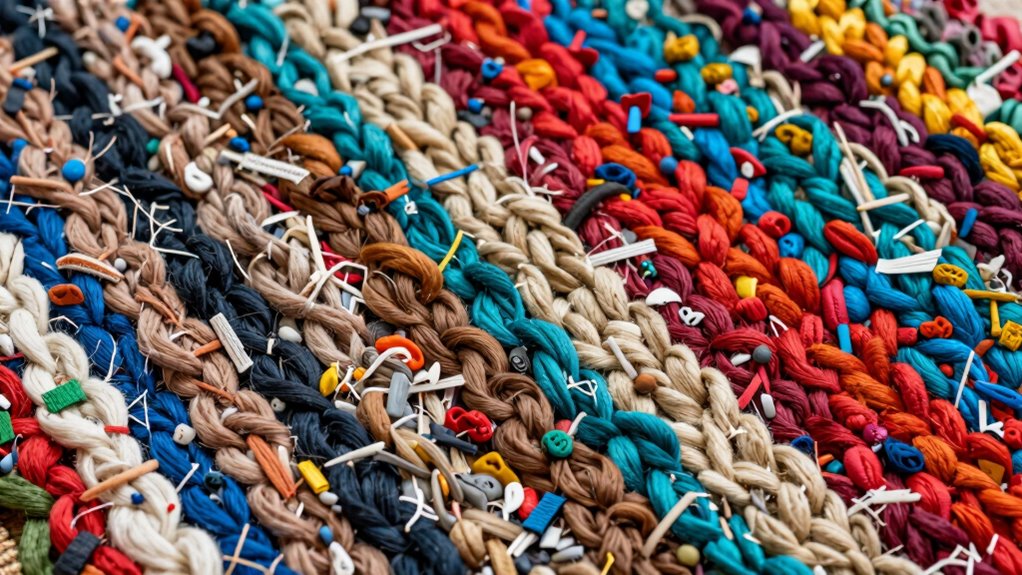
The choice of materials considerably influences both the durability and feel of recycled rugs. Material durability varies depending on fiber type; some fibers, like recycled nylon, tend to withstand high traffic better, ensuring the rug lasts longer. Others, such as recycled cotton, may be softer but wear down more quickly. Rug softness is also affected by fiber selection and manufacturing techniques, with softer materials providing a more comfortable feel underfoot. If you prioritize longevity, opt for sturdy fibers, but if comfort is key, choose softer recycled fibers—even if they may require more frequent replacement. Understanding how different material choices impact durability and rug softness helps you select a recycled rug that balances resilience with comfort, meeting your specific needs and lifestyle. Additionally, fiber type plays a crucial role in how the rug responds to environmental factors like humidity and sunlight, further influencing its lifespan.
Common Types of Recycled Fibers Used in Rugs
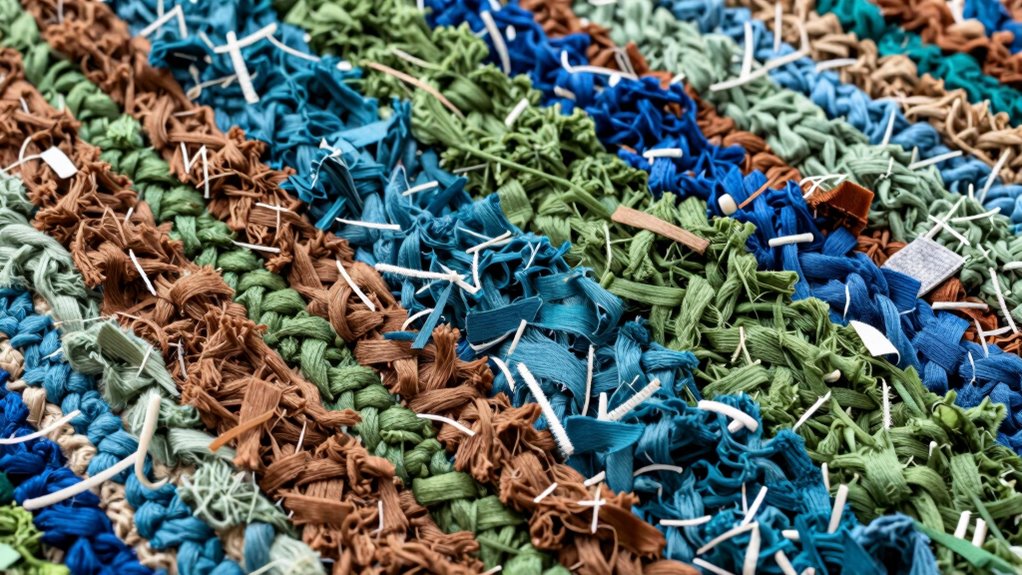
Recycled fibers come in various forms, each offering unique qualities for rugs. You might find rugs made from recycled cotton, which adds softness, or polyester derived from plastic bottles for durability. Natural fibers like wool also serve as sustainable options, giving your rug both style and eco-friendliness. Incorporating foam rolling techniques can enhance overall recovery and promote better HRV, making your routine more effective.
Recycled Cotton Content
Cotton fibers are among the most common recycled materials found in eco-friendly rugs, offering both sustainability and durability. Recycled cotton often comes from textile scraps, manufacturing leftovers, or old garments, making it a smart choice for sustainable sourcing. These fibers undergo fiber recycling processes that clean, break down, and reform the material into usable yarns. This not only reduces waste but also minimizes the need for new cotton cultivation, conserving water and resources. fiber recycling processes also help improve the quality and consistency of recycled cotton fibers, ensuring they are suitable for high-quality rug production. Recycled cotton adds a soft, natural feel to rugs while maintaining strength. When shopping, look for rugs made from recycled cotton that clearly state their fiber recycling processes and sustainable sourcing practices. This ensures you’re choosing a product that’s environmentally responsible and built to last.
Polyester Fiber Sources
Polyester fibers are a popular choice for eco-friendly rugs, especially when sourced from recycled materials. These synthetic alternatives often come from plastic bottles and other PET waste, repurposed through fiber recycling processes. The recycling process involves cleaning, melting, and extruding plastic into new fibers, reducing waste and conserving resources. Recycling fiber materials helps lower the environmental impact of manufacturing. Recycled polyester, or rPET, offers durability, stain resistance, and affordability, making it a common option in rug production. Many manufacturers prefer recycled polyester because it maintains quality while supporting sustainability goals. However, it’s essential to verify the source, as some recycled fibers may contain residual chemicals from their previous use. Overall, recycled polyester provides an effective, eco-conscious fiber option for modern rug manufacturing.
Wool and Natural Fibers
Wool and natural fibers are increasingly popular choices for eco-friendly rugs because of their sustainability and durability. Recycled wool, often sourced through sustainable sourcing practices, offers excellent insulation and resilience. Natural fibers like jute, sisal, and hemp are also common, providing eco-conscious options with strong fiber blending potential. These fibers are often recycled from textile waste or post-consumer products, reducing landfill impact. When choosing a recycled fiber rug, consider how fiber blending enhances strength, texture, and appearance. Additionally, look for rugs made from fibers that are ethically sourced and processed with eco-friendly methods. The combination of natural fibers and recycled content ensures sustainability without sacrificing quality or style. This makes wool and natural fibers ideal for creating environmentally responsible, long-lasting rugs. Incorporating fabric waste reduction techniques in production can further enhance the eco-friendliness of recycled fiber rugs.
Chemical Treatments and Additives in Recycled Fiber Rugs
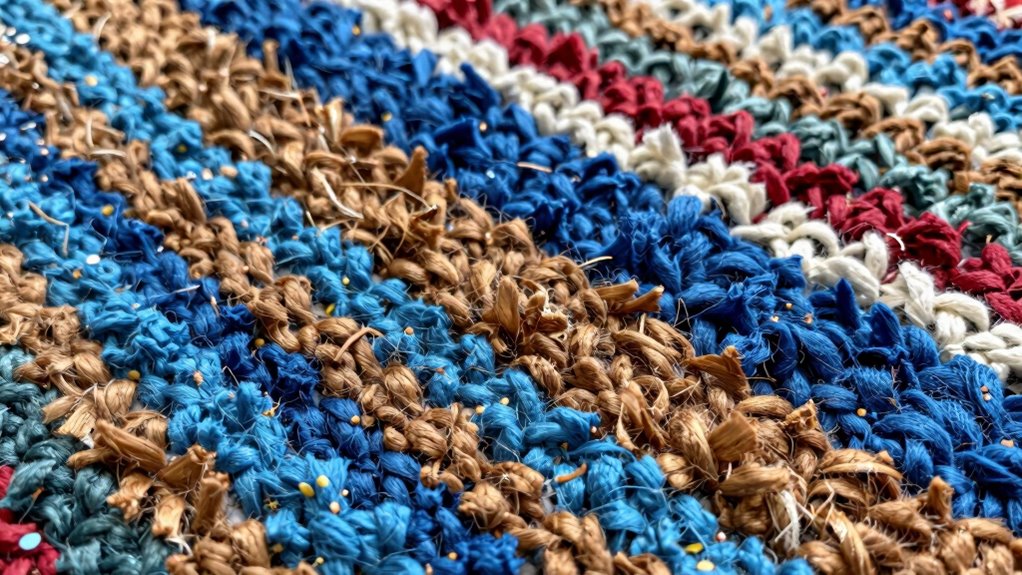
Chemical treatments and additives are commonly used to improve the durability and appearance of recycled fiber rugs. You should consider the types of chemicals applied and the additives used, as they directly affect the rug’s quality and safety. It’s also important to understand the potential health and environmental risks associated with these treatments. For example, some treatments may involve urban activities that could introduce pollutants or toxins into the environment.
Types of Chemical Treatments
Have you ever wondered how recycled fiber rugs achieve durability and stain resistance? The answer lies in various chemical treatments applied during manufacturing. These treatments can include flame retardants, antimicrobial agents, and stain repellents. While effective, they may leave behind chemical residues that could affect indoor air quality. It’s important to consider treatment safety, especially if you have allergies or sensitivities. Some treatments use formaldehyde-based chemicals, which can emit volatile organic compounds (VOCs). Others involve polymer coatings that provide water and stain resistance. Chemical residues may linger if not properly rinsed or cured. Treatments are often tested for safety, but standards vary. Avoid rugs with excessive chemical odors or visible chemical residues to ensure a healthier environment. Additionally, choosing rugs with low chemical emissions can help reduce potential health risks.
Common Additives Used
Recycled fiber rugs often contain various additives that enhance their performance and appearance. These include dyeing techniques to achieve vibrant colors and backing materials that improve durability and stability. Additives can also help resist stains, fading, and mold growth. Understanding these common additives helps you assess quality and safety.
| Additive Type | Purpose |
|---|---|
| Chemical dyes | Bright, durable coloration |
| Backing materials | Structural stability |
| Additives for UV resistance | Protects against sun damage |
Being aware of these additives ensures you choose rugs suited to your needs, especially if you’re concerned about longevity or environmental impact.
Health and Environmental Risks
Although recycled fiber rugs often contain additives to improve their look and durability, these substances can pose health and environmental risks. Chemical treatments and dyes may release volatile organic compounds (VOCs) that affect indoor air quality and increase your risk of chemical exposure. These chemicals can linger in the air, especially in poorly ventilated spaces, causing respiratory issues or allergic reactions. It’s essential to be aware of potential hazards. Additionally, the use of high-quality projectors in home theaters can help mitigate some environmental impacts by reducing the need for frequent replacements due to poor image quality.
- Off-gassing of VOCs can persist for weeks after installation
- Some dyes contain heavy metals or toxic chemicals
- Formaldehyde-based treatments may be present
- Allergens from chemical residues can cause sensitivities
- Limited regulation means harmful chemicals might go unnoticed
Always check product labels and opt for rugs with low or no chemical treatments to protect your health and environment.
How to Assess the Quality of a Recycled Fiber Rug
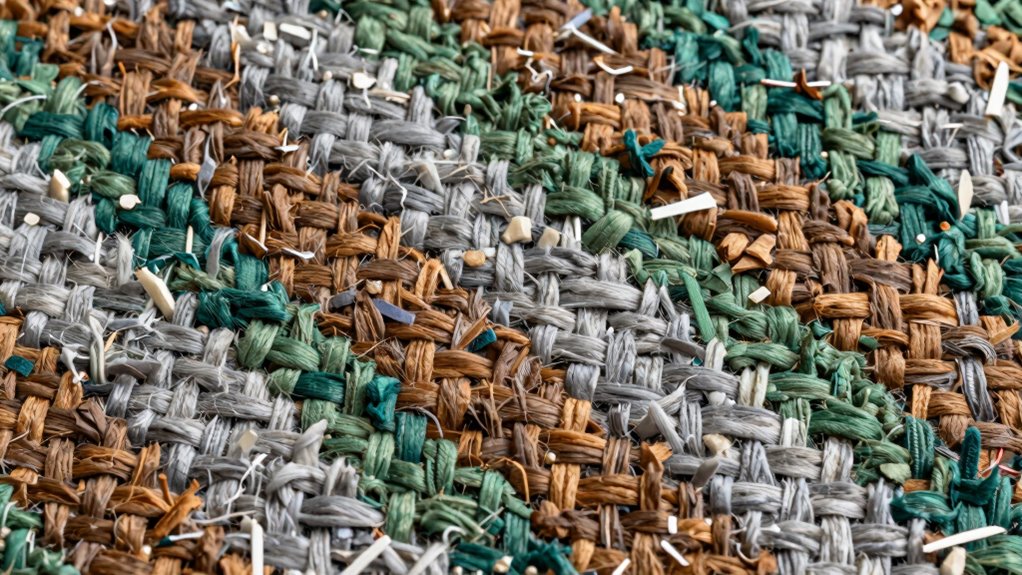
Evaluating the quality of a recycled fiber rug involves paying close attention to its construction, materials, and overall feel. Start by examining the rug’s fibers to confirm they’re tightly woven and durable, which indicates good manufacturing standards. Look for signs of uneven stitching, loose threads, or weak spots that could lead to faster wear. Check the sourcing information to verify the rug comes from sustainable sources, supporting eco-friendly practices. Feel the texture—high-quality recycled fiber rugs should feel sturdy yet soft. Also, validate labels and certifications that highlight adherence to sustainable sourcing and manufacturing standards. A well-made recycled fiber rug balances durability, eco-consciousness, and craftsmanship, ensuring your investment lasts while minimizing environmental impact. Additionally, understanding fiber types can help you choose a rug that best fits your environmental values and usage needs.
Tips for Choosing Safe, Eco-Friendly Recycled Rugs
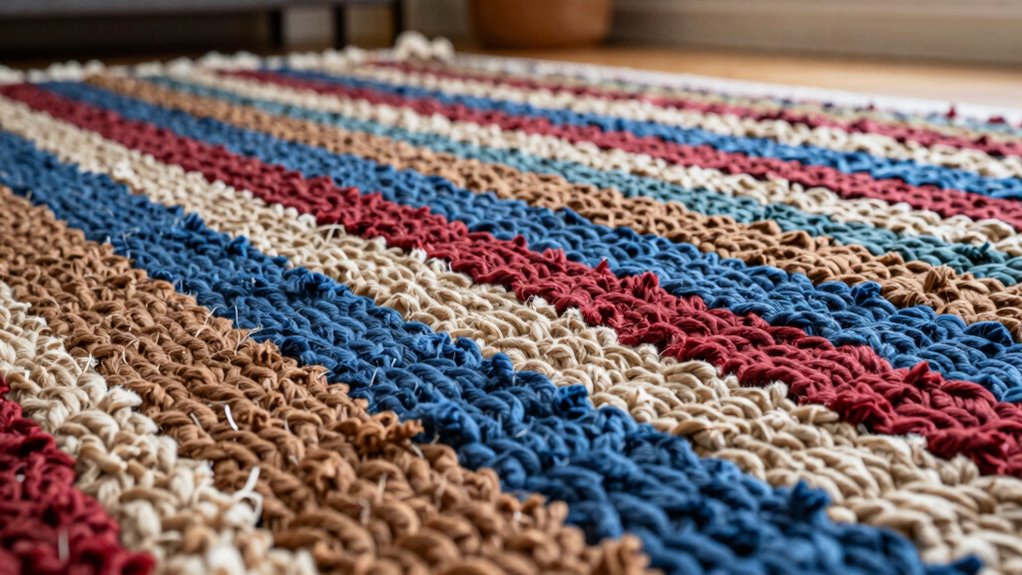
Choosing safe, eco-friendly recycled rugs starts with checking for certifications and labels that confirm the materials meet environmental standards. Look for eco labels like Green Seal or OEKO-TEX, which indicate low chemical content and sustainable practices. Prioritize rugs made with upcycling techniques that repurpose waste creatively, reducing environmental impact. Verify that the dyes used are eco friendly dyes, free from harmful chemicals. Pay attention to the rug’s manufacturing process, ensuring it minimizes waste and energy consumption. Additionally, inquire about the sourcing of recycled fibers to ensure responsible harvesting. By focusing on these factors, you’ll select rugs that are both safe for your home and beneficial for the planet. This approach guarantees a durable, stylish choice that aligns with eco-conscious values.
Are Recycled Fiber Rugs Good for High-Traffic Areas?

Recycled fiber rugs can be a practical choice for high-traffic areas, but their durability depends on the materials and construction. Rugs made through sustainable manufacturing often use tightly woven fibers that hold up well under frequent foot traffic. Look for options with dense textures and strong backing to prevent quick wear. Recycled fibers like nylon or PET tend to be resilient, making them suitable for busy spaces. Additionally, choosing eco-friendly rugs can help maintain indoor air quality since they typically emit fewer volatile organic compounds (VOCs) compared to synthetic options. Properly constructed recycled fiber rugs can withstand daily use without sacrificing sustainability or indoor environment health. Just keep an eye on the quality and construction to ensure your rug performs well over time.
Caring for Recycled Rugs to Maximize Their Longevity
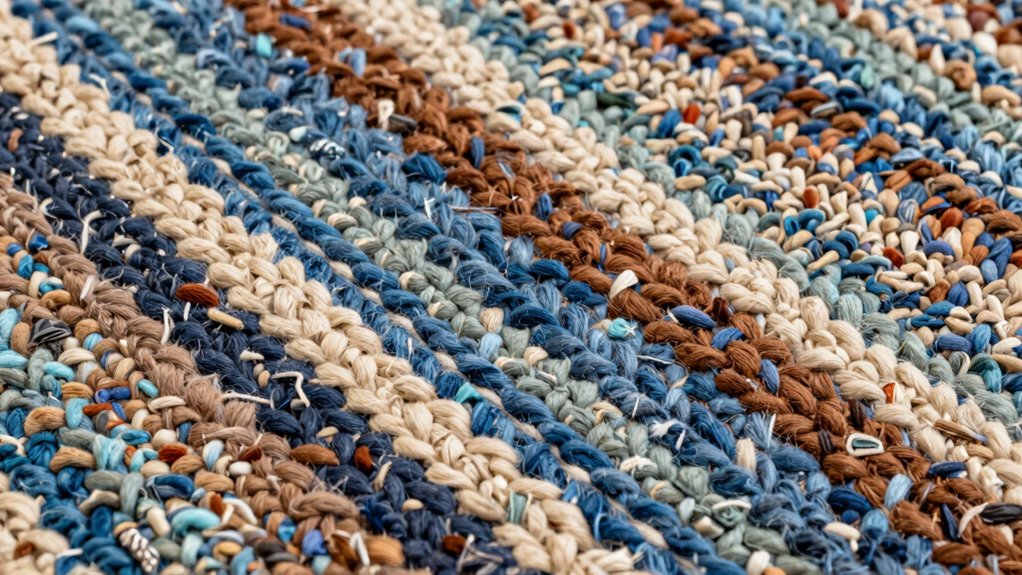
To keep your recycled fiber rug looking its best and guarantee it lasts for years, regular maintenance is essential. Proper care prevents dirt buildup, stains, and wear, extending its lifespan. Start by vacuuming frequently to remove surface dirt. When dealing with spills, act quickly to prevent staining. Use gentle upholstery cleaning techniques for deep cleaning without damaging fibers. For pet stain removal, opt for enzyme-based cleaners to break down organic stains safely. Avoid harsh chemicals that can weaken fibers. Rotate the rug regularly to ensure even wear. Keep your rug out of direct sunlight to prevent fading. Consider professional cleaning periodically to maintain its appearance and durability. Proper maintenance keeps your recycled fiber rug vibrant and functional for years to come.
- Regular vacuuming and rotation
- Immediate spill cleanup
- Gentle upholstery cleaning methods
- Effective pet stain removal techniques
- Professional cleaning when needed
Frequently Asked Questions
Are Recycled Fiber Rugs Hypoallergenic?
Recycled fiber rugs can be hypoallergenic, but it depends on the materials used and your allergy concerns. If you have material sensitivity, check if the rug is made from natural fibers like cotton or wool, which tend to be less allergenic. Some recycled fibers might trap dust or allergens, so clean regularly. Always verify the specific rug’s material details to confirm it suits your allergy needs and minimizes potential reactions.
Can Recycled Fiber Rugs Be Customized in Size and Design?
Yes, you can customize recycled fiber rugs in size and design. Many manufacturers offer custom size options, so you can get the perfect fit for your space. Plus, design personalization is often available, allowing you to choose patterns, colors, and styles that match your decor. Just check with the supplier about their specific customization options, and they’ll help you create a unique rug tailored to your preferences.
How Eco-Friendly Are the Manufacturing Processes of Recycled Rugs?
You might find it surprising, but the manufacturing processes of recycled rugs are quite eco-friendly. They often involve sustainable manufacturing practices that reduce waste and energy use. By choosing rugs made through eco-conscious production, you support environmental preservation. These processes minimize pollution, conserve resources, and promote sustainability. So, when shopping, look for brands committed to eco-friendly methods — it’s a simple way to make a positive impact while enjoying a stylish, eco-conscious rug.
Do Recycled Fiber Rugs Emit Any Odors or Chemicals Over Time?
Recycled fiber rugs generally don’t emit strong odors or chemicals over time, but some may initially have a mild chemical emissions from manufacturing or treatments. The odor longevity varies depending on the rug’s materials and cleaning methods. To guarantee comfort, look for rugs labeled as low-chemical or odor-free, and give new rugs time to air out before use. Proper ventilation helps reduce any lingering odor and chemical emissions efficiently.
Are Recycled Fiber Rugs Suitable for Outdoor Use?
Absolutely, recycled fiber rugs can handle outdoor conditions, but be mindful. Their outdoor durability depends on weather resistance, meaning they resist rain, sun, and snow. Look for rugs specifically labeled for outdoor use, as they’re crafted to withstand the elements. If you want your rug to endure, choose options with strong fibers and weatherproof backing. Proper care guarantees your recycled fiber rug stays vibrant and resilient, no matter the weather.
Conclusion
Think of recycled fiber rugs as a garden reborn from old seeds—you get beauty and sustainability if you choose wisely. Just like tending a garden requires care and attention, caring for your rug guarantees it blooms for years. By understanding its roots and treating it gently, you help your rug flourish, turning your space into a lush, eco-friendly oasis. With mindful choices, your recycled rug can be a lasting symbol of renewal and harmony.