Warm earth tones are trending again, and you can incorporate them sustainably by choosing eco-friendly materials like organic fabrics, reclaimed wood, and natural dyes. Opt for low-impact paints and eco-conscious brands that prioritize transparency and ethical practices. Incorporate upcycled decor and vintage furniture for authenticity. Building a sustainable wardrobe with versatile, natural-colored pieces supports your eco goals. Keep waste minimal with DIY accents and mindful shopping—continue exploring ways to create cozy, eco-friendly spaces with these timeless hues.
Key Takeaways
- Choose eco-friendly materials like organic fibers, reclaimed wood, and natural dyes to ensure sustainability and warmth.
- Use natural pigments and biodegradable finishes for walls, furniture, and decor to minimize environmental impact.
- Support ethical brands that prioritize transparent sourcing, traditional techniques, and fair labor practices.
- Incorporate reclaimed and upcycled elements in your space to add authenticity and reduce waste.
- Opt for versatile, earth-toned palettes across decor and wardrobe to create timeless, eco-conscious, cozy environments.
Why Warm Earth Tones Are Trending in Interiors and Fashion
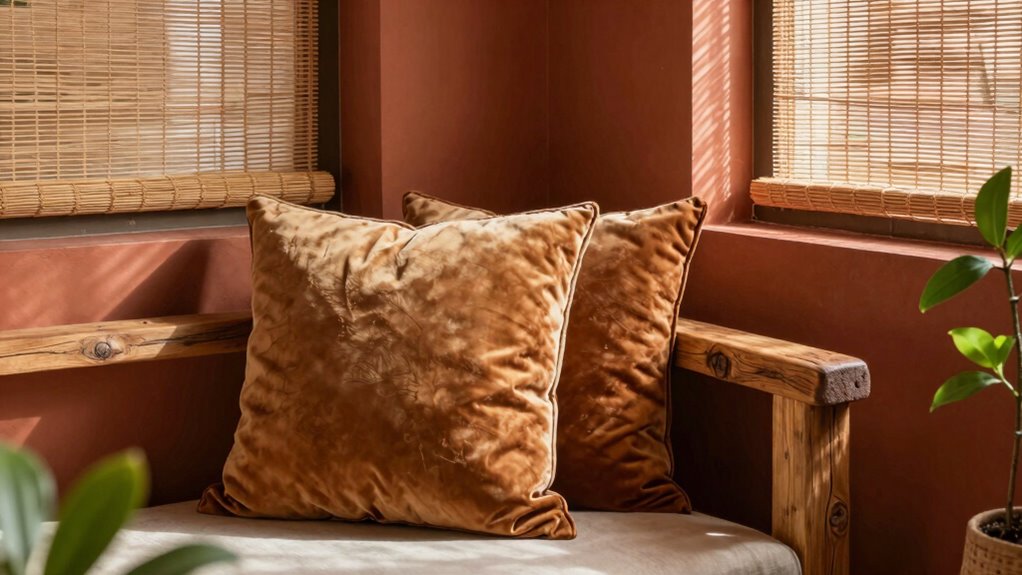
Have you noticed how warm earth tones are everywhere right now? They’re making a big splash in both interior design and fashion because of their powerful impact on color psychology. These hues evoke feelings of comfort, stability, and connection to nature, making spaces and outfits feel welcoming and grounded. Seasonal trends often favor earth tones because they align with a desire for coziness during colder months and a natural aesthetic year-round. Designers and brands are embracing these shades to tap into consumers’ need for authenticity and warmth. Plus, their versatility makes them easy to mix and match, creating timeless looks that resonate emotionally. That’s why warm earth tones have become a go-to choice, capturing current moods and seasonal shifts effortlessly. Incorporating color psychology principles can deepen the emotional impact of these hues in your personal style and home decor.
How to Choose Eco-Friendly Materials for Earth Tones

Choosing eco-friendly materials for earth tones starts with understanding the options that prioritize sustainability. Look for organic fibers like organic cotton, hemp, or linen, which are grown without harmful pesticides or synthetic chemicals. These fibers not only reduce environmental impact but also offer natural textures that enhance earthy palettes. Pair these fibers with natural dyes derived from plants, roots, or minerals, to create rich, authentic colors without synthetic chemicals. When selecting fabrics or materials, check for certifications such as GOTS or OEKO-TEX, which verify eco-friendly practices. Incorporating hormetic principles into your material choices can further enhance overall wellness by promoting resilience and health. By selecting organic fibers and natural dyes, you ensure your space or wardrobe reflects the warmth of earth tones while supporting sustainable production methods. This approach helps you create beautiful, eco-conscious environments rooted in nature.
Eco-Friendly Paints and Dyes for Rich, Sustainable Walls and Fabrics

You can enhance your space with eco-friendly paints and dyes made from natural pigments, which bring rich color without harmful chemicals. Choosing products from low-emission manufacturing processes guarantees your walls and fabrics stay beautiful and safe for the environment. Safe application techniques help you minimize waste and maintain a healthier home while embracing warm earth tones. Incorporating Free Floating design principles can further harmonize your outdoor and indoor spaces with sustainable aesthetics.
Natural Pigment Sources
Natural pigment sources offer an eco-friendly alternative to synthetic dyes, harnessing materials that are both sustainable and rich in earthy hues. You can explore a variety of options, such as:
- Natural mineral pigments like ochre, umber, and sienna, which provide warm, durable colors.
- Plant-based dyes derived from indigo, madder root, and turmeric, offering vibrant, renewable options.
- Clay and earth pigments that are abundant and biodegradable.
- Extracts from berries, bark, and leaves, delivering subtle, organic shades.
- Colorfastness is an important consideration, as natural pigments often require proper preparation and sealing to maintain their vibrancy over time.
These sources are renewable, non-toxic, and often require less energy to produce. By choosing natural mineral and plant-based dyes, you guarantee your walls and fabrics stay beautiful while minimizing environmental impact.
Low-Emission Manufacturing
Advances in low-emission manufacturing processes have made eco-friendly paints and dyes more accessible, allowing you to create vibrant, sustainable walls and fabrics without harming the environment. These processes often utilize solar energy, reducing reliance on fossil fuels and lowering carbon footprints. Manufacturers now prioritize water conservation by optimizing production techniques and recycling water during dyeing and painting stages. This approach also reduces water waste, supporting eco-friendly practices. By choosing low-emission paints and dyes, you help promote cleaner air and healthier ecosystems. These innovations make it easier for you to embrace earth-toned decor that’s both rich in color and environmentally responsible, ensuring your design choices contribute to a more sustainable future.
Safe Application Techniques
With eco-friendly paints and dyes becoming more accessible through low-emission manufacturing, applying them safely is the next step to guarantee your sustainability efforts truly make an impact. To do this, follow these techniques:
- Use natural pigment sourcing to ensure your paints and dyes are free from harmful chemicals.
- Opt for plant-based dyes, which are biodegradable and less toxic than synthetic options.
- Ventilate your space well during application to minimize inhalation of fumes.
- Wear protective gear like masks and gloves to avoid skin contact and inhalation risks.
How to Support Brands That Practice Ethical and Green Manufacturing

Supporting brands that prioritize ethical and green manufacturing starts with doing your research. Look for companies committed to transparency about their sourcing, production processes, and labor practices. Brands that honor cultural symbolism often incorporate traditional techniques and respectful materials, reflecting seasonal variations in their collections. By choosing these brands, you support sustainable practices that reduce environmental impact and promote fair labor standards. Check for certifications like Fair Trade or B Corp, which verify ethical commitments. Additionally, explore their storytelling to understand how they incorporate cultural symbolism and respect seasonal influences in their products. Being aware of cultural preservation efforts helps ensure that your purchases support respectful and meaningful craftsmanship. Your conscious choices can drive industry change, encouraging more brands to adopt eco-friendly practices and prioritize social responsibility. Supporting these brands helps create a more sustainable and respectful approach to earth-tone decor.
Incorporate Reclaimed and Upcycled Elements in Your Earth-Tone Decor

You can add character to your space by sourcing reclaimed materials that bring unique textures and stories. Upcycling furniture transforms old pieces into stunning, eco-friendly accents, while choosing sustainable decor tips helps you stay aligned with your environmental values. Incorporating these elements not only enhances your earth-tone aesthetic but also promotes a more mindful approach to decorating. Exploring environmentally friendly craft ideas can further inspire you to create beautiful, sustainable decor with recycled or repurposed materials.
Sourcing Reclaimed Materials
Have you considered how sourcing reclaimed materials can deepen the warmth and authenticity of your earth-tone decor? Reclaimed materials add character and sustainability to your space. To get started: 1. Seek out reclaimed wood, brick, and metal from salvage yards or online marketplaces. 2. Prioritize items that can be cleaned, restored, or repurposed easily. 3. Choose pieces dyed with eco-friendly dyes to ensure minimal environmental impact. 4. Verify the provenance to guarantee authenticity and reduce waste. Using reclaimed materials not only supports eco-conscious practices but also enhances the natural, earthy vibe you want. These elements bring texture, history, and depth to your decor, making your space uniquely yours. Incorporating reclaimed and upcycled elements creates a sustainable foundation for your warm earth-tone aesthetic. Additionally, eco-conscious practices can boost your website’s visibility and credibility with environmentally minded audiences.
Upcycling Furniture Pieces
By upcycling furniture pieces, you can effortlessly incorporate reclaimed and sustainable elements into your earth-tone decor, adding both character and environmental value. Start with vintage finishes that highlight the furniture’s history, giving each piece a unique, timeless look. Transform old tables or chairs with fresh coats of earth-tone paint or natural stains, emphasizing their rustic charm. Incorporate upcycled textiles, like repurposed upholstery or fabric covers, to add texture and warmth. These materials not only enhance the visual appeal but also reduce waste. Upcycling allows you to customize furniture to fit your style while promoting sustainability. Repurposing techniques can help you achieve a polished, eco-friendly finish. With a bit of creativity, your space will radiate warmth, authenticity, and eco-consciousness—perfect for a cozy, earth-inspired home.
Sustainable Decor Tips
Incorporating reclaimed and upcycled elements into your earth-tone decor not only enhances its warmth and authenticity but also supports sustainable living. To do this effectively, consider these tips:
- Choose furniture made from reclaimed wood, finished with biodegradable finishes to reduce environmental impact.
- Use textiles dyed with plant-based dyes for a natural, vibrant look that’s eco-friendly.
- Incorporate decorative items like vases or frames crafted from repurposed materials to add character.
- Opt for handcrafted ceramics or woven pieces that showcase sustainable craftsmanship.
- Be mindful of biodegradable finishes to ensure your decor choices remain eco-conscious and environmentally friendly.
These small changes help you build a warm, earthy space while prioritizing eco-conscious choices. By focusing on natural dyes and biodegradable finishes, you create a sustainable, beautiful home that reflects your values.
Practical Tips for Using Warm Earth Tones Without Overusing Resources

To use warm earth tones effectively without wasting resources, focus on selecting versatile shades that can be mixed and matched across different projects. This approach reduces the need for extra paint, textiles, or decor. Stick to a seasonal palette with complementary hues like terracotta, olive, and sandy beige, which work well together through thoughtful color pairing. Use these shades in various settings to maximize their impact without overconsumption.
| Color Pairing | Suitable Season |
|---|---|
| Terracotta & Sage | Autumn & Spring |
| Beige & Olive | Summer & Fall |
| Rust & Taupe | Winter & Autumn |
| Clay & Charcoal | Year-round |
| Mustard & Forest | Fall & Winter |
How to Build a Sustainable Wardrobe With Earth-Inspired Colors

Creating a sustainable wardrobe with earth-inspired colors starts with choosing versatile pieces that can be mixed and matched for various outfits. Focus on timeless designs and natural fabrics to guarantee longevity. To stay current, incorporate seasonal fashion updates by selecting items in warm tones like terracotta or olive, which reflect nature’s palette. Recognize the cultural symbolism behind earth hues—many represent stability, growth, and harmony—adding depth to your wardrobe.
- Invest in high-quality basics like neutral-toned t-shirts and trousers.
- Add statement pieces with rich earth tones to elevate your look.
- Rotate seasonal items to prevent overbuying and extend their lifespan.
- Support brands that prioritize sustainable practices and cultural respect.
Simple Ways to Reduce Waste When Decorating With Earth Hues

Reducing waste when decorating with earth hues starts with mindful sourcing and choosing quality pieces that last. Opt for furniture and decor made from sustainable materials, and consider recycling fashion by repurposing or upcycling items instead of discarding them. When shopping online, look for brands that use biodegradable packaging to lessen environmental impact. Avoid single-use plastics and excessive wrapping, which contribute to landfill waste. Incorporate vintage or secondhand pieces, which reduce demand for new manufacturing. Prioritize local artisans to cut transportation emissions and support sustainable practices. By making intentional choices, you extend the lifespan of your decor and minimize waste, creating a beautiful, eco-friendly space that aligns with your values.
What Certifications Guarantee Sustainability in Earth-Tone Products
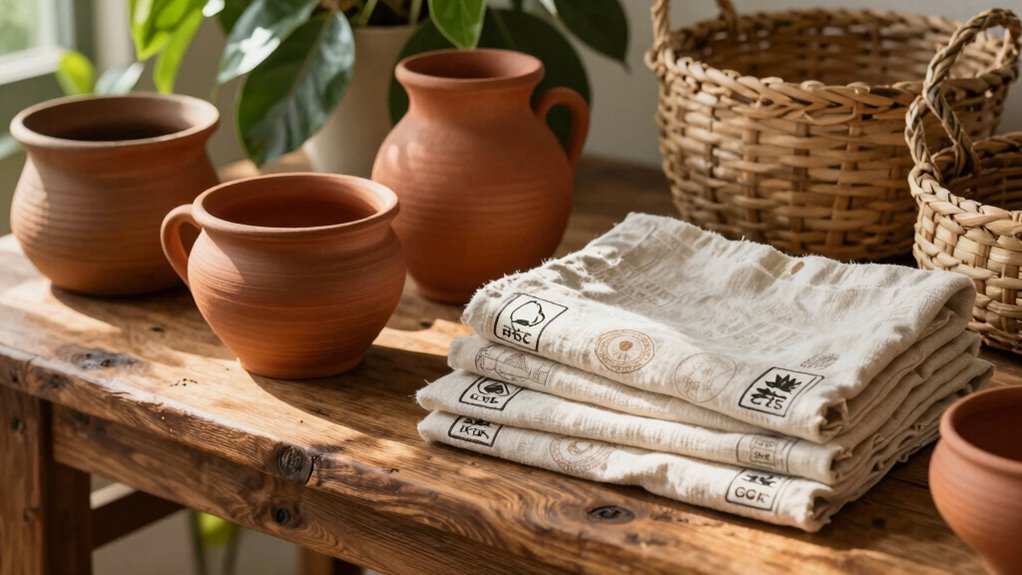
When choosing earth-tone products, verifying their sustainability is key to making environmentally responsible decisions. Certifications help guarantee your choices support eco-friendly practices. Here are key certifications to look for:
- GOTS (Global Organic Textile Standard) – guarantees organic fiber sourcing and ethical production.
- OEKO-TEX Standard 100 – ensures textiles are free from harmful chemicals, supporting healthier environments.
- Fair Trade Certification – confirms fair labor practices and sustainable sourcing.
- Organic Content Standard (OCS) – verifies natural dye techniques and organic fiber sourcing.
These certifications validate that products are made with eco-conscious methods, like natural dye techniques and organic fibers, aligning your décor with sustainable principles. Always check for official labels to confidently select earth-tone items that prioritize the planet.
DIY Ideas for Adding Warm Earth Accents Sustainably

Adding warm earth accents to your home can be both stylish and sustainable with simple DIY projects. Start by using natural fibers like jute, hemp, or organic cotton for pillows, rugs, or wall hangings. These materials are eco-friendly and add texture that enhances warm tones. For a splash of color, opt for plant-based dyes, which are made from natural sources like indigo, turmeric, or beetroot. You can dye your existing textiles or create new pieces with these dyes to achieve rich, earthy hues without harmful chemicals. Combining natural fibers with plant-based dyes allows you to craft unique accents that reflect your style while reducing environmental impact. DIY projects like these are easy, affordable, and perfect for adding warm earth tones sustainably to any space.
Frequently Asked Questions
How Can I Identify Genuinely Eco-Friendly Earth Tone Products?
To identify genuinely eco-friendly earth tone products, look for clear eco label verification from reputable organizations, ensuring the product meets environmental standards. Check if the brand emphasizes sustainable sourcing, like responsibly harvested materials or eco-friendly dyes. Do your research on the company’s practices, and prioritize those transparent about their supply chain. By doing so, you can confidently choose earth tone items that support sustainability and reduce environmental impact.
Are There Affordable Options for Sustainable Earth-Tone Decor?
Finding budget-friendly materials for sustainable earth-tone decor is like discovering a hidden gem. You can explore thrift stores, online marketplaces, and local artisans for cost-effective options that don’t compromise eco-friendliness. Look for reclaimed wood, natural fibers, and recycled metals, which are often more affordable. By choosing these sustainable materials, you’ll enjoy beautiful earth-tone decor without breaking the bank, making eco-conscious living both stylish and accessible.
How Do I Maintain Earth-Tone Materials to Ensure Longevity?
To maintain earth-tone materials and guarantee their longevity, you should practice eco-friendly maintenance by regularly cleaning with gentle, natural cleaners. Avoid harsh chemicals that can damage the material over time. Protect surfaces from excessive sunlight and moisture, and use coasters or mats to prevent scratches. Regular upkeep not only preserves the aesthetic appeal but also extends the lifespan of your decor, supporting sustainable choices and maximizing material longevity.
Can Natural Earth Dyes Be Used Effectively on All Surfaces?
Yes, natural earth dyes made from plant-based pigments can be used effectively on many surfaces. To guarantee good results, you should consider appropriate dye application techniques, such as pre-treating fabrics or surfaces and using proper mordants. For porous surfaces like wood or clay, apply multiple coats and seal the dye afterward. Testing on small areas first helps you gauge color absorption and longevity, ensuring vibrant, sustainable results.
What Are Common Mistakes to Avoid When Decorating Sustainably With Earth Tones?
Imagine decorating your home with earthy hues but overusing neutral shades, making spaces dull. Avoid this mistake by balancing warm earth tones with accent colors for vibrancy. Also, don’t neglect indoor air quality; choose low-VOC natural dyes and paints. A common error is ignoring these aspects, which can compromise sustainability and comfort. Stay mindful of color diversity and material safety, ensuring your design is both eco-friendly and lively.
Conclusion
Embracing warm earth tones is like planting seeds of sustainability in your life’s canvas. By choosing eco-friendly materials and mindful brands, you’re painting a future where beauty and responsibility coexist. Think of your decor and wardrobe as a garden—nurture it with reclaimed treasures and sustainable practices. Every conscious choice adds a vibrant hue to the masterpiece of a greener, more beautiful world, where your style blooms with purpose and passion.