Washable rugs are designed for easy cleaning, but they can shed microfibers during washing, which may impact indoor air quality. Shedding is normal at first, especially with synthetic fibers, but using high-quality, natural fiber materials and proper care can reduce this. Factors like fiber type, washing frequency, and rug design influence shedding levels. To keep your home healthier and your rug looking great, learn how to select and maintain low-shedding options.
Key Takeaways
- Washable rugs are designed for easy cleaning, but initial shedding of tiny fibers can occur, which usually diminishes with proper care.
- Shedding results from loose fibers in low-quality or synthetic materials and is often exacerbated by frequent washing and agitation.
- Choosing natural fibers like wool or cotton and handling rugs gently can significantly reduce microfiber shedding.
- Regular vacuuming and careful washing with gentle detergents help minimize fiber release and maintain rug quality.
- Visible fiber shedding may indicate wear or low-quality materials, but proper maintenance can limit microfiber contamination and improve indoor air quality.
What Are Washable Rugs and How Do They Differ From Traditional Rugs?
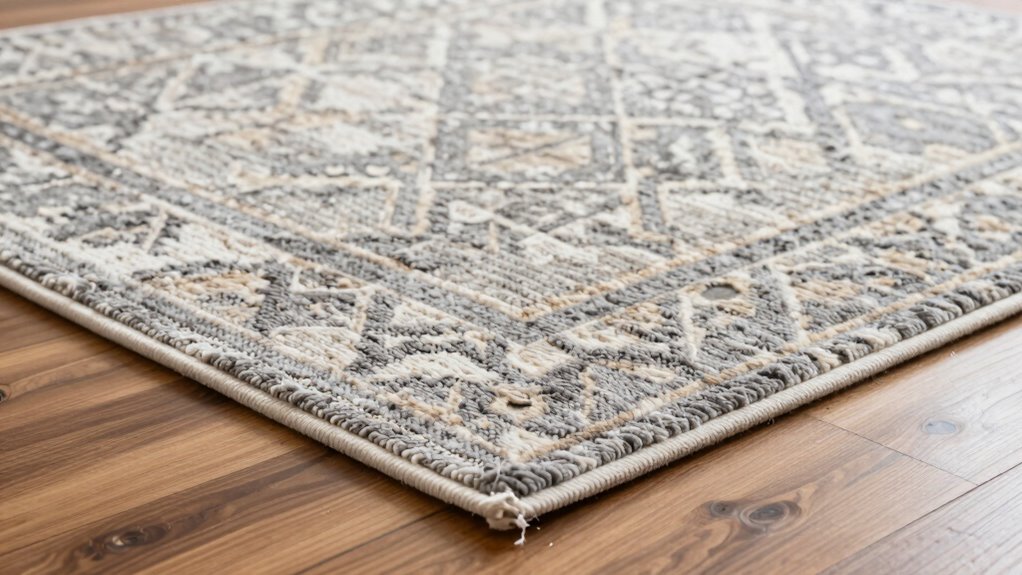
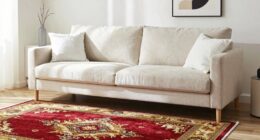
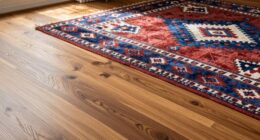
Have you ever wondered what makes washable rugs different from traditional ones? Washable rugs are designed with materials that allow easy cleaning and maintenance, making them more versatile. Their rug design often incorporates durable, stain-resistant fibers that can withstand frequent washing without damage. Unlike traditional rugs, which are usually made from wool or synthetic fibers that require dry cleaning or special care, washable rugs are built for convenience. When considering rug placement, think about areas prone to spills or dirt, like kitchens or entryways, where washable rugs truly shine. Their construction ensures they hold up well after multiple washings, maintaining their look and comfort. Additionally, the fiber composition of washable rugs contributes to their durability and ease of cleaning, setting them apart from traditional options. This practicality makes washable rugs an excellent choice for busy households seeking both style and easy upkeep.
Why Do Washable Rugs Shed Microfibers?

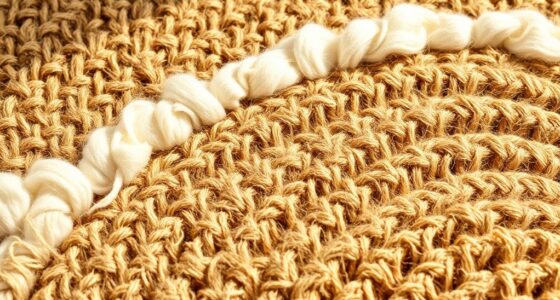
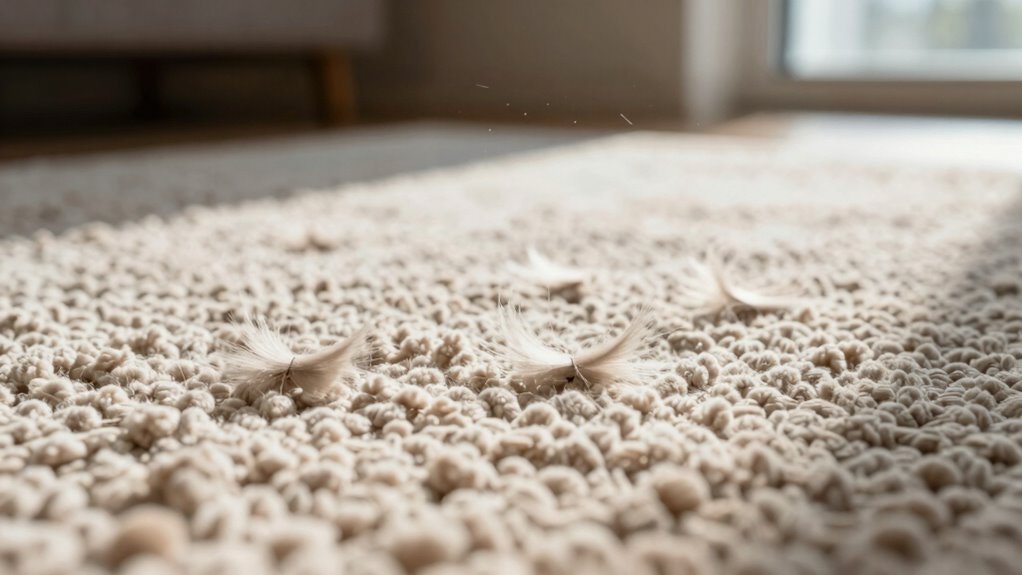
Although washable rugs are designed for easy cleaning, they often shed microfibers during washing and use. This shedding occurs because the fibers are not always securely bonded, especially with low-quality materials. When you wash the rug, tiny fibers loosen due to mechanical agitation, exceeding the rug’s fiber filtration capacity. Over time, this reduces rug durability, making it more prone to wear and tear. The shedding isn’t necessarily a sign of poor quality but a natural result of fiber friction and agitation during cleaning. To minimize shedding, choose rugs with tightly woven fibers and good fiber filtration. Proper care helps maintain rug integrity and extends its lifespan, reducing microfiber loss over time. Additionally, understanding the creative storytelling behind product design can help consumers select higher-quality options that prioritize fiber retention and durability.
How Much Microfiber Shedding Is Normal When You First Use a Rug?
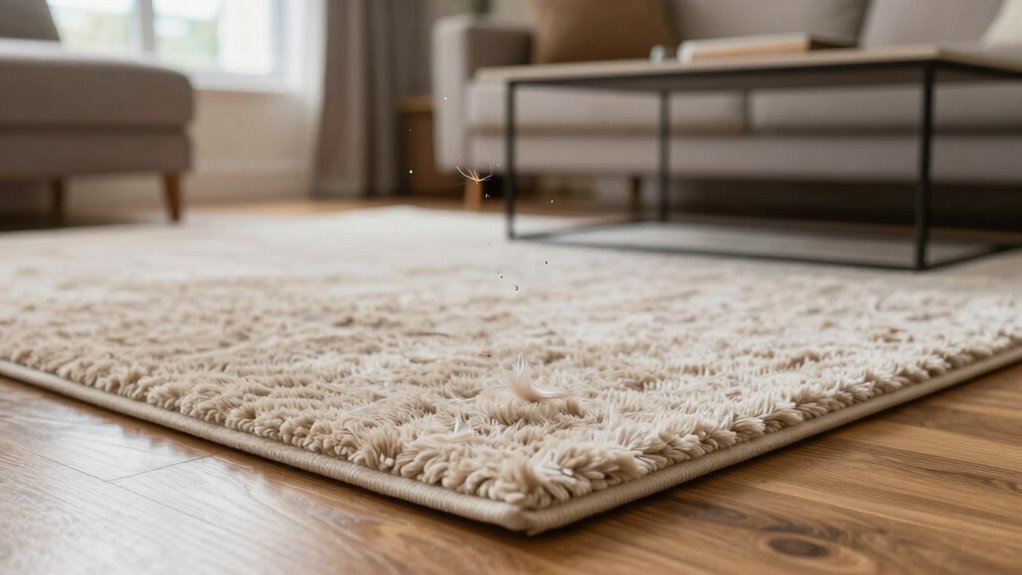
When you first start using a washable rug, some microfiber shedding is normal as the fibers settle into their environment. This initial shedding doesn’t mean your rug is defective; it’s part of the process. Typically, you can expect:
- A small amount of fibers on your hands or vacuum, which lessens after a few washes.
- Minimal impact on fiber durability—your rug’s fibers are designed to withstand this early shedding.
- No significant change in rug aesthetics, as the shedding usually stops quickly, restoring its visual appeal.
While a little fiber loss is normal initially, it shouldn’t compromise the rug’s long-term durability or beauty. Regular washing helps fibers settle, ensuring your rug remains both functional and attractive.
What Factors Influence Microfiber Shedding in Washable Rugs?

The materials used in your rug play a big role in how much microfiber sheds. How often you wash it can also affect shedding levels, with more frequent washes sometimes increasing loose fibers. Additionally, the rug’s thickness influences shedding, as thinner rugs tend to release more fibers during cleaning.
Material Composition Impact
Material composition plays a crucial role in determining how much microfiber shedding occurs in washable rugs. The fibers used directly impact durability and shedding levels. For example:
- Synthetic fibers like polyester and nylon shed more, especially if they’re not designed for fiber recycling, leading to increased microfibers in your home.
- Natural fibers such as wool or cotton tend to shed less, but their rug design can influence how much debris is released during washing.
- Blended materials may seem sturdy, but poorly mixed fibers can break down faster, causing more shedding over time.
- Incorporating eco-friendly fiber recycling into manufacturing processes can significantly reduce microfiber release and environmental impact.
Choosing rugs made with eco-friendly fiber recycling and thoughtful rug design minimizes microfiber release. Your choices matter—opt for quality to protect your space and the environment.
Washing Frequency Effects
Frequent washing can substantially increase microfiber shedding from your washable rugs, especially if you don’t adjust your cleaning routine accordingly. Repeated washing weakens the fibers, reducing rug durability and making fibers more likely to shed over time. This constant agitation can also cause color fading, dulling the vibrancy of your rug’s design. To minimize shedding, avoid over-washing and use gentle cycles with mild detergents. Allowing sufficient time between washes helps preserve fabric integrity, maintaining both the rug’s longevity and appearance. Proper care not only extends your rug’s lifespan but also helps prevent the buildup of microfiber debris in your environment. Being aware of fiber degradation and how washing impacts it can guide you in maintaining your rug’s quality. By moderating washing frequency, you help preserve the rug’s structural strength and vibrant colors, reducing the amount of microfiber debris released into your environment. Proper care not only extends your rug’s lifespan but also keeps shedding to a minimum.
Rug Thickness Factors
Thicker rugs tend to shed more fibers during washing because their denser construction creates more friction and stress on individual fibers. Higher rug thickness increases fiber density, making fibers more prone to dislodging. As you wash, consider these factors:
- Increased fiber density heightens the chance of shedding due to the compactness of the material.
- Denser construction amplifies friction between fibers, leading to more fibers breaking loose.
- Thicker rugs often require more vigorous washing, which can accelerate shedding and fiber loss.
- Rug Material Composition also influences shedding, as some fibers are more susceptible to dislodging during cleaning.
Understanding these factors helps you prepare for potential shedding. While thicker, densely woven rugs may be more durable, they also demand careful washing to minimize fiber loss. Adjust your cleaning routine accordingly for longer-lasting, less shedding rugs.
Does Microfiber Shedding Affect Indoor Air Quality?
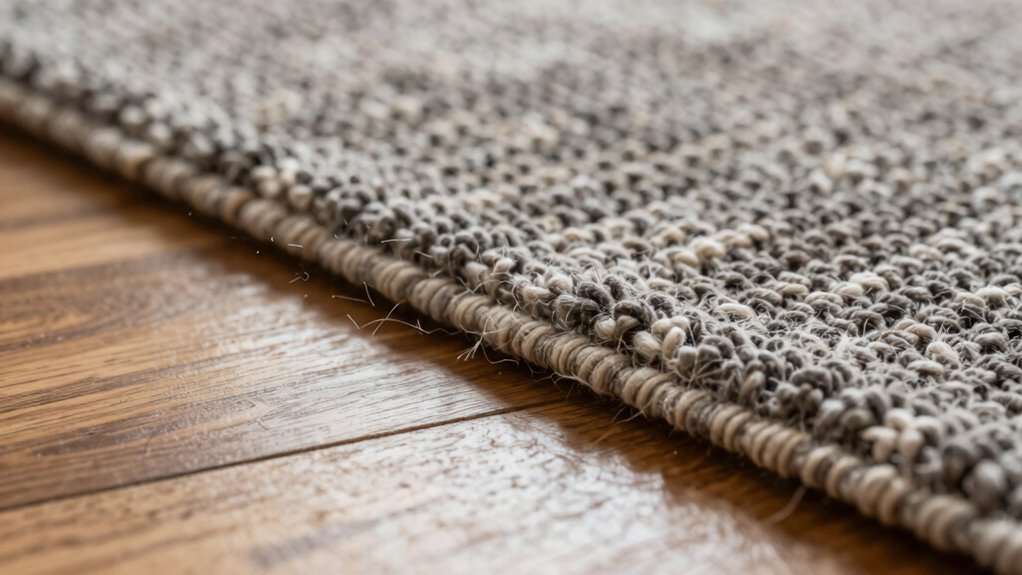
Microfiber shedding from washable rugs can directly impact indoor air quality by releasing tiny fibers into the air you breathe. These microscopic particles can linger in the air, especially in poorly ventilated spaces, potentially reducing overall air quality. If you have allergies or asthma, these shed fibers might trigger allergy symptoms or exacerbate respiratory issues. Continuous shedding means more tiny fibers floating around, which can settle on surfaces or be inhaled. While microfiber shedding is common, its effect on indoor air quality varies based on factors like rug material, cleaning frequency, and ventilation. Being aware of this connection helps you better understand how your environment influences your health, especially if you notice increased allergy symptoms when rugs are newly washed or cleaned. Additionally, choosing high-quality, low-shedding microfiber rugs can help mitigate these effects.
How Can You Reduce Microfiber Shedding Through Proper Care?
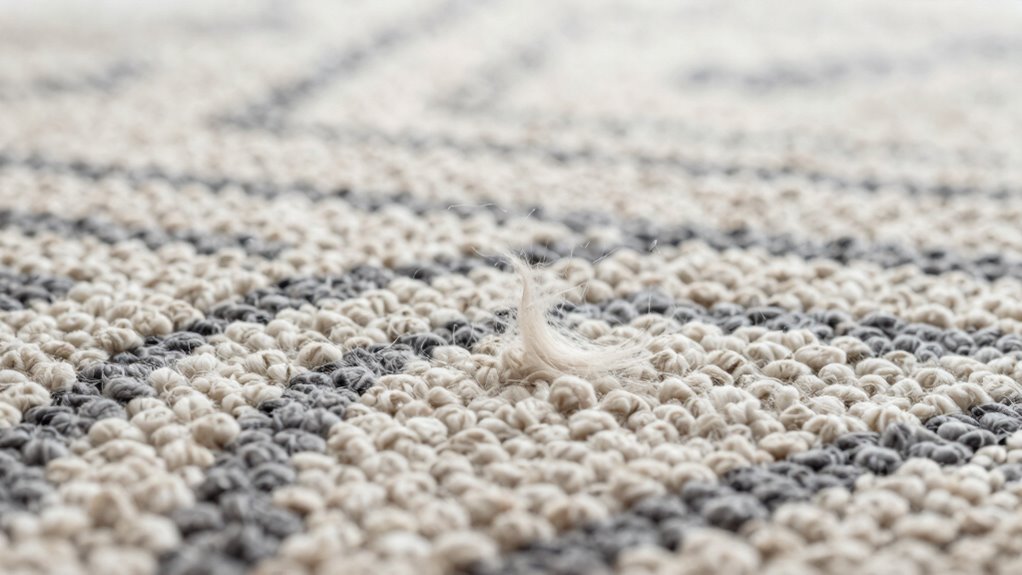
To minimize microfiber shedding from your washable rugs, it’s important to follow proper care practices. First, choose a strategic rug placement—avoid high-traffic areas that cause excessive wear and fiber loss. Second, reinforce fibers through gentle washing and air drying, which helps maintain rug integrity. Third, regularly vacuum your rug to remove loose fibers before they shed further. Proper fiber reinforcement during cleaning reduces loose fibers, while careful rug placement minimizes friction and fiber breakage. Additionally, selecting appropriate cleaning methods can significantly decrease microfiber release during maintenance. These steps not only extend your rug’s lifespan but also keep microfiber shedding in check, contributing to better indoor air quality. By caring for your rug thoughtfully, you protect your space and reduce the environmental impact of microfiber pollution.
Which Materials Are Less Likely to Shed Microfibers?
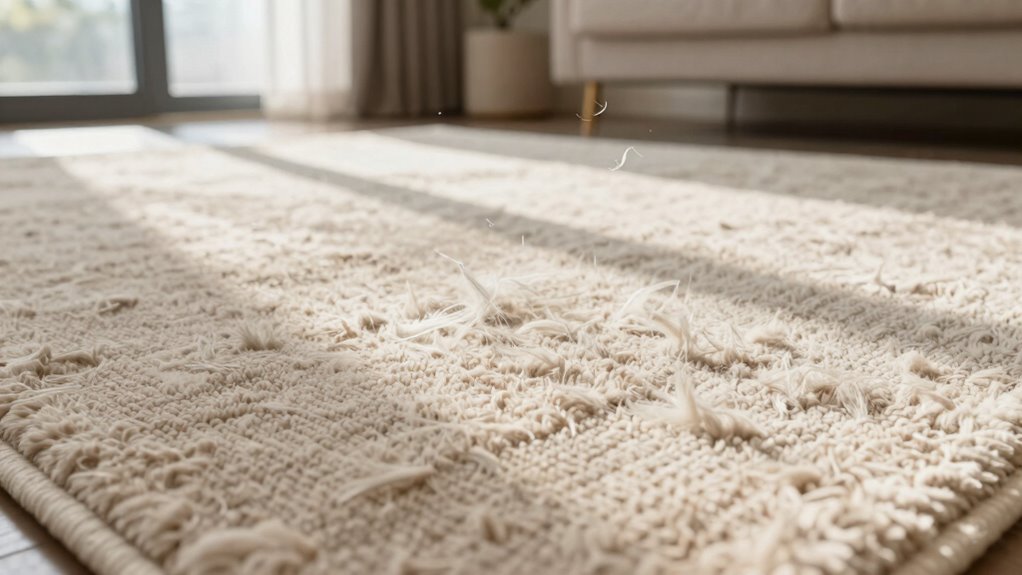
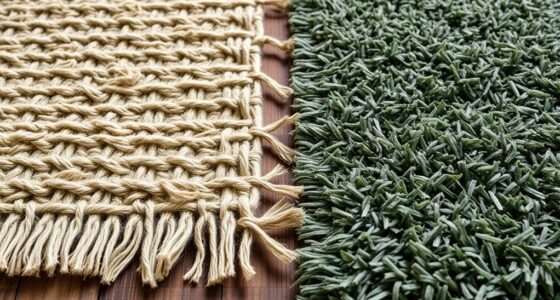
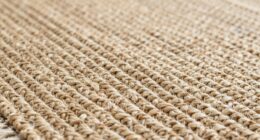
When choosing materials for your rugs and textiles, opting for natural fibers often results in less microfiber shedding. Natural materials like wool, cotton, and silk are less prone to shedding compared to synthetic fibers. Synthetic fibers, such as polyester and nylon, tend to shed more because they are manufactured with finer, more fragile threads that break down easily. In contrast, natural materials have a more durable fiber structure that resists shedding over time. Additionally, natural fibers are generally more sustainable and eco-friendly, making them a better choice for environmentally conscious homeowners. If minimizing microfiber release is your goal, prioritize rugs made from natural materials. These fibers are not only less likely to shed but also tend to be more eco-friendly and sustainable. By selecting natural fibers, you can enjoy a cleaner, healthier home with less microfiber contamination.
How to Choose a Low-Shedding Washable Rug?
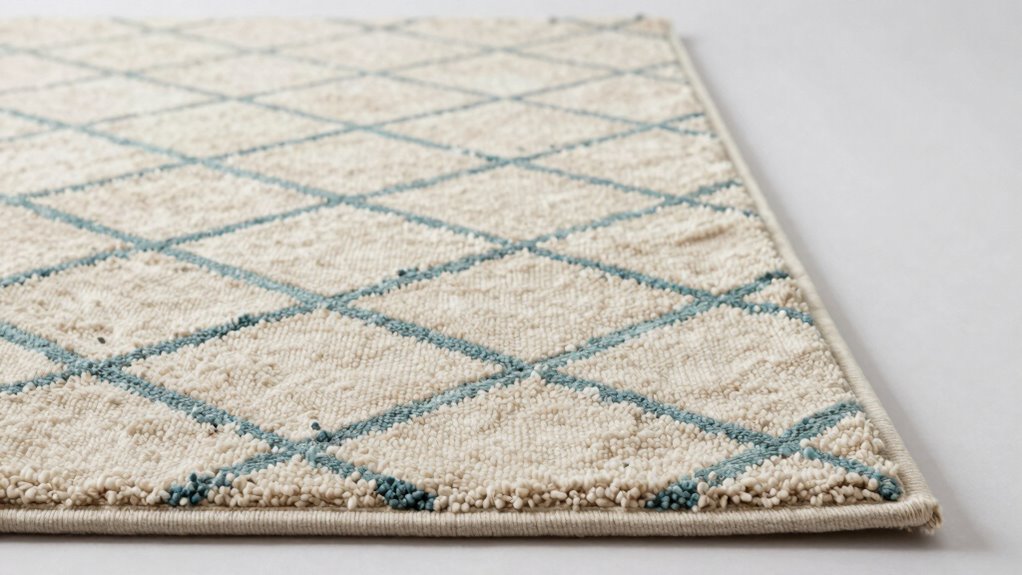
Choosing a low-shedding washable rug starts with selecting the right materials. Opt for synthetic fibers known for their minimal shedding and durability. Look for rugs made from high-quality polyester or nylon, which resist fiber loss over time. To guarantee you make an emotional connection, consider these tips:
- Prioritize Rug Durability—a sturdy rug will last longer and shed less.
- Check Material Labels—choose synthetic fibers explicitly designed for low shedding.
- Read Reviews—real customer feedback can reveal how well the rug holds up and sheds in everyday use.
- Incorporate Free Floating landscaping or design elements to help the rug blend seamlessly into your outdoor or indoor ambiance, enhancing its aesthetic appeal and longevity.
Cleaning Tips to Minimize Shedding and Keep Your Rug Fresh
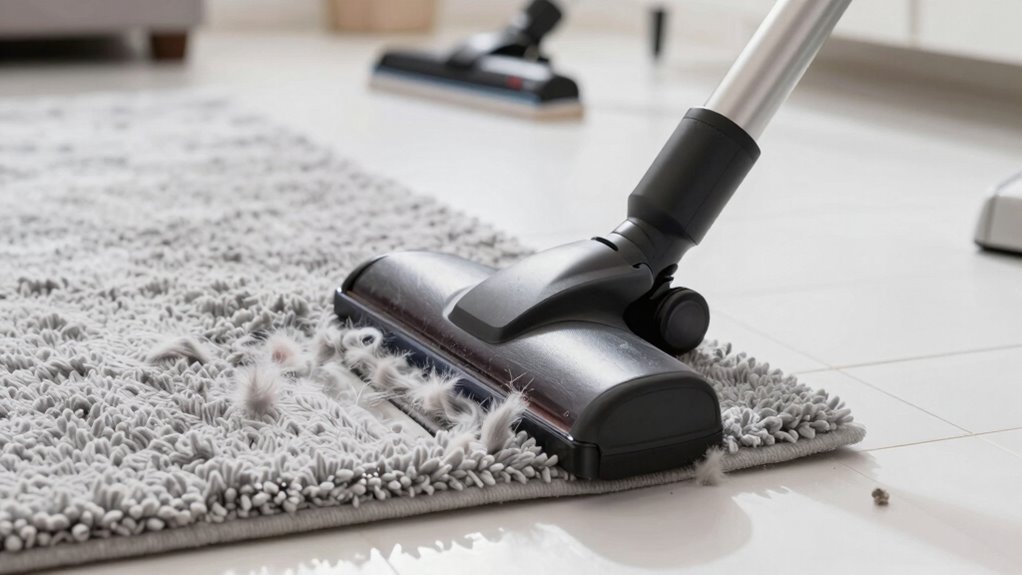
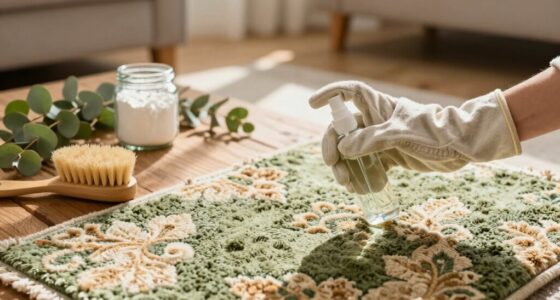
Regular cleaning is essential to keep your washable rug looking fresh and to reduce shedding over time. By washing your rug regularly, you promote fiber recycling, which helps prevent loose fibers from accumulating and shedding excessively. Use gentle detergents and avoid harsh chemicals to protect the rug’s integrity, ensuring better rug durability. When you clean, consider shaking out or vacuuming the rug beforehand to remove surface debris and loose fibers. Washing in cold water and drying on a low heat setting can also minimize fiber breakage. These simple steps help preserve the fibers and extend your rug’s lifespan, making it easier to maintain its appearance and function. Incorporating appropriate cleaning agents can also help minimize fiber shedding and keep your rug in optimal condition. Consistent, careful cleaning is your best strategy to keep shedding at bay and enjoy a fresh, durable rug.
When Should You Be Concerned About Excess Microfiber Shedding?
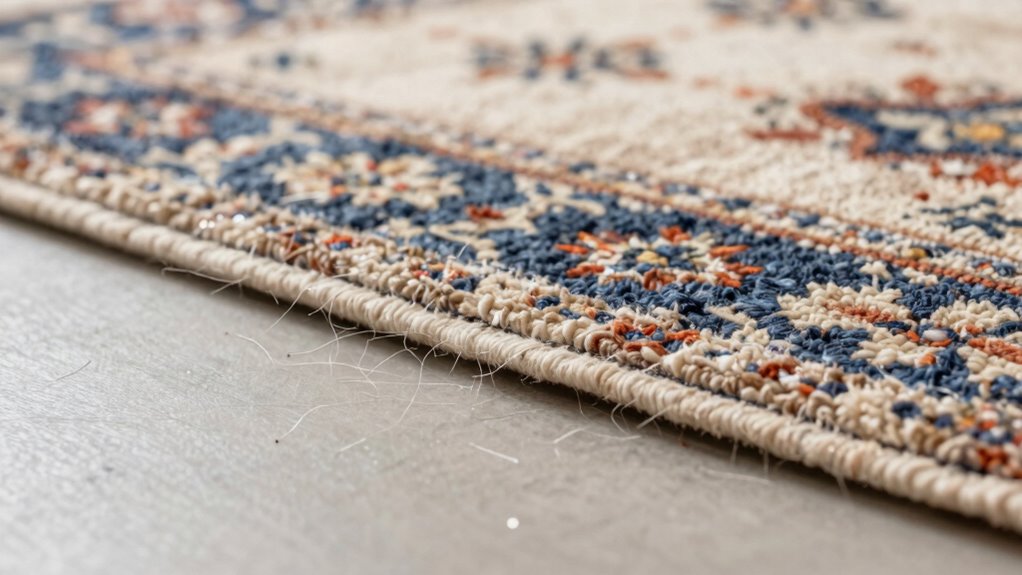
If you notice fibers shedding visibly or find your rug releasing more dust than usual, it’s time to pay attention. Frequent washing that doesn’t reduce shedding or persistent dust buildup can also signal an issue. These signs indicate you should consider whether the shedding is becoming excessive and if action is needed.
Visible Fiber Shedding Signs
Have you noticed fibers collecting on your furniture or floating in the air after vacuuming your washable rug? This fiber accumulation can be a sign of excessive shedding. Watch for these clear signs:
- Increased shedding that leaves visible fibers on your clothing or surfaces.
- Changes in shedding patterns, such as more fibers coming loose with each wash or vacuum.
- Constant fiber dust or fluffy particles lingering long after cleaning.
If you see these signs, it indicates your rug’s shedding is beyond normal. Excess fiber shedding can cause irritation and damage your rug’s appearance. Pay attention to fiber accumulation and shedding patterns to determine if your rug needs a different care routine or replacement. Staying vigilant helps keep your space clean and safe.
Frequent Washing Indicators
Frequent washing of your microfiber rug can be a clear sign that it’s shedding more than usual. When you notice fibers coming off after each wash, it suggests that the rug’s fiber filtration isn’t effectively capturing shedding particles anymore. This increased shedding can compromise the rug’s durability over time, making it less resilient and more prone to damage. If you find yourself washing the rug more often than recommended or seeing persistent fiber loss, it’s a sign to contemplate its condition. Excessive washing can accelerate fiber breakdown, reducing the overall lifespan of your rug. Pay attention to how often you wash it and whether shedding seems to worsen. Recognizing these indicators helps you determine when your rug’s fiber filtration is failing and when it might be time to consider a replacement.
Persistent Dust Accumulation
Persistent dust accumulation on your microfiber rug is a clear warning sign that it may be shedding more fibers than usual. If you notice a thick layer of dust buildup, it’s likely contributing to allergen accumulation in your home. This can worsen allergy symptoms and impact air quality. You should be concerned about excess microfiber shedding if you see:
- An increase in dust and debris on the surface or nearby furniture
- More frequent sneezing, coughing, or respiratory discomfort
- Visible fibers collecting in corners or on vacuum filters
These signs indicate that your rug’s fibers are shedding more than normal, releasing dust and allergens into your environment. Regular cleaning won’t fix the root cause, so it’s time to evaluate whether your rug needs replacement or special care.
Frequently Asked Questions
Are There Specific Brands Known for Low-Shedding Washable Rugs?
Yes, you can find brands known for low-shedding washable rugs, like Ruggable and Lorena Canals. These brands have a strong reputation for fiber longevity and quality, ensuring minimal shedding over time. By choosing trusted brands, you benefit from durability and easier maintenance. Always check customer reviews and product details to confirm their shedding behavior, helping you select a rug that stays cleaner and looks new longer.
Can Microfiber Shedding Be Harmful to Pets or Children?
Microfiber shedding can pose risks to pet safety and allergy concerns, especially if your pets or children are sensitive to dust or fibers. As you use washable rugs, you might notice some shedding, which could irritate respiratory issues or cause choking hazards for little ones. To minimize these risks, choose low-shedding microfiber rugs and wash them regularly, ensuring your home remains safe and allergy-friendly for everyone.
How Often Should Washable Rugs Be Cleaned to Reduce Shedding?
Think of your washable rug like a garden that needs regular care. You should vacuum it at least twice a week to keep loose fibers from building up. When stains appear, use gentle stain removal techniques to prevent fiber damage and shedding. Regular cleaning not only reduces shedding but also keeps your rug looking fresh. Consistent care guarantees your rug stays beautiful and minimizes microfiber shedding over time.
Do Eco-Friendly or Organic Rugs Shed Less Microfiber?
Eco-friendly or organic rugs made from natural fibers like wool, cotton, or jute tend to shed less microfiber compared to synthetic rugs. These organic materials are less prone to releasing tiny fibers, so you won’t have to deal with as much shedding or microplastic pollution. When you choose rugs made from eco-friendly fibers, you’re supporting sustainable practices and reducing your environmental impact while enjoying a cleaner, healthier home.
Is Microfiber Shedding Reduced in Machine-Washable Versus Hand-Washed Rugs?
You’ll find microfiber shedding is often reduced in machine-washable rugs because the best washing methods promote better fiber retention. Machine washing typically involves controlled agitation and temperature, which helps loosen and remove loose fibers more effectively than hand-washing. When you follow manufacturer instructions for machine washing, you help minimize microfiber shedding and keep your rug looking fresh longer, ensuring fibers stay securely in place with proper washing techniques.
Conclusion
Just like finding a stray sock in your laundry, discovering microfiber shedding from your washable rug is common at first. But with proper care and choosing the right materials, you can keep your space clean and fresh. Think of it as catching those tiny fibers before they settle into every corner—turning a potential mess into a simple routine. Ultimately, staying attentive to shedding helps guarantee your rug stays beautiful and your indoor air stays healthy.