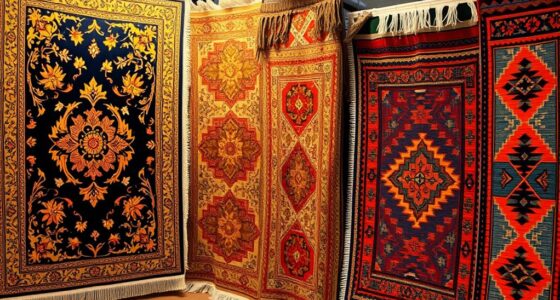
Collecting tribal rugs gives you a chance to explore diverse cultural traditions and craftsmanship. You’ll discover how each piece reflects unique regional techniques, colors, and stories that embody community histories and identities. These textiles often use natural dyes and intricate weaving styles passed down through generations, preserving time-honored practices. Appreciating their details reveals rich cultural narratives beyond their beauty. To understand more about these remarkable artifacts and their significance, keep exploring the fascinating world of tribal rug collections.
Key Takeaways
- Tribal rugs showcase unique cultural traditions, reflecting regional craftsmanship, histories, and storytelling through motifs and weaving techniques.
- Natural dyes derived from plants, insects, and minerals give tribal rugs authentic, region-specific colors that deepen over time.
- Weaving techniques, such as knotting styles and pattern choices, vary among tribes, embodying their cultural identities and craftsmanship.
- Each design element, motif, and color in tribal rugs narrates stories and beliefs integral to the community’s history and environment.
- Collecting and preserving tribal rugs supports cultural heritage, highlights traditional techniques, and enriches understanding of diverse artisan practices.

Collecting tribal rugs offers a rewarding glimpse into diverse cultural traditions and artistic craftsmanship. When you explore this world, you become a keen observer of the intricate weaving techniques that artisans have refined over generations. Each rug reveals a unique approach to creating durable, visually stunning textiles, often incorporating elaborate knotting methods or specialized weaving styles specific to a region. As you examine these pieces, you’ll notice how weaving techniques vary from one tribe to another, reflecting their distinct histories and skills. Some may feature tight, uniform knots that produce a dense, resilient fabric, while others display looser, more decorative patterns. These techniques are not just functional; they embody cultural stories and identities, making your collection a tapestry of history. Additionally, understanding the costs and fees associated with collecting and maintaining tribal rugs can help you better manage your investment and preserve their beauty over time.
Equally fascinating are the dyeing methods used to produce the vibrant colors seen in tribal rugs. You’ll find that many artisans employ natural dyes derived from plants, insects, and minerals, which give each piece an authentic, earthy tone. The process of dyeing is an art in itself, often passed down through generations, with each tribe developing its own signature palette. For example, some tribes utilize indigo for deep blues, while others harness pomegranate rinds or madder root for rich reds. These natural dyeing techniques contribute to the rug’s character, as colors develop and deepen over time, adding depth and warmth to your collection. Recognizing the subtle variations in hue can tell you much about the region of origin and the natural resources available to the weavers.
As you acquire tribal rugs, you’ll find that understanding their weaving and dyeing techniques enhances your appreciation of their cultural significance. Every knot, color choice, and pattern speaks to a community’s history, beliefs, and environment. By studying these methods, you gain insight into the craftsmanship and ingenuity behind each piece. Whether you’re drawn to the geometric precision of Central Asian rugs or the symbolic motifs of North African textiles, knowing the techniques involved enriches your connection to the art. Collecting tribal rugs isn’t just about aesthetics; it’s about preserving and honoring centuries-old traditions. Your collection becomes a vibrant narrative—an ongoing dialogue with the artisans who created these timeless works of art.

SAFAVIEH Monaco Collection Area Rug – 8' x 10', Multi, Boho Chic Tribal Distressed Design, Non-Shedding & Easy Care, Ideal for High Traffic Areas in Living Room, Bedroom (MNC222F)
[STAIN RESISTANT & NON-SHEDDING]: Expertly machine-woven from enhanced synthetic durable fibers that are stain resistant and have a…
As an affiliate, we earn on qualifying purchases.
As an affiliate, we earn on qualifying purchases.
Frequently Asked Questions
How Do I Authenticate an Antique Tribal Rug?
To authenticate an antique tribal rug, examine its craftsmanship closely. Look for consistent knot density, which indicates skilled weaving, and check if the colors come from natural dyes, as synthetic dyes are a recent development. Feel the rug’s texture for signs of age, like slight wear and fading. Research its origin and provenance, and consult an expert if needed. Authentic rugs typically have unique, traditional patterns and high-quality materials.
What Are Common Signs of Rug Restoration or Repair?
You might notice signs of rug restoration or repair like uneven fiber deterioration or visible repair patching. The fibers may look fresher or differ slightly in color, indicating recent patching. Sometimes, the seams or edges show signs of re-stitching. These clues help you spot repairs, guaranteeing you understand the rug’s history and authenticity. Recognizing these signs ensures you make informed decisions when collecting or valuing tribal rugs.
Which Tribal Regions Produce the Most Valuable Rugs?
You’ll find the most valuable tribal rugs originate from regions with rich, traditional craftsmanship, like Persia (Iran), the Caucasus, and Anatolia. Nomadic weavers in these areas create unique, high-quality pieces that reflect their cultural heritage. Regional craftsmanship, combined with the rarity and historical significance of these rugs, boosts their value. So, focus on rugs from these regions if you’re seeking valuable, culturally significant tribal pieces.
How Should I Care for and Store Tribal Rugs?
Did you know that properly caring for tribal rugs can increase their value over time? To keep yours in top shape, regularly use gentle rug cleaning techniques like vacuuming with a brushless attachment and avoiding harsh chemicals. Store your tribal rugs in a cool, dry place, rolled rather than folded, and avoid direct sunlight. Follow these storage best practices to preserve their beauty and cultural significance for generations to come.
Are Synthetic Dyes Used in Modern Tribal Rug Reproductions?
Yes, synthetic dyes are often used in modern tribal rug reproductions, but some artisans still prefer natural dyes for authenticity. Synthetic dyes offer a wider range of vibrant colors and faster dyeing processes, making production more efficient. However, if you want a rug with true historical and cultural value, look for pieces dyed with natural dyes, which develop a rich patina over time and better preserve the rug’s traditional essence.

nuLOOM 5×8 Outdoor/Indoor Ranya Tribal Area Rug, Light Brown, Geometric Design, Stain Resistant, Highly Durable, For Patio, Balcony, Bedroom, Dining Room, Living Room, Bathroom
Elevated Tribal Geometric Design: Showcasing a bold, globally inspired geometric motif, this rug brings rich visual texture and…
As an affiliate, we earn on qualifying purchases.
As an affiliate, we earn on qualifying purchases.
Conclusion
As you gather these tribal rugs, you’re weaving more than threads—you’re weaving stories, traditions, and history into your space. Each pattern dances like a heartbeat, echoing ancient lands and cultural whispers. Your collection becomes a tapestry of connection, a vibrant mosaic of heritage and artistry. Embrace the journey, for in every rug, you find a rhythm that pulses with life, turning your home into a living gallery of stories waiting to be told.

STARUIA Washable 8×10 Area Rug for Living Room, Beige Western Aztec Tribal Moroccan Area Rug, Boys Neutral Rug for Bedroom, Soft Non-Slip Non-Shedding Large Carpet Under Dining Table Home Office
Multi-Situation Use & Size:Unique tribal and Aztec design can add a vintage touch to your home. Elegant geometric…
As an affiliate, we earn on qualifying purchases.
As an affiliate, we earn on qualifying purchases.
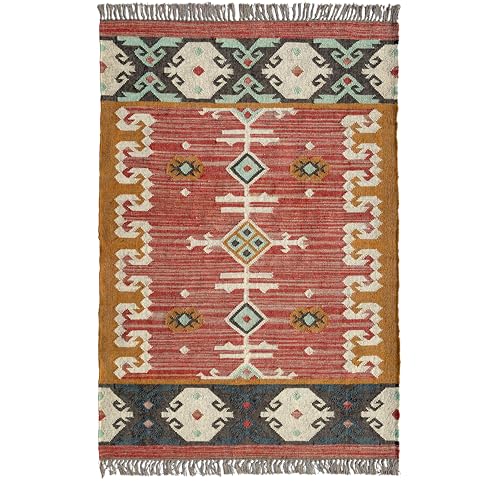
Weaving Village Jute Traditional Kilim Rug Boho Flatweave Area Rug for Living Room, Living Room Entryway, Tribal Series, 4'x6'
Each Kilim rug showcases intricate patterns and vibrant colors, reflecting traditional craftsmanship and adding a touch of bohemian…
As an affiliate, we earn on qualifying purchases.
As an affiliate, we earn on qualifying purchases.