
To navigate rug auctions effectively, familiarize yourself with key terms like reserve price, absentee bidding, and lot number. Understand the auction process, including catalog reviews, bidding strategies, and how to recognize authentic antiques through weaving techniques and material quality. Set a budget and plan your bids carefully to avoid overspending. Knowing these basics will help you make confident decisions—keep going, and you’ll discover valuable tips to master the auction world.
Key Takeaways
- Familiarize yourself with auction terminologies like lot numbers, bidding increments, reserve prices, and absentee bidding.
- Understand the auction process, including registration, bidding methods, and how to track lots of interest.
- Learn to identify authentic antique rugs by inspecting weaving techniques, materials, and signs of age.
- Develop bidding strategies, such as setting a budget, starting low, and knowing when to escalate or withdraw.
- Review auction catalogs carefully and participate via live, phone, or absentee bids for maximum flexibility.
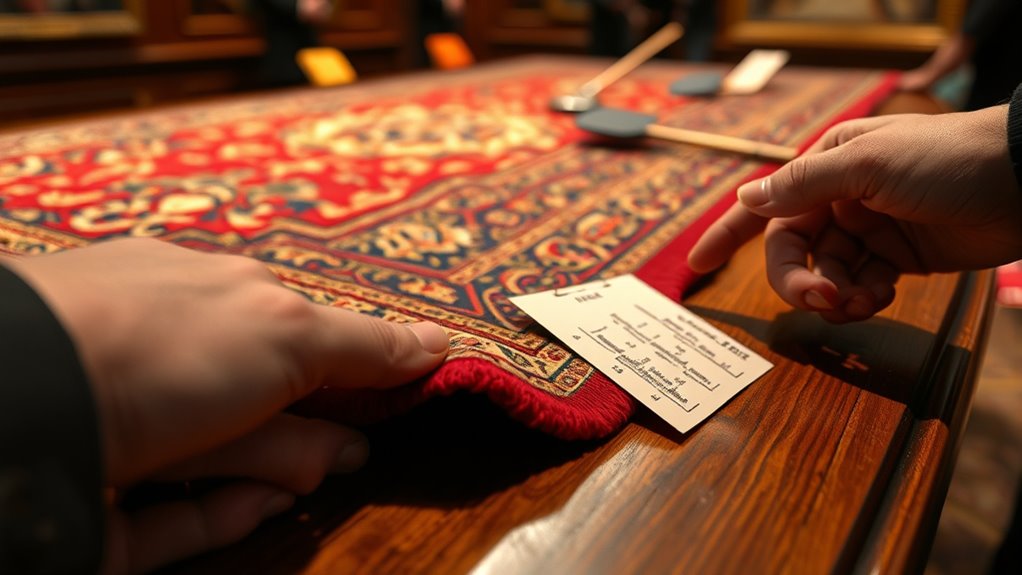
Ever wondered how rug auctions work? If you’re diving into this world, understanding the process can make all the difference. When you first attend an auction, you’ll notice that each lot, or individual rug, is accompanied by detailed descriptions. These details often include information about antique identification, which is vital if you’re after rare, vintage pieces. Recognizing genuine antiques involves inspecting factors like weaving techniques, material quality, and signs of age. Knowing how to identify authentic antique rugs helps you avoid fakes and make smarter bids. This knowledge also assists in valuing the rug’s worth, guaranteeing you don’t overpay. Whether you’re an experienced collector or a newcomer, honing your antique identification skills allows you to spot valuable pieces quickly. Additionally, understanding home improvement concepts like proper preservation can help maintain the rug’s condition over time.
Understanding antique identification helps you spot valuable rugs and make smarter bids at auctions.
As the auction begins, you’ll need to develop effective bidding strategies. Successful bidding isn’t just about how much you want a rug but also about timing and confidence. First, set a clear budget beforehand and stick to it, avoiding emotional bidding that might lead to overspending. Watch the pacing of the auction, noting when bidding slows or heats up—these moments can be opportunities to step back or push forward. It’s wise to start with a lower bid to gauge the competition, then gradually increase your offer if you’re genuinely interested. Remember, some auction houses have bidding increments, so planning your bids in advance helps you stay within your limits.
Another key aspect of bidding strategies is understanding the auction’s rhythm. Some auctions allow for absentee or phone bids, giving you a chance to participate even if you’re not physically present. If you’re bidding remotely, confirm you’re familiar with the auction platform and how to place your bids quickly. Watching the crowd can also tell you a lot about the level of interest in a particular rug. If you notice multiple bidders showing interest, it might be time to decide whether to escalate or withdraw. Confidence plays a big role—don’t hesitate if you truly value a piece, but also recognize when to cut your losses.
Ultimately, successful participation in rug auctions hinges on your preparation—knowing how to identify valuable, antique pieces and implementing sound bidding strategies. By honing your antique identification skills, you’ll better evaluate the true worth of each rug. Meanwhile, strategic bidding keeps you from overspending while increasing your chances of securing the pieces you want. When you combine both these skills, you turn what might seem like a chaotic event into a rewarding experience, turning your passion for rugs into a smart investment.

HowExpert Guide to Rug Collecting: The 39-Day System to Learn How to Identify, Evaluate, and Collect Antique, Vintage, and Modern Rugs with Long-Term Value
As an affiliate, we earn on qualifying purchases.
As an affiliate, we earn on qualifying purchases.
Frequently Asked Questions
How Do I Register for a Rug Auction?
To register for a rug auction, start by reviewing the auction catalog online or in print to find the event details. Then, complete the bidding registration process, which usually involves providing your contact information and payment details. Some auctions allow you to register online, while others may require in-person registration. Make sure to follow the specific instructions provided by the auction house to secure your spot and participate in bidding.
What Are the Common Payment Methods Accepted?
You’ll find that most rug auctions accept a variety of payment options, including credit cards, bank transfers, and sometimes even digital wallets. These methods guarantee swift transactions and keep your purchase process smooth as silk. Rest assured, auction houses prioritize transaction security, so your payment information stays protected. While options vary, using secure methods gives you peace of mind, making bidding both exciting and safe.
Can I Preview Rugs Before Bidding?
Yes, you can preview rugs before bidding. Most auctions offer viewings so you can assess rug condition firsthand, which helps you make informed bids. During these previews, focus on details like rug condition and craftsmanship. Remember to follow proper bidding etiquette by being respectful and attentive. Preview sessions give you confidence, ensuring you’re comfortable with your choices and understand the nuances of each piece before placing your bid.
What Is the Return Policy After Purchase?
If you’re unsure about your rug purchase, check the auction house’s return policies and refund eligibility before bidding. For example, Sarah bought a vintage rug, but it didn’t match her expectations. She contacted the auction house within their return window and was able to get a refund. Usually, return policies specify conditions like the rug’s condition and time limits, so always review them carefully to guarantee a smooth process if needed.
Are There Fees for Absentee or Online Bidding?
Yes, there are typically fees for absentee or online bidding, often called bidding fees. These fees vary depending on the auction house and are usually outlined during the registration process. When you complete your online registration, you’ll be informed about any applicable bidding fees. Be sure to review these details beforehand so you’re aware of the costs involved and can plan your budget accordingly.

Bamboo Paddle – 1/2" Thick Wooden Rug Paddle with Airflow Holes, Light Weight and Super Durable Beautiful Smooth Finish & Chamfered Holes
14.5" Bamboo Rug Cleaning Paddle with Airflow Holes – Light weight, super durable, with chamfered holes.
As an affiliate, we earn on qualifying purchases.
As an affiliate, we earn on qualifying purchases.
Conclusion
Understanding rug auction terminology and process empowers you to make confident bids. Did you know that the global art and antique auction market, which includes rare rugs, is valued at over $16 billion? By mastering the key terms and procedures, you can navigate this vibrant market more effectively. So, whether you’re a seasoned collector or a first-time bidder, being informed gives you a real edge in securing beautiful, valuable pieces. Happy bidding!

Rusty Crow Rag Rug Book and Tool
Rusty Crow Rag Rug Book and Tool is easy to turn scraps into wonderful rugs
As an affiliate, we earn on qualifying purchases.
As an affiliate, we earn on qualifying purchases.

Scotchgard Rug & Carpet Cleaner, Fabric Cleaner Blocks Stains, Cleaning Sprays Make Cleanup Easier, 14 oz
CARPET CLEANER SPRAY: One Scotchgard Rug & Carpet Cleaner, 14 oz can, that cleans and prevents stains on…
As an affiliate, we earn on qualifying purchases.
As an affiliate, we earn on qualifying purchases.