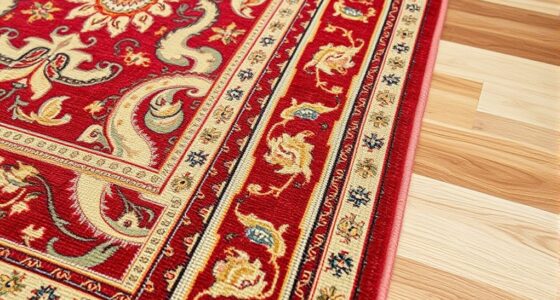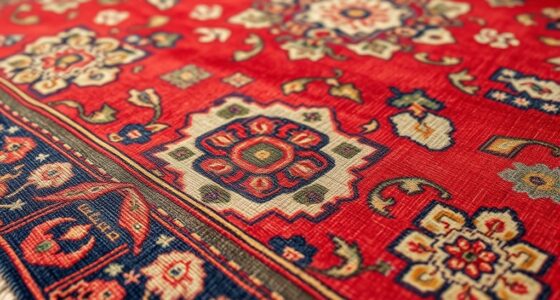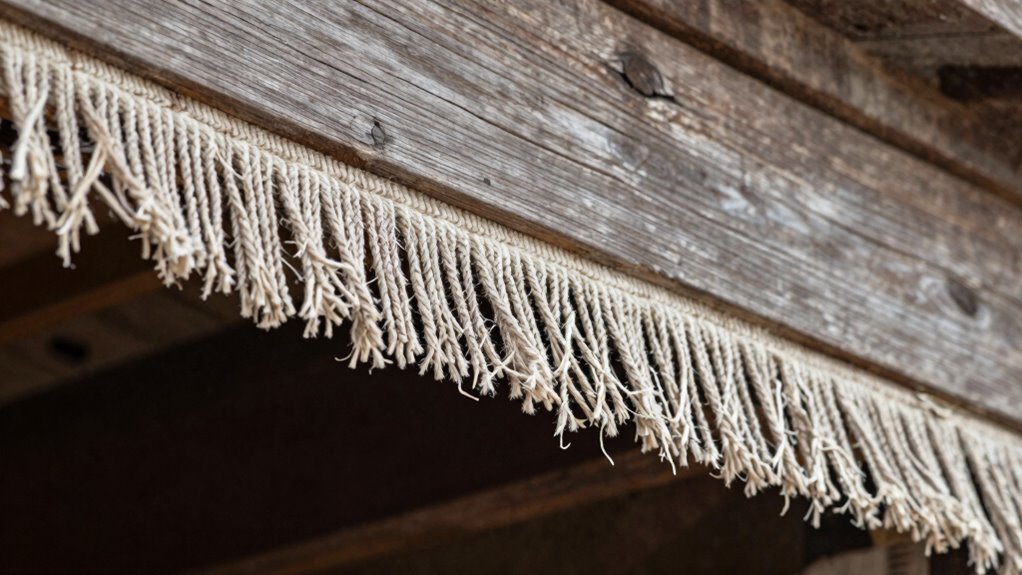
Fringe isn’t just decoration—it reveals much about a textile’s structure and craftsmanship. By examining the knotting, weaving techniques, and material choices, you can determine if a fabric is handwoven or machine-made, how durable it is, and its cultural or historical origins. Variations in length, density, and repair signs tell stories about its age and use. Continue exploring, and you’ll uncover how fringe acts as a visual record of textile quality and history.

Get cleaning gear delivered free with Prime
- Fast, free delivery on millions of items
- Prime Video, Amazon Music and more included
- Member-only deals all year
Key Takeaways
- Fringe construction methods reveal textile techniques, indicating whether fabric is woven, knotted, or finished, providing insights into craftsmanship.
- Knot styles, density, and fringe length can indicate fabric durability, age, and potential wear, serving as structural indicators.
- Material choices and weave patterns in fringe reflect regional origins and cultural influences, aiding in textile authentication.
- Irregularities or repairs in fringe suggest craftsmanship quality and help identify handmade versus machine-made textiles.
- Fringe functions beyond decoration, acting as a structural element that influences fabric stability and resilience over time.
As an affiliate, we earn on qualifying purchases.
What Does Fringe Reveal About Textile Structure?

Fringe reveals important details about the underlying structure of textiles, especially how fibers are secured and finished. The fringe edge can tell you whether the fibers are knotted, twisted, or simply left loose, giving clues about the weaving or knotting techniques used. For example, a tightly knotted fringe suggests a careful finishing process that secures fibers firmly, while a looser fringe indicates a different approach. The fringe color also offers insights; contrasting or matching fringe can reflect design choices or functional aspects like durability. By examining the fringe edge and color, you gain a better understanding of the textile’s construction, revealing whether it’s woven, knotted, or finished in a particular way. These details help you interpret the textile’s structural integrity and craftsmanship. Additionally, understanding the textile’s finishing techniques can further inform you about its durability and quality.
How Can Fringe Show You Weaving and Knotting Techniques?
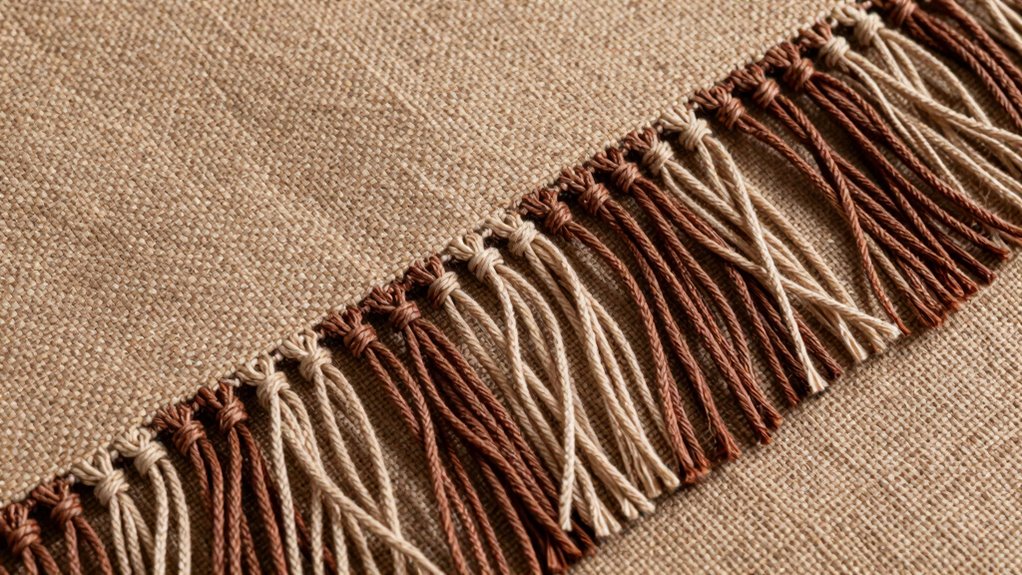
By closely examining how the fringe is finished, you can identify specific weaving and knotting techniques used in the textile’s creation. Fringe as ornament often reveals the craftsmanship behind the piece. For example, tightly knotted fringe might indicate a complex knotting technique, while evenly spaced, straight fringe suggests precise weaving. You can also see how different knots create texture or stability, giving clues about the textile’s durability. In fringe in fashion, these techniques influence the garment’s movement and appearance. Look for signs of:
- Overhand knots or square knots
- Twisted or braided fringe
- Loose or tightly woven ends
- Variations in fringe length and spacing
Additionally, understanding the Gold IRA Markets can give insights into how craftsmanship and investment strategies share a common theme of value and durability, reflecting the importance of technique and quality in both fields. These details help you understand the craftsmanship involved and the techniques that shape the textile’s structure and style.
Different Types of Fringe and How They Are Made

There are various types of fringe styles that can dramatically change a garment’s look. You’ll notice different construction techniques and how they influence the texture and movement of the fringe. Material choices also play a key role in creating unique effects and visual interest. Exploring content formats can reveal how fringe functions as a structural element rather than just decoration, offering insight into the garment’s design principles.
Types of Fringe Styles
Different fringe styles can dramatically change your look, and each one is created using specific techniques that influence how the strands fall and move. Whether you prefer a bold statement or subtle detail, fringe fashion offers a variety of options. Some popular styles include blunt fringe, which creates a sharp, even edge; layered fringe that adds texture and depth; wispy fringe for a softer, airy feel; and cut-out fringe for a modern twist. These styles can be incorporated into clothing or accessories, elevating your overall appearance. Fringe accessories like earrings or bags can also showcase different styles, adding movement and personality. Choosing the right fringe style depends on your vibe and the look you want to achieve, making it a versatile element of your wardrobe.
Fringe Construction Techniques
Understanding how fringe is constructed is key to appreciating its diverse styles. Different construction techniques influence fringe symbolism and how it functions in fashion. Knotted fringe involves tying strands into knots, creating a textured look often seen in bohemian styles. Cut fringe is simply sliced from fabric or leather, giving a clean, uniform appearance. Twisted fringe involves twisting strands before attaching, adding durability and a distinctive texture. Chainette fringe uses small loops of fabric linked together, offering a more intricate design. The choice of construction technique impacts both the visual appeal and structural role of the fringe, emphasizing its importance beyond decoration. Fabric manipulation techniques play a crucial role in shaping the final look and feel of the fringe. By understanding these methods, you better grasp how fringe in fashion acts as a subtle yet meaningful structural element.
Material Variations and Effects
The choice of materials considerably shapes the appearance and function of fringe, offering a wide array of textures, weights, and movement. Different materials convey unique symbolism and impact how fringe in fashion communicates style or meaning. For example:
- Silk or satin: Creates a luxurious, smooth feel and elegant drape.
- Cotton or wool: Offers a more casual, textured look with durability.
- Metal or beads: Adds weight and shimmer, often symbolizing wealth or status.
- Synthetic fibers: Provide vibrant colors and flexibility for experimental designs.
Each material influences how the fringe moves and its visual effect, revealing underlying messages or cultural significance. Understanding material variations helps you appreciate fringe as a structural clue, not just decoration, but a symbol woven into fashion’s fabric.
Reading Fringe to Determine Fabric Strength and Density

When examining fringe, you can gather essential clues about a fabric’s strength and density by paying close attention to its structure. The fiber composition influences how the fringe behaves; tightly woven fibers indicate higher strength, while loose fibers suggest softness and lower durability. Fringe density also provides insight—denser fringe usually means the fabric itself is thicker and more robust. Observe how the fibers are arranged at the edge: tightly packed, uniform fringe points to a sturdy, tightly woven fabric, whereas sparse or uneven fringe indicates a more delicate, less dense material. Additionally, contrast ratio plays a role in how the fabric appears under different lighting conditions, helping further assess its quality. By analyzing these details, you can assess the fabric’s overall strength and density without damaging the material, making fringe a valuable structural clue in fabric evaluation.
Is the Fringe Handwoven or Machine-Made? Here’s How to Tell
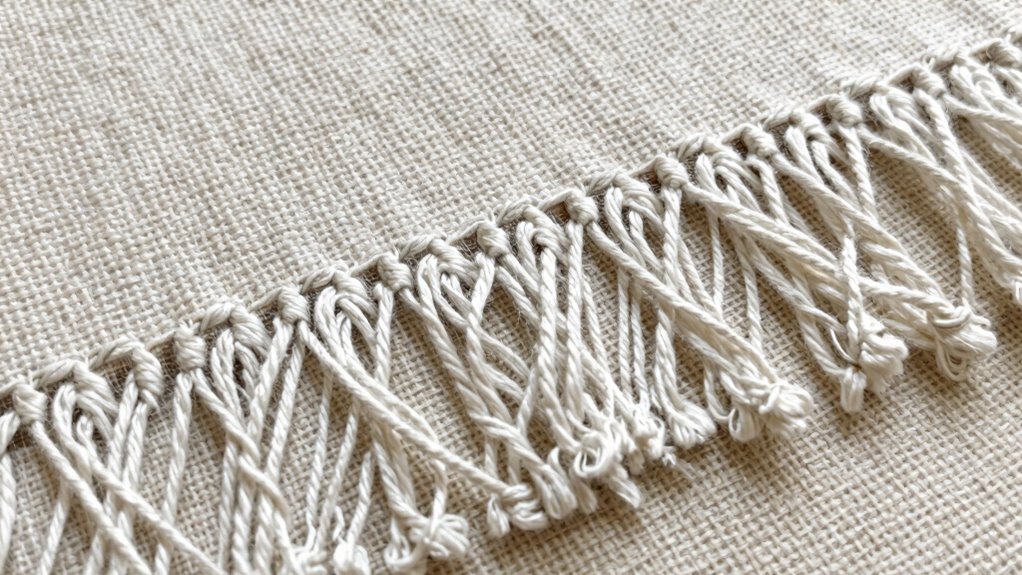
Determining whether a fringe is handwoven or machine-made involves closely examining its construction details. Look at the fringe pattern: handwoven fringes often have slight irregularities, while machine-made ones are uniform. Check the fringe color consistency; handwoven fringes may display subtle variations, adding character. Feel the texture: handwoven fringes tend to be softer and more textured, whereas machine-made ones feel more even and smooth. Observe the finishing: handwoven fringes may have loose or uneven ends, while machine-made ones are neatly trimmed. To spot the difference, consider the sound vibrations during the weaving process, as traditional handweaving can sometimes produce unique acoustic signatures.
Handwoven fringes show irregular patterns, subtle color variations, and uneven finishes.
- Irregularities in fringe pattern
- Variations in fringe color
- Texture differences
- Finishing quality
Using Fringe to Identify Cultural and Regional Textile Styles

Fringe details can reveal much more than just craftsmanship—they often hold the key to understanding a textile’s cultural and regional origins. Different cultures incorporate fringe as fashion, using specific styles, lengths, and weaving techniques that reflect their heritage. For example, Native American fringes often feature intricate beadwork, while Southeast Asian textiles use vibrant, tightly knotted fringe patterns. Fringe in jewelry also signals regional identity, with certain styles linked to specific communities or traditions. Recognizing these variations helps you identify where a piece may have come from or what cultural significance it carries. By paying close attention to fringe’s construction, placement, and decorative elements, you gain insight into regional textile styles and the cultural stories woven into each piece. Understanding textile origins can deepen your appreciation for the craftsmanship and cultural significance behind each fringe design.
Spotting Repairs, Alterations, and Quality Signs in Fringe

Spotting repairs, alterations, and signs of quality in fringe requires a keen eye for detail. Look closely at the fringe’s color consistency—uneven dye or mismatched shades might indicate repairs or re-dyeing. Check if the fringe as a fashion accessory still maintains its original texture; worn or frayed ends can signal age or heavy use. Alterations may be visible where the fringe is shortened or sewn differently, especially near the base. Pay attention to knots and stitching; tight, uniform knots suggest quality work, while uneven or loose stitches hint at quick fixes. Also, observe the fringe’s alignment—irregular or asymmetrical fringe could point to repairs or reattachments, revealing the textile’s history and how it’s been preserved or modified over time. Additionally, examining the fabric materials can offer insight into the durability and authenticity of the fringe, indicating whether it’s been reinforced or replaced.
What Fringe Can Tell You About Textile Age and Provenance?
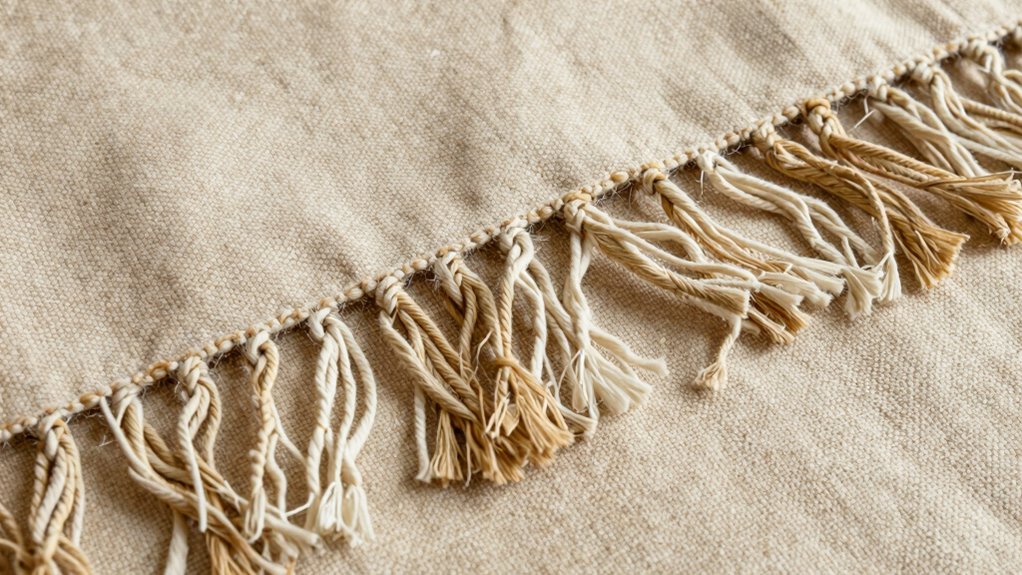
Your choice of material and weave in fringe reveals clues about when a textile was made and where it originated. Recognizing distinctive styles and cultural details helps you trace its history and significance. By examining these features, you can better understand the textile’s age and provenance. Additionally, understanding the cultural context of fringe styles can provide insights into the social and economic conditions of the textile’s origin.
Material and Weave Clues
The material and weave of fringe can reveal valuable clues about a textile’s age and origin. Different fibers, like silk, wool, or cotton, reflect specific time periods and regions. The weave pattern also indicates craftsmanship and trade routes. For example, tightly woven silk fringes suggest luxury textiles from the Renaissance or Victorian eras, while coarser wool hints at utilitarian workwear. Recognizing fringe symbolism helps you understand cultural meanings and social status. Additionally, fringe fashion trends often revive old materials or weaving techniques, making them modern statements rooted in history. Pay attention to these clues when examining textiles, as they tell stories about the people, places, and times behind the fabric. Material analysis can further enhance your understanding of a textile’s provenance. It’s a fascinating way to decode a textile’s past beyond just its appearance.
Style and Cultural Significance
By examining the style and cultural details of fringe, you can uncover significant insights about a textile’s age and origin. Fringe reflects specific fashion history moments and aesthetic trends that reveal its provenance. For example, certain fringe styles, like the long, flowing strands of the Victorian era or the bold, colorful fringes of the 1960s, signal their cultural context. You can also identify regional influences, such as Native American or Eastern European motifs, which carry cultural significance. Recognizing these stylistic details helps you date textiles accurately and understand their cultural background. Fringe isn’t just decorative; it’s a visual record of historical fashion movements and cultural expressions, allowing you to trace the textile’s journey through time and place.
How Fringe Helps Test Fabric Durability and Longevity
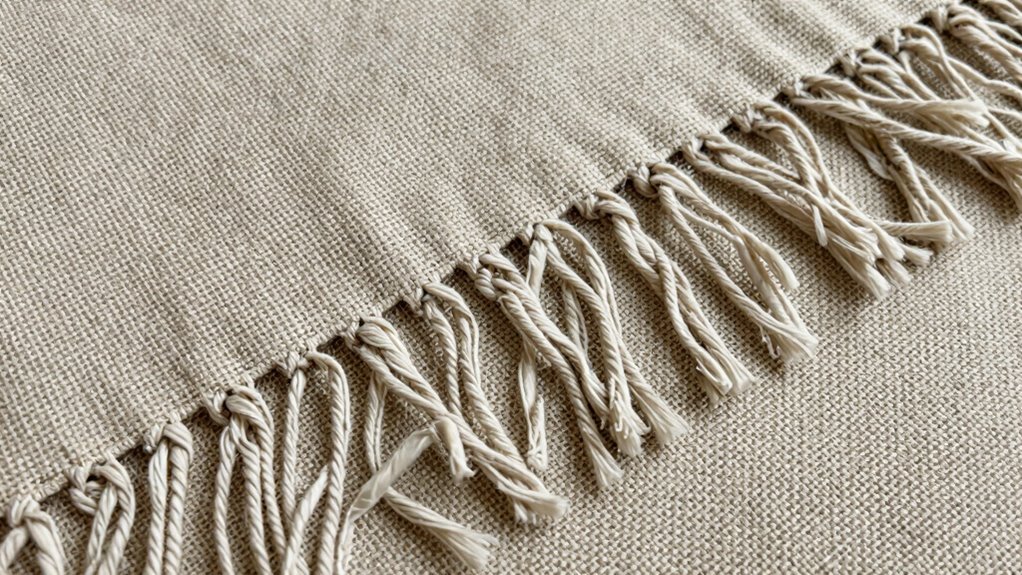
Ever wondered how fringe can reveal a fabric’s true durability? When you examine fringe in fashion or fringe in art, it acts like a stress test for textiles. Over time, the way the fringe holds up indicates the fabric’s strength and resilience. You might notice frayed edges or unraveling, which signals wear and tear. This makes fringe a practical tool for testing longevity.
- It shows how well the fabric resists fraying under daily use
- It highlights potential weaknesses in stitching or weave
- It reveals how materials age and degrade over time
- It offers insight into the fabric’s overall quality and durability
Tips for Reading Fringe Like a Textile Expert

To read fringe like a textile expert, start by examining the fiber types to understand the material’s quality. Next, observe the weaving techniques to gauge craftsmanship and durability. Finally, analyze the fringed edges for signs of wear or construction details that reveal the fabric’s construction.
Examine Fiber Types
When examining fringe, identifying the fiber types is essential for understanding its quality and origin. Your goal is to recognize fiber characteristics that reveal textile composition, which influences durability and feel. Look closely at the fibers: natural fibers like wool or cotton tend to be softer and more breathable, while synthetic fibers such as polyester or nylon often feel slicker and more uniform. Consider these clues:
- Texture: Is it coarse or silky?
- Color retention: Does the color fade easily?
- Flexibility: Is the fringe stiff or pliable?
- Gleam: Does it have a shiny appearance?
These details help you determine whether the fringe is made from high-quality natural fibers or more affordable synthetics, providing insight into its manufacturing process and value.
Observe Weaving Techniques
By closely examining the weaving techniques in fringe, you can uncover valuable clues about its craftsmanship and origin. Look for specific embroidery patterns that reveal cultural influences or traditional methods. For example, tightly woven fringes with intricate stitches may indicate expert craftsmanship, while looser, irregular weaves suggest handmade work. Pay attention to the dyeing techniques used—faded or uneven coloration can point to natural dyes and older methods, whereas uniform, vibrant hues often result from modern dyeing processes. The way the fringe is woven, whether it’s plain weave, twill, or another pattern, also offers insights into regional styles and techniques. Analyzing these details helps you distinguish between different weaving traditions and understand the cultural significance embedded in the fringe’s construction.
Analyze Fringed Edges
Examining fringed edges closely allows you to read subtle details that reveal a lot about the textile’s history and craftsmanship. Look at the fringe embellishments to identify how they’re attached—knotted, woven, or cut—each method indicating different techniques. Notice the length and density of the fringe, which can suggest its cultural significance or functional purpose. Observe the fringe symbolism; certain styles or patterns might represent specific tribes, regions, or social statuses. Pay attention to the fiber quality and finishing details, as they reflect the skill involved.
- Check for consistent knotting or braiding patterns
- Note the direction of fringe strands for stylistic clues
- Identify any decorative knots or tassels
- Recognize variations in fringe density and length
Frequently Asked Questions
How Does Fringe Placement Influence Textile Structural Integrity?
You’ll find that fringe placement considerably impacts textile structural integrity by influencing fringe knotting and fringe dyeing. Properly placed fringe provides reinforcement at stress points, preventing tearing. When fringe knotting is strategically positioned, it maintains fabric strength, while fringe dyeing enhances color durability. Misplaced fringe can weaken the structure, leading to fraying or unraveling, so thoughtful placement ensures your textile remains both visually appealing and resilient over time.
Can Fringe Patterns Indicate Specific Weaving Traditions?
Yes, fringe patterns can reveal specific weaving traditions. When you examine woven motifs within the fringe, you’ll notice unique styles tied to cultural symbolism. These patterns often serve as identifiers of a community’s heritage, craftsmanship, and storytelling. By studying the arrangement and designs, you can trace the origins of the textile and understand the cultural significance behind the weaving techniques, making fringe a visual record of tradition and identity.
What Tools Are Best for Examining Fringe Details Closely?
You should use a magnifying glass or a jeweler’s loupe to examine fringe details closely. These tools help you see fringe symbolism and weaving techniques that reveal its historical significance. A good-quality microscope can also provide detailed insights into fiber types and stitch patterns. By closely inspecting fringe, you gain a deeper understanding of its cultural meaning and structural clues, making your analysis more accurate and meaningful.
Are Certain Fringe Styles More Prone to Damage?
Yes, certain fringe styles are more prone to damage, especially those made from delicate materials like silk or fine threads. When you analyze fringe material closely, you’ll notice that more intricate or lightweight fringes tend to wear out faster. Understanding the cultural significance of fringe helps you appreciate its importance, but it also highlights the need for careful handling and maintenance to preserve these vulnerable styles.
How Does Fringe Contribute to Overall Fabric Durability Testing?
They say “the whole is greater than the sum of its parts,” and that’s true for fringe in fabric durability testing. Fringe material properties and manufacturing techniques directly impact how well the fabric holds up. By examining how fringe responds to stress, you can assess the fabric’s overall strength. Properly designed fringe acts as a structural indicator, revealing weak spots and ensuring the fabric’s longevity under real-world conditions.
Conclusion
Next time you see fringe, remember it’s more than decoration—it’s a peek into the fabric’s story. By examining its structure, knots, and finish, you could uncover clues about its age, origin, and quality. Some say fringe can even reveal a fabric’s durability or hidden repairs. So, trust your eye and get curious—your fringe might just tell you more than you think, proving the old saying that beauty really is in the details.
Fall Picks
fall essentials
As an affiliate, we earn on qualifying purchases.