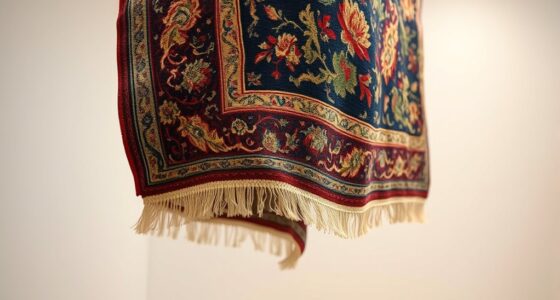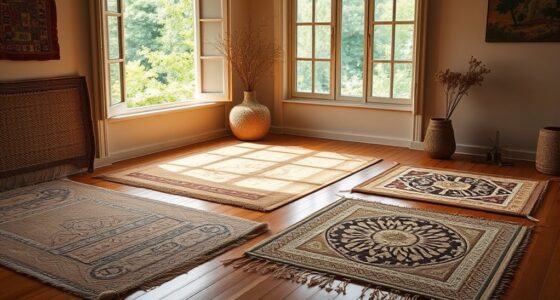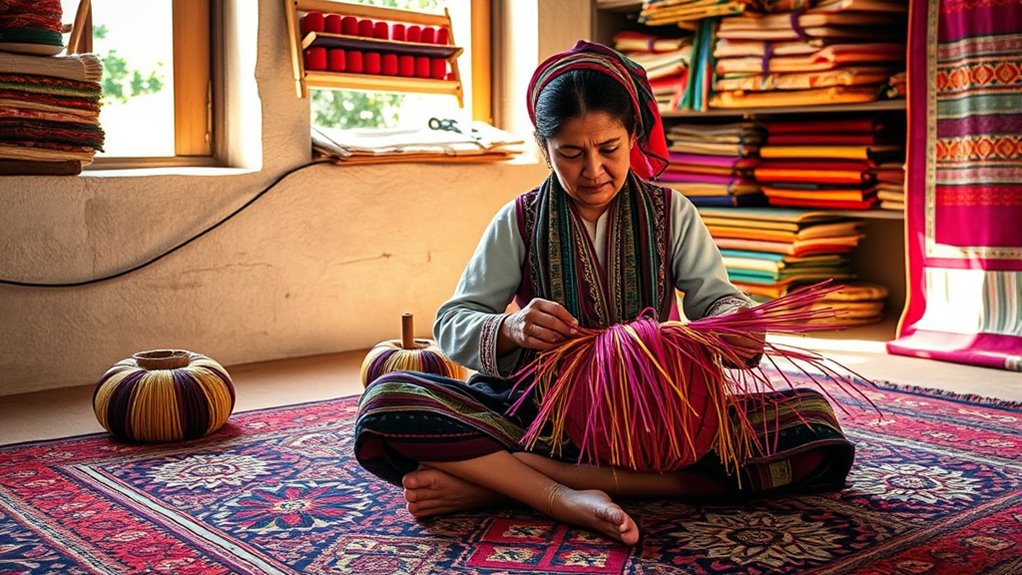
Women are essential in preserving rug weaving traditions, acting as cultural custodians and passing down skills, motifs, and techniques through generations. They craft each rug as a story that embodies community history, beliefs, and values, using symbols, colors, and patterns with deep meaning. By teaching younger generations and adapting techniques, women keep the craft alive and relevant. As you continue exploring, you’ll discover how their role sustains cultural identity and heritage worldwide.
Open a free Amazon Business account
Business pricing, bulk buying and tax-exempt orders.
As an affiliate, we earn on qualifying purchases.
Key Takeaways
- Women serve as primary custodians, passing down weaving techniques and cultural motifs across generations.
- They use weaving to preserve and express their community’s cultural identity and heritage.
- Women encode symbols and stories within patterns, conveying cultural beliefs and social values.
- They act as cultural stewards, ensuring the continuity of traditional craftsmanship and storytelling.
- Women innovate within tradition, blending new influences to keep weaving relevant and meaningful today.

Women have long been the backbone of rug weaving, playing a pivotal role in preserving traditional designs and techniques. Your involvement in this craft isn’t just about creating beautiful textiles; it’s about maintaining a cultural legacy passed down through generations. As you weave, you employ specific weaving techniques that have been refined over centuries, each with its own significance and style unique to your community. These techniques—whether knotting, looping, or twining—are more than just methods of construction; they’re expressions of your identity and history. Every pattern you create is infused with cultural symbolism, representing stories, beliefs, and social values that define your people. For you, each rug becomes a narrative, a visual language that connects the present to the past. Your hands are the keepers of tradition, as you meticulously learn and transmit these weaving techniques to younger generations. This process isn’t merely about craftsmanship; it’s about ensuring that the cultural symbolism embedded in every motif endures. You understand that certain symbols—geometric shapes, colors, or specific patterns—carry meanings, such as protection, fertility, or spirituality. When you select colors and motifs, you’re making deliberate choices that reflect your community’s history and worldview. This deep connection between technique and symbolism elevates your work beyond mere decoration, turning each rug into a meaningful artifact. Additionally, the use of color symbolism in your rugs enhances their cultural significance and aesthetic appeal. As you weave, you also adapt and innovate while staying rooted in tradition. You might incorporate new patterns or techniques influenced by external cultures, but you do so with respect and awareness of their significance. This balance helps keep your craft dynamic and relevant, ensuring that your cultural symbolism continues to resonate with contemporary audiences. Your role isn’t just technical; it’s cultural stewardship. You pass on your knowledge through oral stories, hands-on teaching, and shared experiences, ensuring that the art form survives and thrives. In this way, your participation in rug weaving sustains much more than an aesthetic tradition—it sustains your community’s identity. Every rug you produce is a monument to your skills, cultural symbolism, and the resilience of your heritage. Through your dedication, you keep alive the stories, values, and symbols that define your people, making you a essential custodian of your culture’s rich history.

Sanwariya Rugs Handwoven Wool Jute Southwestern Area Rug, 5 x 8 Ft
- Handwoven with premium wool and jute: Skilled craftsmanship with authentic materials
- Bold tribal medallion pattern: Creates a warm, inviting atmosphere
- Traditional geometric border design: Complements various home décor styles
As an affiliate, we earn on qualifying purchases.
As an affiliate, we earn on qualifying purchases.
Frequently Asked Questions
How Do Women Pass Down Weaving Techniques Across Generations?
You pass down weaving techniques through family mentorship and storytelling traditions, sharing skills and cultural stories with younger generations. You teach them how to select materials, master intricate patterns, and develop their own style. By involving family members in your craft, you guarantee these techniques stay alive. Storytelling adds depth, connecting the weaving process to cultural history, so each new generation understands the significance behind the patterns and methods you’ve preserved.
Are There Specific Symbols Women Incorporate Into Their Designs?
You’ll notice women often incorporate symbolic motifs into their designs, reflecting cultural significance and personal stories. These symbols, like geometric patterns or nature-inspired elements, serve as a language conveying identity, history, and beliefs. Coincidentally, these motifs are passed down through generations, creating a shared cultural heritage. By weaving these symbols, women preserve traditions, making each rug a meaningful artwork that connects past and present in a vibrant tapestry of cultural expression.
What Challenges Do Women Face in Preserving Traditional Weaving Skills?
You face challenges in preserving traditional weaving skills due to gender disparities and limited market access. These disparities often restrict your opportunities to showcase and sell your work, making it harder to sustain your craft financially. Additionally, societal expectations may limit your participation in training or leadership roles within the weaving community. Overcoming these hurdles requires support, fair market access, and recognition of your essential role in maintaining cultural heritage.
How Has Women’s Participation in Rug Weaving Evolved Historically?
Women’s participation in rug weaving has blossomed like a spring flower, gradually shifting from traditional gender roles to crucial cultural preservation. Historically confined, women now actively shape the craft’s evolution, passing down skills and stories through generations. This transformation reflects society’s broader recognition of their essential role, empowering them to keep cultural heritage alive. Your involvement guarantees these ancient traditions continue to thrive, weaving the fabric of cultural identity for future generations.
Do Women Hold Leadership Roles Within Weaving Cooperatives or Groups?
Women do hold leadership roles within weaving cooperatives or groups, often shaping cooperative governance. You might see women leading decision-making processes, organizing production, or managing sales, which empowers them and elevates their influence. In many communities, women’s leadership strengthens group cohesion and preserves traditional techniques, ensuring that their essential contributions continue to thrive. Their active participation in governance highlights the evolving recognition of women’s important roles in rug weaving cooperatives.
Conclusion
As you reflect on the rich tapestry of rug weaving traditions, you realize that women’s hands have always woven more than just fibers—they’ve crafted cultural legacies. It’s a coincidence how, in every knot and pattern, their stories quietly intertwine with history. When you see a beautifully woven rug, remember it’s not just art, but a testament to women’s enduring strength and creativity, quietly shaping traditions that continue to flourish beneath your gaze.
Baby shower & registry season Picks
baby registry must-haves
As an affiliate, we earn on qualifying purchases.