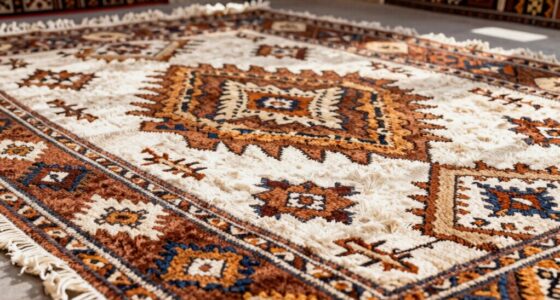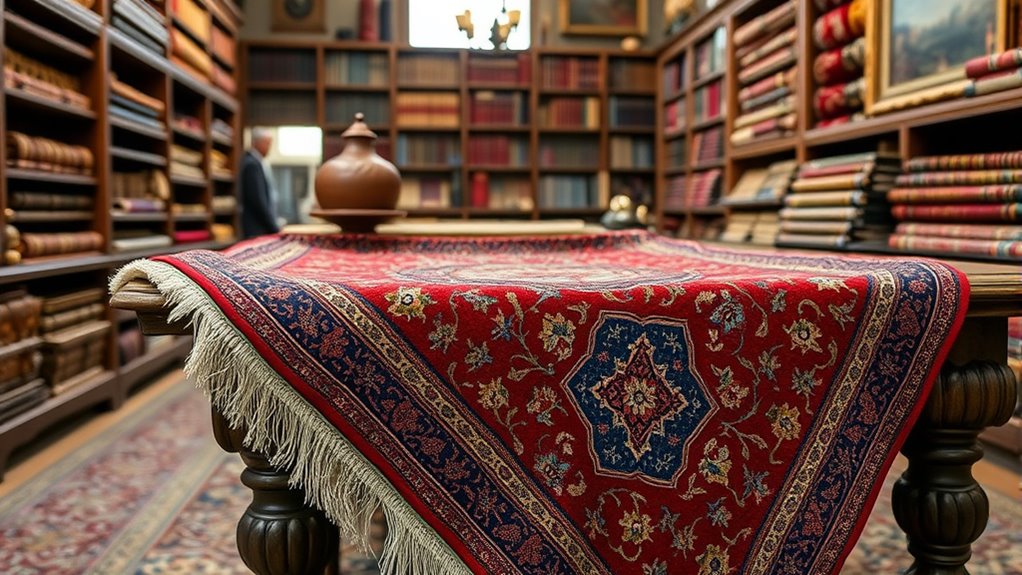
Oriental rugs have a proud history that begins in Persia over thousands of years ago, showcasing innovative weaving and dyeing techniques. Skilled artisans used natural dyes and complex knotting methods, creating intricate patterns and vibrant colors that reflected regional traditions and stories. These craftsmanship techniques spread through trade routes, influencing styles across Asia and Europe. As you explore further, you’ll discover how these rugs evolved into treasured art forms admired worldwide today.
Key Takeaways
- Persian rug weaving dates back thousands of years, showcasing sophisticated techniques and regional artistic traditions.
- Natural dyes from plants and minerals created vibrant, durable colors integral to regional styles.
- Advanced knotting methods like the Senneh knot enhanced rug detail, durability, and cultural symbolism.
- Regional influences, including Anatolian and Central Asian styles, spread techniques and motifs across Asia and Europe.
- Oriental rugs’ craftsmanship and artistry have established their reputation as valuable cultural and artistic symbols worldwide.
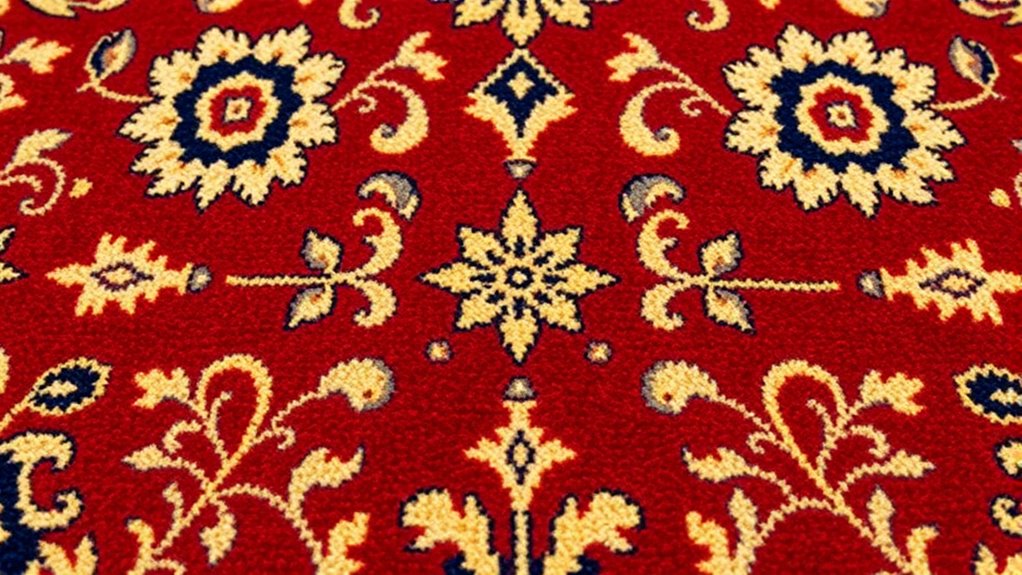
The history of Oriental rugs is a rich tapestry woven over thousands of years, reflecting the artistry and cultural traditions of the regions where they originated. As you explore their history, you’ll notice how intricate weaving techniques and dyeing methods have evolved, shaping the unique character of each piece. In ancient Persia, for example, master weavers developed sophisticated weaving techniques that allowed for detailed patterns and durable constructions. These techniques often involved complex knotting methods, such as the Persian or Senneh knot, which contributed to the rug’s durability and intricate designs. Such craftsmanship required skill and patience, passed down through generations of artisans.
Dyeing methods also played an indispensable role in defining the beauty and symbolism of these rugs. Natural dyes derived from plants, minerals, and insects were used to produce vibrant, long-lasting colors. For instance, the use of indigo created deep blues, while madder root yielded rich reds. The precise application of these dyes, often achieved through multiple dye baths and careful mordanting, allowed artisans to create subtle color gradations and detailed motifs. This mastery over dyeing not only enhanced aesthetic appeal but also conveyed cultural stories and symbolism embedded in the patterns.
Throughout history, different regions within Persia and neighboring areas refined their techniques, resulting in distinct styles. The Anatolian Turks, for example, developed their own weaving patterns and employed specific dyeing methods that produced bold geometric designs. Meanwhile, Central Asian tribes introduced symbolic motifs and used locally sourced dyes, giving rise to unique visual identities. As trade routes expanded, these techniques and styles spread across Asia and into Europe, influencing rug-making traditions far beyond their origins.
Regional weaving and dyeing techniques shaped diverse styles, influencing global rug traditions across Asia and Europe.
You can see how these innovations in weaving and dyeing techniques contributed to the reputation of Oriental rugs as highly valued art forms. Each rug became a reflection of its maker’s skill, cultural identity, and the natural resources available in its region. Over centuries, technological and artistic advancements allowed weavers to experiment with new patterns, color combinations, and weaving styles, leading to the diverse array of Oriental rugs admired today. Their enduring beauty and craftsmanship are a tribute to the rich history of techniques perfected over generations, connecting you to a centuries-old tradition of artistry and cultural expression.

SERISSA Washable Rugs 8×10 Area Rugs, Large Non-Slip Boho Living Room Rust Rug, Ultra Soft Vintage Print Distressed Oriental Tribal Farmhouse Carpet for Dining Room Bedroom Dorm Office Home Decor
❤️【Soft Low Pile Rug】 This area rug is made of high-quality polyester. Ultra pleasant soft feel and quality…
As an affiliate, we earn on qualifying purchases.
As an affiliate, we earn on qualifying purchases.
Frequently Asked Questions
How Are Oriental Rugs Preserved and Restored Today?
You can preserve and restore oriental rugs today by using specialized rug cleaning methods that gently remove dirt and stains without damaging fibers. Restoration techniques like knot repair, color restoration, and fringe rebuilding help maintain their beauty. Regular professional cleaning and careful handling are essential. By trusting experts who use these methods, you guarantee your rug stays vibrant and intact for generations to come.
What Are the Differences Between Antique and Modern Oriental Rugs?
Imagine you’re browsing a vintage store—antique oriental rugs boast authentic craftsmanship and rich history, making each piece unique and valuable. Modern rugs, on the other hand, emphasize contemporary design and durability, often prioritizing aesthetic appeal over antique authenticity. The main difference lies in age and craftsmanship: antiques are handcrafted, often with centuries-old techniques, while modern rugs incorporate updated methods and materials to meet today’s tastes and standards.
Which Regions Outside Persia Are Known for Notable Rug Weaving?
You’ll find notable rug weaving in regions like Turkey, Afghanistan, and the Caucasus. Each area has distinct regional styles and weaving techniques that set their rugs apart. Turkish rugs often feature bold geometric patterns, while Afghan designs emphasize deep reds and intricate motifs. The Caucasus showcases diverse styles with complex knotting techniques. Exploring these regions reveals rich traditions that contribute uniquely to the global tapestry of oriental rug craftsmanship.
How Does Rug Symbolism Vary Across Different Cultures?
Rug symbolism varies greatly across cultures, reflecting unique cultural motifs and ritual significance. You’ll notice that in some societies, geometric patterns symbolize protection, while floral designs represent fertility or paradise. In others, specific colors and symbols hold spiritual meanings, serving as talismans or storytelling devices. By understanding these cultural motifs, you can appreciate how rugs serve as more than decorations—they embody stories, beliefs, and rituals that connect communities across generations.
What Is the Economic Impact of Oriental Rug Trade Globally?
You see that the global oriental rug trade considerably impacts economies, with a market valuation running into billions. You can influence import-export dynamics, as countries like Iran, India, and Turkey dominate supply chains. When demand rises, prices increase, boosting local economies and supporting artisans. Conversely, shifts in trade policies or economic downturns can affect market stability. Overall, the trade fosters cultural exchange while shaping the financial landscape of rug-producing nations.

FRELISH DECOR Handwoven Jute Area Rug – 2×3 feet – Natural Yarn – Rustic Vintage Beige Braided Reversible Rug – Eco Friendly Rugs for Bedroom – Kitchen – Living Room – Farmhouse (2'x3')
SIZE: This handwoven jute area rug is 2×3 Feet. We have many more sizes for you to choose…
As an affiliate, we earn on qualifying purchases.
As an affiliate, we earn on qualifying purchases.
Conclusion
Now that you’ve explored the rich history of Oriental rugs, imagine walking into a home where a centuries-old Persian carpet tells its story through intricate patterns. These rugs aren’t just beautiful decorations—they’re woven histories that connect you to centuries of craftsmanship and culture. Whether you own one or simply admire their artistry, understanding their journey from Persia to the world deepens your appreciation for these timeless treasures. Every rug holds a story worth discovering.

Shahbanu Rugs Snowbound White Hand Knotted Afghan Kazak Densely Woven Soft and Vibrant Wool Natural Dyes Oriental Rug (3'10"x5'8")
Latex free
As an affiliate, we earn on qualifying purchases.
As an affiliate, we earn on qualifying purchases.

Oriental Rugs: An Illustrated Lexicon of Motifs, Materials and Origins
As an affiliate, we earn on qualifying purchases.
As an affiliate, we earn on qualifying purchases.