If you’re exploring dyes, you’ll find vegetable dyes are eco-friendly and derived from natural plant sources, offering earthy tones, while synthetic dyes provide vibrant, consistent colors through chemical processes. Space-dyeing creates unique, multi-colored patterns by applying dyes in sections, making each piece one-of-a-kind. Each type has its benefits and environmental impacts—so understanding their differences helps you choose the best option for your project. Stay tuned to uncover more about their uses, advantages, and future trends.
Key Takeaways
- Vegetable dyes are natural, eco-friendly, and derived from plants, insects, or minerals, while synthetic dyes are chemically manufactured for vibrant, durable colors.
- Space-dyed techniques involve applying dyes selectively to create multi-colored, artistic patterns with unique, unpredictable effects.
- Vegetable dyes require mordants and careful fabric preparation, whereas synthetic dyes offer quick, consistent coloring suitable for mass production.
- Natural dyes have a lower environmental impact, but may need more water and time; synthetic dyes often involve toxic chemicals impacting the environment.
- Space dyeing emphasizes creativity and resource efficiency, producing one-of-a-kind designs through techniques like tying, bundling, or spraying.

Natural Earth Paint Egg Dye Kit – Eco-Friendly, Non-Toxic Easter Egg Coloring for Kids & Adults – 4 Food-Safe Dyes, No Boiling Needed, Mixable Colors, Vegan & Sustainable
Eco-Friendly & Non-Toxic – Made from plant-based dyes including spinach, purple carrot, turmeric, beet, and red cabbage. Safe…
As an affiliate, we earn on qualifying purchases.
As an affiliate, we earn on qualifying purchases.
What Are Vegetable Dyes and How Are They Made
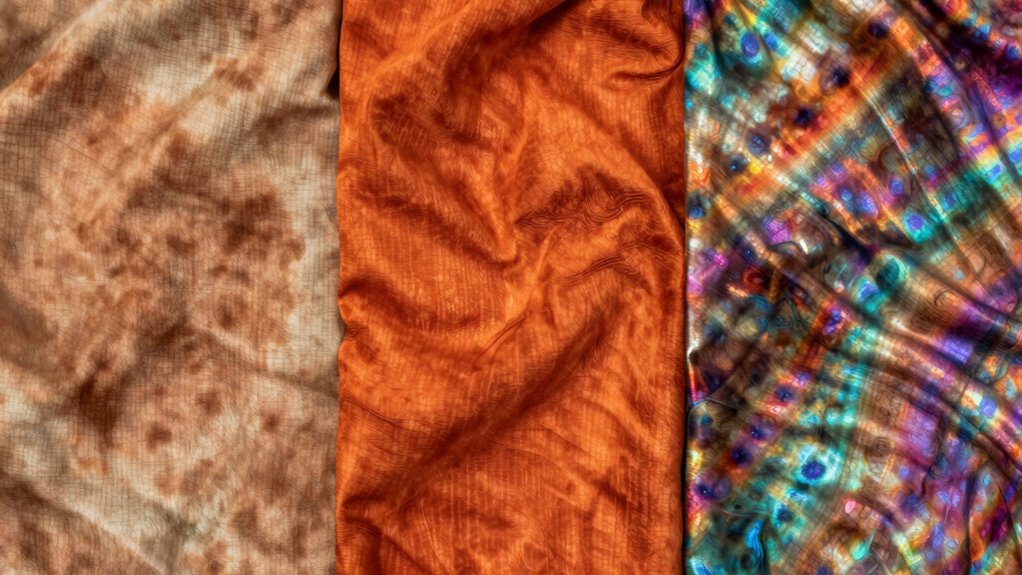
Have you ever wondered how vegetable dyes get their vibrant colors? It all starts with natural extraction from plant sources like roots, leaves, and bark. You can extract these dyes by crushing or boiling the plant material, releasing pigments that give each dye its unique hue. The process involves carefully selecting the right plant sources, then soaking or boiling them to draw out the colors embedded in their tissues. The resulting liquid can be used directly or refined further to create stable dyes for textile and craft applications. Because these dyes come from nature, they’re biodegradable and eco-friendly, making them a sustainable choice. Understanding how vegetable dyes are made highlights their natural origin and the traditional methods used to harness their vivid, enduring colors. Additionally, proper preservation techniques ensure the longevity and colorfastness of vegetable dyes, making them a practical choice for various uses.

12 Colors Tie Dye Kit, Tie Dye Set for Kids, Pre-Filled Tye Dye Bottles, Non Toxic Permanent Fabric Dye Art Set, Easy DIY Fabric Art – Create Fun
【Premium Tie Dye Kit】Dive into the vibrant world of tie-dyeing with our all-inclusive kit. Perfect for beginners and…
As an affiliate, we earn on qualifying purchases.
As an affiliate, we earn on qualifying purchases.
How Vegetable Dyes Are Used in Textiles and Art

Vegetable dyes bring a natural vibrancy to textiles and artwork, making them a popular choice for those seeking sustainable and authentic materials. You can achieve beautiful colors by using natural plant sources, where dye extraction involves soaking or boiling the plant material to release pigments. Artists and textile makers often prefer vegetable dyes because they create unique, earthy tones that deepen over time. To use these dyes, you typically prepare the fabric by mordanting it with natural substances like alum or iron, which help fix the dye. Once prepared, you immerse the fabric in the dye bath, allowing the color to set. This process not only results in stunning, eco-friendly textiles but also connects you to traditional dyeing techniques rooted in nature.
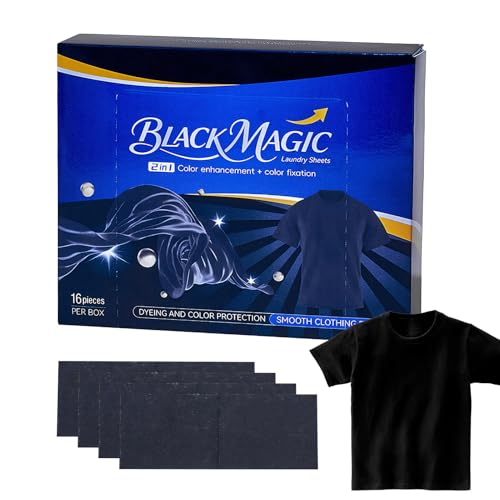
Black Fabric Dye Sheets, Quick Color Restoration Dye, 16 Pieces Clothing Color Kit for T-Shirts Jeans, Water-Soluble Fabric Details, Laundry Accessory with Easy Use, Home Textile Dyeing for Pants
Color Renewal: Achieve a deep and uniform shade on worn fabrics without fading or streaking allowing your garments…
As an affiliate, we earn on qualifying purchases.
As an affiliate, we earn on qualifying purchases.
How Synthetic Dyes Were Developed and Their Benefits

Synthetic dyes revolutionized the textile industry in the late 19th century by providing a fast, consistent, and affordable way to add vibrant colors to fabrics. This breakthrough stemmed from advances in chemical synthesis, allowing scientists to create dyes in laboratories rather than relying on natural sources. The industry impact was immediate: textiles became more colorful, durable, and accessible. You can see the emotional effect in the table below, which highlights key benefits:
| Benefit | Impact | Emotion |
|---|---|---|
| Consistency | Reliable color quality | Confidence in your choices |
| Affordability | Lower production costs | Excitement for consumers |
| Vibrancy | Bright, lasting hues | Joy of vivid colors |
| Speed of production | Faster manufacturing times | Satisfaction in quick results |
| Industry growth | Boosted economy | Pride in technological progress |
Additionally, synthetic dyes opened up new possibilities for color precision, enhancing the ability to reproduce exact shades repeatedly.

Fabric Dye Powder; Eco Friendly Biodegradable Clothing Dye Kit All Purpose Color for Natural and Synthetic Fabrics (Dark Blue (628))
Vibrant Lasting Color – Our Clothing Fabric Dye delivers intense, high-fixation color that stays rich wash after wash….
As an affiliate, we earn on qualifying purchases.
As an affiliate, we earn on qualifying purchases.
Are Vegetable Dyes More Sustainable Than Synthetic Dyes?

Are vegetable dyes a more sustainable choice compared to synthetic dyes? Generally, they have a lower environmental impact because they come from renewable plant sources and often require fewer toxic chemicals during production. This results in less pollution and waste, making them a greener option. Additionally, vegetable dyes hold significant cultural importance in many communities, preserving traditional craft techniques and supporting local economies. They often involve sustainable harvesting practices that respect ecosystems. However, vegetable dyes may not always produce the same colorfastness or vibrancy as synthetics, which can lead to higher water use and repeated dyeing. Incorporating requirements traceability practices can help ensure the use of sustainable sourcing methods and maintain quality standards. Overall, if sustainability and cultural preservation matter most to you, vegetable dyes tend to be a better choice—especially when mindful harvesting and processing methods are used.
What Is Space-Dyeing and How Does It Create Unique Patterns?
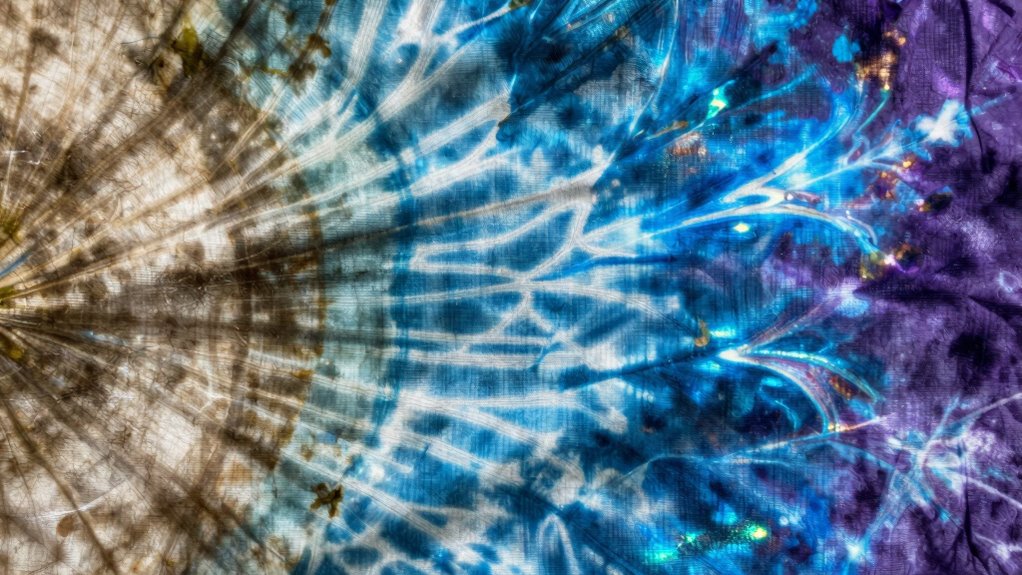
Space-dyeing involves applying dyes directly to yarn or fabric in specific sections, which results in one-of-a-kind patterns. The way you apply the dyes—whether by twisting, bunching, or tying—significantly influences the final look. Each technique creates distinct pattern variations, making every piece uniquely vibrant. Additionally, the application methods used in space-dyeing are crucial in determining the complexity and uniqueness of the resulting designs.
Dye Application Techniques
Unlike traditional dyeing methods that color entire fabrics uniformly, space-dyeing involves applying multiple colors in specific sections to create distinctive patterns. This technique often begins with natural pigments, where dye extraction from plants or minerals provides vibrant, eco-friendly hues. You start by selectively applying dye to certain areas of the fabric, rather than submerging it completely. This targeted approach allows you to control where colors appear, resulting in irregular, multi-colored patterns that are unique with each application. Space-dyeing can be achieved through hand-painting, tying, or bundling fabrics to restrict dye penetration. The process emphasizes precision, enabling you to craft visually interesting textiles that stand out with their unpredictable, artistic patterns. It’s a versatile technique that highlights both creativity and the beauty of natural dye sources. Additionally, dye application techniques can influence the overall sustainability and environmental impact of your textile projects.
Resulting Pattern Variations
Because space-dyeing involves applying multiple colors to specific sections of fabric, it results in a wide variety of unique patterns that cannot be replicated exactly. This technique relies on natural extraction methods to source dyes, which can influence dye stability during processing. Since natural dyes often have varying dye stability compared to synthetic options, the resulting patterns may show subtle differences with each batch. These variations create distinctive, one-of-a-kind designs, making space-dyed fabrics highly sought after for their individuality. The unpredictability of how dyes interact with fibers and the natural extraction process ensures no two pieces are alike. As a result, space-dyeing offers a dynamic, artistic approach that celebrates pattern variation and the natural qualities of the dyes used.
How Are Space-Dyed Fabrics Made? Techniques and Creativity

To create stunning space-dyed fabrics, you start with fabric preparation techniques that set the stage for vibrant patterns. Next, you choose dye application methods that allow for unpredictable, artistic results. Finally, your design and pattern creation processes give each piece its unique character and flair. Incorporating safe handling practices during dyeing ensures a safer and more efficient workspace, helping you achieve consistent and beautiful results.
Fabric Preparation Techniques
Space-dyed fabrics are created through a specialized dyeing process that results in vibrant, multicolored patterns. Before dyeing, you prepare the fabric by guaranteeing it’s clean and properly conditioned, often through natural dyeing techniques like dye extraction from plants or minerals. This step enhances dye absorption and ensures consistent results. To achieve the space-dyed effect, you typically coil or bundle the fabric tightly, then apply multiple dyes in different sections or layers. The fabric is then wrapped in plastic or placed in a controlled environment to prevent color bleeding. This preparation allows the dyes to penetrate selectively, creating the characteristic variegated look. Your creativity in folding, tying, or bundling the fabric directly influences the final pattern, making each piece unique. Additionally, understanding the ethical implications of dyeing processes can help ensure environmentally responsible practices.
Dye Application Methods
Once your fabric is properly prepared and bundled, applying dye becomes a creative process that determines the final pattern. With space-dyeing, you can use natural pigments or synthetic dyes, each creating different effects through specific techniques. You might dip or brush sections, allowing chemical reactions to produce unique color shifts and gradients. Tying, folding, or twisting fabric can control where colors appear, while layering dyes encourages unpredictable blending. In space-dyeing, multiple colors are applied in a single pass or sequentially, creating vibrant, variegated patterns. The key is understanding how different dye application methods influence chemical reactions and color placement. Your choices in application—whether brushing, spraying, or bundling—directly shape the fabric’s visual complexity, making each piece a one-of-a-kind work of art.
Design and Pattern Creation
Creating mesmerizing patterns in space-dyed fabrics relies on both technique and creativity. The process begins with selecting fibers and extracting dyes through natural dyeing methods, which involve dye extraction from plants, insects, or minerals. Once the dyes are prepared, you can apply them in unique ways to create vibrant, variegated designs. The key is controlling how the dye interacts with the fabric during the space-dyeing process, which involves bundling, tying, or wrapping the fabric to produce unpredictable patterns. Your creative choices—such as color combinations, dyeing sequences, and fabric manipulation—determine the final look. Free Floating can also influence the overall aesthetic by offering natural movement and flow to the finished fabric.
- Using natural dyeing methods for rich hues
- Varying dye extraction techniques for diverse colors
- Tying or bundling fabric for pattern control
- Layering multiple dye applications
- Experimenting with color blending and fabric tension
Which Dyes Are Best for Sensitive Skin and Eco-Friendly Projects?

When choosing dyes for sensitive skin and eco-friendly projects, natural and plant-based options are your best bet. Natural pigments derived from plants, roots, and minerals are typically free of harsh chemicals, reducing the risk of skin irritation. These dyes work through chemical reactions that bond pigments to fibers without synthetic additives. Because they’re minimally processed, they tend to be safer for sensitive skin and better for the environment. Additionally, natural dyes are biodegradable and renewable, making them an eco-conscious choice. While some natural dyes may require mordants—substances that facilitate the chemical reactions needed for color fixation—these are often less toxic than synthetic chemicals. Overall, natural pigments provide a gentle, sustainable option for those prioritizing skin safety and environmental impact. Incorporating certified organic dyes can further ensure the purity and eco-friendliness of your project.
How Do Vegetable, Synthetic, and Space-Dyed Fabrics Compare in Durability?

When comparing vegetable, synthetic, and space-dyed fabrics, you’ll notice differences in color fastness and wear resistance. Synthetic fabrics often hold their colors longer and resist fading better over time, while vegetable dyes may fade more quickly. Space-dyed textiles offer unique patterns with decent durability, but their longevity varies depending on the dyeing process.
Color Fastness Levels
Color fastness levels determine how well fabrics retain their color after exposure to washing, light, and rubbing. With vegetable dyes, natural mordants and mordanting techniques greatly influence durability, often resulting in moderate fastness. Synthetic dyes tend to have higher color fastness due to their chemical stability, making them more resistant to fading. Space-dyed fabrics can vary, depending on dye application and fiber type, but generally fall between vegetable and synthetic dyes. Factors affecting fastness include dye type, mordants used, and fabric treatment. You should consider these aspects when choosing dyes for durability:
- Natural mordants improve color fixation but may reduce fastness if not used properly
- Synthetic dyes often outperform vegetable dyes in lightfastness
- Mordanting techniques impact wash fastness
- Space-dyed fabrics can experience uneven fading
- Proper fabric care extends color longevity
Additionally, herbal baths and natural spices can influence dyeing processes and color stability, enhancing fabric longevity through holistic approaches.
Wear Resistance Differences
Vegetable dyes generally offer moderate wear resistance, especially if natural mordants are used properly, but they tend to fade more quickly with repeated washing and exposure to light. Their natural pigmentation comes from dye extraction from plant sources, which can vary in strength. Over time, this makes vegetable-dyed fabrics less durable in regards to color retention. Synthetic dyes typically provide higher wear resistance, as their chemical bonds are more resistant to fading and washing. Space-dyed fabrics, often involving synthetic or combined dyeing techniques, tend to have enhanced durability due to the stability of their dye compounds. Overall, if durability is your priority, synthetic and space-dyed fabrics usually outperform vegetable dyes, which sacrifice some wear resistance for their eco-friendly and natural characteristics.
Longevity of Colors
Among the different fabric dyeing methods, synthetic dyes generally deliver the longest-lasting colors, maintaining vibrancy through numerous washes and exposure to light. Synthetic dyes offer superior dye stability, ensuring your garments retain their original hue longer than vegetable dyes or space-dyed fabrics. Vegetable dyes, derived from natural pigmentation, tend to fade faster because of lower dye stability, especially after repeated washing. Space-dyed fabrics often have color variations that can mask fading but may not last as long in overall vibrancy. To maximize color longevity, consider the dye type and how it interacts with your fabric.
- Synthetic dyes resist fading better over time
- Vegetable dyes may require gentler washing
- Space-dyed fabrics hide wear with color patterns
- Proper care extends dye longevity
- Natural pigmentation fades faster than synthetic
Which Dye Type Suits Your Craft or Fashion Project? Pros and Cons
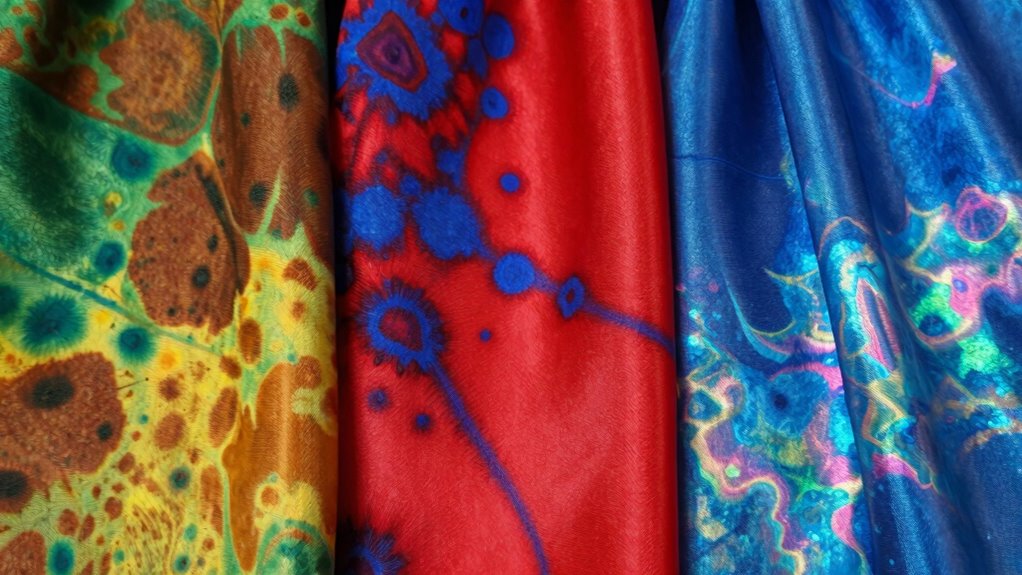
Are you unsure which dye type best fits your craft or fashion project? Natural pigments, obtained through dye extraction from plants, offer eco-friendly options that are perfect for sustainable projects. They tend to produce softer, muted tones and are easy to work with for beginners. However, natural dyes might lack the vibrant colorfastness of synthetic options and can require more time and effort to extract and apply. Synthetic dyes, on the other hand, provide bright, consistent colors and are highly durable, making them ideal for projects requiring longevity. Space-dyed techniques create unique, multi-colored effects that add visual interest. Your choice depends on your priorities: natural pigments for eco-consciousness, synthetic dyes for vibrancy and durability, or space-dyed for artistic expression.
What’s Next for Dyes? Innovations and Sustainable Practices
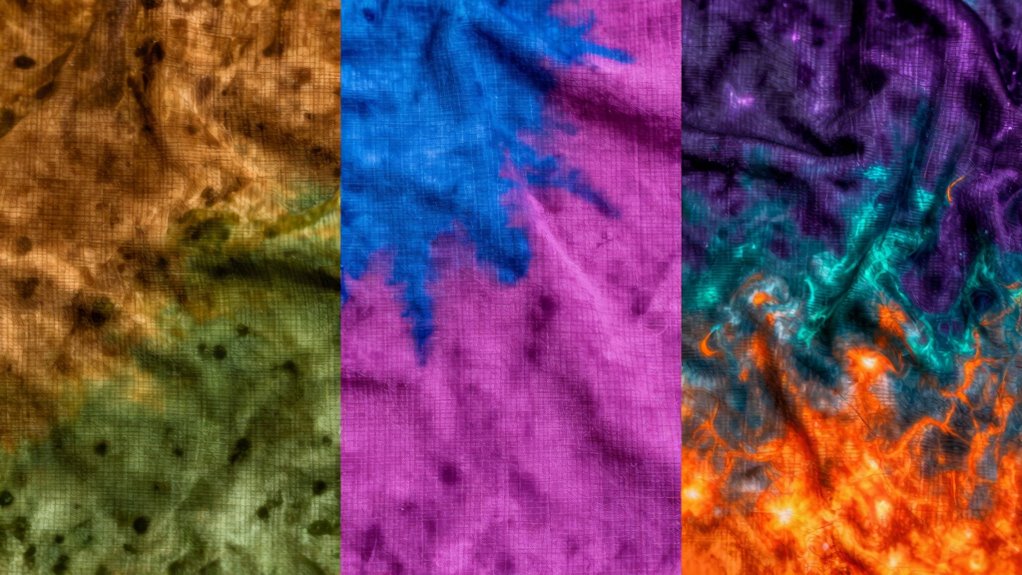
What’s on the horizon for dyes? Advancements in dye chemistry are driving innovative solutions that blend sustainability with vibrant color. Researchers are revisiting historical dyeing techniques, integrating natural dyes with modern methods to reduce environmental impact. The focus is shifting toward eco-friendly practices, like using plant-based dyes and reducing toxic waste. You can expect developments in lab-grown dyes that mimic traditional hues without harming ecosystems. Innovation also includes space-dyed processes, creating unique patterns while conserving resources. These trends aim to preserve the rich history of dyeing while embracing greener, safer options. Staying informed means you’ll be part of a movement toward sustainable fashion and crafts, where dye chemistry sparks creativity without compromising the planet.
- Natural dyes reborn through sustainable techniques
- Lab-grown, eco-friendly synthetic dyes
- Space-dyed methods for unique designs
- Reinventing historical dyeing with modern science
- Reduced chemical waste in dye manufacturing
Frequently Asked Questions
How Do Dyeing Processes Impact Environmental Pollution?
Dyeing processes considerably impact environmental pollution through wastewater management issues and chemical runoff. When you neglect proper wastewater treatment, harmful dyes and chemicals seep into water sources, contaminating ecosystems and affecting human health. Synthetic dyes often contain toxic substances, increasing pollution risks, while vegetable dyes are typically more eco-friendly. By managing wastewater effectively and reducing chemical runoff, you can minimize environmental harm and promote sustainable dyeing practices.
Can Vegetable Dyes Produce Vibrant, Long-Lasting Colors?
Yes, vegetable dyes can produce vibrant, long-lasting colors, but their natural brightness may be somewhat softer compared to synthetic dyes. You’ll find that with proper mordants and care, the color longevity of vegetable dyes improves, making them suitable for many applications. While they might not always match the intensity of synthetic dyes, their eco-friendliness and unique tones make them a great choice if you value sustainability and natural hues.
Are Synthetic Dyes Safe for All Skin Types and Allergies?
Synthetic dyes aren’t safe for everyone, especially if you have skin sensitivity or allergy risks. They can cause irritation or allergic reactions in some people, so you should always check labels and do patch tests first. If you have sensitive skin or known allergies, it’s better to choose natural or vegetable dyes. Always consult with a dermatologist if you’re unsure about how your skin might react to synthetic dyes.
What Are the Cost Differences Between Vegetable and Synthetic Dyes?
You’ll find that synthetic dyes generally have better cost effectiveness due to their lower production costs and higher availability, making them more affordable overall. Vegetable dyes tend to have higher pricing variation because of factors like source material, labor, and seasonal availability, which can drive up costs. If budget is a concern, synthetic dyes usually offer a more consistent and economical choice, whereas vegetable dyes might be pricier but appeal to eco-conscious consumers.
How Does Space-Dyeing Influence Fabric Manufacturing Efficiency?
Ironically, space-dyeing speeds up fabric manufacturing while complicating fiber penetration and dye fixation. You might think it’s a quick fix, but it actually requires precise machinery and careful control to achieve intricate color patterns. This method reduces the need for multiple dyeing steps, boosting efficiency. However, it demands specialized equipment, which can offset time savings. So, in the end, space-dyeing’s impact on efficiency is both a benefit and a challenge.
Conclusion
Now that you’ve explored vegetable, synthetic, and space-dyed fabrics, you hold the brush to paint your own vibrant story. Each dye type is a different note in the symphony of creativity—some warm and earthy, others bold and futuristic. Choose wisely, and let your fabric be more than material; let it be a canvas of sustainability, innovation, and self-expression. Ultimately, your choice colors the future you imagine.