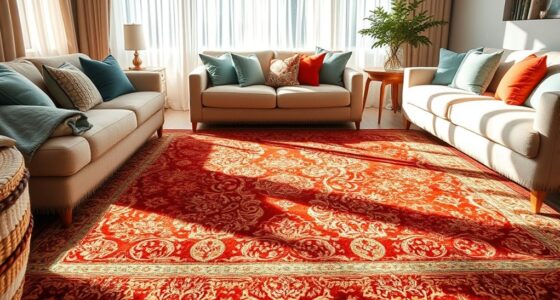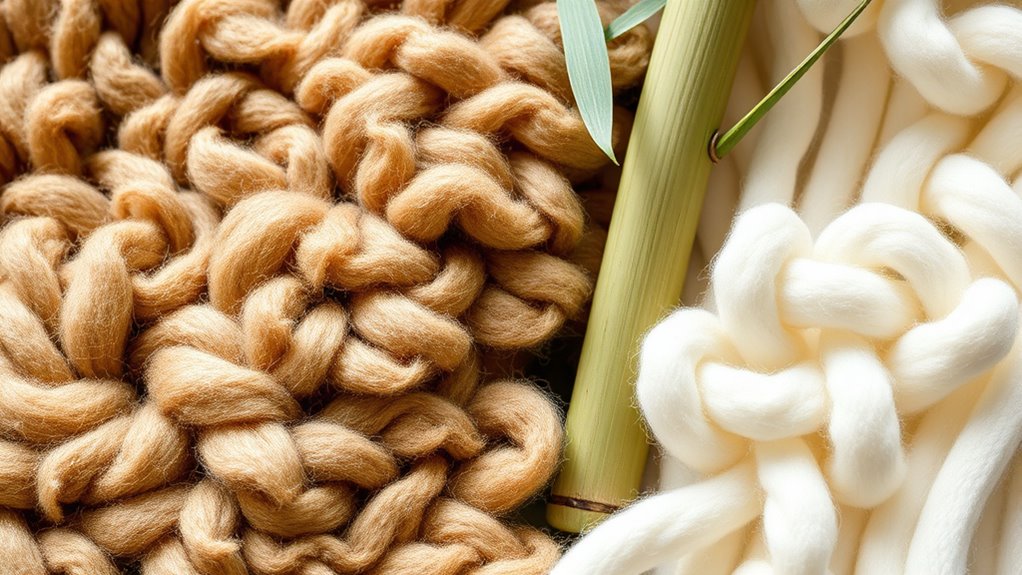
Choosing the right rug material like wool, bamboo, or cotton can help you naturally control temperature and humidity in your home. Wool traps air, providing insulation while absorbing moisture to keep your space dry and cozy year-round. Bamboo’s breathable fibers allow airflow, helping you stay cool in summer and warm in winter. Cotton’s moisture-wicking properties prevent dampness and mold. Keep exploring to discover how these materials can enhance your home’s comfort all year.
Key Takeaways
- Wool rugs insulate by trapping air, providing warmth in winter and cooling in summer.
- Bamboo rugs are highly breathable, allowing airflow to regulate temperature year-round.
- Cotton rugs absorb moisture, preventing dampness and mold, maintaining a comfortable environment.
- All three materials help maintain indoor temperature balance through natural breathability and moisture management.
- Their distinct properties influence comfort, insulation, and long-term rug performance in various climates.

When choosing a rug, considering how it regulates temperature can make a significant difference in your comfort. Rugs made from materials like wool, bamboo, and cotton each have unique properties that influence how warm or cool your space feels. Wool, in particular, stands out for its excellent insulation properties. Its natural fibers trap air, creating a barrier that retains heat during colder months and helps keep the room cooler when it’s warm. This makes wool rugs versatile and effective year-round. Additionally, wool excels at moisture management, absorbing humidity from the air and preventing dampness or mold buildup. This means your rug stays dry and comfortable, reducing the risk of unpleasant odors or deterioration caused by excess moisture. Moreover, color temperature adjustments can further optimize the ambiance and comfort of your space depending on the season and personal preference.
Bamboo, on the other hand, offers a different set of benefits. As a renewable resource, bamboo is not only eco-friendly but also naturally breathable. It helps regulate temperature by allowing air to flow freely through the fibers, which can keep your feet cool in summer and warm when it’s chilly. Bamboo’s moisture-wicking qualities also contribute to better moisture management, preventing sweat from accumulating and making it a good choice for high-humidity environments. Since bamboo fibers are lightweight and have a smooth texture, they promote good airflow and help maintain a balanced indoor climate, ensuring you feel comfortable regardless of the season.
Cotton rugs are another popular option, especially for their softness and breathability. Cotton’s natural fibers allow air to circulate easily, which helps with temperature regulation by preventing overheating. While cotton may not have the same insulation capabilities as wool, it effectively manages moisture by absorbing sweat and excess humidity. This absorption keeps the surface dry and reduces the likelihood of mold or mildew forming, especially in areas prone to dampness. Cotton rugs are a practical choice if you want a lightweight, easy-to-clean material that supports good moisture management and maintains a comfortable environment.

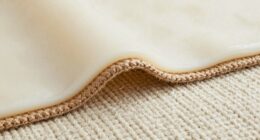
Nordic Sheep Baby Sheepskin 2×3.1 ft | Real Sheepskin Rug Temperature regulating for Strollers | Perfect as Fluffy Rug for the Baby Room | Comfortable as Chair Cover | Color: Natural Yellow
EASY TO CARE FOR – We recommend brushing it with a sheepskin brush every now and then. This…
As an affiliate, we earn on qualifying purchases.
As an affiliate, we earn on qualifying purchases.
Frequently Asked Questions
How Do Temperature-Regulating Rugs Impact Indoor Air Quality?
Temperature-regulating rugs improve your indoor air quality by reducing airborne allergens and preventing mold growth. They help maintain a stable humidity level, making it harder for mold to thrive and allergens to circulate. You’ll notice fresher, cleaner air because these rugs actively contribute to a healthier environment. Regularly cleaning them enhances these benefits, ensuring you breathe easier and enjoy a more comfortable space without worrying about allergy triggers or mold issues.
Are There Specific Maintenance Tips for Wool, Bamboo, and Cotton Rugs?
Think of maintaining your rug like tending a garden—you need to nurture it regularly. For wool, bamboo, and cotton rugs, you should schedule routine rug cleaning and address stains promptly. Use gentle cleaning methods, avoid harsh chemicals, and always follow manufacturer instructions. Regular vacuuming helps prevent dust buildup, and spot stain removal keeps your rug looking fresh. Proper care guarantees your rug remains beautiful and functional for years to come.
Which Material Is Most Eco-Friendly for Sustainable Living?
You’ll find bamboo is the most eco-friendly because of its quick growth and high biodegradability, making it a strong renewable resource. Wool also scores well due to its biodegradability and natural origins, but it requires more land and water. Cotton is renewable but less biodegradable, especially when heavily processed. For sustainable living, bamboo stands out because of its rapid renewability and minimal environmental impact, supporting eco-conscious choices.
How Do Rug Thickness and Density Affect Temperature Regulation?
Think of your rug as a cozy fortress; thicker and denser rugs act like insulative walls. Rug thickness controls how much heat is trapped or released, while high rug density creates a tight weave that keeps warmth in during winter and coolness out in summer. When you choose a rug with the right thickness and density, you design a climate-control shield that adapts to your comfort needs effortlessly.
Can These Materials Help Reduce Energy Costs in Homes?
You can definitely reduce energy costs with these materials, as wool, bamboo, and cotton offer excellent durability and aesthetic versatility. Wool’s natural insulation helps keep your home warmer in winter and cooler in summer, reducing heating and cooling needs. Bamboo and cotton rugs also add insulation and style, making your space more energy-efficient. Their long-lasting qualities mean you won’t need frequent replacements, saving you money over time.

COSTWAY Bamboo Area Rug, 5'x8' Natural Bamboo Floor Mat with Anti-Slip Backing, Indoor Roll-up Runner Rug, 96"x60" Anti-Skid Large Floor Carpet for Bedroom Living Room Entryway Indoor
[Wide Applications] This bamboo floor mat adds a natural ambiance to your home, able to blend seamlessly into…
As an affiliate, we earn on qualifying purchases.
As an affiliate, we earn on qualifying purchases.
Conclusion
Choosing the right material can make your rug a true temperature regulator. Wool, bamboo, and cotton each offer unique benefits, helping you stay comfortable year-round. Did you know wool can absorb up to 30% of its weight in moisture, keeping your space cozy and dry? By selecting the right fabric, you’ll enjoy a more comfortable environment and reduce energy costs. So, consider these materials carefully—they’re more than just stylish; they’re smart choices for comfort and sustainability.

COTTON CRAFT Woven Area Rug – 2 Pack Reversible Boho Farmhouse Rustic Cotton Throw Rug Carpet with Fringe – Machine Washable Accent Mat for Bedroom Living Room Entryway Bathroom – 22×34 – Tan Natural
Set of 2 Perfect Size Rugs with Decorative Fringes: The pack contains 2 rugs measuring 22 x 34…
As an affiliate, we earn on qualifying purchases.
As an affiliate, we earn on qualifying purchases.

FRELISH DECOR Wool and Jute Premium Handwoven Chunky Stripes Rug – Contemporary Area Rug for Living Room Bedroom (6' x 9' – Natural Ivory)
Material: 60% Jute, 30% Wool, 10% Cotton, Made by skilled artisans in India
As an affiliate, we earn on qualifying purchases.
As an affiliate, we earn on qualifying purchases.