TL;DR

Get cleaning gear delivered free with Prime
- Fast, free delivery on millions of items
- Prime Video, Amazon Music and more included
- Member-only deals all year
A Hunker report points to sintered stone as an alternative to conventional tile flooring, citing its nonporous surface, resistance to stains and moisture, and reduced grout lines. The material can cost more than many tiles, may be difficult to repair, and requires professional installation; no specific product or independent performance test is identified in the report.
A Hunker report identifies sintered stone as an alternative for homeowners considering new floors, describing it as a slab material that can resemble natural stone and resist moisture, stains and scratches. The option may reduce grout maintenance compared with standard tile, but it can cost more and requires specialist installation, so it is not a simple like-for-like replacement for every renovation.
Sintered stone is made by combining mineral particles, including silica, quartz and feldspar, then subjecting them to high heat and pressure. The report says the manufacturing process produces a nonporous surface. It describes that surface as resistant to scratches, stains, moisture and temperature changes, though the supplied material does not provide product-specific test results or quantify how those qualities compare with particular tile products.
The material is sold in large slabs and in designs intended to resemble marble, granite and other natural stones. Because slabs can require fewer joints than conventional tile layouts, the report says there may be less grout to clean. It also says sintered stone does not require sealing to prevent moisture absorption and staining in the way some natural stone floors do. Its nonporous surface may inhibit the growth of bacteria or viruses, according to the report; that description is not a claim that the flooring disinfects a room or replaces routine cleaning.
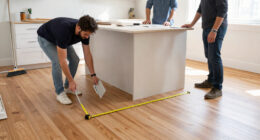
The trade-offs are substantial. Hunker describes sintered stone as more expensive than many tile options, with a potentially limited range of styles. Large pieces need careful handling and precise measurements, and the material is difficult to cut without specialized equipment. The report says installation should be left to a professional; improper handling or fitting can cause chips or cracks, while a damaged slab may be harder to replace than an individual tile.
Fewer Grout Lines, Higher Project Costs
For homeowners planning kitchens, bathrooms or other busy areas, the comparison is not simply about which surface looks more expensive. Sintered stone may appeal to people seeking a stone-like appearance with fewer grout joints and no need for sealing, while its stated resistance to moisture and stains could suit rooms where spills are common. Those are potential advantages, not guarantees: performance depends on the specific product, installation and care.
The installation requirements affect the overall decision. Since the slabs are difficult to cut and vulnerable to damage during handling, the material price is only part of the budget; specialist labor and careful planning also matter. Homeowners should compare installed quotes, ask how a specific product is tested and rated, and confirm what repair or replacement would involve before choosing it over tile.
Repairability is another practical distinction. With standard tile, a damaged piece may sometimes be removed and replaced individually. A large sintered-stone slab can make that kind of repair more complicated, according to the report. Buyers weighing durability should account for both resistance to everyday wear and the consequences of a rare but significant impact.
sintered stone flooring slabs marble look
As an affiliate, we earn on qualifying purchases.
As an affiliate, we earn on qualifying purchases.
How Sintered Stone Differs From Tile
Tile remains a common flooring choice because it can be durable, relatively easy to clean and available in many formats. The Hunker report notes that tiles can still crack or chip, depending on their material and installation, and that grout lines can collect dirt and require cleaning. These drawbacks are the reason the article considers an alternative; it does not establish that all tile floors share the same weaknesses or that sintered stone is superior in every use.
Unlike a floor assembled from many individual tiles, sintered stone is typically installed in larger pieces. Its mineral ingredients are fused under heat and pressure rather than formed into conventional ceramic tile. The report frames the result as combining a natural-stone appearance with properties associated with engineered surfaces. It does not identify a particular manufacturer, product model, independent laboratory study or price range, so the description should be treated as general guidance rather than a specification for every sintered-stone floor.
The report also distinguishes sintered stone from natural stone such as marble, saying the former does not need sealing to prevent staining and moisture absorption. Natural stone and tile products vary, however, and the source gives no direct comparison of purchase prices, lifespan or maintenance requirements across specific materials. Those details need to be checked against the products and conditions in an individual renovation.
“Sintered stone is made from mineral particles found in natural stone, such as silica, quartz, and feldspar, which are fused together using extreme heat and pressure.”
— Hunker report
Product Performance Varies by Slab
The supplied report does not identify the specific product or manufacturer behind its claims, nor does it include independent test data, a price comparison, expected service life or a warranty. It is therefore unclear how much resistance a particular slab offers under real household conditions, or how its installed cost compares with tile in a given location.
The report says sintered stone can inhibit the growth of bacteria or viruses because of its low porosity, but it supplies no testing details and does not establish a health benefit. It also says styles may be limited without listing products or markets. Homeowners should verify technical specifications, available finishes, care instructions and repair policies with suppliers rather than assume those points apply equally to every option.
Installation conditions, subfloor preparation and the size and layout of the slabs may affect the result. The source offers no project-specific guidance on those issues. It also does not explain whether individual damaged slabs can be repaired in place or what replacement would cost.
Compare Samples and Installer Quotes
The next step for anyone considering this flooring is to request product specifications and samples from suppliers, then compare them with tile options suited to the same room. Ask about stain and scratch testing, moisture suitability, cleaning instructions, warranty coverage, available patterns and the likely process if a slab is damaged.
Because the report says the material needs specialized cutting and careful fitting, homeowners should seek itemized quotes from experienced installers before committing. Quotes can clarify whether the cost includes measurement, transport, cutting, installation and any required preparation. The supplied source does not announce a new product launch or a forthcoming industry decision; its guidance is an option to evaluate as part of an individual flooring project.
Key Questions
What is sintered stone flooring?
Sintered stone is an engineered surface made by fusing mineral particles, such as silica, quartz and feldspar, under high heat and pressure. The Hunker report says it is typically supplied in large slabs and can be designed to resemble natural stone.
Is sintered stone more durable than tile?
The report describes sintered stone as resistant to scratches, stains, moisture and temperature changes, but it does not provide comparative test data showing that it outperforms every tile product. It can still chip or crack, particularly after a heavy impact or improper handling.
Does sintered stone need sealing?
According to the report, sintered stone does not require sealing to prevent staining and moisture absorption, unlike some natural stone floors. Buyers should confirm the care instructions for the specific product they are considering.
Can homeowners install sintered stone themselves?
The report advises against a basic DIY installation because the slabs are difficult to cut and require specialized equipment. It says professional installation is needed to handle measurements, cutting and fitting safely and accurately.
What are the main drawbacks?
The reported drawbacks include higher cost than many tiles, a potentially narrower choice of styles, specialist installation and more complicated repairs if a large slab cracks. The source does not provide exact prices or repair estimates.
Source: rss
Halloween Picks
halloween
As an affiliate, we earn on qualifying purchases.