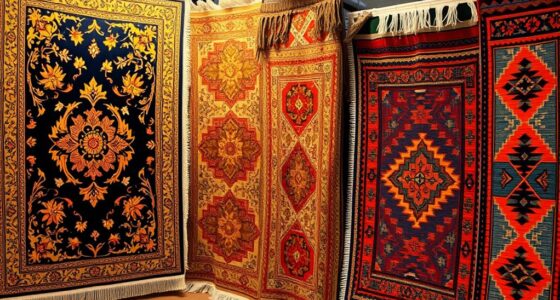
To decipher rug patterns, focus on understanding the symbolic motifs, colors, and designs used. Many motifs, like flowers, animals, or geometric shapes, tell stories about protection, growth, or spirituality, often reflecting the community’s beliefs and history. Colors also carry meanings that enhance these messages, creating a visual language of cultural storytelling. By exploring these elements, you’ll gain deeper insight into the artisans’ worldview and traditions—stay with us to learn more about uncovering these woven stories.

Get cleaning gear delivered free — and shop member deals
- Fast, free delivery on millions of items
- Access to Prime Big Deal Days deals on October 6–7
- Prime Video, Amazon Music and more included
Key Takeaways
- Analyze motifs to identify cultural symbols representing stories, beliefs, or societal roles passed down through generations.
- Understand the origins and meanings of specific patterns, such as animals or geometric shapes, in their cultural context.
- Recognize the significance of colors and how they complement motifs to convey emotional and spiritual messages.
- Decode pattern arrangements as visual narratives reflecting community history, protection, fertility, or divine connection.
- Appreciate that rug designs serve as storytelling artifacts, encapsulating cultural values, legends, and worldview in woven symbols.

Have you ever wondered what the intricate patterns on a rug really mean? Beneath their beauty, these designs often carry deep symbolic motifs that tell stories about the culture and beliefs of their creators. When you look closely, you’ll notice each pattern isn’t just decorative; it’s a language that communicates cultural narratives passed down through generations. These motifs serve as visual signatures, revealing the history, values, and even hopes of the communities that crafted them. Understanding these symbols can transform a simple rug into a storytelling artifact, giving you insight into the lives of those who made it.
Many rugs feature motifs like flowers, animals, or geometric shapes, each with specific meanings rooted in tradition. For example, a repeating star pattern might symbolize protection or guidance, while a tree of life motif can represent growth, fertility, and connection to the divine. These symbolic motifs aren’t random; they’re carefully chosen to convey particular messages, often linked to religious beliefs, societal roles, or natural elements. As you examine these designs, you’re essentially decoding a visual language that encapsulates centuries of cultural narratives. Recognizing these patterns allows you to appreciate the rug not just as an object of beauty but as a vessel of cultural memory. Additionally, color symbolism plays a significant role in conveying specific messages and emotions within these designs.
The origins of these motifs often stem from stories, legends, or spiritual beliefs that are central to the community’s identity. For instance, certain motifs may symbolize protection against evil spirits or serve as talismans for good fortune. Others might depict elements from nature, reflecting the vital relationship between the people and their environment. When you understand the cultural context behind these symbols, you gain a richer appreciation of the craftsmanship and the stories woven into every thread. It’s like deciphering a secret code that reveals the worldview, history, and values of the artisans who created the piece.
As an affiliate, we earn on qualifying purchases.
Frequently Asked Questions
How Can I Identify the Cultural Origin of a Rug Pattern?
You can identify a rug’s cultural origin by examining its fiber material and weaving techniques. Different regions favor specific fibers like wool, silk, or cotton, which reflect local resources. Also, observe the weaving style—hand-knotted, flatweave, or hooked—since these methods are unique to certain cultures. Researching these features helps you connect patterns to their cultural roots, revealing the story behind each rug’s design.
Do Similar Patterns Indicate Shared Symbolism Across Different Regions?
You might think similar patterns mean shared symbolism, but it’s not always true. Regional motif significance varies, and cross-cultural pattern comparisons can reveal influences rather than identical meanings. While some motifs appear across different areas, their interpretations often differ due to local traditions. Investigate each pattern’s context carefully, as visual similarities don’t necessarily imply the same symbolic message. Keep an open mind and explore the cultural stories behind each design.
Can Modern Rugs Have Traditional Symbolic Meanings?
Yes, modern rugs can have traditional symbolic meanings, though contemporary interpretations often blend old and new symbolism. As you explore modern symbolism, you’ll notice designers incorporate traditional motifs with fresh ideas, creating rugs that honor heritage while reflecting current themes. You can appreciate how contemporary interpretations preserve cultural stories, allowing you to connect with the rug’s history and symbolism in a meaningful way.
How Do Age and Wear Affect the Interpretation of Rug Symbols?
Like an ancient manuscript, your rug’s age and wear patterns influence its symbols’ meanings. Age-related deterioration can obscure intricate details, making stories harder to read. Wear patterns highlight areas of significance, revealing where history was lived and cherished. You’ll find that the more worn a rug, the deeper its story, as time and use add layers of meaning, transforming symbols into a rich tapestry of personal and cultural memory.
Are There Universal Symbols That Appear Across All Rug Types?
Yes, there are universal symbols in rug pattern symbolism that appear across many rug types. You’ll find motifs like the star, representing guidance, or the tree of life, symbolizing growth and connection. These symbols often carry shared meanings regardless of culture or origin. Recognizing these universal symbols helps you understand the deeper storytelling in rug designs, revealing common themes and values woven into different textile traditions.
Conclusion
As you trace the intricate patterns beneath your feet, you realize each symbol whispers stories of traditions, dreams, and hopes woven into every knot. The vibrant colors and complex motifs become a tapestry of history, alive with meaning. By unraveling these designs, you connect to a rich cultural legacy that dances through time. So, next time you gaze upon a rug, remember—you’re holding a piece of storytelling, artfully spun into every fiber.
Fall Picks
fall essentials
As an affiliate, we earn on qualifying purchases.