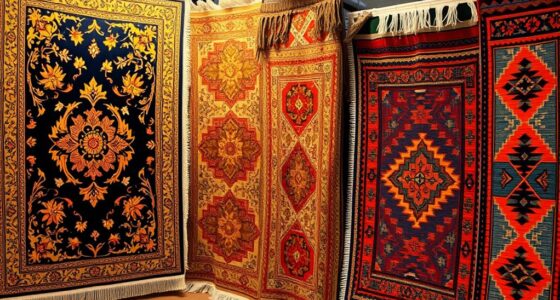
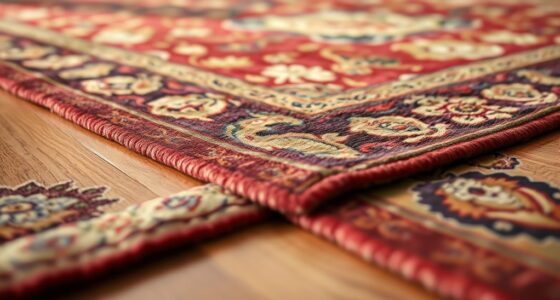
Knot density markedly impacts a rug’s quality and value by showing how tightly and precisely the knots are tied on its surface. Higher knot density means a more detailed, durable, and finely crafted rug, which typically lasts longer and is worth more. Factors like material, weaving technique, and regional style influence density. Understanding these aspects helps you assess rug craftsmanship and durability—if you keep exploring, you’ll discover even more about what makes a rug truly exceptional.
Key Takeaways
- Knot density reflects the number of knots per square inch, directly indicating rug craftsmanship and quality.
- Higher knot density usually means finer, more detailed designs and increased durability.
- Materials like silk allow for greater knot density, enhancing rug value and intricacy.
- Regional weaving styles and techniques influence typical knot densities, affecting overall quality standards.
- Evaluating knot density helps buyers identify well-made, long-lasting, and valuable rugs.

Have you ever wondered what exactly determines the quality and durability of a carpet or rug? One of the most vital factors is knot density, which is often referred to as the knot density measurement. This measurement tells you how tightly packed the knots are on a rug’s surface, directly impacting its strength, appearance, and lifespan. The higher the knot density, the more knots per square inch, resulting in a finer, more detailed design and increased durability. Understanding this concept helps you recognize why some rugs feel thicker and last longer than others. Additionally, knot density is a key factor in evaluating the overall craftsmanship and value of a rug, as it reflects the skill and precision of the weaver.
Knot density doesn’t just happen randomly; it’s influenced by several factors affecting knot density. First, the type of material used plays a role. Wool, silk, and cotton all have different inherent qualities that affect how tightly knots can be tied. Silk, for example, allows for a higher knot density because it’s thinner and more pliable, leading to more intricate, detailed designs. Wool, while durable, may not achieve the same knot density as silk but still offers impressive longevity. Second, the weaving technique significantly impacts knot density. Traditional hand-knotted rugs often boast higher knot densities compared to machine-made counterparts because artisans can meticulously place each knot for precision and tightness. The skill level of the weaver also matters—experienced artisans can achieve higher knot densities, resulting in more refined patterns and increased rug value.
Other factors affecting knot density include the purpose of the rug and regional weaving styles. For instance, Persian and Oriental rugs tend to have higher knot densities because they’re crafted for intricate designs and longevity. Conversely, casual or decorative rugs might have lower knot densities and prioritize speed over detail. The size of the knot itself also matters—smaller knots can increase the overall knot density, creating a finer appearance. Additionally, the knot type, whether it’s a Turkish knot or Persian knot, influences how densely the knots can be tied within the same area. It’s also important to consider regional weaving styles, as they often dictate the typical knot density standards and techniques used in different cultures.
Ultimately, understanding knot density measurement and the factors affecting knot density helps you evaluate a rug’s quality. A higher knot density usually indicates better craftsmanship and longer-lasting material, making it a good indicator of value. So, next time you’re shopping for a rug, pay attention to the knot density and the craftsmanship behind it. This knowledge guarantees you choose a piece that will not only look stunning but also stand the test of time.
Frequently Asked Questions
How Does Knot Density Affect Rug Durability Over Time?
Higher knot density directly boosts your rug’s durability over time. When there are more knots per square inch, the rug becomes stronger and more resistant to wear and tear. This increased knot density enhances rug longevity, ensuring it looks good and stays intact longer, even with frequent use. So, if you want a rug that lasts, prioritize those with higher knot density for better durability and extended lifespan.
What Tools Are Best for Measuring Knot Density Accurately?
You should use a magnifying glass or a handheld ruler for measuring techniques that determine knot density accurately. To guarantee precision, compare your findings against standardized density scales, which help you understand the number of knots per square inch or centimeter. These tools allow you to assess rug quality effectively, giving you a clear idea of the rug’s craftsmanship and potential durability over time.
Does Higher Knot Density Always Mean Higher Rug Quality?
Think of knot density as a double-edged sword—more isn’t always better. Higher knot density doesn’t automatically mean higher quality; knot density myths often overshadow other factors like craftsmanship and material. While it can enhance durability and detail, aesthetic considerations matter too. You should look at the overall balance, ensuring the rug’s beauty, longevity, and artistry align with your preferences, rather than relying solely on knot count.
Can Knot Density Influence the Rug’s Ease of Cleaning?
Knot density can affect the rug’s cleaning ease; higher density means tighter fibers, making it more resistant to dirt and stains. This can simplify maintenance, but it also requires more care to avoid damage. To keep your rug in top shape, follow maintenance tips like regular vacuuming with gentle suction and immediate stain removal. Remember, a densely knotted rug might need careful cleaning, but it generally offers better durability and longevity.
Are There Regional Differences in Typical Knot Densities?
Imagine a tapestry woven with regional variations, each knot telling a story. Yes, there are regional differences in typical knot densities, shaped by cultural preferences and traditional techniques. For example, Persian rugs often feature higher knot densities, reflecting meticulous craftsmanship, while Turkish rugs may have slightly lower densities. These variations influence the rug’s durability, appearance, and value, making each region’s craftsmanship uniquely enchanting and distinct.
Conclusion
Remember, a rug’s true value lies in its knot density. The tighter and more numerous the knots, the finer and more durable the rug. Think of it like a tightly woven fabric—better craftsmanship equals higher worth. As the saying goes, “A chain is only as strong as its weakest link.” So, pay attention to knot density; it’s the key to appreciating a rug’s quality and longevity.